
Paysage aux environs de Deauville — History & Facts
Where does light end, and longing begin? In a world where the horizon kisses the sky, Paysage aux environs de Deauville embraces innocence, capturing a moment suspended between reality and dreams. Look to the center of the canvas, where the gentle undulation of the landscape invites your gaze. The soft hues of blue and green blend effortlessly, guiding your eyes toward the distant shoreline, where the sea mirrors the sky's vast expanse. Notice how delicate strokes of white and cream play across the surface, mimicking the fleeting clouds, while dappled sunlight dances across the water, creating an ethereal glow.
This interplay of color and light articulates a sense of serenity, as if the landscape itself breathes. Yet, as you delve deeper, contrasts emerge within this tranquil scene. The vibrant sunlight hints at warmth, yet the distant figures—small and almost ethereal—evoke feelings of solitude, reminding us of life's transitory nature. The inviting land suggests comfort, yet there lies an undercurrent of wistfulness, as if the viewer is longing for something just beyond reach.
Each brushstroke is a quiet whisper, merging innocence with a subtle ache, reflecting the complexities of human emotion. Boudin painted this scene between 1870 and 1874, during a transitional period in his artistic career, as he began to embrace plein air techniques. Working in Normandy, he sought to capture the changing effects of light and atmosphere, paving the way for the Impressionist movement. At this time, the art world was evolving, and Boudin found himself both influenced by and influencing the artists around him, solidifying his role as a pivotal figure in the exploration of light and landscape.
More Artworks by Eugène Boudin
Browse all →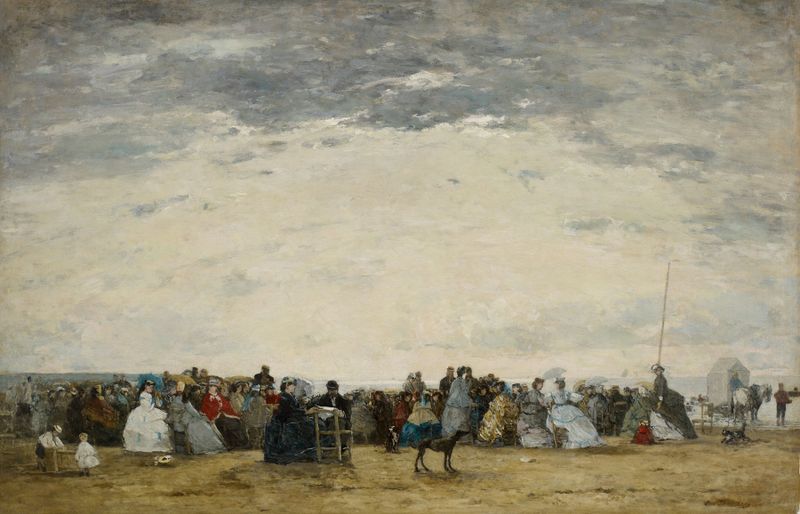
Vacationers on the Beach at Trouville
Eugène Boudin

Washerwoman near Trouville
Eugène Boudin
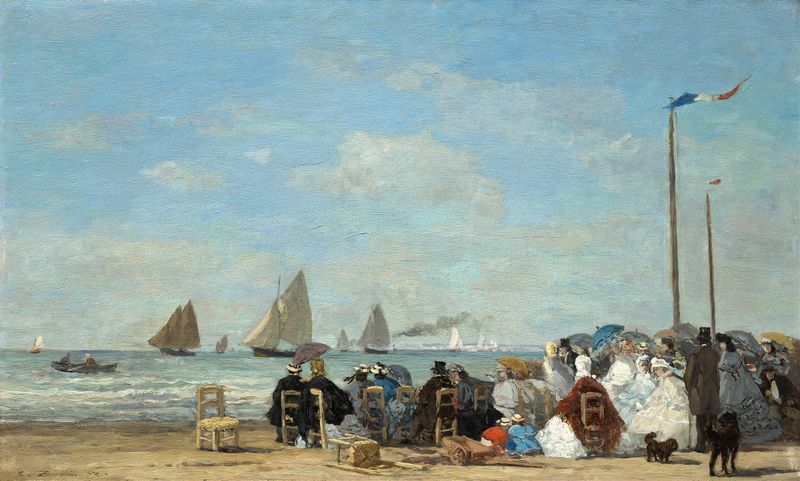
Beach Scene at Trouville
Eugène Boudin

Port aux environs d’Honfleur
Eugène Boudin

Le Faou, un coin du village
Eugène Boudin
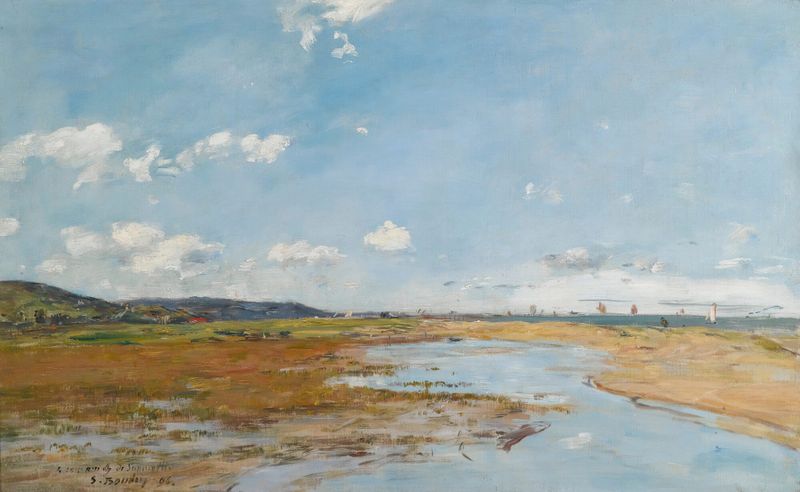
Deauville. Le Rivage
Eugène Boudin
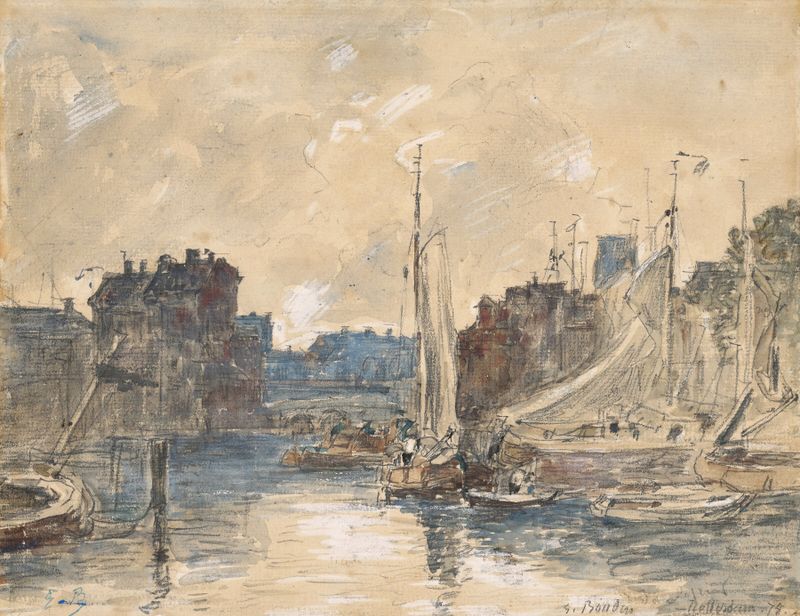
Port de Rotterdam
Eugène Boudin

View of Bordeaux, from the Quai des Chartrons
Eugène Boudin

Trouville, Scène De Plage
Eugène Boudin

Trouville, Le Port
Eugène Boudin





