
Paysage Avec Maisons — History & Facts
In the soft embrace of sunlight, destiny weaves through the vibrant hues of life, echoing the ephemeral nature of existence. Look to the center, where quaint houses emerge from a lush tapestry of green, their warm shades capturing the eye. Notice the way the brushstrokes dance, creating a texture that invites a sense of touch. The sky swirls above with a blend of blues and whites, a serene backdrop to the grounded simplicity below.
The composition, with its gentle curves and lines, guides the viewer’s gaze across the canvas, allowing for a meditative exploration of the scene. Amidst the idyllic landscape, an underlying tension exists. The houses, though inviting, are enveloped in a sense of seclusion, suggesting a deeper narrative of longing and solitude. The interplay of light and shadow hints at the passage of time, as seasons change and moments slip away.
Each element, from the flurry of leaves to the distant horizon, serves as a reminder of life's transitory beauty and the destinies intertwined within this serene tableau. In 1911, Renoir painted this work while residing in the south of France, a period marked by a shift in his artistic style as he grappled with physical ailments. His later years saw him embracing a more subdued palette, reflecting an introspective phase in both his life and the wider art world, where Impressionism was evolving yet still held sway. This painting encapsulates his mature understanding of color and emotion, a testament to a life steeped in beauty and complexity.
More Artworks by Pierre-Auguste Renoir
Browse all →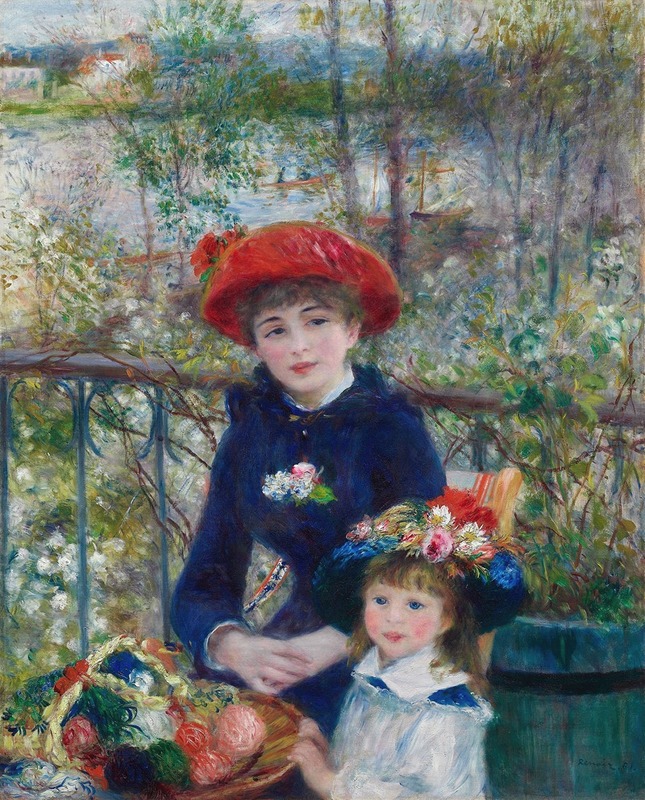
Two Sisters (On the Terrace)
Pierre-Auguste Renoir
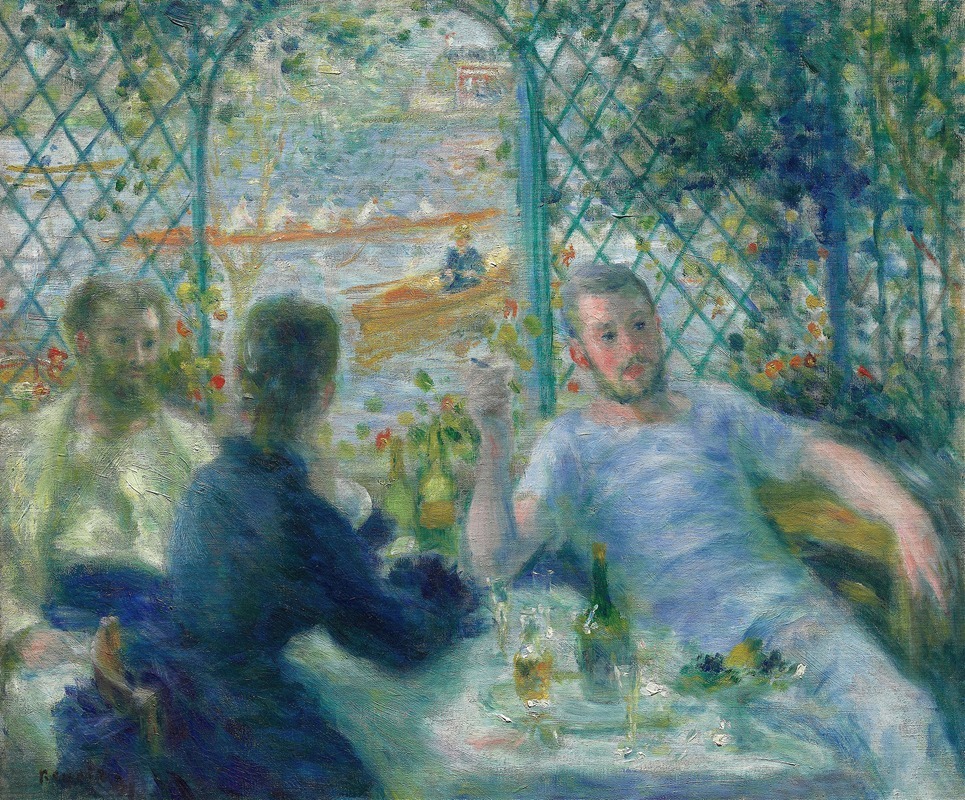
Lunch at the Restaurant Fournaise (The Rowers' Lunch)
Pierre-Auguste Renoir
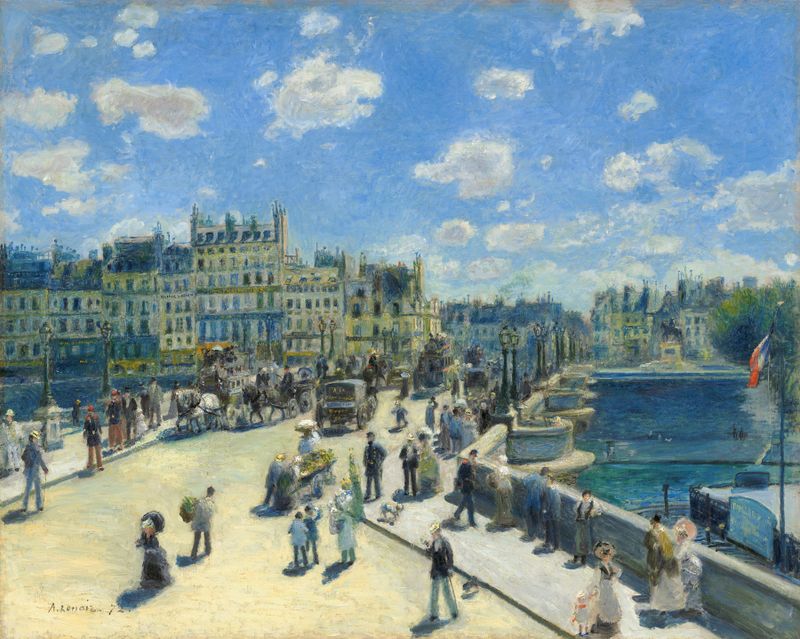
Pont Neuf, Paris
Pierre-Auguste Renoir
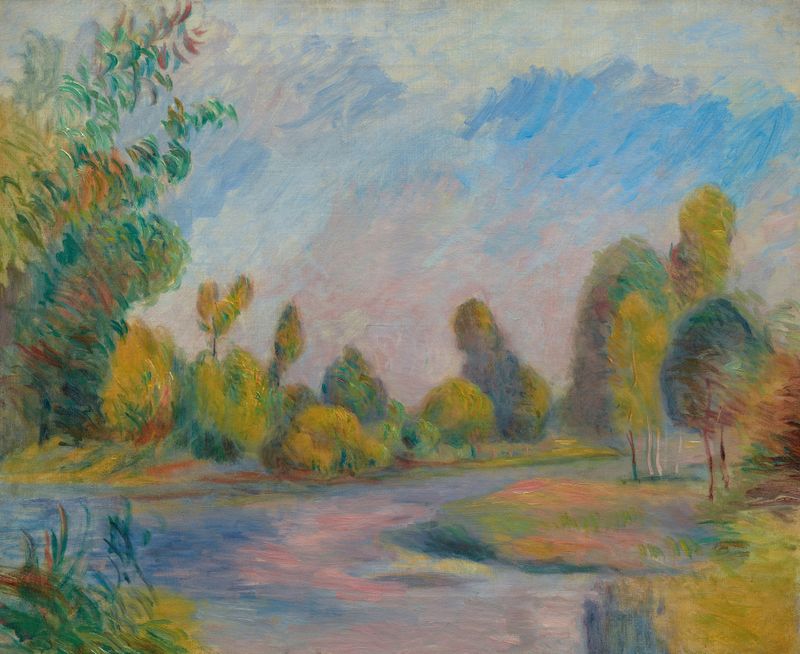
Au bord de la rivière
Pierre-Auguste Renoir

Near the Lake
Pierre-Auguste Renoir
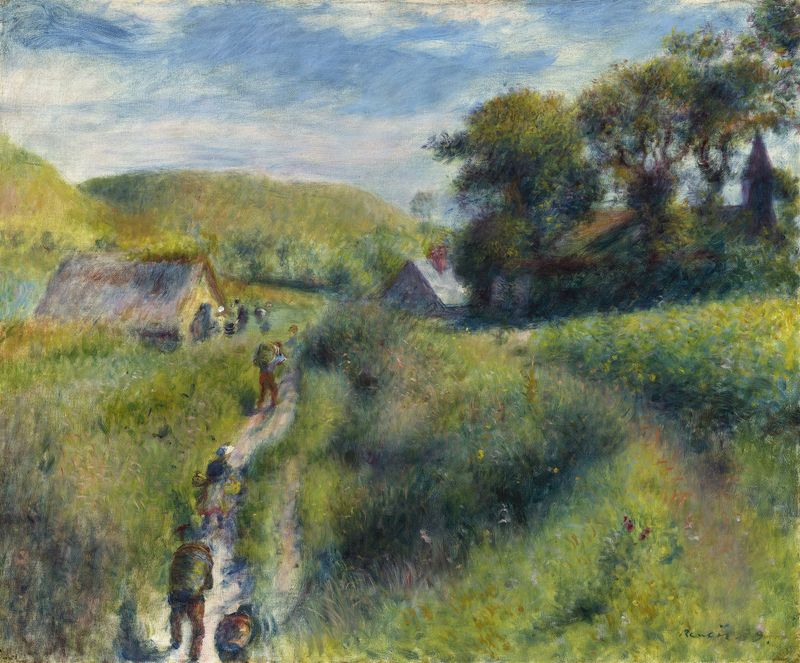
The Mussel Harvest
Pierre-Auguste Renoir

The Seine at Chatou
Pierre-Auguste Renoir
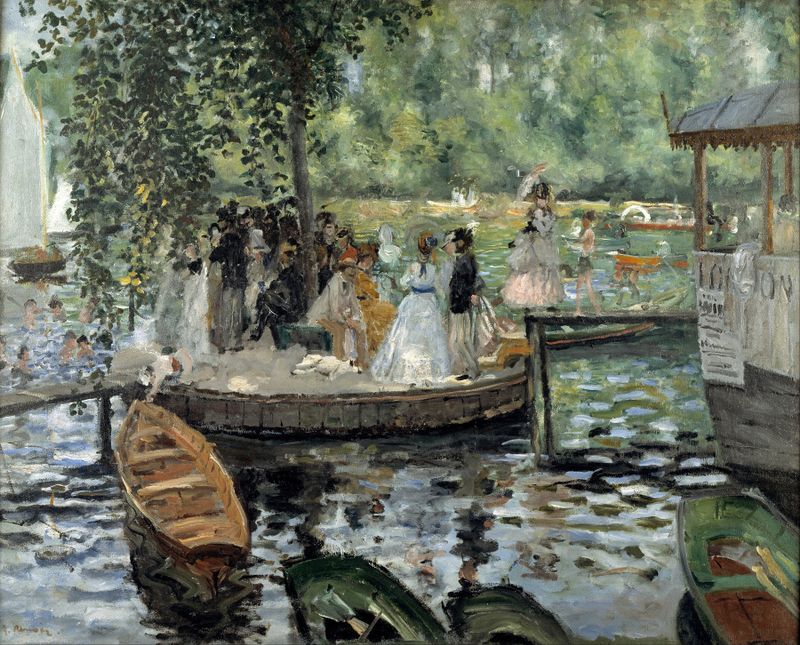
La Grenouillère
Pierre-Auguste Renoir
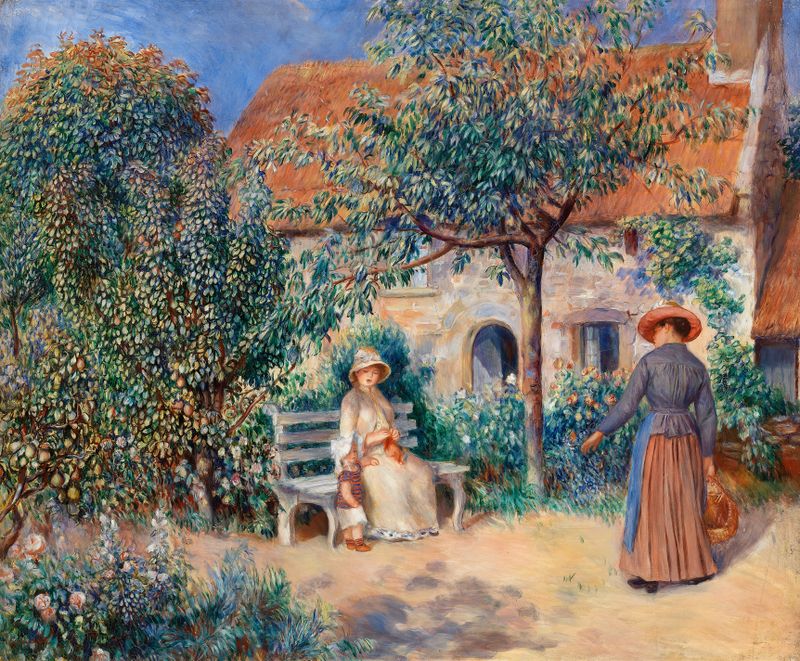
In Brittany (En Bretagne)
Pierre-Auguste Renoir
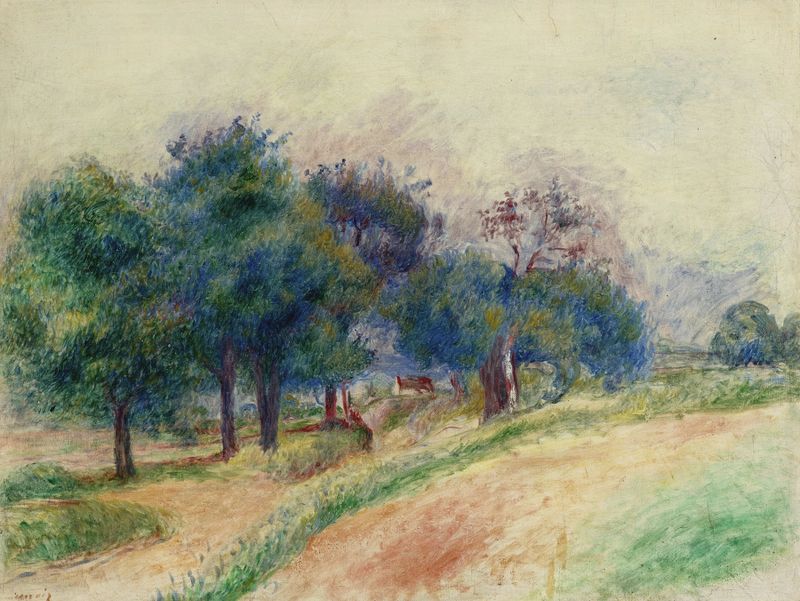
Paysage d’Essoyes
Pierre-Auguste Renoir





