
Paysage avec route, Dauphiné — History & Facts
In the quiet spaces that fill our lives, a landscape can whisper secrets of longing and betrayal, echoing the complexities of human emotion. Direct your gaze to the left of the canvas, where a slender path meanders through a serene countryside. The vivid greens of the grass seem to pulse with life, while the soft hues of the sky blend into one another, invoking a sense of calm yet hinting at the turmoil beneath. Note the brushstrokes, fluid yet deliberate, capturing the delicate balance of nature and the human experience that walks alongside it.
The light filters through the clouds, casting shadows that play across the scene like fleeting memories. In this landscape, Jongkind invites contemplation on the tension between tranquility and discontent. The road, though inviting, hints at journeys untraveled, reflecting choices that linger in the heart. The gentle swirls of color evoke a sense of nostalgia, suggesting that while the beauty of nature endures, there may be an underlying betrayal—perhaps of self or of one's aspirations.
Each element, from the distant mountains to the subtle bending of trees, encapsulates the fragile dialogue between serenity and the storm that brews within. In 1879, Jongkind painted this work during a pivotal period of his life in France, where he was becoming increasingly recognized as a precursor to Impressionism. Surrounded by the lush landscapes of the Dauphiné region, he sought to capture fleeting moments amidst his struggles with both personal challenges and the evolving art scene, forever in dialogue with the world around him.
More Artworks by Johan Barthold Jongkind
Browse all →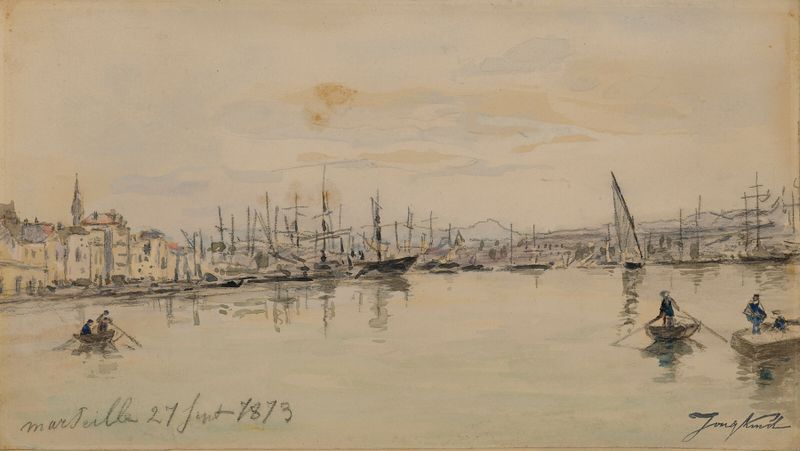
Le Port de Marseille
Johan Barthold Jongkind

Canal Saint-Martin
Johan Barthold Jongkind

Countryside near Brezins, between Grenoble and Vienne
Johan Barthold Jongkind

Notre-Dame vue du quai de la Tournelle
Johan Barthold Jongkind

Environs de Grenoble
Johan Barthold Jongkind

Clair de lune à Overschie (environs de Rotterdam)
Johan Barthold Jongkind

Port de Honfleur
Johan Barthold Jongkind
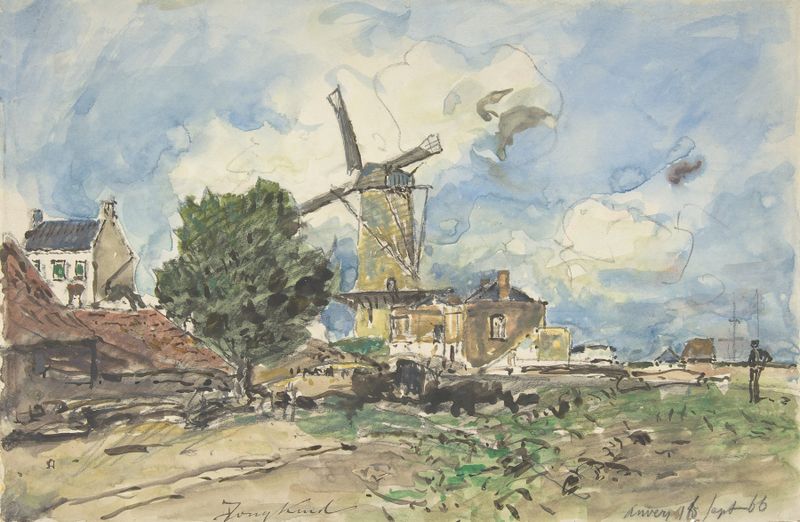
Wind Mill at Antwerp
Johan Barthold Jongkind

Le Havre
Johan Barthold Jongkind

The Church of Overschie
Johan Barthold Jongkind





