
Paysage à Cagnes — History & Facts
In Paysage à Cagnes, this notion transcends into a tranquil yet contemplative landscape, inviting viewers to explore the interplay of light and shadow that hints at deeper emotional currents beneath its surface. Look to the foreground, where gentle waves of golden sunlight bathe the meandering path, illuminating the vibrant greens of the foliage. Notice how the trees stand tall on the left, their shadows casting a gentle veil over the path, creating a sense of depth and intrigue. The soft brushwork, imbued with a warm palette of yellows and greens, draws the viewer’s eye toward the inviting curves of the landscape that blend harmoniously with the rolling hills in the distance. Yet, beneath the serene surface lies a contrasting tension.
The juxtaposition of the bright sunlight and the shadowed path symbolizes the complex relationship between joy and melancholy. The shadows evoke a whisper of longing, reminding us that every glimpse of beauty often carries traces of hidden sorrow. The graceful lines of the scene reflect a moment caught between stillness and the fleeting nature of time, encapsulating the bittersweet essence of life itself. Created in 1910, Paysage à Cagnes was painted during a period when Renoir was grappling with the challenges of aging and physical ailment.
Living in Cagnes-sur-Mer, he sought solace in the natural beauty around him, finding inspiration in the vibrant colors of the landscape he loved. At this time, the art world was shifting towards modernism, yet Renoir remained committed to capturing the fleeting joys of life through his impressionistic lens.
More Artworks by Pierre-Auguste Renoir
Browse all →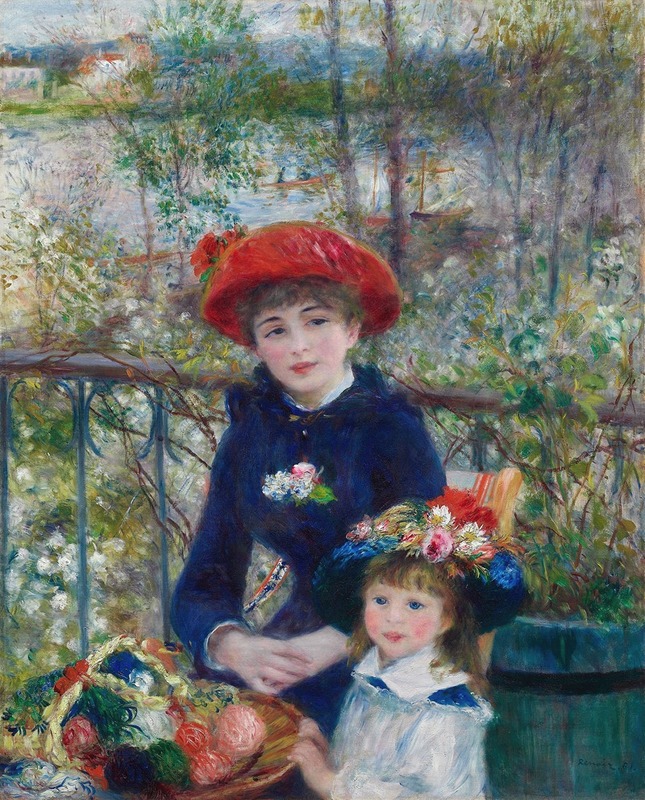
Two Sisters (On the Terrace)
Pierre-Auguste Renoir
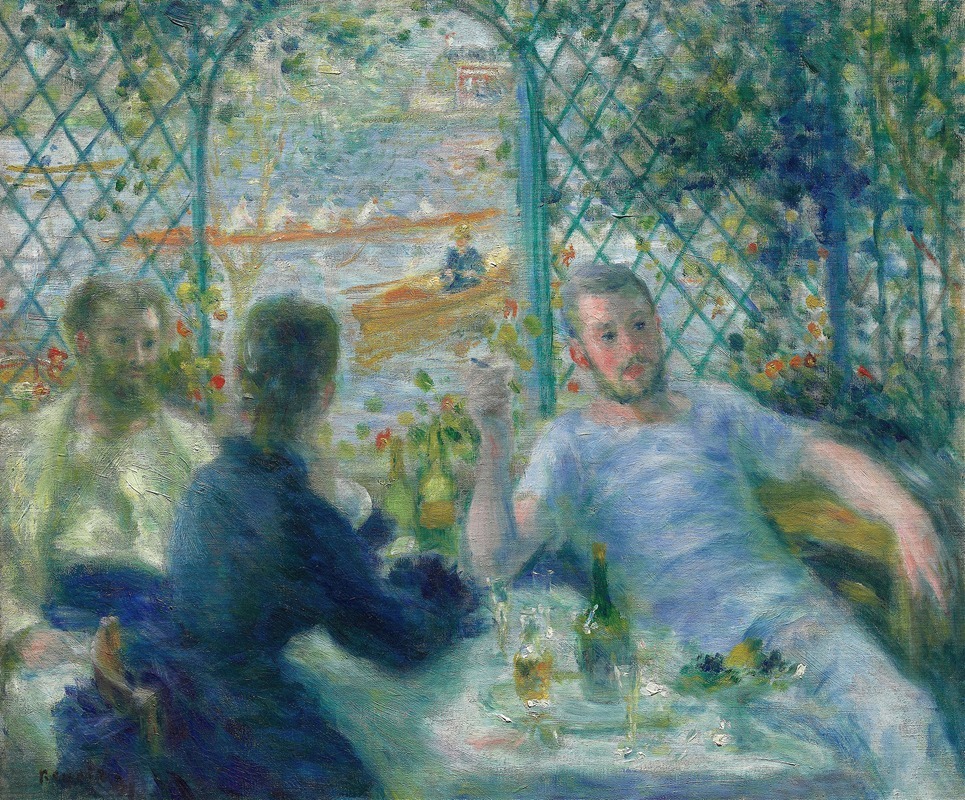
Lunch at the Restaurant Fournaise (The Rowers' Lunch)
Pierre-Auguste Renoir
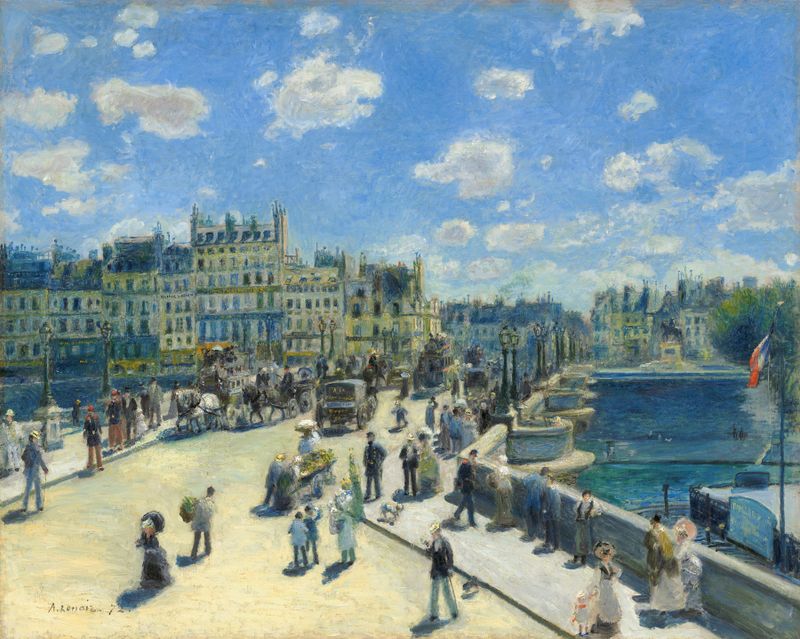
Pont Neuf, Paris
Pierre-Auguste Renoir
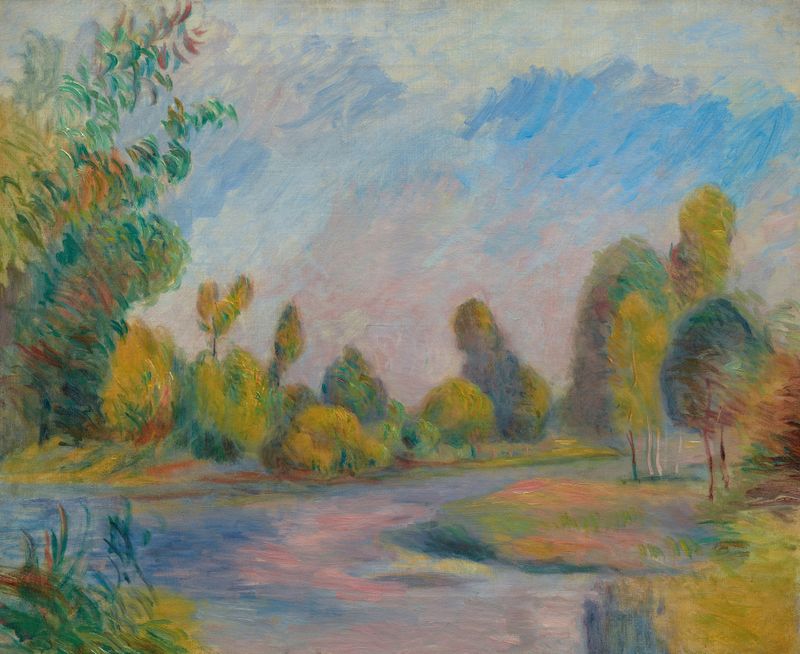
Au bord de la rivière
Pierre-Auguste Renoir

Near the Lake
Pierre-Auguste Renoir
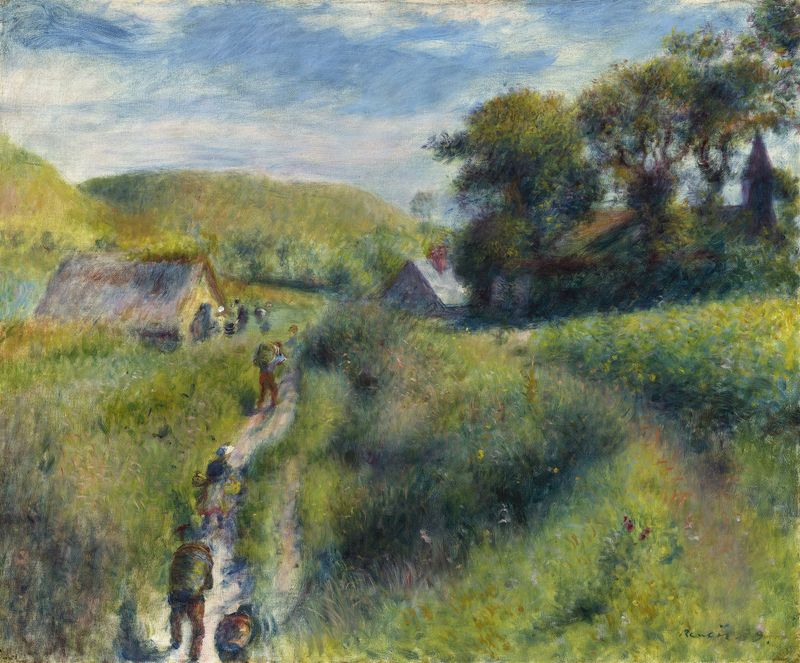
The Mussel Harvest
Pierre-Auguste Renoir

The Seine at Chatou
Pierre-Auguste Renoir
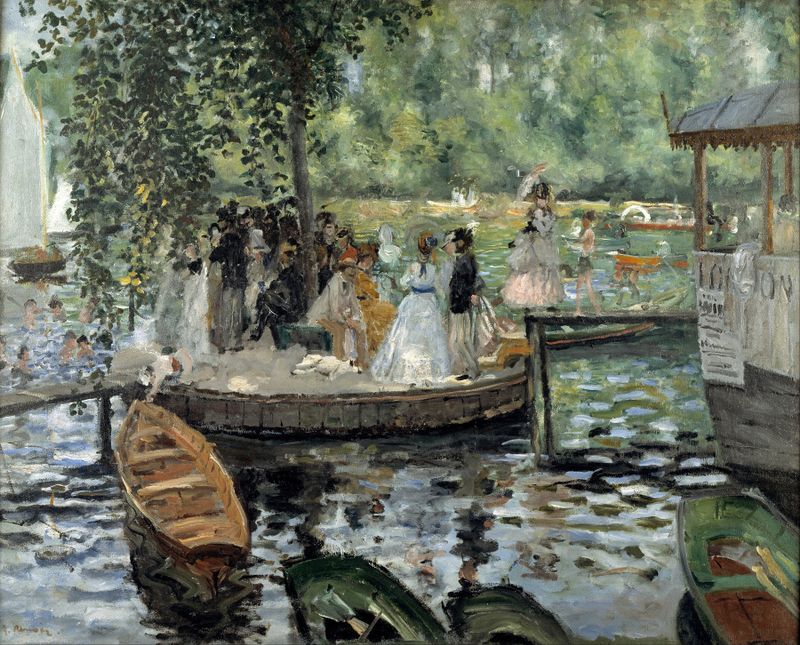
La Grenouillère
Pierre-Auguste Renoir
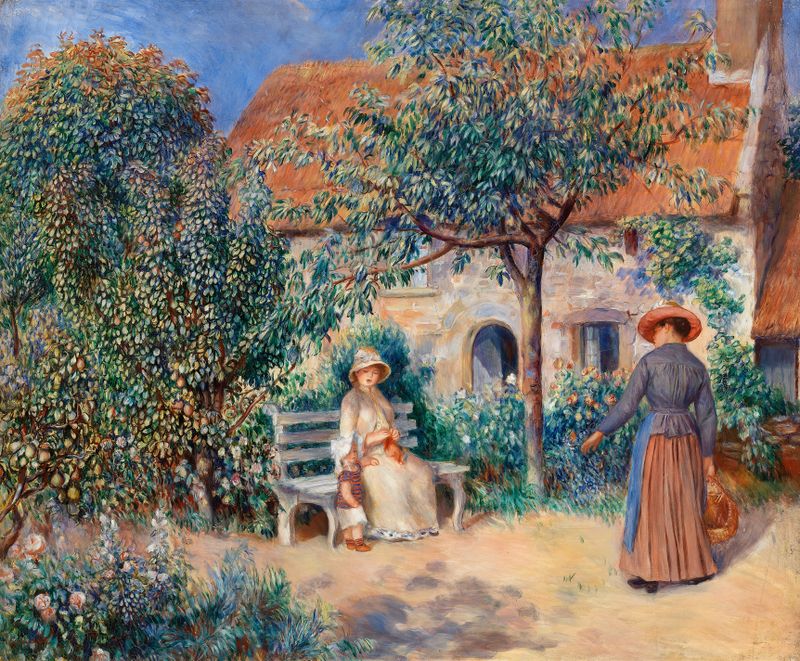
In Brittany (En Bretagne)
Pierre-Auguste Renoir
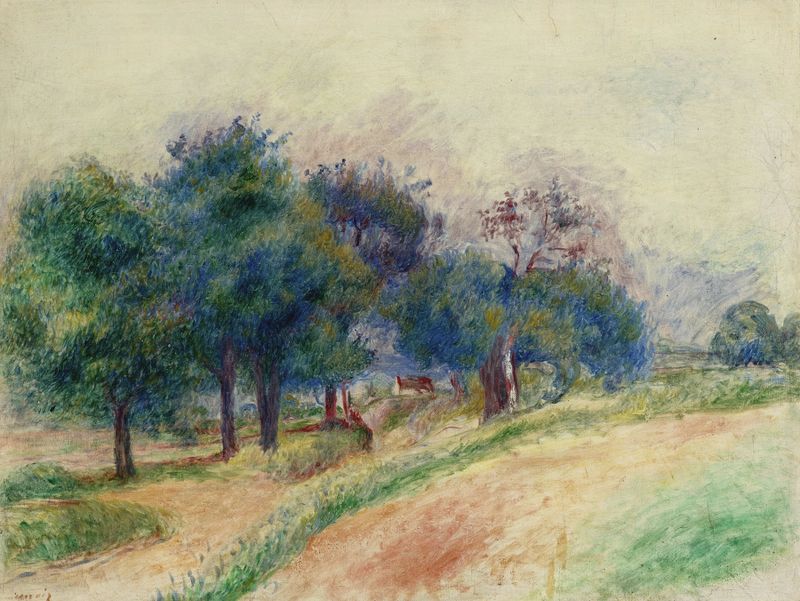
Paysage d’Essoyes
Pierre-Auguste Renoir





