
Paysage clair ou Oliviers à Cagnes — History & Facts
What if silence could speak through light? In Paysage clair ou Oliviers à Cagnes, the dialogue between color and tranquility invites reflection on the transformative power of nature. Look to the center, where the sun-drenched olive trees stand resilient against a backdrop that pulsates with warmth and harmony. The gentle strokes capture the trees’ gnarled limbs, while soft, luminous greens and golden hues teem with vitality. Notice how the light falls upon the rolling hills, creating a soft gradient that draws the eye deeper into the canvas, invoking a sense of peace and unity with the landscape. This artwork evokes a contrast between the solidity of the trees and the ephemeral quality of the sunlight filtering through their leaves.
The interplay of color signifies life’s transitions—the vibrant greens representing growth, while whispers of earth tones suggest a grounded existence. It’s a visual meditation on resilience, inviting viewers to contemplate the cycles of life and the constant state of change embedded within the stillness of the scene. In 1922, Bonnard was living in the south of France, where he found inspiration amid the lush landscapes that surrounded him. During this period, the artist was exploring the interplay of color and light, moving away from tighter compositions to embrace more liberated brushwork.
The post-war world was shifting, and Bonnard's work reflected a desire for renewal and the celebration of everyday beauty, capturing fleeting moments of serenity amidst the chaos of life.
More Artworks by Pierre Bonnard
Browse all →
Les deux fiacres (Boulevard des Batignolles)
Pierre Bonnard

Le Balcon Et L’ombrelle
Pierre Bonnard

Paysage de Vernon
Pierre Bonnard

Place Pigalle at Night
Pierre Bonnard
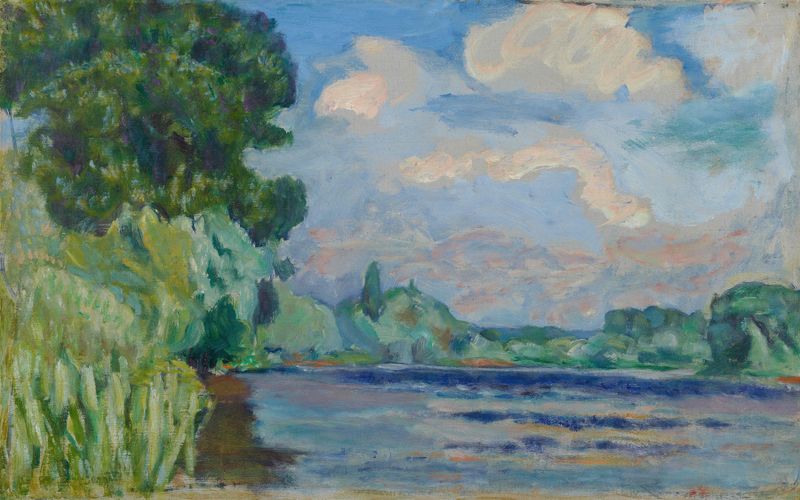
La Seine à Vernon
Pierre Bonnard

Les Toits
Pierre Bonnard
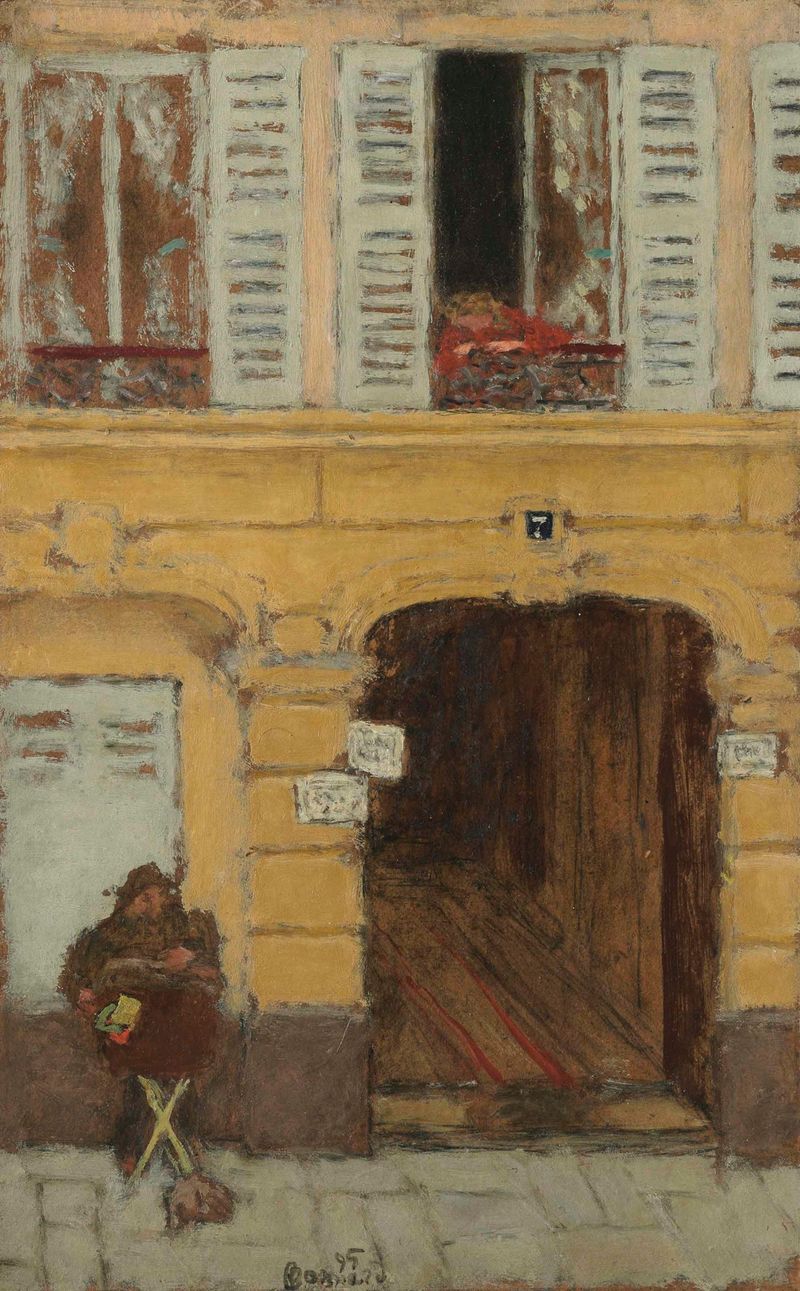
L’orgue de Barbarie ou Le joueur d’orgue
Pierre Bonnard

Paysage de Saint-Tropez
Pierre Bonnard

Soleil Couchant
Pierre Bonnard
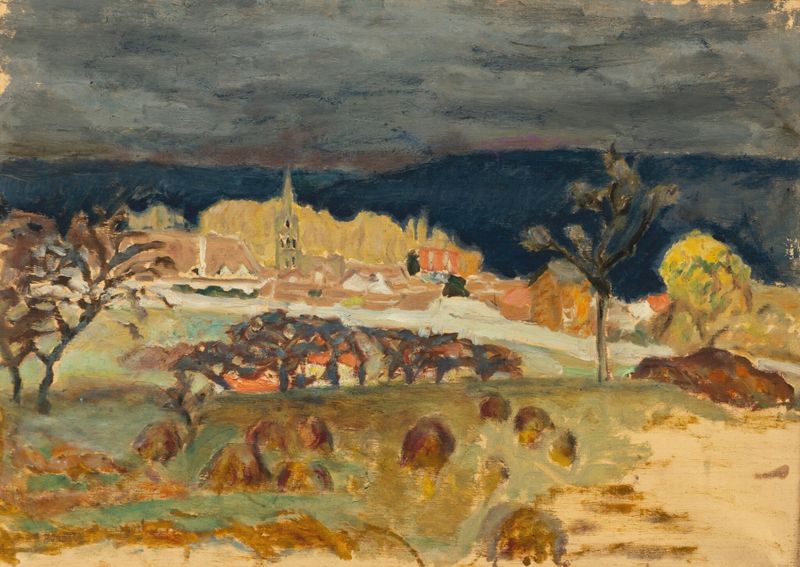
Village, ciel d’orage
Pierre Bonnard





