
Paysage normand — History & Facts
What secret hides in the quiet of the canvas? Here, time stands still, whispering stories of fleeting moments and tranquil solitude. Look to the horizon where gentle waves caress the shore, capturing the soft interplay of blues and greens. Notice how the light falls upon the sand, illuminating each grain with delicate warmth, while the clouds drift lazily above, their reflections merging softly with the water below. The brushwork dances across the canvas, creating a sense of movement in the otherwise serene landscape, inviting the viewer into a world that teeters between stillness and the ephemeral. As you delve deeper, observe the contrasting elements at play—the calmness of the scene juxtaposed with the underlying tension of the approaching storm in the distance.
The vibrant palette signifies the richness of nature, yet there lingers a sense of foreboding, as if the landscape is caught in a moment before change. Each stroke evokes not only the beauty of the coast but also an awareness of transience, reminding us of the inevitable passage of time. Eugène Boudin painted Paysage normand between 1858 and 1862 in the coastal regions of Normandy, an area that deeply inspired his work. During this period, he was immersed in the burgeoning Impressionist movement, capturing the essence of natural light and atmosphere, which was revolutionary for the time.
His focus on landscape painting reflected an evolving appreciation for nature, setting the stage for future generations of artists to explore similar themes.
More Artworks by Eugène Boudin
Browse all →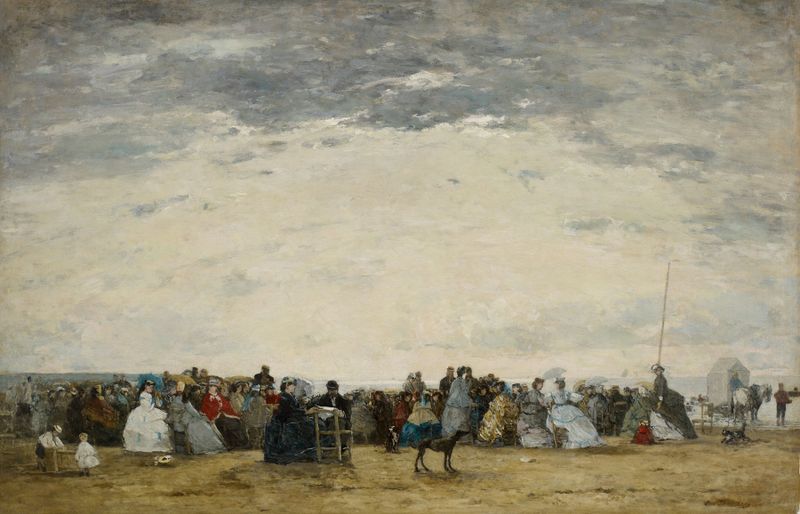
Vacationers on the Beach at Trouville
Eugène Boudin

Washerwoman near Trouville
Eugène Boudin
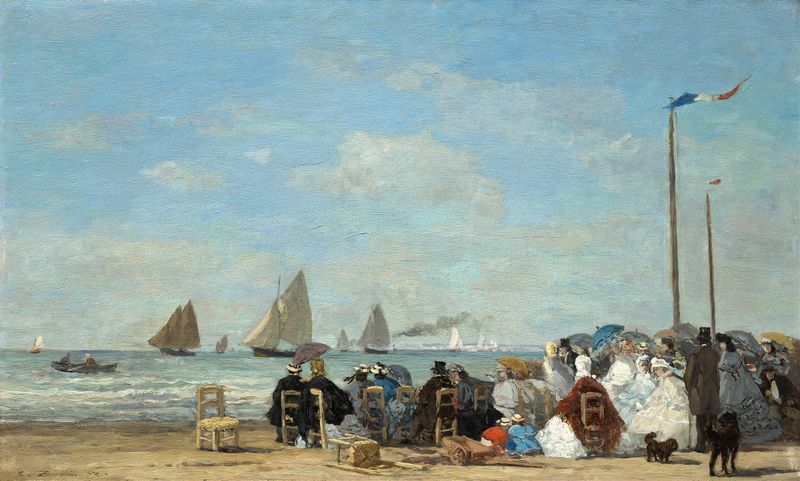
Beach Scene at Trouville
Eugène Boudin

Port aux environs d’Honfleur
Eugène Boudin

Le Faou, un coin du village
Eugène Boudin
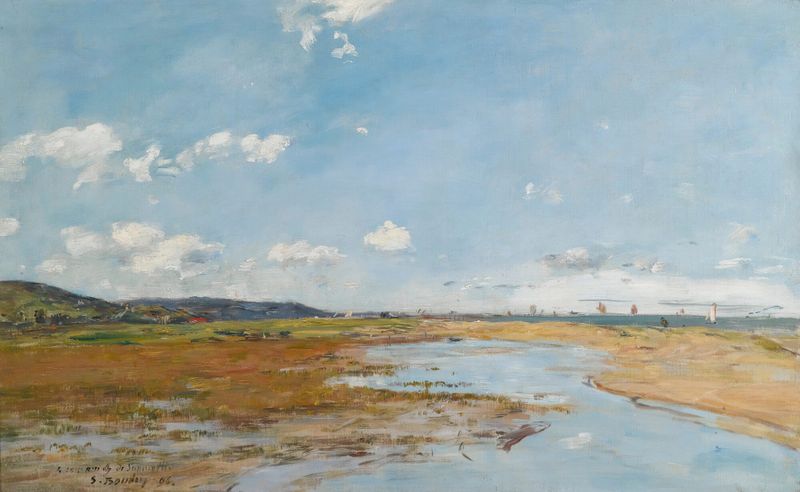
Deauville. Le Rivage
Eugène Boudin
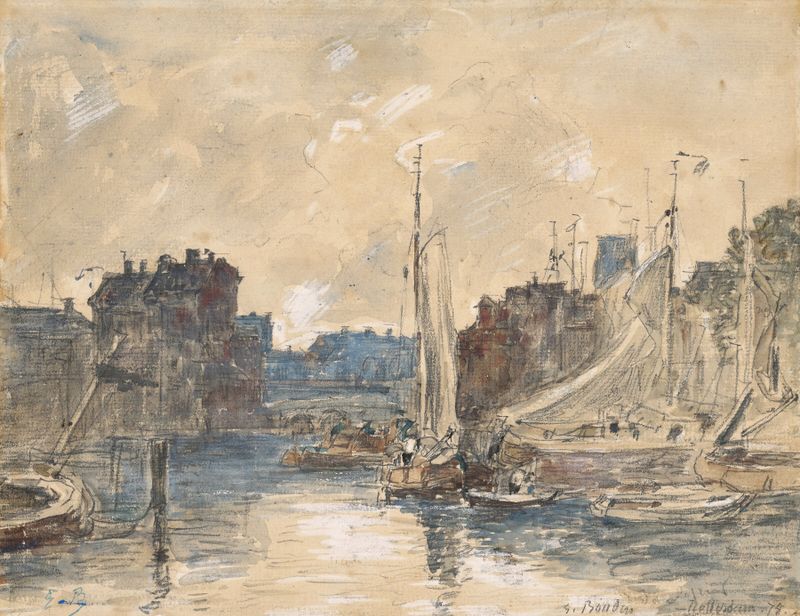
Port de Rotterdam
Eugène Boudin

View of Bordeaux, from the Quai des Chartrons
Eugène Boudin

Trouville, Scène De Plage
Eugène Boudin

Trouville, Le Port
Eugène Boudin





