
Paysage près de Cagnes — History & Facts
In Paysage près de Cagnes, the essence of yearning saturates the canvas, inviting viewers into a realm where memory and emotion intertwine. It speaks of a longing for simpler times, capturing the beauty of nature as a refuge from the chaos of life. Look to the lower right, where a vibrant patch of wildflowers bursts forth, their colors dancing in harmony with the lush greens of the surrounding landscape. The oil paint is applied with a lightness that suggests the warm caress of the sun on a peaceful afternoon.
Notice how the gentle brushstrokes weave together the scene, blending hues and creating depth, leading the eye towards the distant hills that cradle the sky. The sinuous lines of the path draw you into the scene, guiding you to explore Renoir's delicate balance of light and shadow. As you delve deeper, consider the contrasts at play: the wildflowers’ fleeting beauty juxtaposed with the enduring strength of the hills, embodying the tension between transience and permanence. The soft, hazy sky evokes a sense of nostalgia, while the vivacity of the flowers stirs a longing for connection — both to the landscape and to one’s own past.
This emotional interplay makes the painting resonate deeply, encapsulating the bittersweet nature of remembrance. Painted in 1910, Renoir was living in Cagnes-sur-Mer, a coastal town in France, amidst a flourishing period of artistic innovation. At this time, he was embracing a new, more liberated style, reflecting his ongoing evolution as an artist. As he painted Paysage près de Cagnes, the world around him was undergoing rapid changes, yet his connection to the serene beauty of the landscape remained steadfast, a testament to his enduring love for nature.
More Artworks by Pierre-Auguste Renoir
Browse all →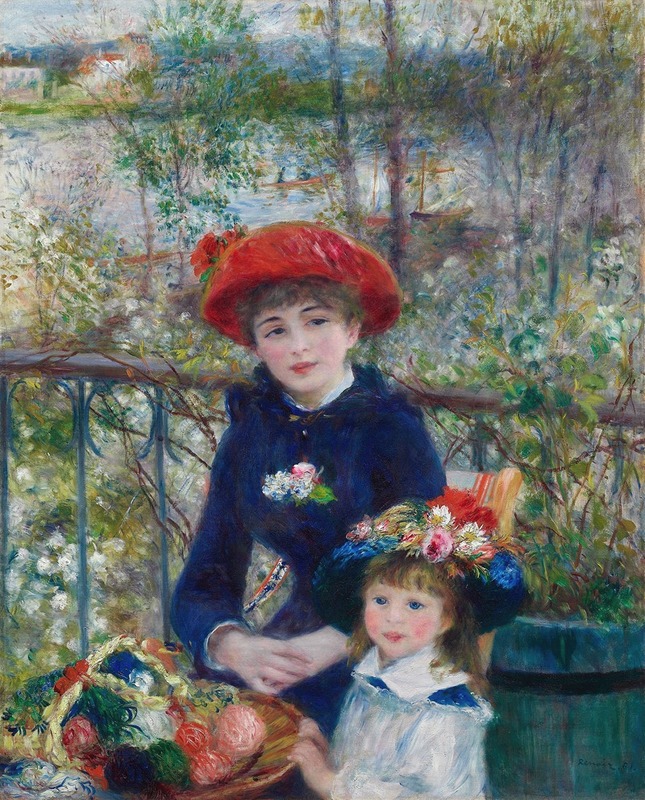
Two Sisters (On the Terrace)
Pierre-Auguste Renoir
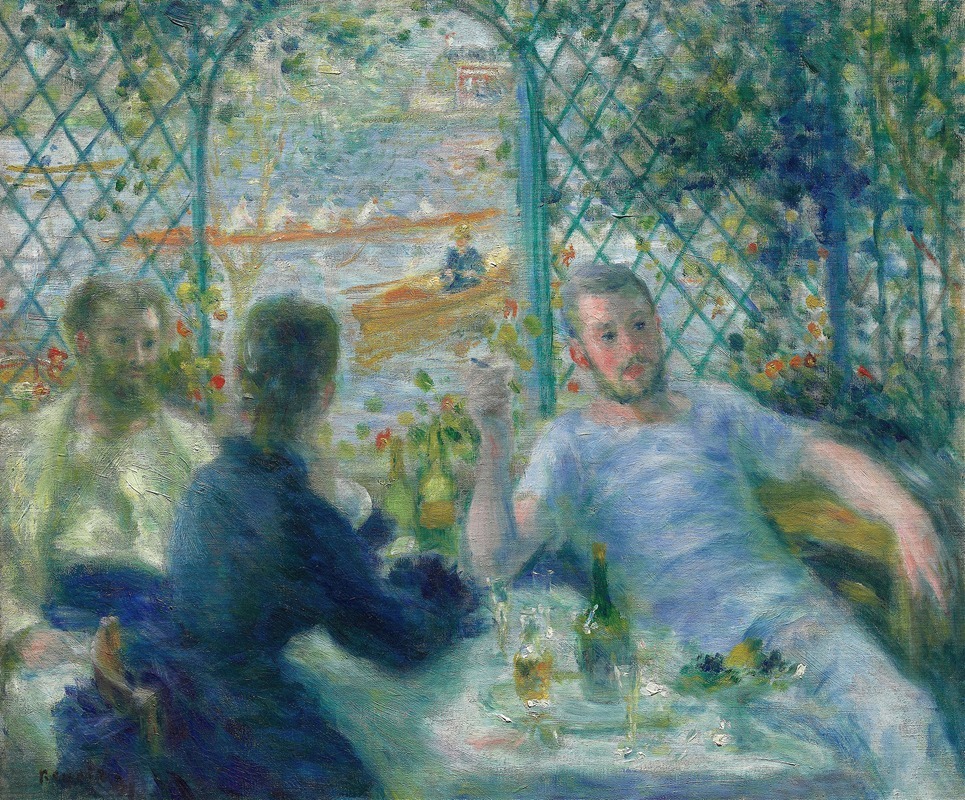
Lunch at the Restaurant Fournaise (The Rowers' Lunch)
Pierre-Auguste Renoir
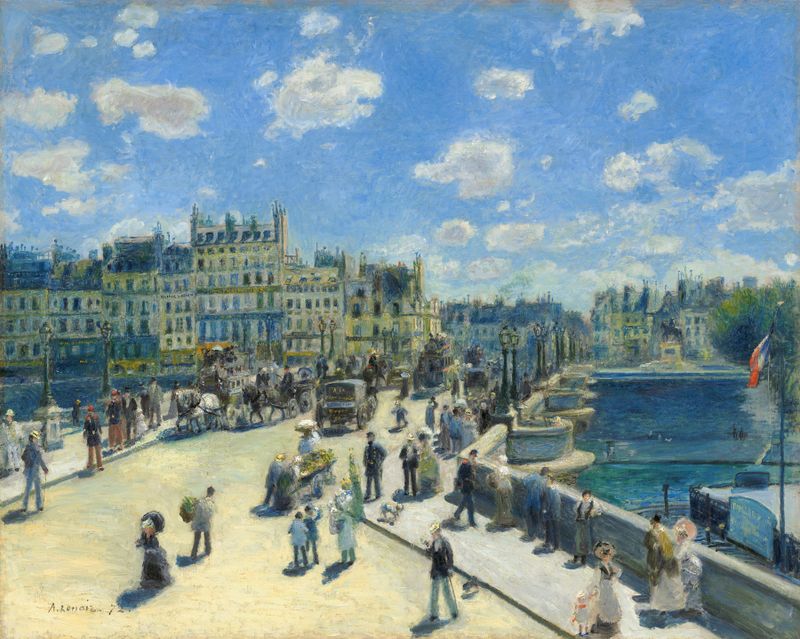
Pont Neuf, Paris
Pierre-Auguste Renoir
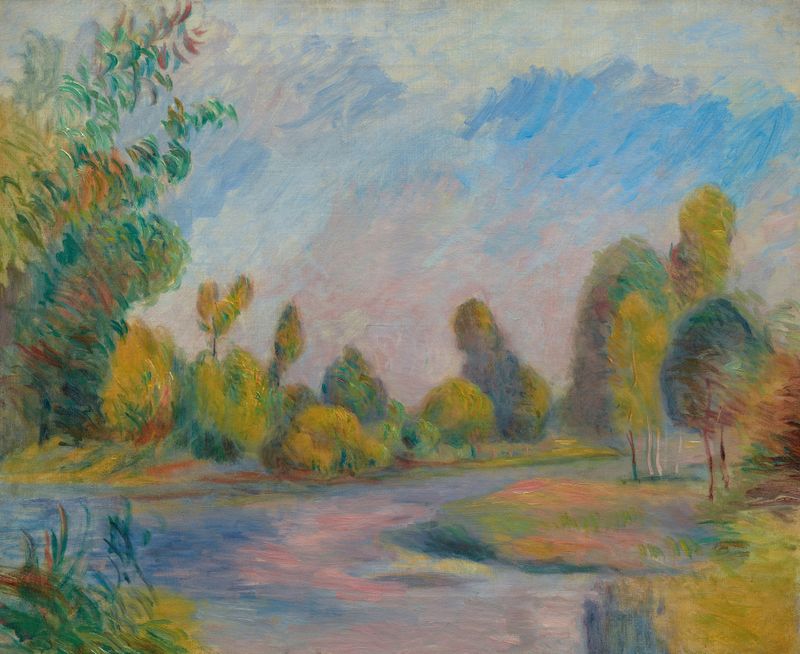
Au bord de la rivière
Pierre-Auguste Renoir

Near the Lake
Pierre-Auguste Renoir
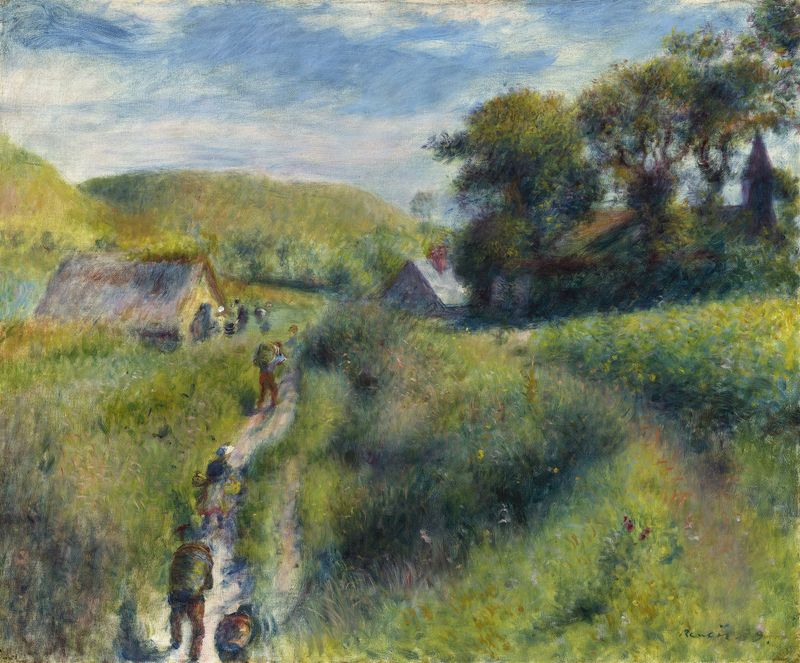
The Mussel Harvest
Pierre-Auguste Renoir

The Seine at Chatou
Pierre-Auguste Renoir
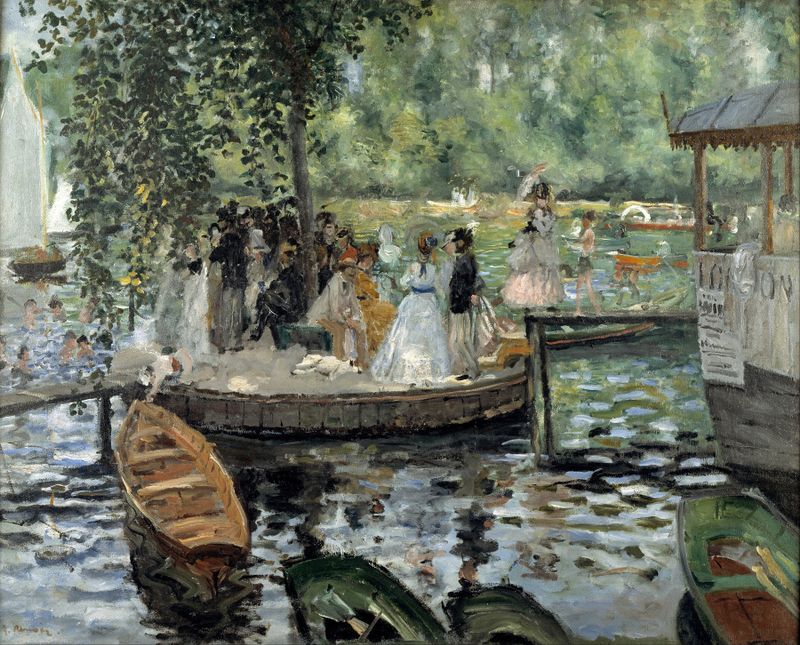
La Grenouillère
Pierre-Auguste Renoir
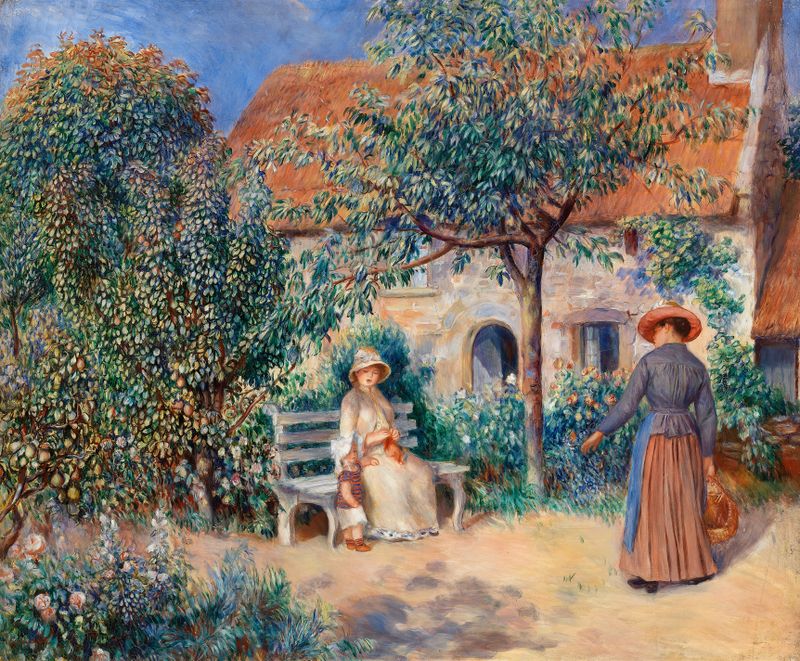
In Brittany (En Bretagne)
Pierre-Auguste Renoir
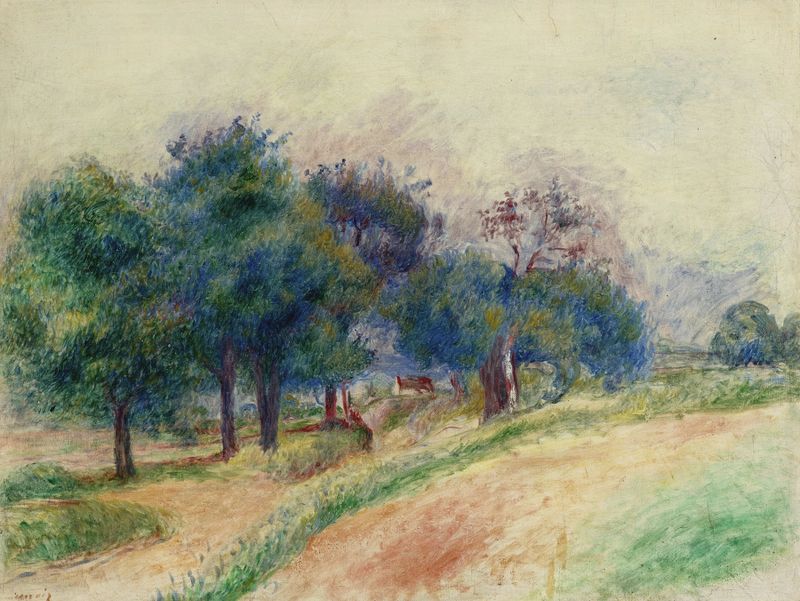
Paysage d’Essoyes
Pierre-Auguste Renoir





