
Peacock in the Woods, study for book Concealing Coloration in the Animal Kingdom — History & Facts
A peacock, usually the showman of the animal kingdom, nearly vanishes here into the dappled undergrowth. What first catches the eye is not the bird’s famous tail, but the way its dazzling “eyes” dissolve into a tapestry of leaf and shadow. Abbott Handerson Thayer, in this 1907 study for his book Concealing Coloration in the Animal Kingdom, invites the viewer to search for the animal as a predator might, discovering how nature’s most flamboyant plumage can also become its best disguise.
The light flickers across the scene, pulling the peacock’s form in and out of focus, as if the forest itself conspires to keep its secrets. This painting belongs to a moment when science and art were in lively conversation, and naturalists like Thayer used brush and canvas to argue their case. The early twentieth century saw a surge of interest in camouflage, both in nature and, soon, in military technology. Thayer’s studies, now in the collection of the Smithsonian American Art Museum, were not just illustrations but provocations—challenging viewers to see animals not as static specimens but as masters of survival.
In this work, history has left us with more questions than answers about its journey, but the image itself remains a puzzle to be solved, rewarding each careful look with a new discovery among the leaves.
More Artworks by Abbott Handerson Thayer
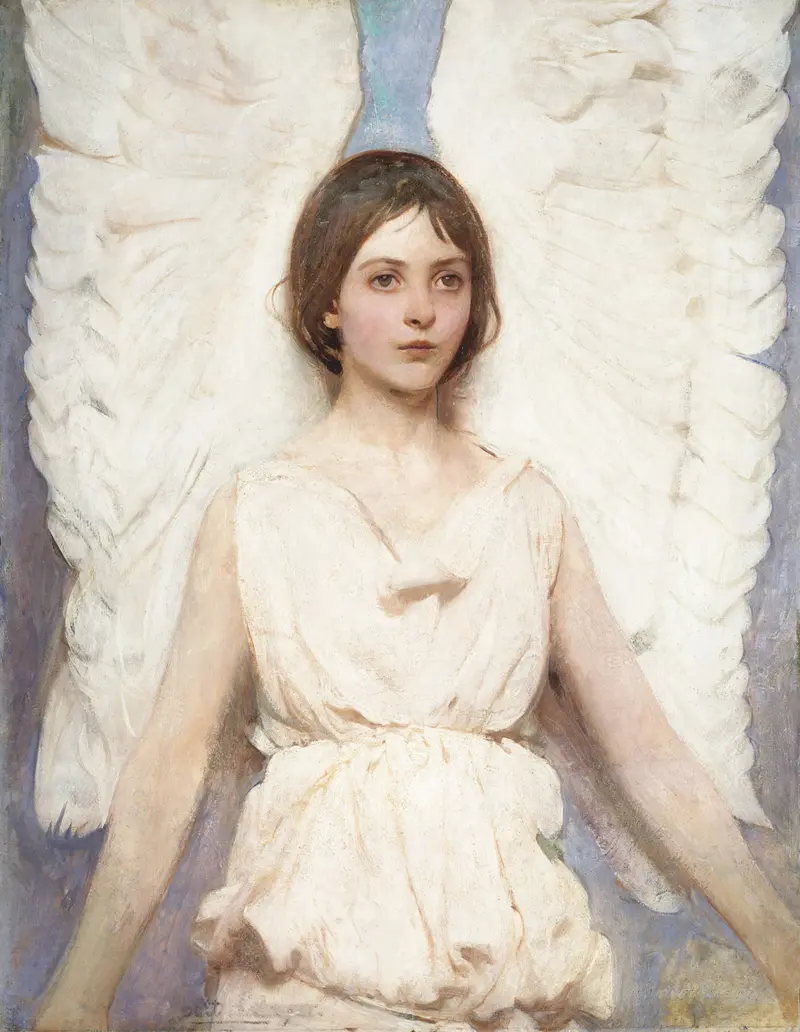
Angel
Abbott Handerson Thayer

Mount Monadnock
Abbott Handerson Thayer
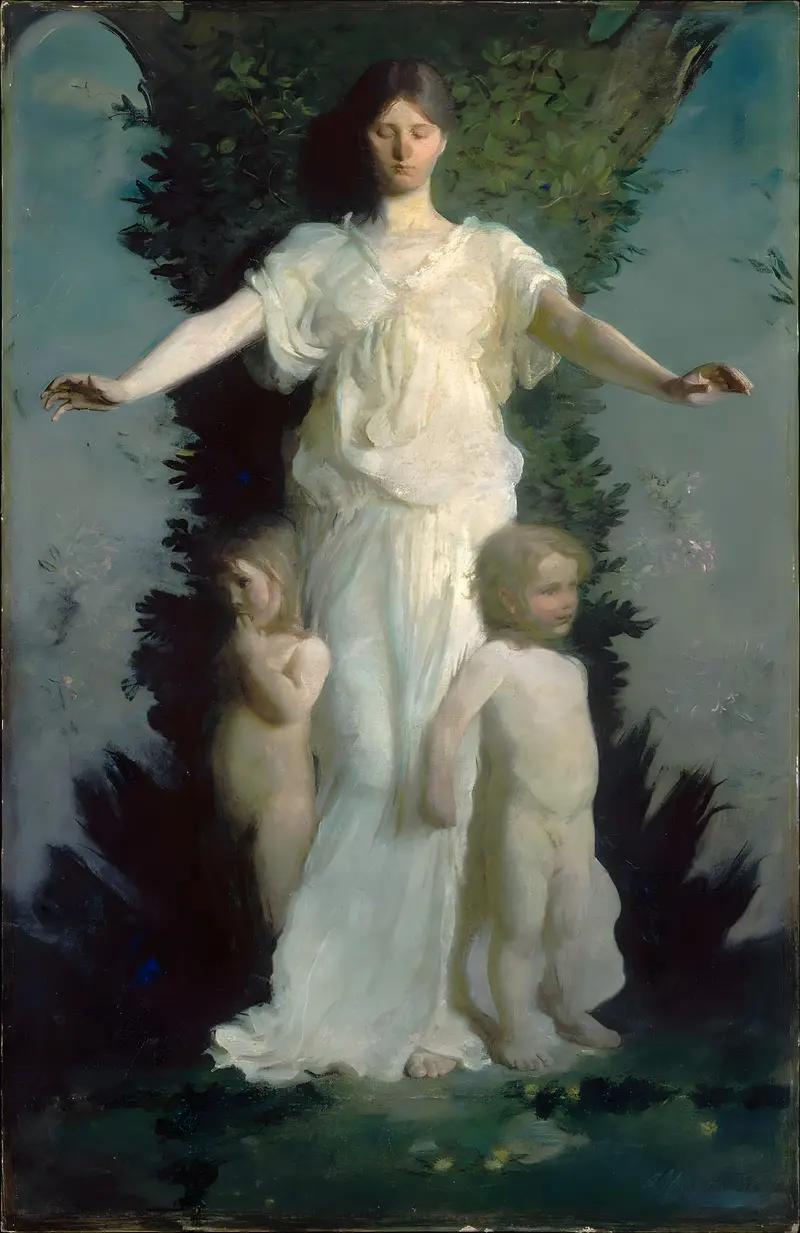
Caritas
Abbott Handerson Thayer

Winter, Monadnock
Abbott Handerson Thayer
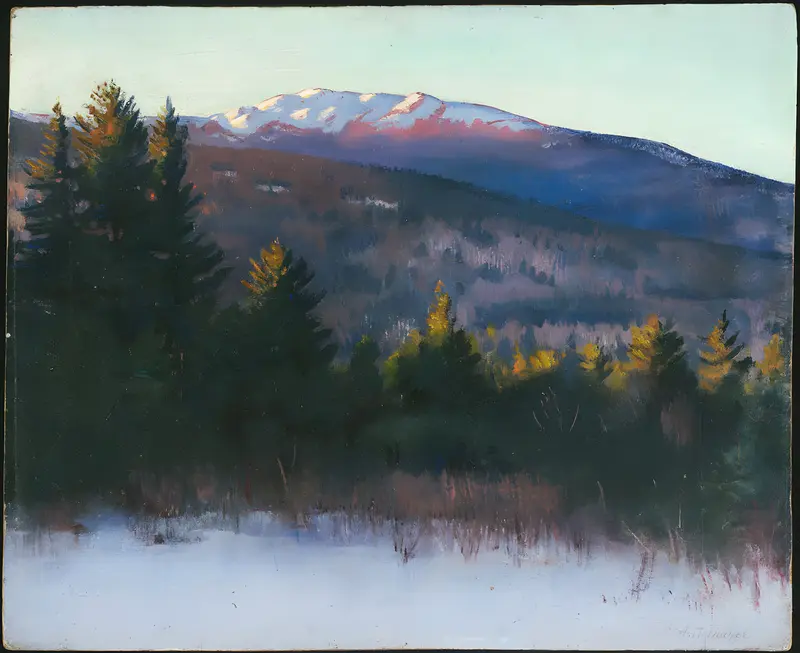
Mount Monadnock
Abbott Handerson Thayer
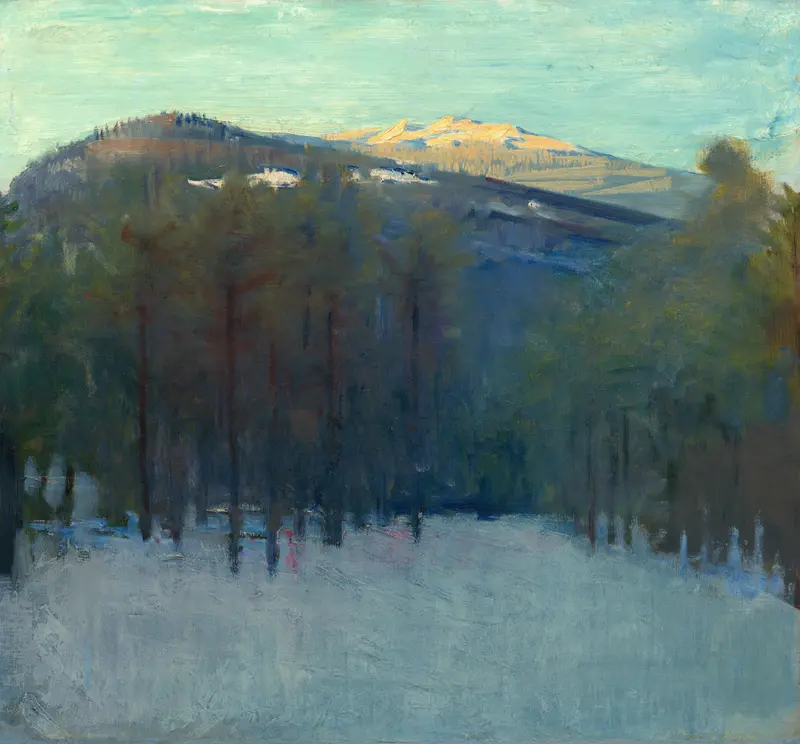
Mount Monadnock
Abbott Handerson Thayer
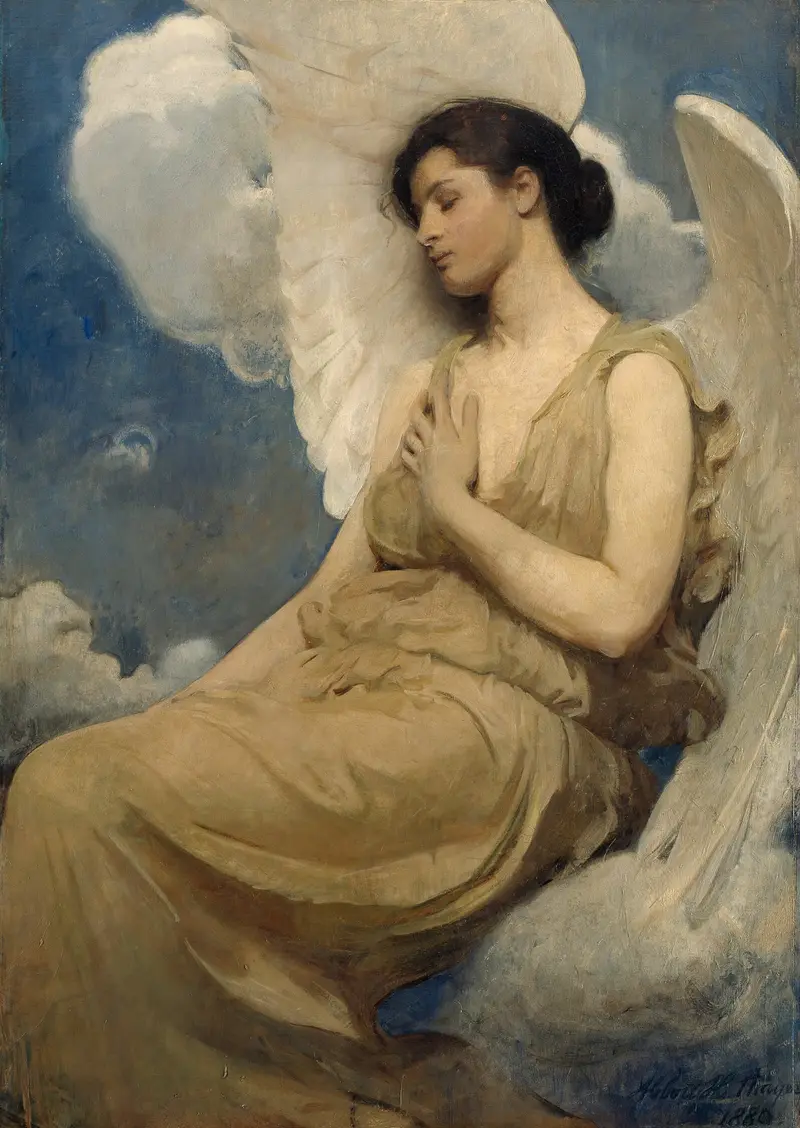
Winged Figure
Abbott Handerson Thayer
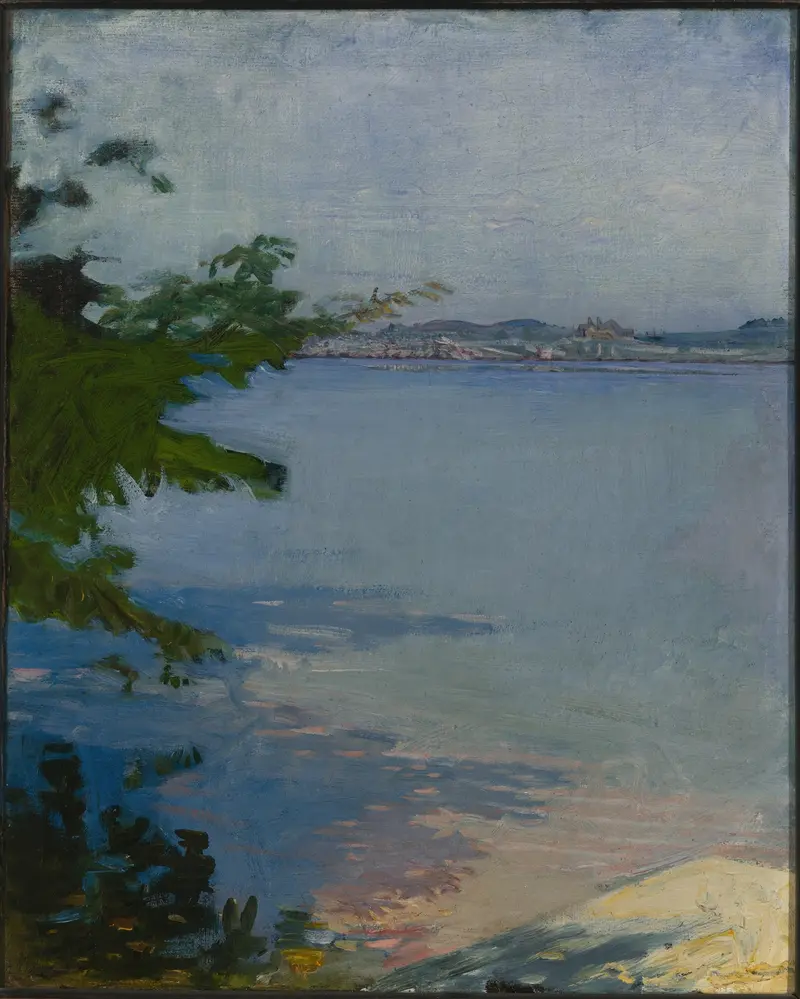
Dublin Pond, New Hampshire
Abbott Handerson Thayer
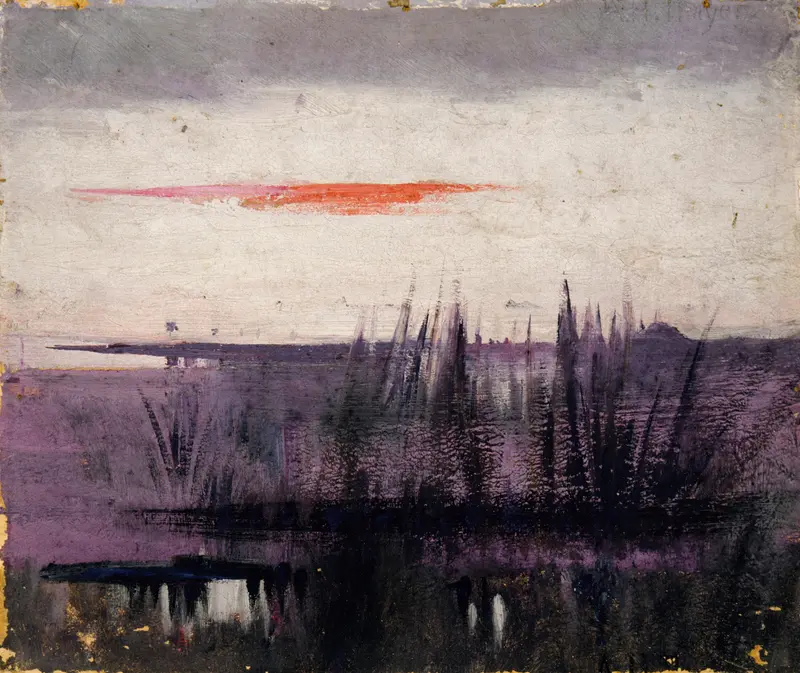
The Sky Simulated By White Flamingoes Study For Book, Concealing Coloration In The Animal Kingdom
Abbott Handerson Thayer
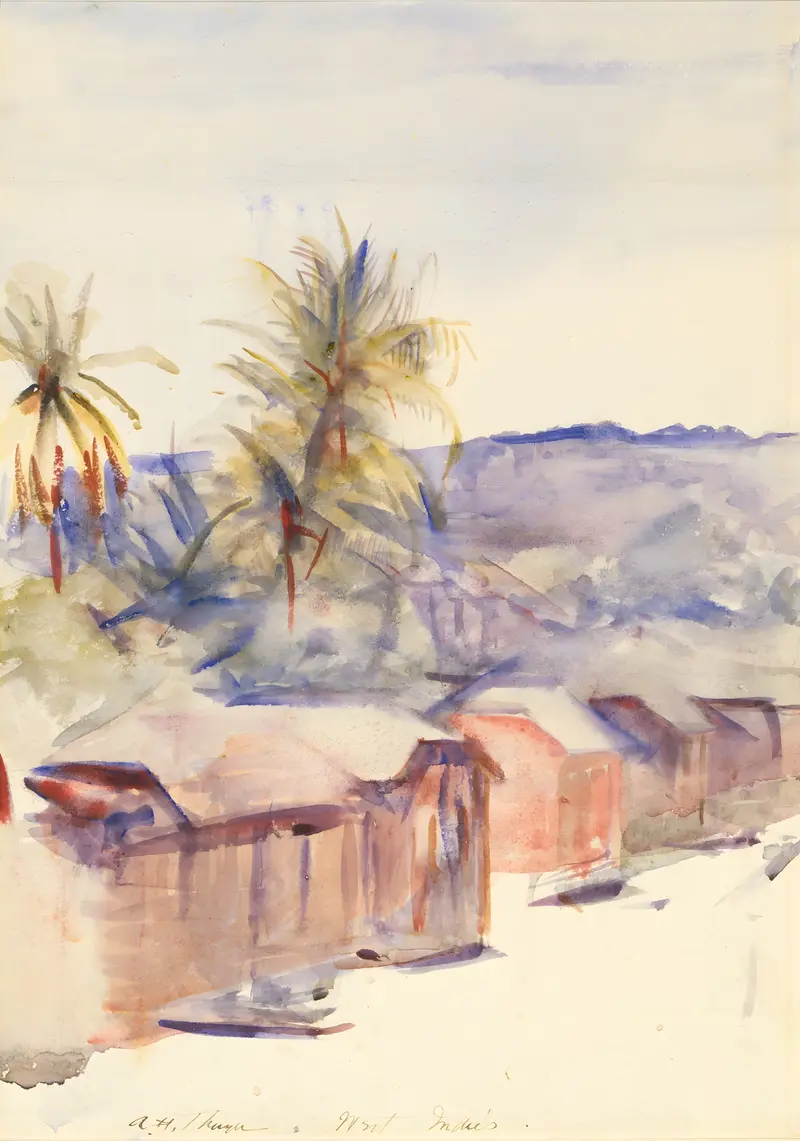
Village Street, Dominica
Abbott Handerson Thayer





