
Peninsula of Saint-Jean — History & Facts
In Peninsula of Saint-Jean, the viewer confronts the poignant essence of loss woven within a picturesque landscape, inviting contemplation of what remains after beauty fades. Look to the center where the vibrant strokes of green and blue intertwine to depict the lush hillside meeting the tranquil sea. Notice how the light dances upon the water’s surface, creating a shimmering path that draws the eye toward the horizon. The carefully layered brushwork evokes a sense of movement, as if the gentle breeze might carry away the very stillness captured in this moment.
Each brushstroke reveals both Renoir's mastery of color and his desire to encapsulate the fleeting nature of joy. However, beyond the serene beauty lies a subtle tension. The sweeping landscape contrasts with the stillness of the foreground, hinting at a deeper yearning for connection amidst transient moments. The absence of figures challenges the viewer to reflect on what is missing, as the vibrant scenery resonates with the ache of nostalgia for lost times, perhaps even a lost relationship.
This duality between joy and melancholy is a thread that runs through the piece, provoking introspection on the nature of existence itself. In 1893, Renoir painted this piece while grappling with personal health issues and a shifting art world, as Impressionism began to be recognized but also faced criticism. Working in a seaside town, he captured the essence of a landscape that offered beauty against the backdrop of his own struggles, embodying a profound reflection on both life and loss during this transformative period in his career.
More Artworks by Pierre-Auguste Renoir
Browse all →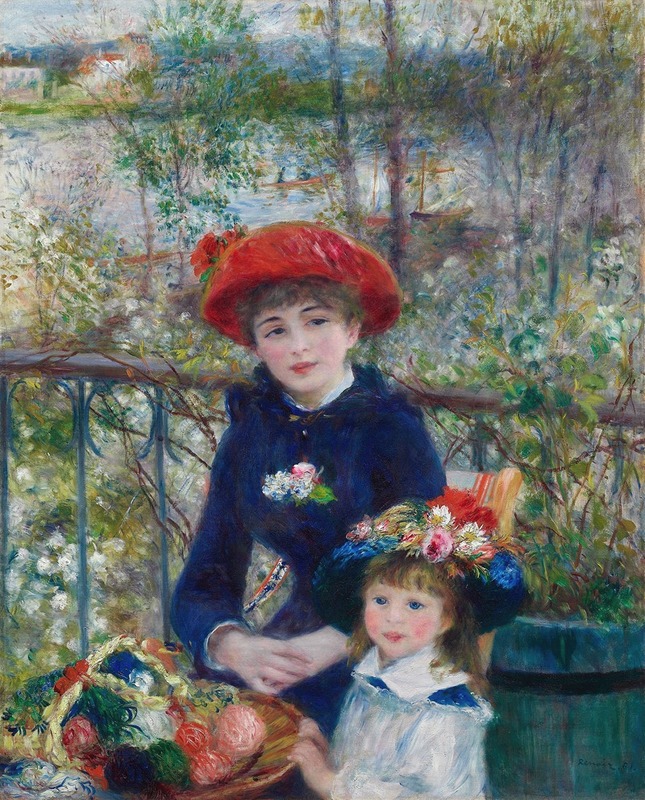
Two Sisters (On the Terrace)
Pierre-Auguste Renoir
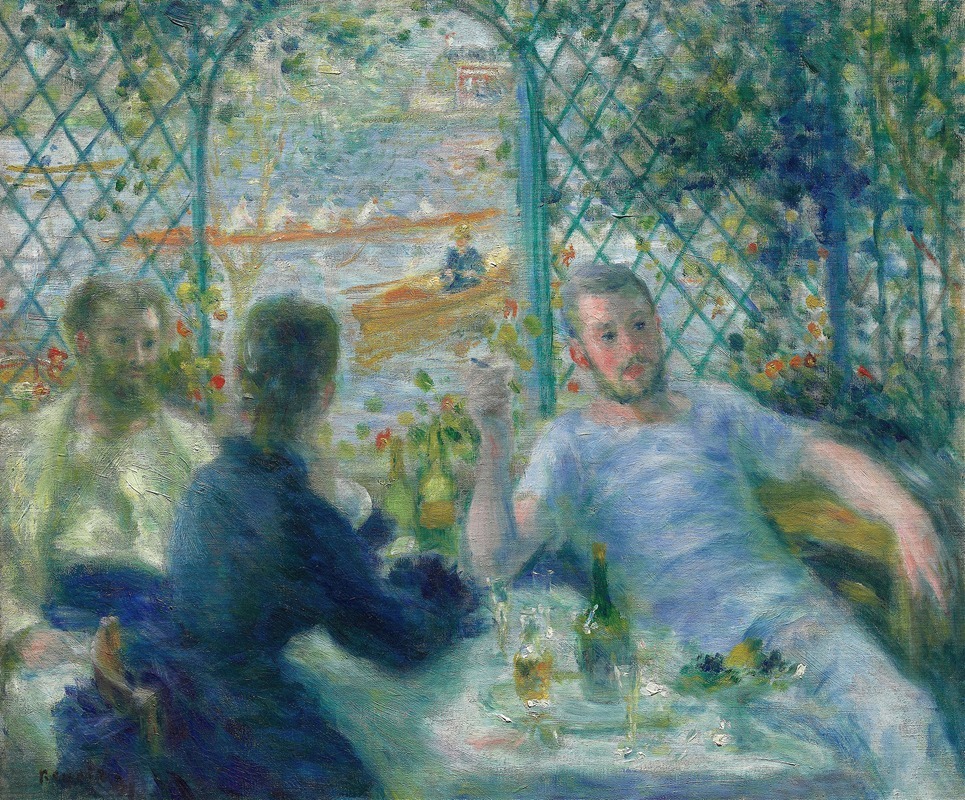
Lunch at the Restaurant Fournaise (The Rowers' Lunch)
Pierre-Auguste Renoir
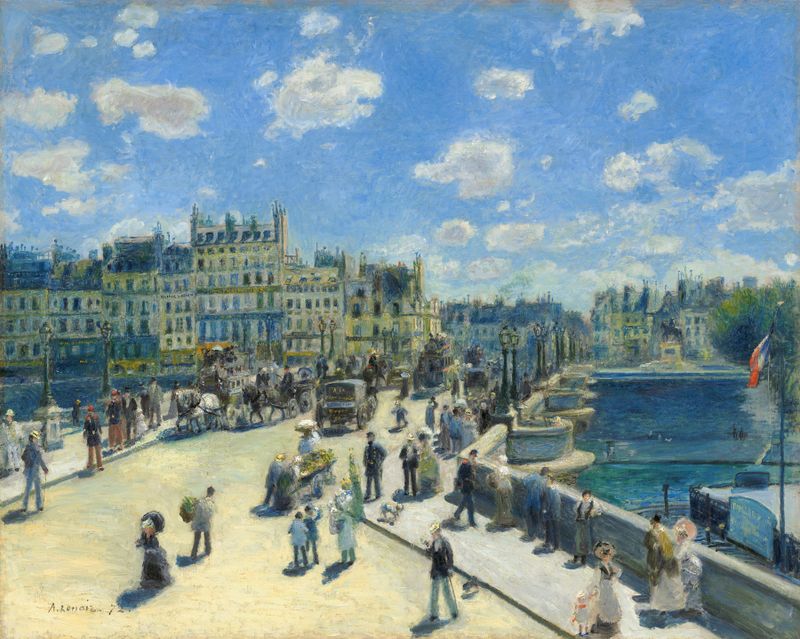
Pont Neuf, Paris
Pierre-Auguste Renoir
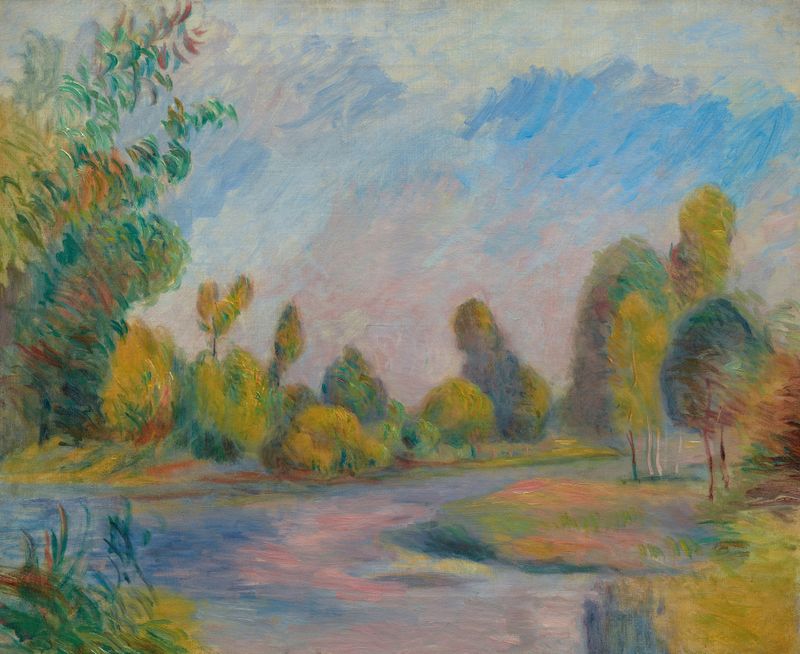
Au bord de la rivière
Pierre-Auguste Renoir

Near the Lake
Pierre-Auguste Renoir
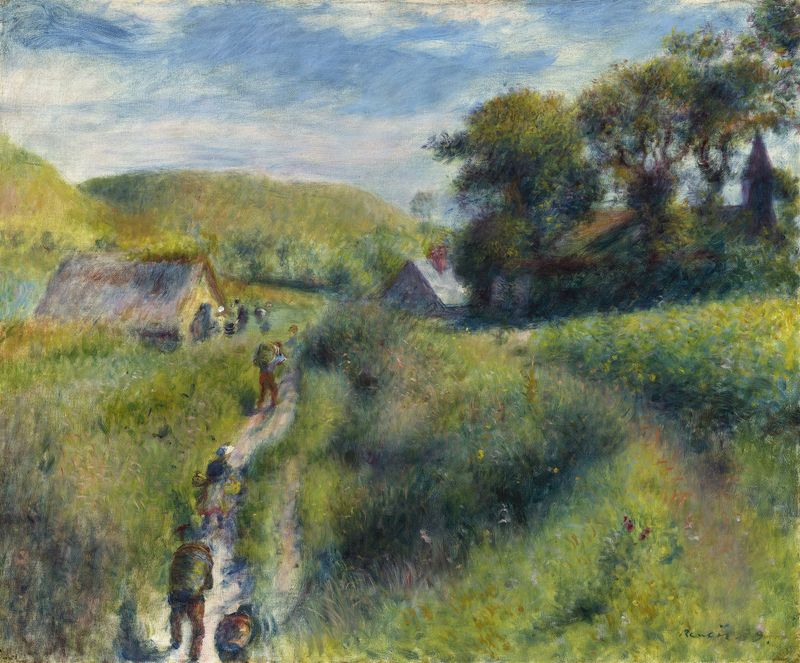
The Mussel Harvest
Pierre-Auguste Renoir

The Seine at Chatou
Pierre-Auguste Renoir
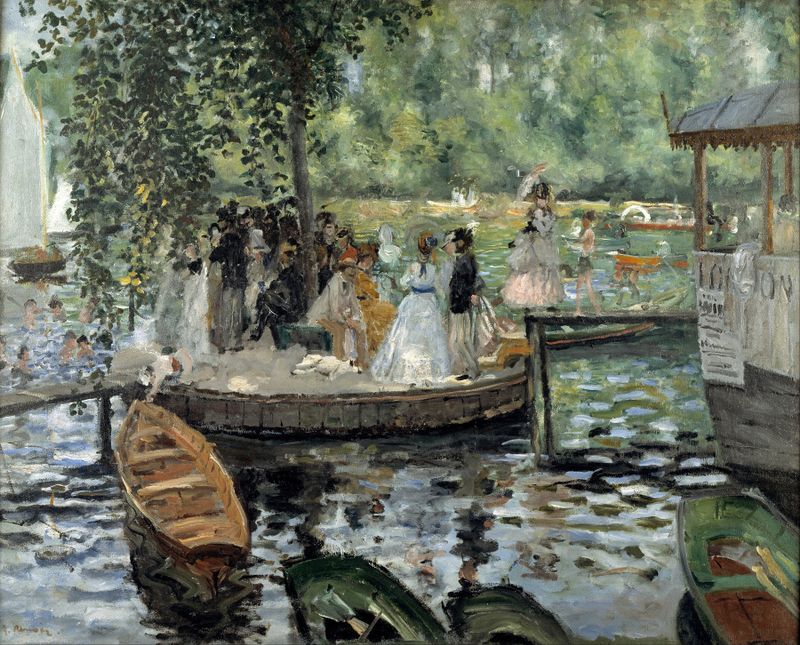
La Grenouillère
Pierre-Auguste Renoir
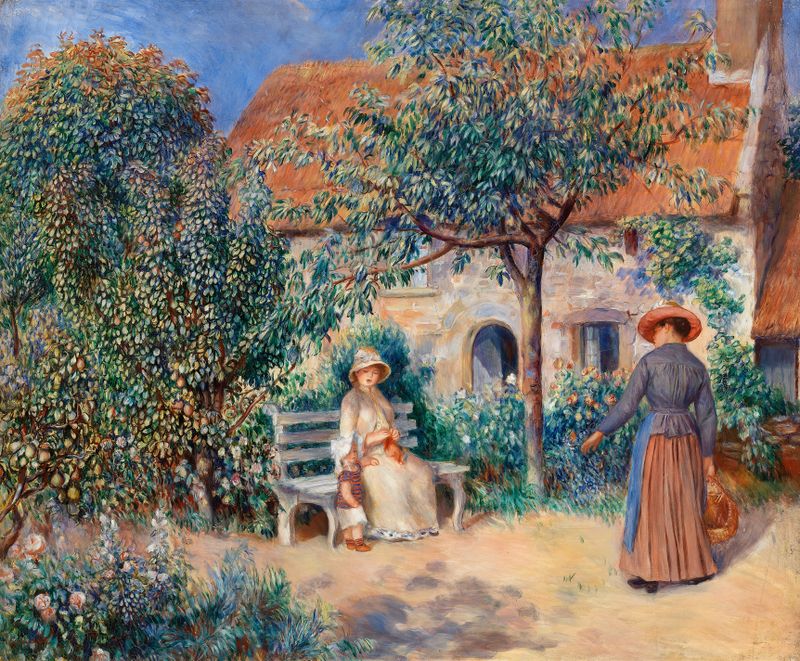
In Brittany (En Bretagne)
Pierre-Auguste Renoir
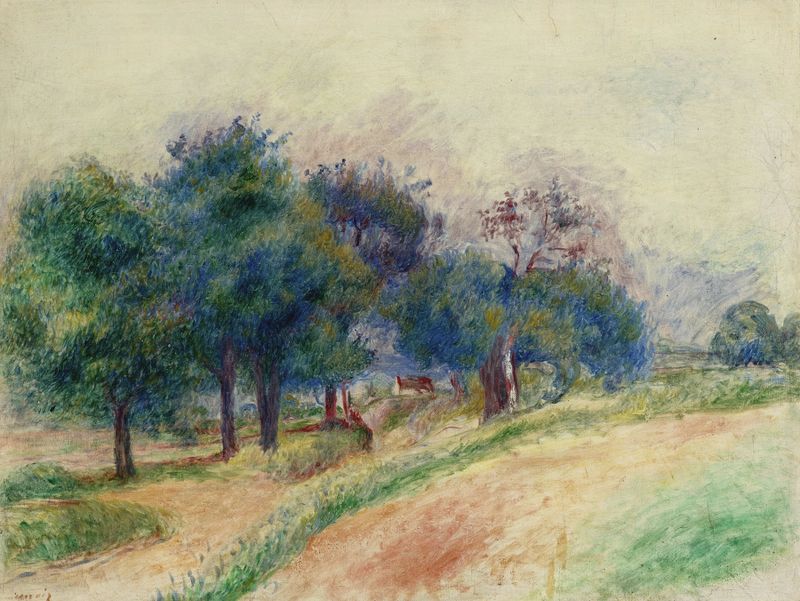
Paysage d’Essoyes
Pierre-Auguste Renoir





