
Pier at Bercy (Embarcadere a Bercy) — History & Facts
What draws the eye first in Pier at Bercy (Embarcadere a Bercy) is the sweep of the river, its restless surface rendered in quick, nervous lines that catch the shifting light. The pier itself juts confidently into the water, a stage where everyday life unfolds: figures gather in small knots, some deep in conversation, others lost in their own thoughts. The scene hums with quiet activity—people cross the gangways, a boatman rows toward the shore, and the distant bridge anchors the composition, its arches echoing the gentle curve of the riverbank.
Lepère’s hand is everywhere: in the dense, crosshatched sky, in the lively silhouettes of city dwellers, and in the subtle way the built and natural worlds meet at the water’s edge. Created in 1890, this work belongs to a moment when artists across Europe were fascinated by the changing face of the modern city. The industrial age had transformed Paris, and places like Bercy—once on the city’s outskirts—became sites of both commerce and leisure. Prints such as this were often collected by a new urban middle class eager to see their world reflected in art.
Though little is recorded about the journey of this particular piece before its arrival at the National Gallery of Art, its survival speaks to the enduring appeal of Lepère’s vision. The next time you look, let your gaze travel from the river’s shimmering surface to the distant rooftops, and imagine the sounds and rhythms of a day on the banks of the Seine.
More Artworks by Auguste Lepère

Le Pont-Neuf (Paris)
Auguste Lepère
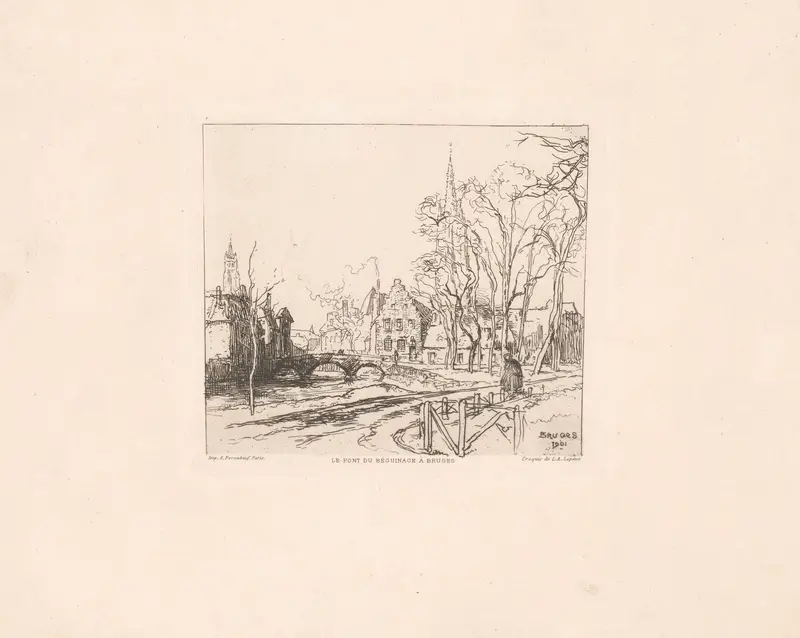
Le pont du Beguinage à Bruges
Auguste Lepère
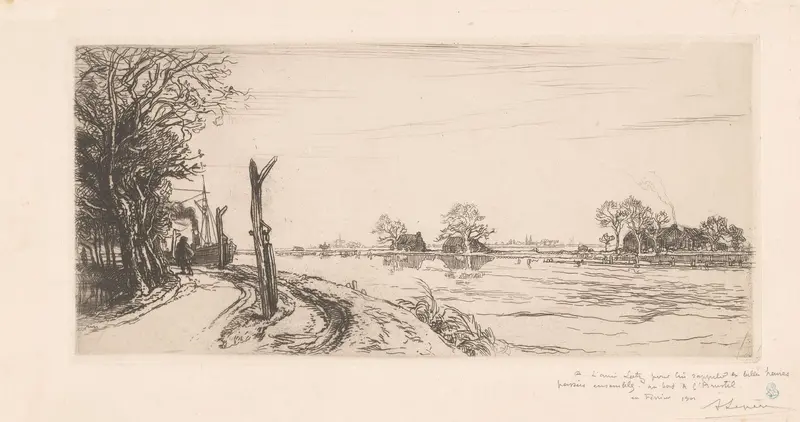
Au bord de l’Amstel
Auguste Lepère
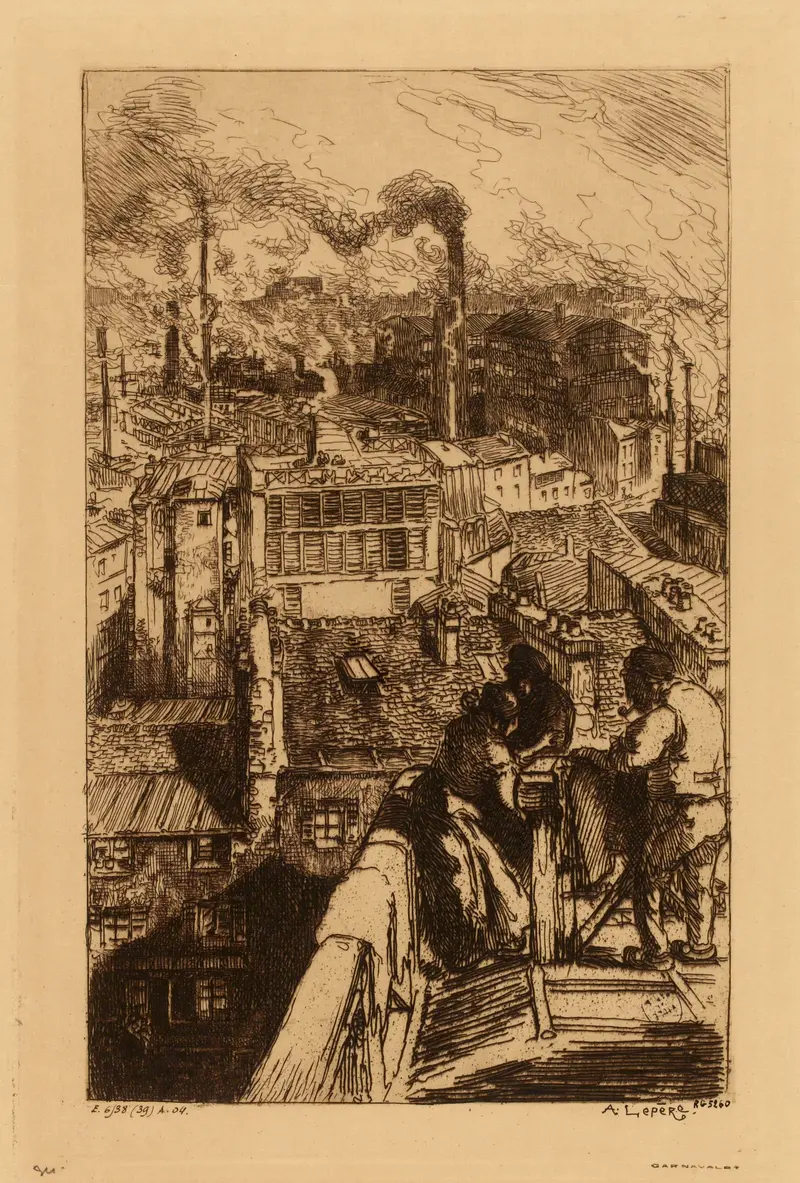
Le quartier des Gobelins
Auguste Lepère
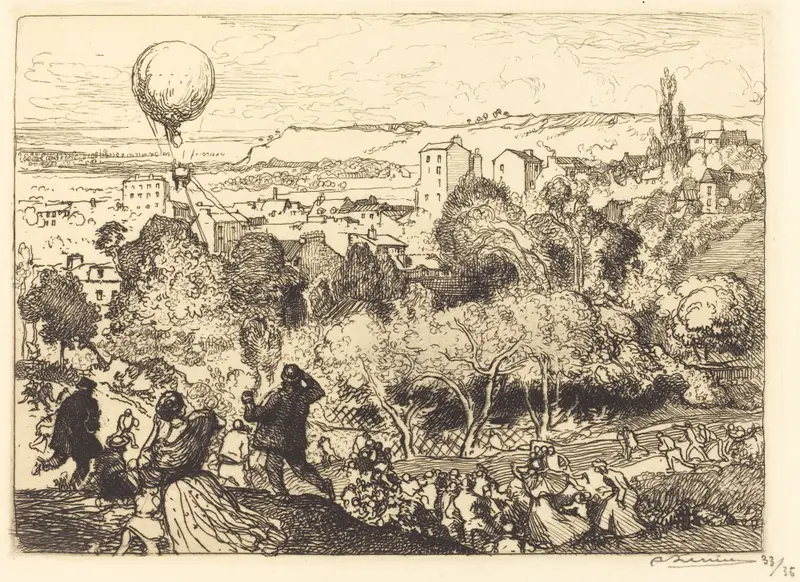
The Falling Balloon, in Pre-Saint-Gervais (Lebaloon qui tombe, au Pre-Saint-Gervais)
Auguste Lepère
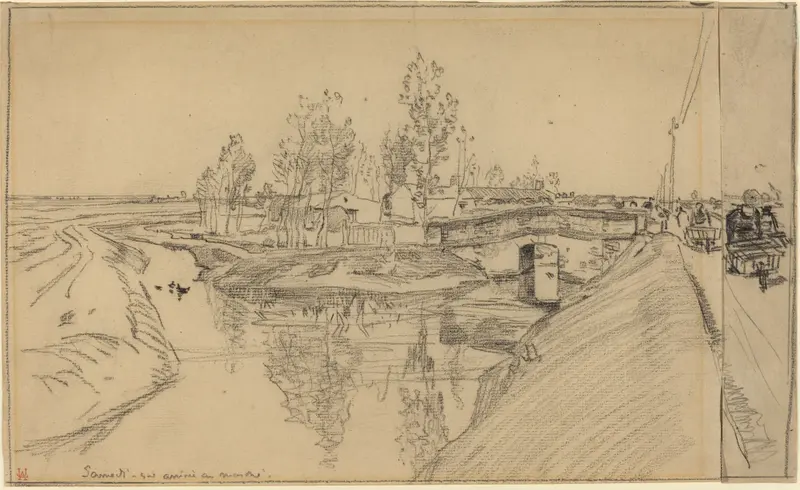
Arrivee au Marche
Auguste Lepère
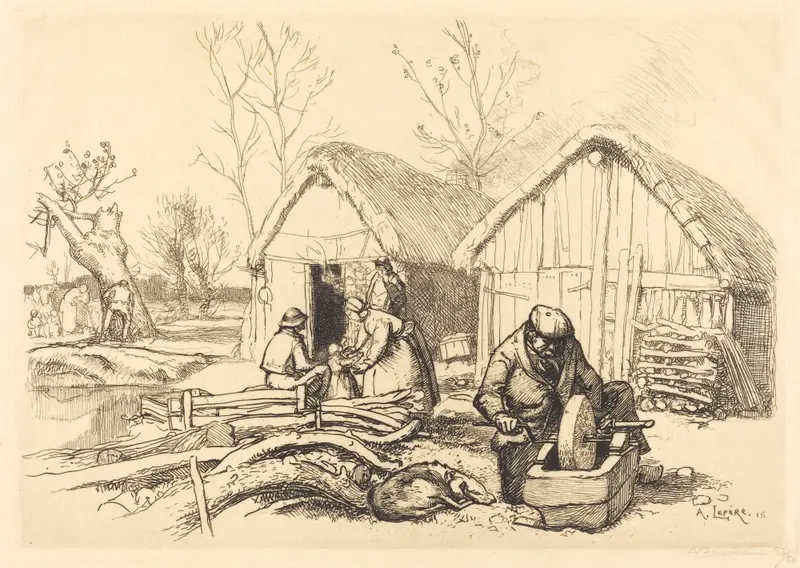
The House of the Woodcutter, Vendee (La maison du bucheron, Vendee)
Auguste Lepère
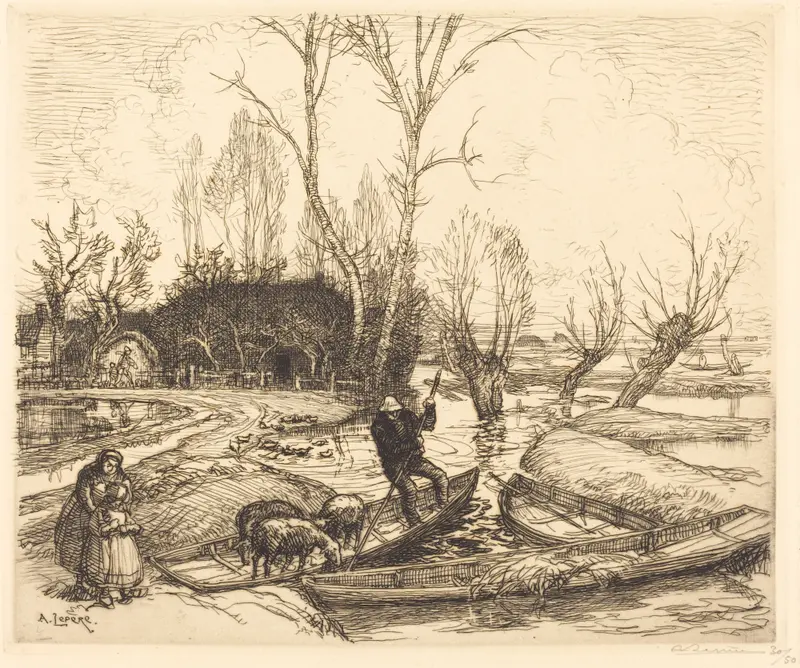
In the Deluged Marsh - The Shepherd (Au marais inonde - Le berger)
Auguste Lepère
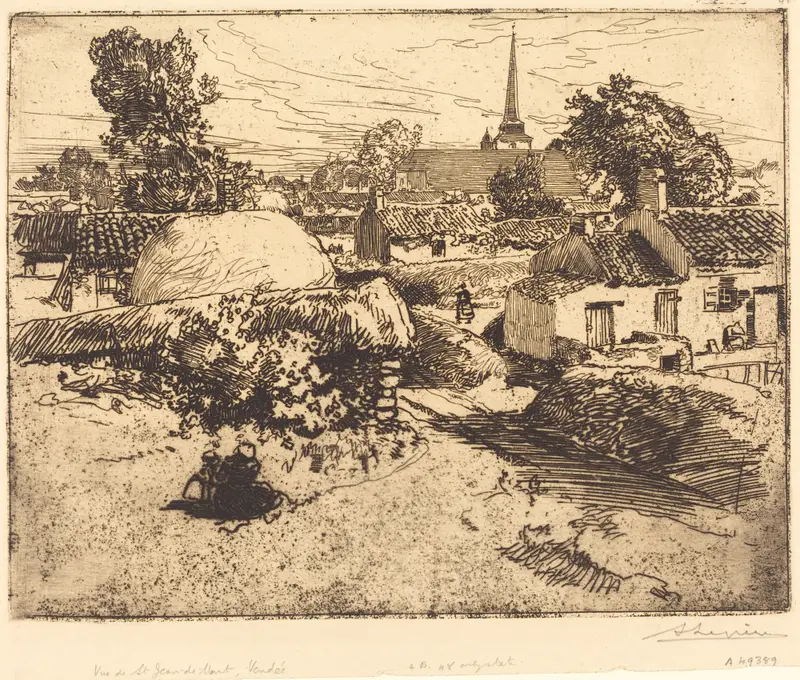
View of St.-Jean-de-Mont, Vendee (Vue de St.-Jean-de-Mont, Vendee)
Auguste Lepère
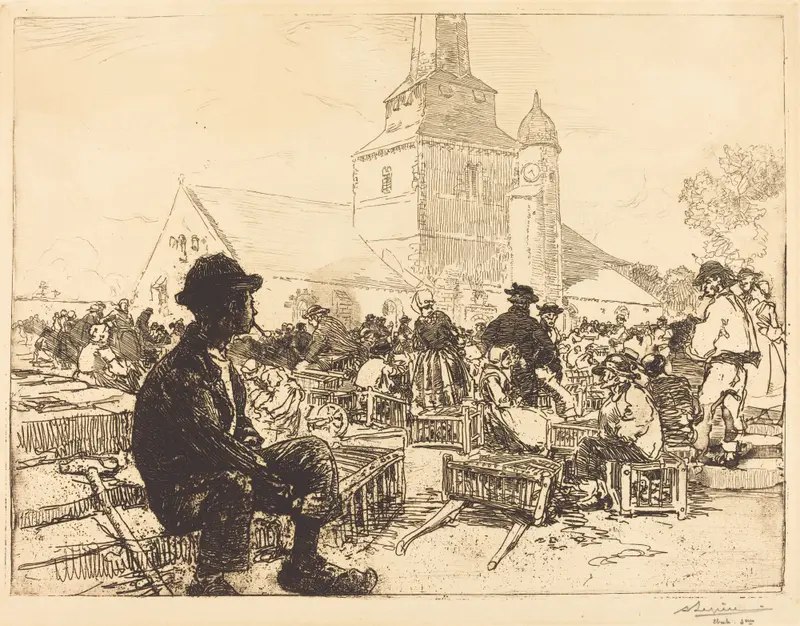
Poultry Market at St.-Jean-de-Mont (Marche a la volaille, a St.-Jean-de-Mont)
Auguste Lepère





