
Place de la Bastille en 1841 — History & Facts
Could beauty survive in a century of chaos? The answer emerges in the vibrant yet somber strokes of Fédor Hoffbauer's work, Place de la Bastille en 1841. Here, amidst the layers of history, we find a reflection of both hope and loss, encapsulating a moment that feels timeless yet steeped in the shadows of the past. Focus on the central figures gathered in the plaza, their faces illuminated by soft, golden hues, exuding a sense of nostalgia. Notice how the lush greens of the trees frame the scene, contrasting with the muted tones of the buildings that surround them.
The composition draws the eye toward the towering column that stands as a sentinel over this space, its height symbolic of resilience amidst the encroaching darkness of the 20th century. Each brushstroke captures the essence of life, inviting the viewer to linger on the emotions that resonate through the vibrant color palette. Delve deeper, and the painting reveals its emotional complexities. The juxtaposition of lively gatherings against the backdrop of a historically charged site evokes a bittersweet nostalgia for a time that sought freedom but was often met with turmoil.
Subtle details, like the fleeting expressions of the participants, hint at the collective yearning for a brighter future while simultaneously mourning what has been lost in the wake of revolution. It is this interplay of light and shadow that captures the essence of human experience—a dance of joy and sorrow. Fédor Hoffbauer painted this work during a turbulent period between 1915 and 1945, when Europe was grappling with both World Wars and the profound social upheavals that followed. Living in France, he sought to reconnect viewers with the vibrancy of his homeland’s history, amidst a landscape scarred by conflict.
His art became a testament to resilience, illustrating how moments like this can remind us of the beauty that persists even in the face of chaos.
More Artworks by Fédor Hoffbauer
Browse all →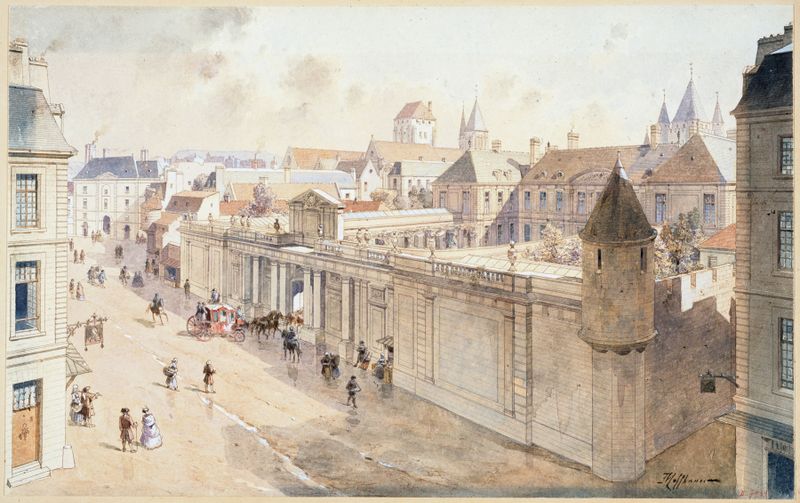
Le palais du Grand Prieur au Temple, en 1770
Fédor Hoffbauer
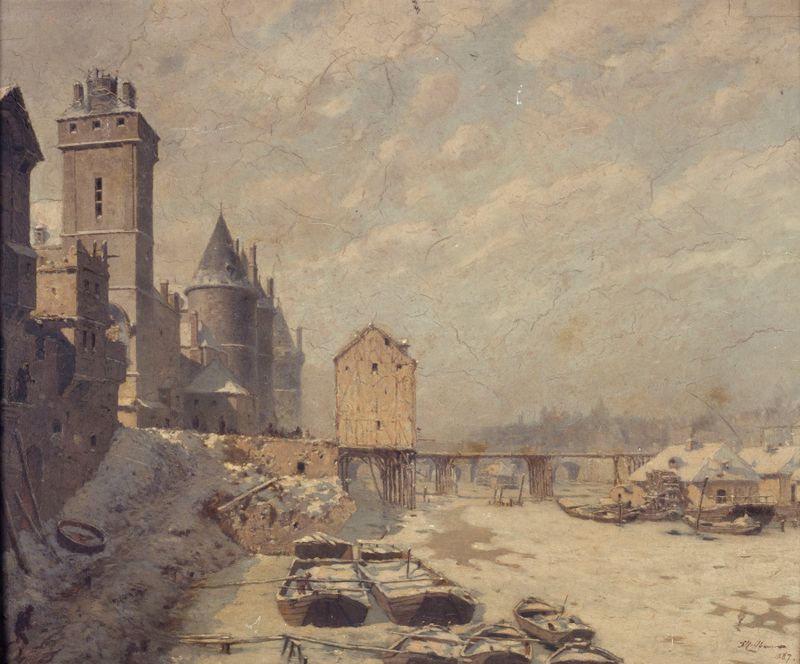
La tour de l’Horloge, la Conciergerie et le pont au Change, en 1621
Fédor Hoffbauer

Banquet des officiers de la marine Russe, dans la salle des fêtes à l’Hôtel de Ville. Fêtes Franco-Russes à Paris
Fédor Hoffbauer

Le Grand Châtelet et le pont de Bois, 1621-1645
Fédor Hoffbauer
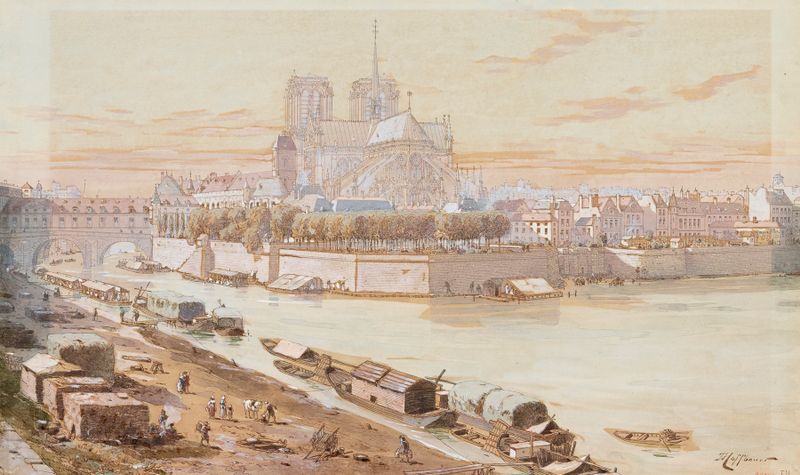
Notre-Dame et l’Evêché en 1750
Fédor Hoffbauer

Vue panoramique de Paris en 1588, depuis les toits du Louvre, avec le Pont-Neuf en construction
Fédor Hoffbauer
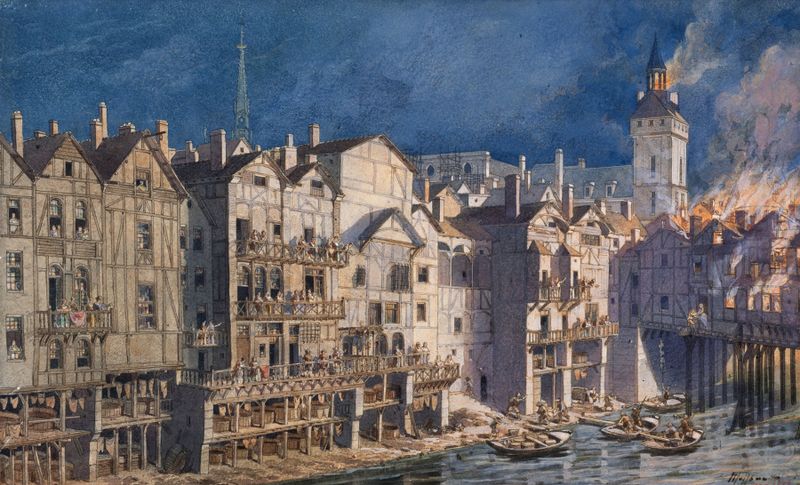
La Cité entre le pont Notre Dame et le pont au Change en 1621
Fédor Hoffbauer

L’Hôtel de Ville et le pont d’Arcole en 1842
Fédor Hoffbauer

Le Cimetière des Innocents en 1750
Fédor Hoffbauer
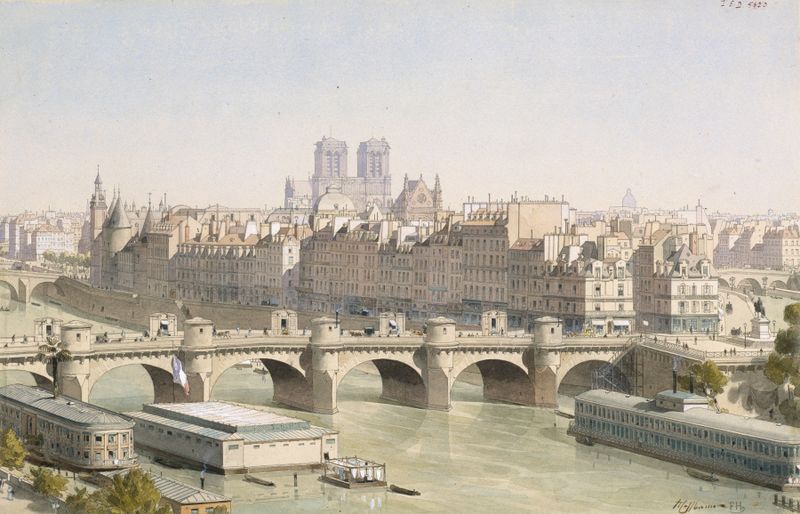
Vue de l’île de la Cité et le pont-Neuf avec ses boutique, vers 1840
Fédor Hoffbauer
More Historical Art
Browse all →
The Night Watch Militia Company of District II under the Command of Captain Frans Banninck Cocq
Rembrandt van Rijn

Lincoln Memorial
Henry Bacon

The Third of May 1808
Francisco de Goya

Isaac and Rebecca, Known as ‘The Jewish Bride’
Rembrandt van Rijn

The Charge of the Mamelukes (1814)
Francisco de Goya

De vier ruiters van de apocalyps
Albrecht Dürer