
Place de la République — History & Facts
Did the painter know this moment would outlive them? The vibrant hues that dance across the canvas weave a timeless narrative of life bustling through a Parisian square. Look to the center where the monument rises, commanding attention amidst a flurry of life. The cool blues and warm ochres envelop the scene, while light filters through the trees, casting soft shadows on the cobblestones below. Notice how the figures, small yet dynamic, engage in conversation, each brushstroke capturing the motion of their gestures as they navigate the space.
The composition feels alive, pulsing with energy, as if the very air is filled with the laughter and chatter of a lively afternoon. Delve deeper into the contrasts: the stately monument stands resolute against the fleeting, ephemeral movements of its inhabitants. While the structure symbolizes permanence, the lively figures represent the ever-changing nature of society. The interplay of color serves as a metaphor for this dichotomy, with the cooling tones hinting at a serene backdrop, contrasting the vivid diversity of the crowd, each character infused with a unique story and emotion. Eugène Galien-Laloue painted Place de la République during a time when Paris was emerging as a center of modernity and cultural life.
Working in the late 19th to early 20th century, he was influenced by the Impressionist movement, capturing urban landscapes with a focus on light and atmosphere. His artworks reflect a period of transformation in the city as it evolved from its historical roots into a modern metropolis.
More Artworks by Eugène Galien-Laloue
Browse all →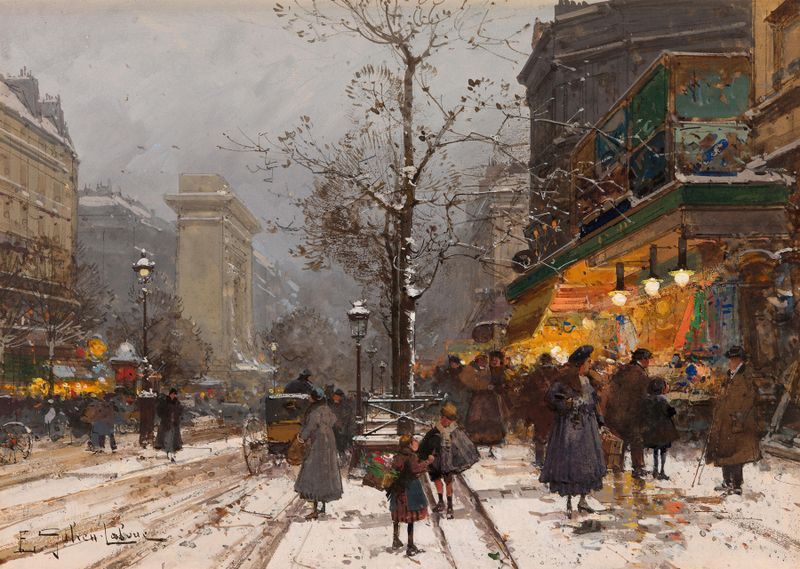
Boulevard Bonne – Nouvelle sous la neige
Eugène Galien-Laloue
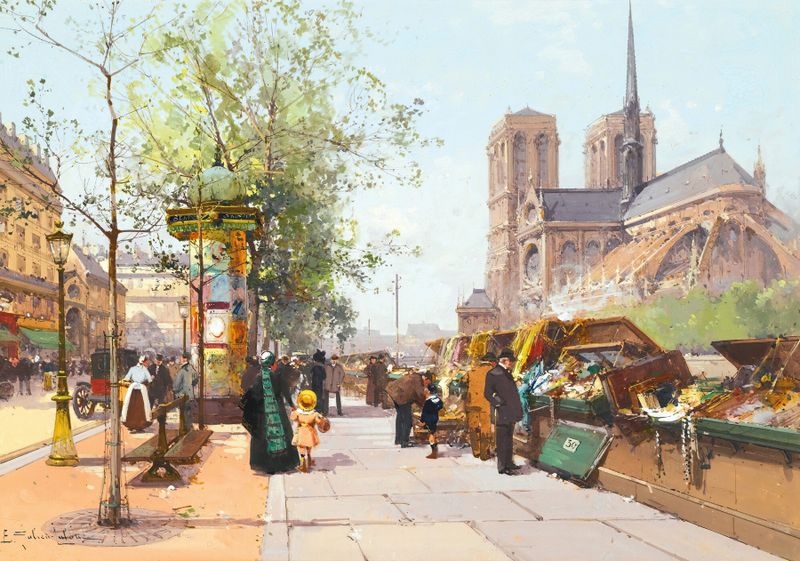
Notre Dame De Paris
Eugène Galien-Laloue
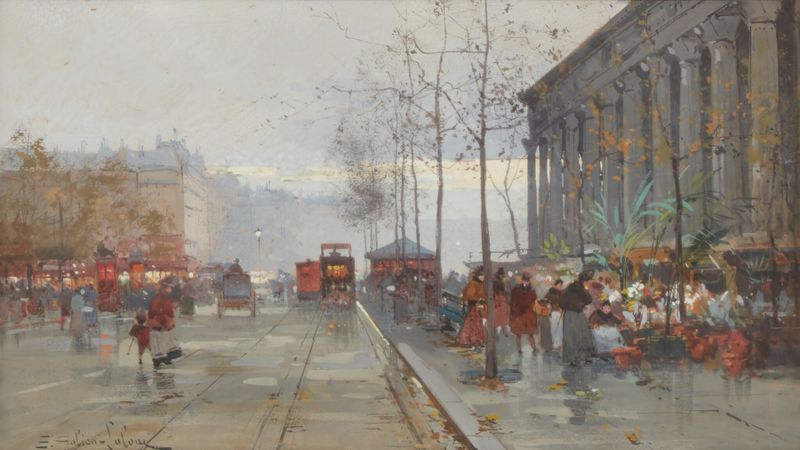
Le Marché aux fleurs de la Madeleine
Eugène Galien-Laloue
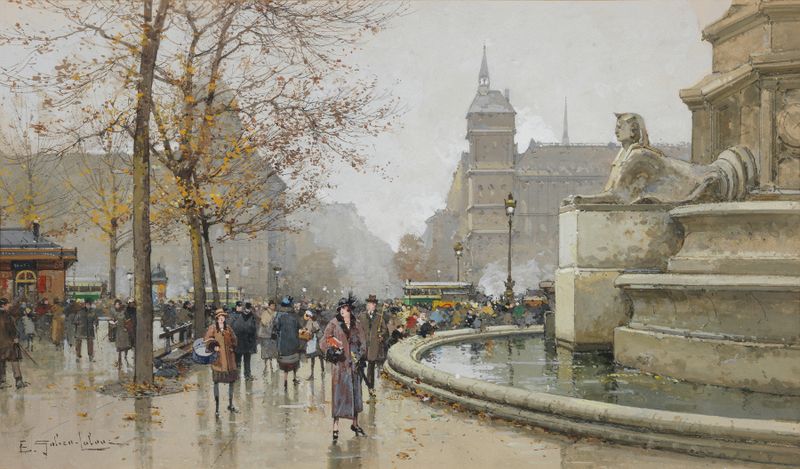
La fontaine du Palmier, place du Châtelet
Eugène Galien-Laloue
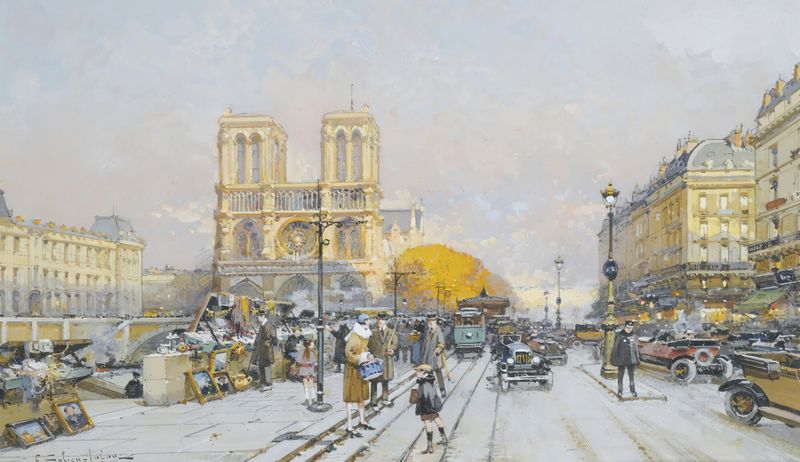
Notre Dame
Eugène Galien-Laloue
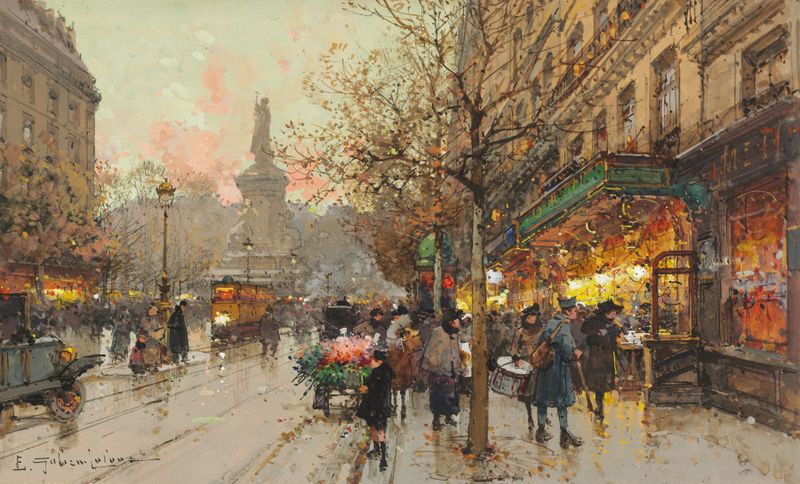
Place De La République
Eugène Galien-Laloue
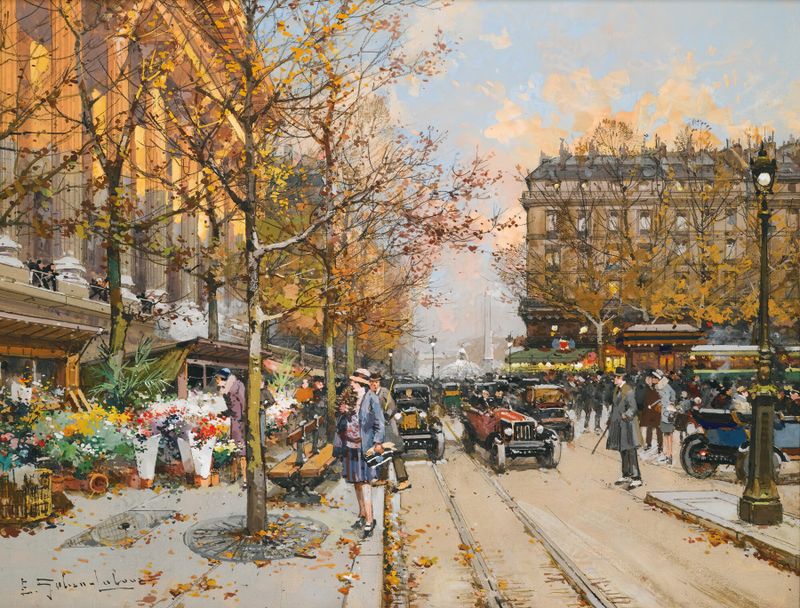
Place De La Madeleine
Eugène Galien-Laloue
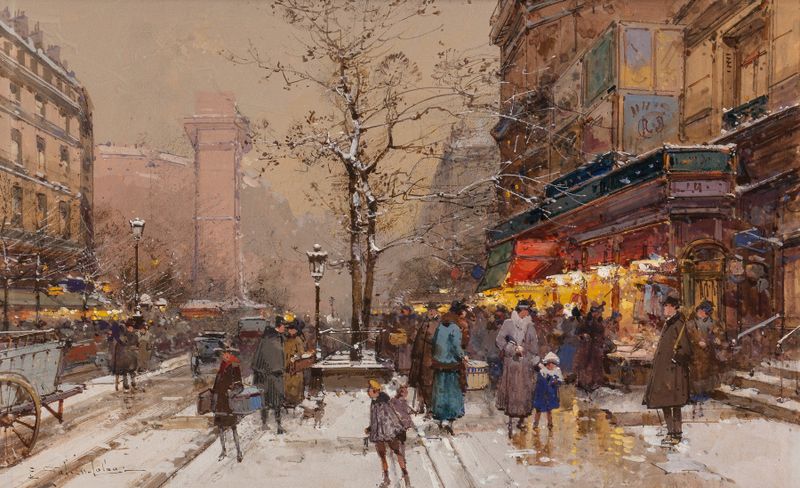
Porte Saint-Denis
Eugène Galien-Laloue
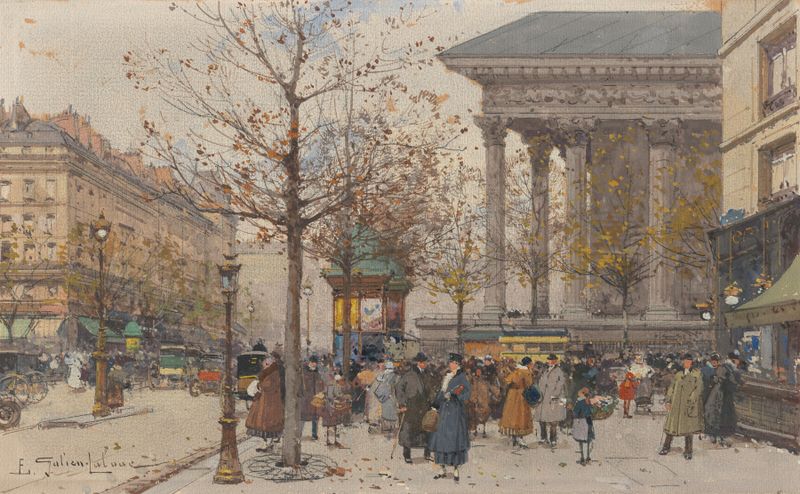
Vue animée de la Madeleine
Eugène Galien-Laloue
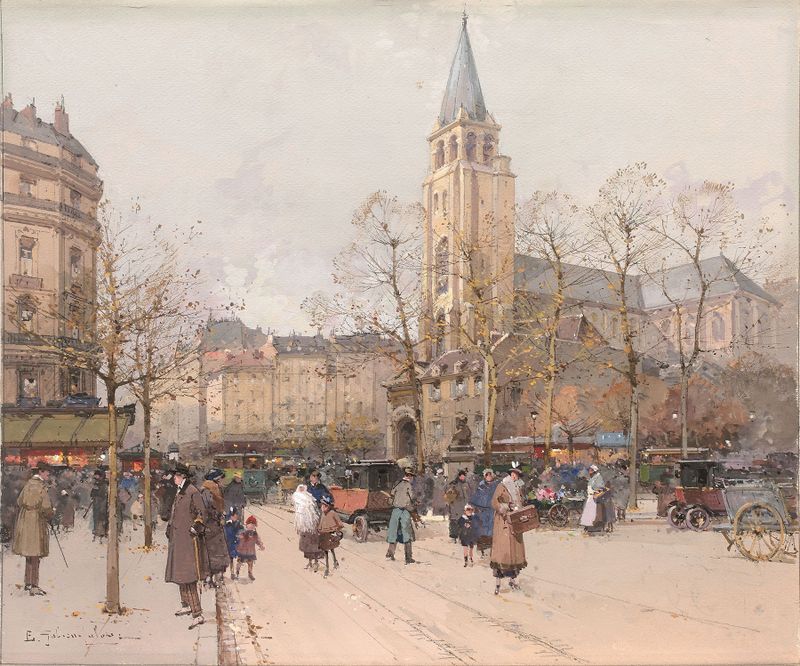
Vue des boulevards à Saint-Germain-des-Prés
Eugène Galien-Laloue





