
Place St. Sulpice, Paris — History & Facts
What secret hides in the quiet of the canvas? In the stillness of Place St. Sulpice, Paris, faith emerges, woven into the very fabric of its scene. Look to the foreground where figures meander, their forms rendered with a delicate impressionism that breathes life into mundane moments. Notice how the soft daylight spills across the stone plaza, illuminating both the vibrant hues of the buildings and the muted tones of the pedestrians.
The artist’s brushwork conveys a sense of movement, inviting the eye to dance around the canvas in a gentle rhythm. Delve deeper into the painting’s essence, and you will find a contrast between the bustling life of the city and the serene architectural backdrop. The juxtaposition of the lively figures against the grand, calm façade of the church suggests a dialogue between human activity and spiritual contemplation. Each passerby, with their unique gesture, embodies the everyday struggle for purpose amidst the weight of faith and tradition that looms over them. Created during the late 19th century, Raffaëlli painted this work amidst a period of artistic transition in Paris.
Emerging from a world dominated by academic painting, he sought to capture the essence of modern life while grappling with themes of spirituality and community. This canvas reflects both personal introspection and broader societal shifts, as Paris was becoming a hub of new ideas and artistic exploration, marked by the embrace of impressionism and its evolving narratives.
More Artworks by Jean François Raffaëlli
Browse all →
Autumn In Paris
Jean François Raffaëlli

Le jardin du Luxembourg
Jean François Raffaëlli
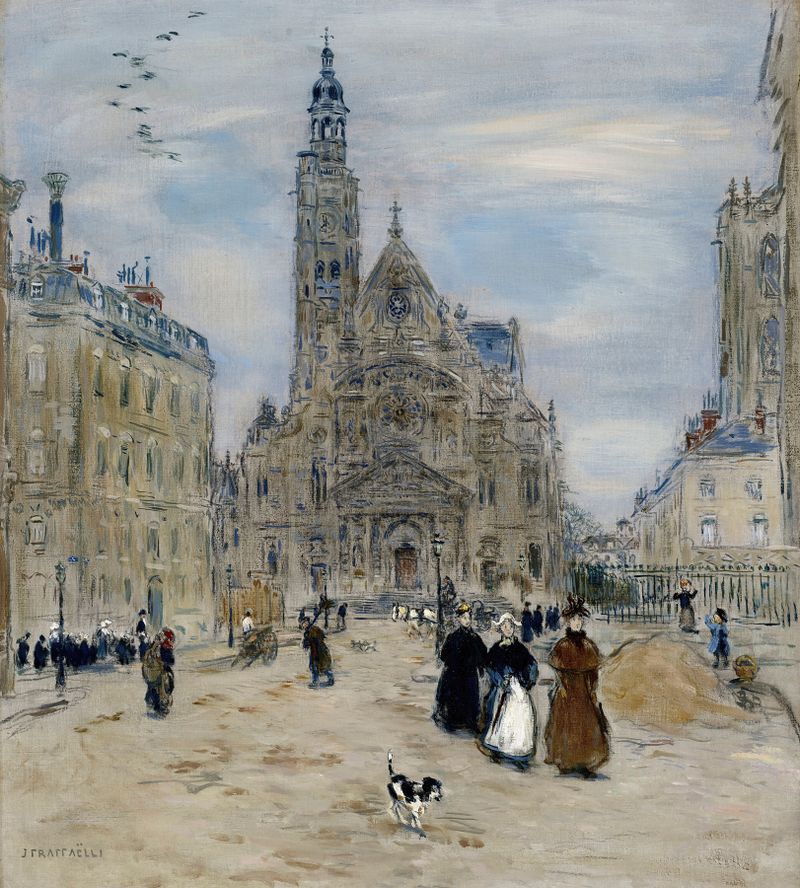
Saint-Étienne-du-Mont, Paris
Jean François Raffaëlli
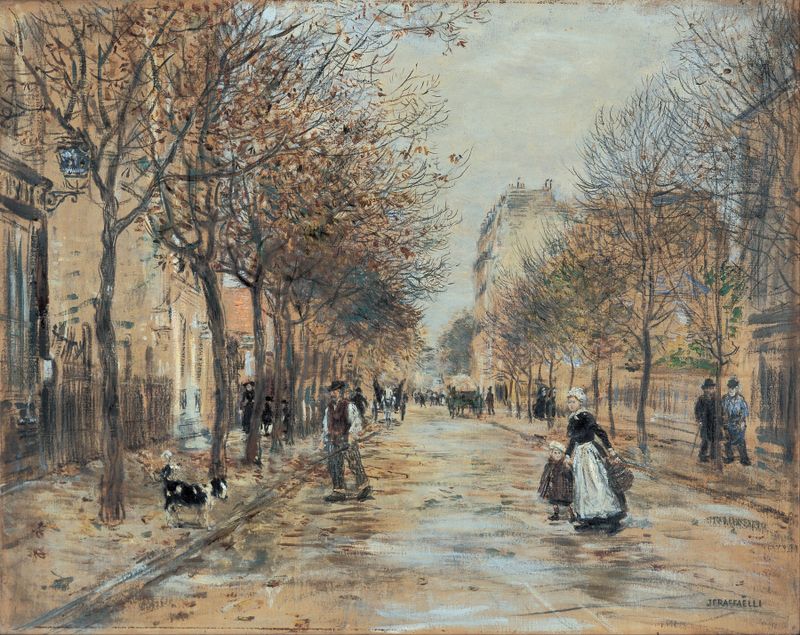
Street in Asnières
Jean François Raffaëlli
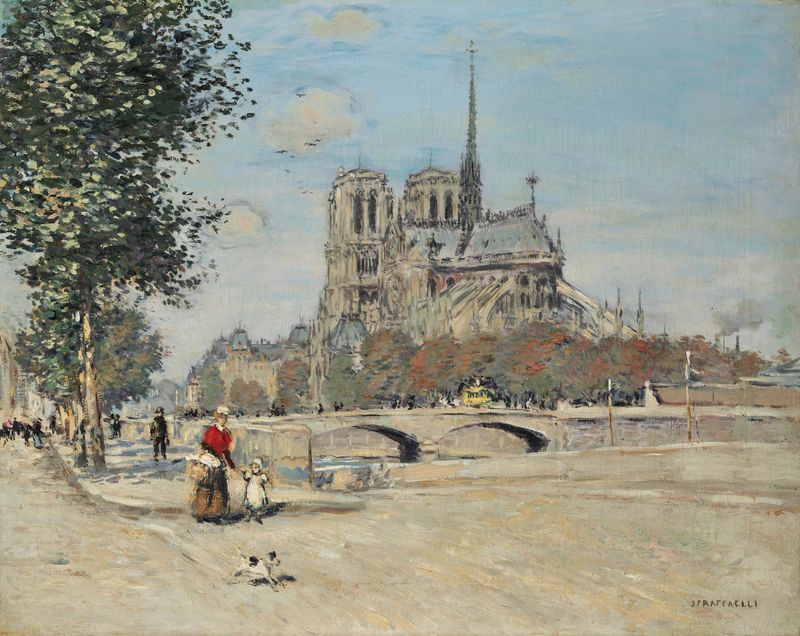
Notre-Dame de Paris et le pont de l’Archevêché
Jean François Raffaëlli

Place de Saint-Germain des Prés, Paris
Jean François Raffaëlli
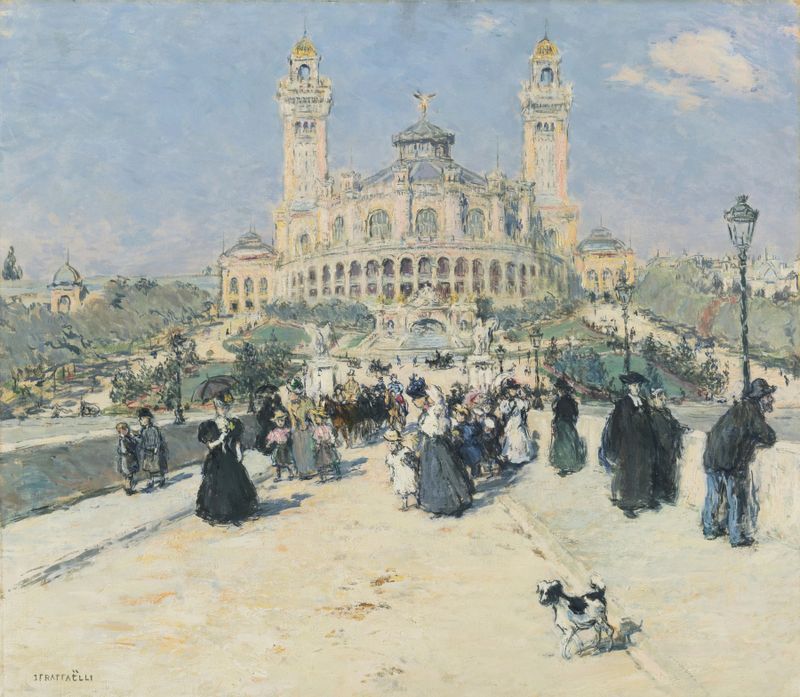
Le Trocadéro
Jean François Raffaëlli

Les Champs-Élysées
Jean François Raffaëlli

Le boulevard des Italiens
Jean François Raffaëlli

The Quai Malaquais, Paris
Jean François Raffaëlli





