
Ponte Vecchio, Florence — History & Facts
What if beauty was never meant to be finished? In George Elbert Burr's Ponte Vecchio, Florence, a fleeting moment of transcendence captures a world where time seems to stand still, inviting contemplation and reverence. Look to the center of the canvas, where the iconic bridge gracefully arches over the shimmering waters of the Arno River. The interplay of light and shadow dances across the surface, portraying a luminous yet muted palette of ochres and blues. Notice how the artist's delicate brushstrokes blend the lines between reality and memory, creating an ethereal quality that draws the viewer's gaze both inward and outward. Burr subtly contrasts the solidity of the stone bridge with the fluidity of the flowing river beneath, suggesting the transient nature of beauty and existence.
The presence of silhouetted figures on the bridge hints at human connection—moments shared beneath the weight of history. Each detail, from the soft reflections in the water to the distant hills, encapsulates a sense of longing, urging us to ponder the stories held within this serene yet bustling scene. In 1900, the artist was immersed in a burgeoning American movement that sought to capture the essence of European landscapes. Living in the vibrant community of artists in California, Burr was influenced by both Impressionism and the Arts and Crafts movement, allowing him to explore new techniques and deepen his connection to the natural world.
This work exemplifies not only his mastery but also a shared desire among artists of the era to convey a profound sense of place and emotion.
More Artworks by George Elbert Burr
Browse all →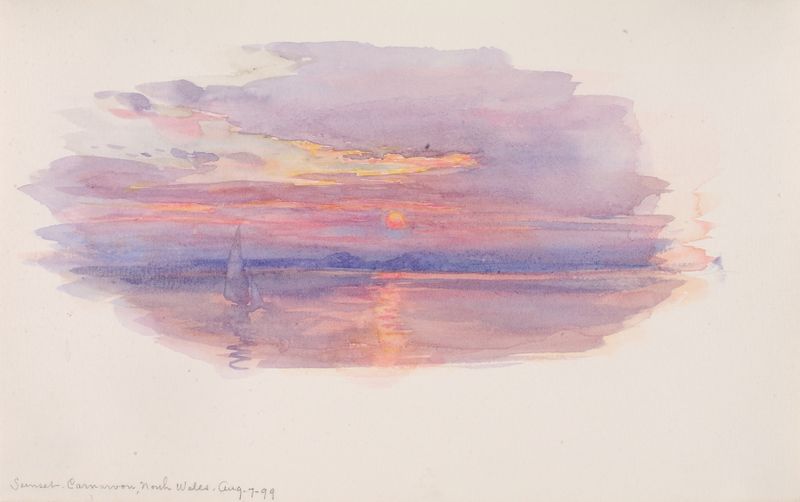
Sunset, Caernarvon, North Wales
George Elbert Burr
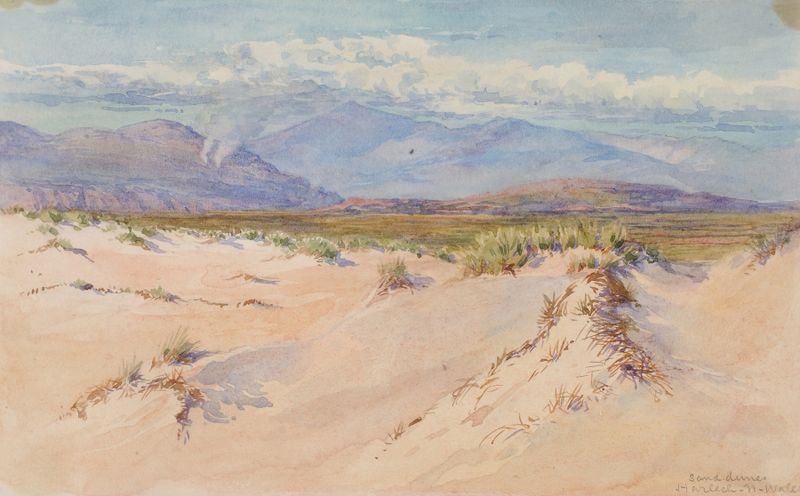
Sand Dunes, Harlech, North Wales
George Elbert Burr

From Pincio, Rome
George Elbert Burr

The Wye near Ross
George Elbert Burr

Venice
George Elbert Burr
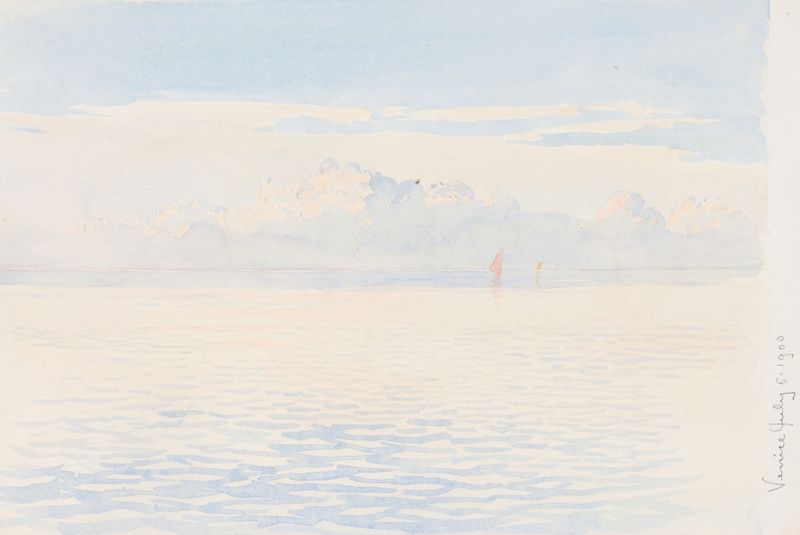
Venice II
George Elbert Burr

Shore at Pwllheli, N. Wales
George Elbert Burr

The Wye at Wilton Castle (Wales)
George Elbert Burr

Venice
George Elbert Burr

Criccieth, N. Wales II
George Elbert Burr
More Architecture Art
Browse all →
The statue of Liberty
Frédéric Auguste Bartholdi

View of Houses in Delft, Known as ‘The Little Street’
Johannes Vermeer

View of Houses in Delft, Known as ‘The Little Street’
Johannes Vermeer

The Cathedral in Rouen. The portal, Grey Weather
Claude Monet

The yellow house
Vincent van Gogh

The Church in Auvers-sur-Oise, View from the Chevet
Vincent van Gogh