
Porteuse De Fagots Dans Un Paysage De Neige — History & Facts
In a world that often feels barren, how do we find beauty amidst emptiness? Focus on the solitary figure at the center, a woman cradling her burdens against a vast, white expanse. Her dark clothing contrasts sharply with the surrounding snow, drawing the viewer's eye. Notice how the muted tones of the landscape amplify her presence, emphasizing her quiet strength.
The brushwork renders the snow both soft and unyielding, while the uneven strokes in the background suggest an indifferent wilderness. Delve deeper into the emotional weight of the scene. The woman's posture conveys resilience, yet her isolation hints at a profound loneliness. The desolate landscape itself becomes a character, mirroring her struggle and fortitude.
As you observe the interplay of light and shadow, it evokes a sense of both nurturing and harshness, revealing the duality of nature as both a sanctuary and a battleground. Created in mid-19th century France, this work reflects Courbet's commitment to realism, portraying the stark realities of rural life. At this time, he was breaking away from traditional academic painting, focusing instead on the lives of ordinary people. The burgeoning movement toward realism in art reflected societal shifts, as industrialization transformed landscapes and livelihoods.
This painting captures not only a moment but an era of struggle and resilience, resonating with the human experience.
More Artworks by Gustave Courbet
Browse all →
Marine
Gustave Courbet
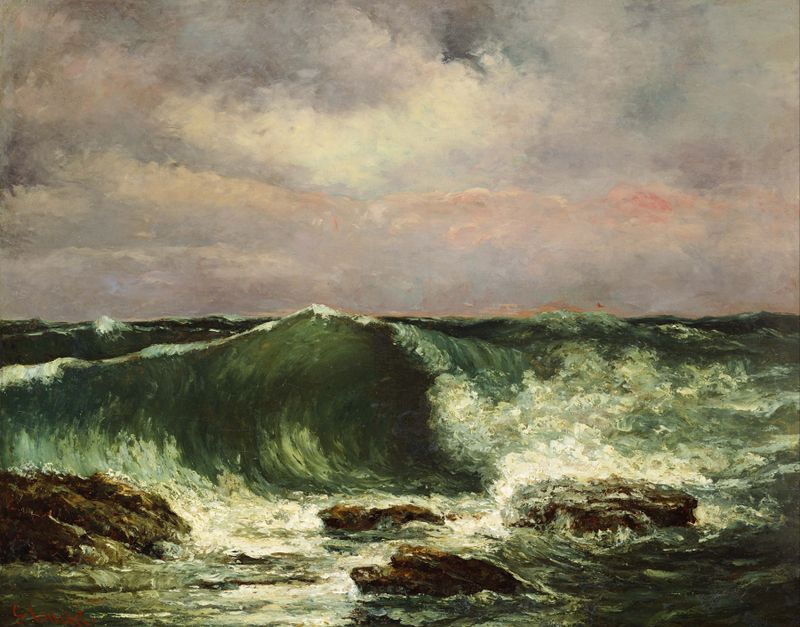
Waves
Gustave Courbet

Étretat; Les Falaises
Gustave Courbet
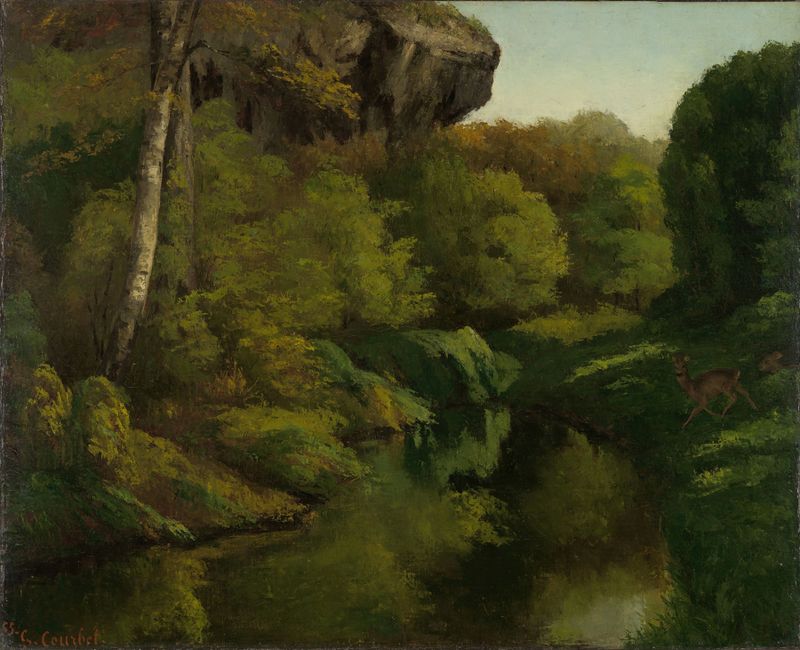
View in the Forest of Fontainebleau
Gustave Courbet
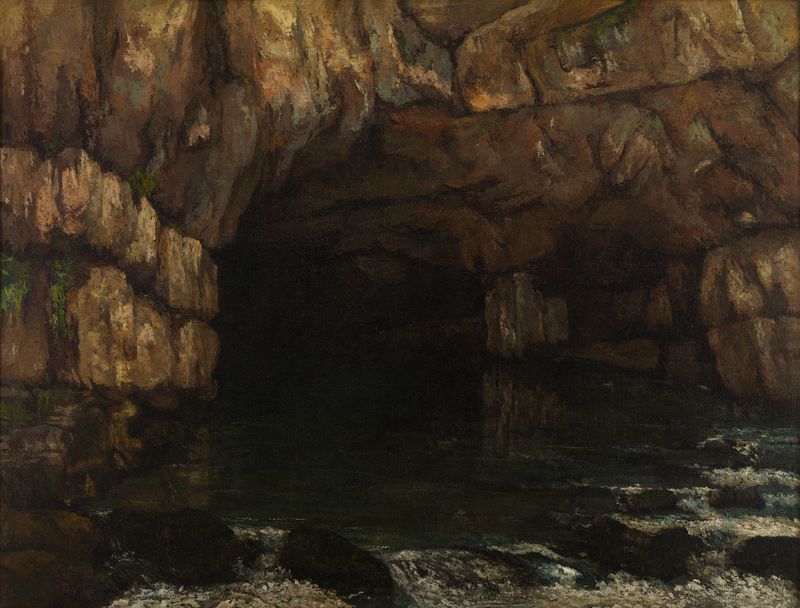
La source de la Loue (The Source of the Loue)
Gustave Courbet

Low Tide at Trouville
Gustave Courbet
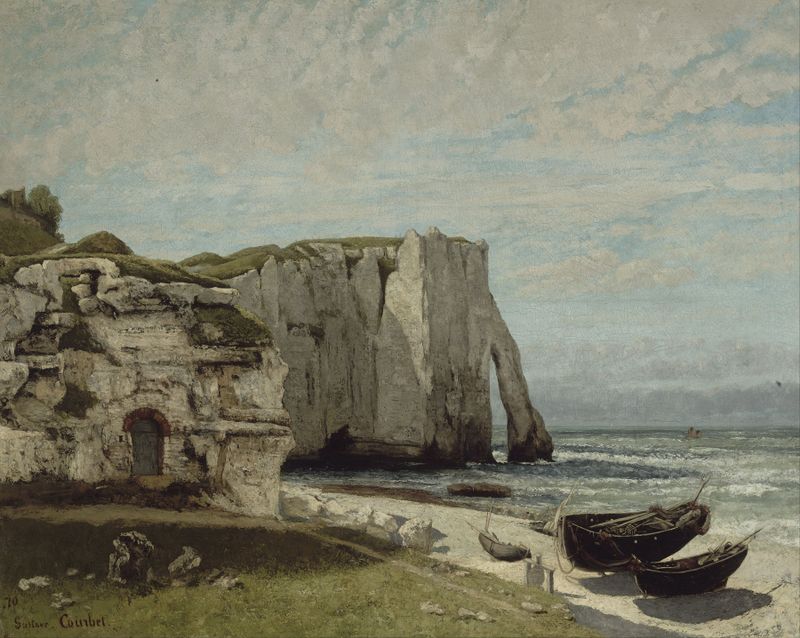
The Etretat Cliffs after the Storm
Gustave Courbet
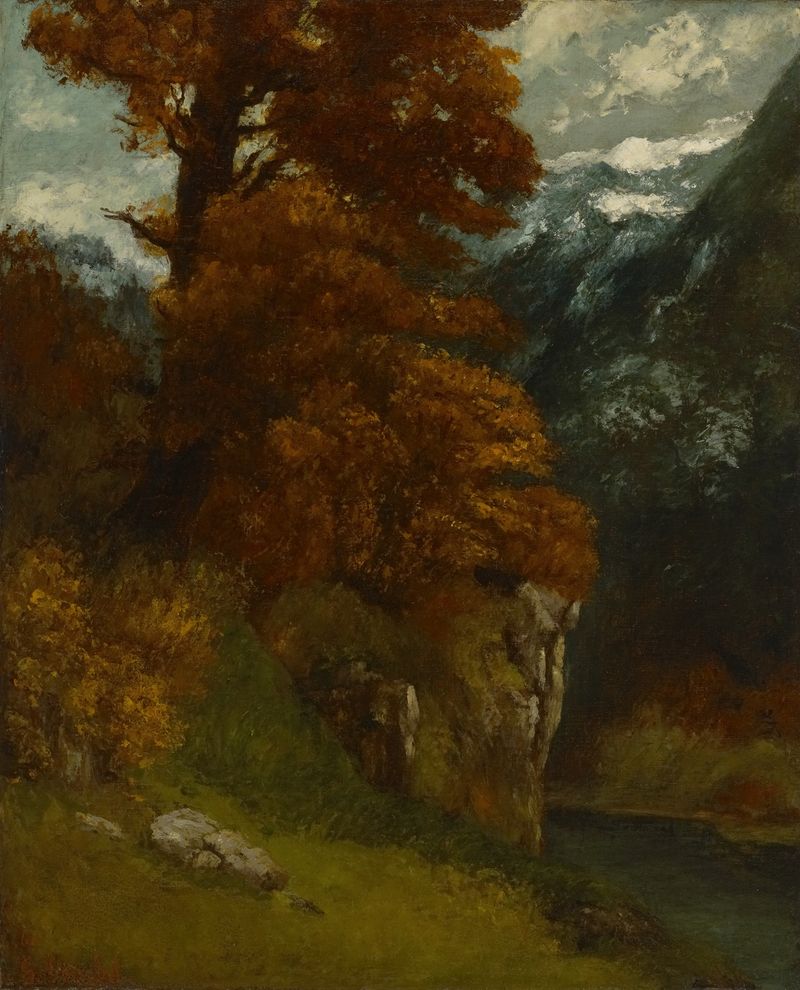
The Glen at Ornans (Bords du Doubs; Effet d’Automne)
Gustave Courbet
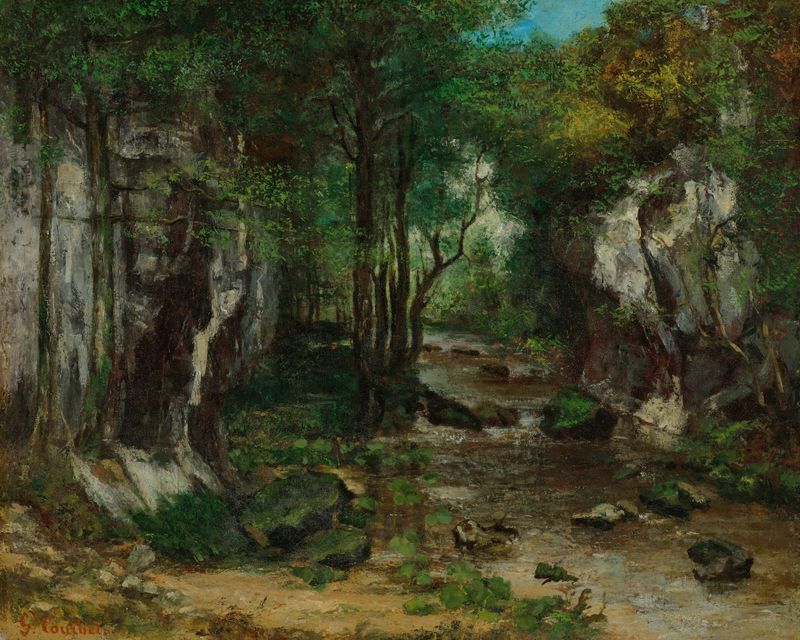
Le Ruisseau de Puits Noir
Gustave Courbet
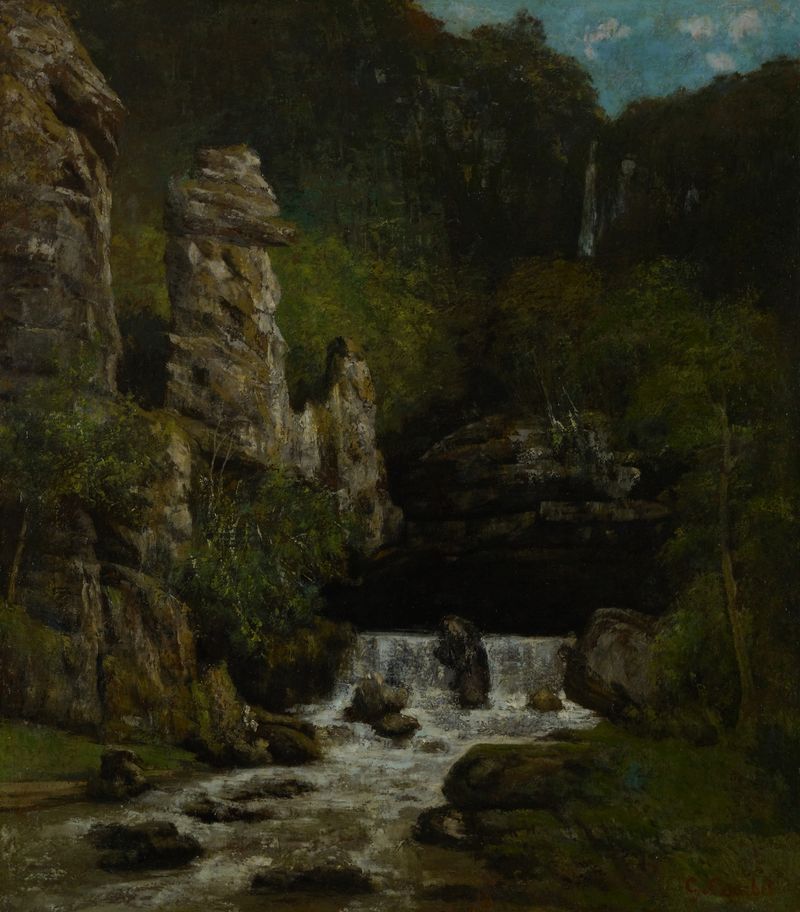
Landscape with a Waterfall
Gustave Courbet





