
Portrait of a Lady in Black and White — History & Facts
What first arrests the eye in Portrait of a Lady in Black and White is the commanding stillness of the sitter, her gaze as poised and unwavering as the pearls that trace her collarbone. The artist draws us in with a play of contrasts: the crisp white ruff and sleeves, sharply outlined against the depthless black of her gown, and the delicate tension in her fingers as they clutch a folded handkerchief. Every detail is deliberate, from the gold threads that spiral along her sleeves to the subtle sheen of the pearls, each element a signal of status and self-possession.
The light falls softly from the left, illuminating her pale face and hands, and casting the background into quiet shadow, so that all attention is fixed on her presence—reserved, yet unmistakably aware of being seen. Painted between circa 1590 and 1599, this portrait belongs to a world where likeness was more than memory: it was a declaration of lineage, virtue, and wealth. In late sixteenth-century Florence, where Alessandro Allori worked, such images were often commissioned to mark marriages or alliances, their formality a testament to the values of the elite. The Isabella Stewart Gardner Museum now houses this work, its origins and the sitter’s identity lost to time, yet the painting remains a vivid document of its era’s ideals.
The fashion, the pearls, the precise hair and veil—all speak of a society in which appearances were carefully constructed, and portraits like this one were both private treasures and public statements. The longer you look, the more the silence of her gaze seems to invite questions, holding its secrets just out of reach.
More Artworks by Alessandro Allori

Francesco de' Medici
Alessandro Allori
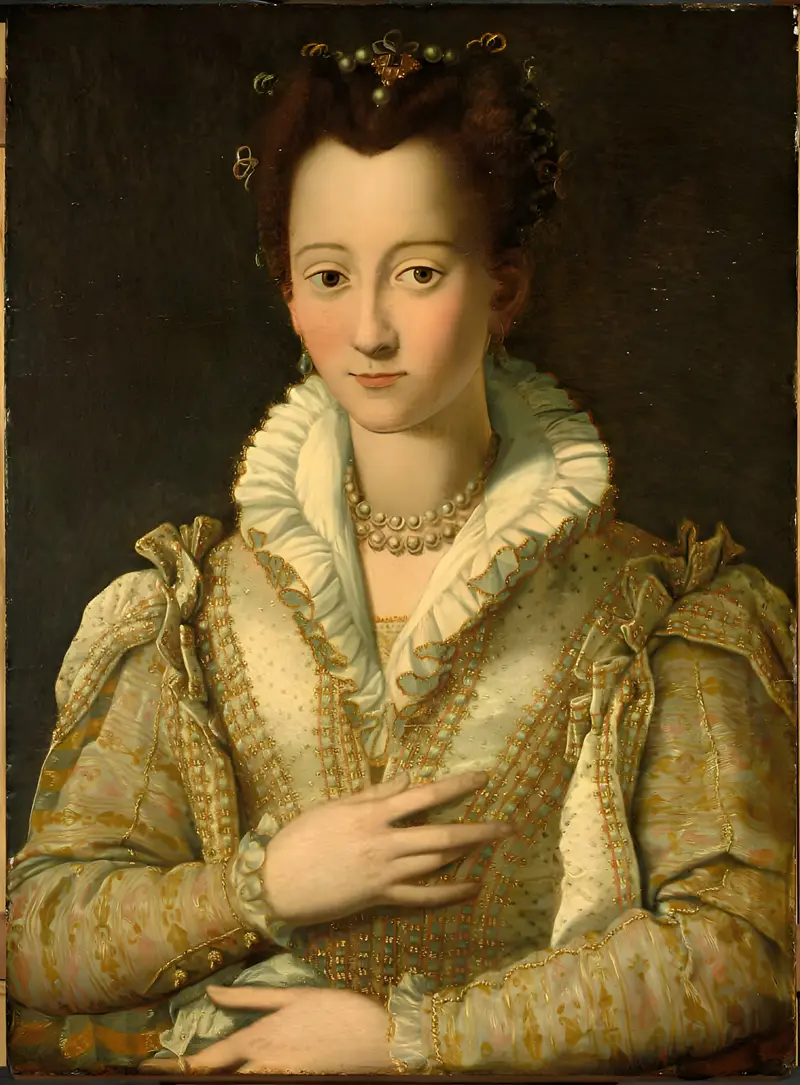
Portrait of a Woman
Alessandro Allori

The Abduction of Proserpine
Alessandro Allori
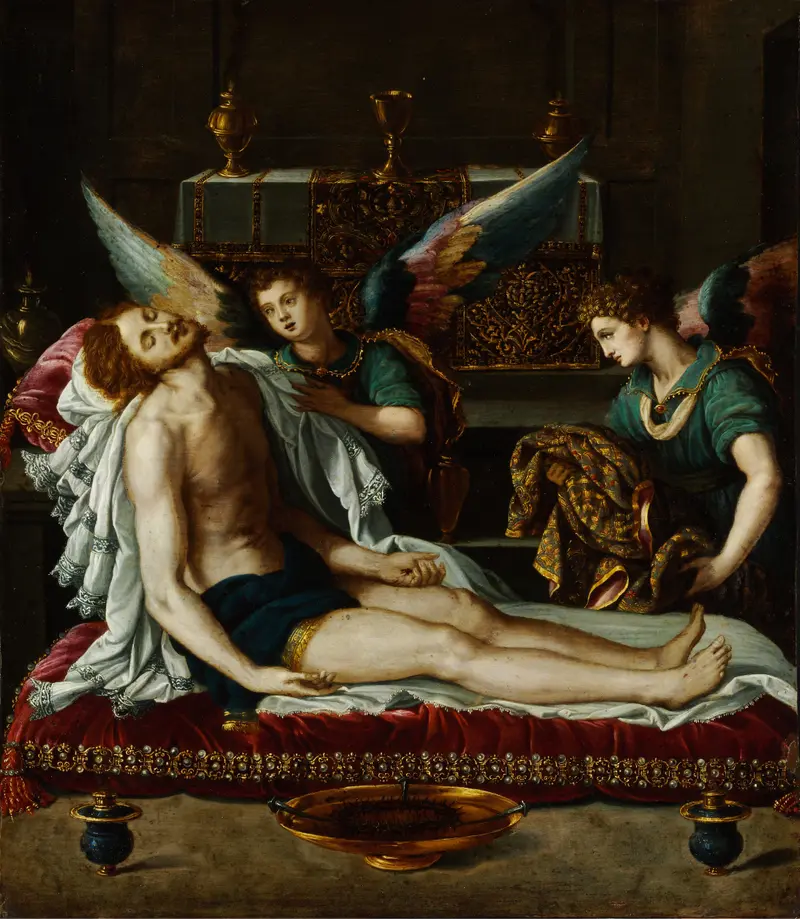
The Body of Christ Anointed by Two Angels
Alessandro Allori
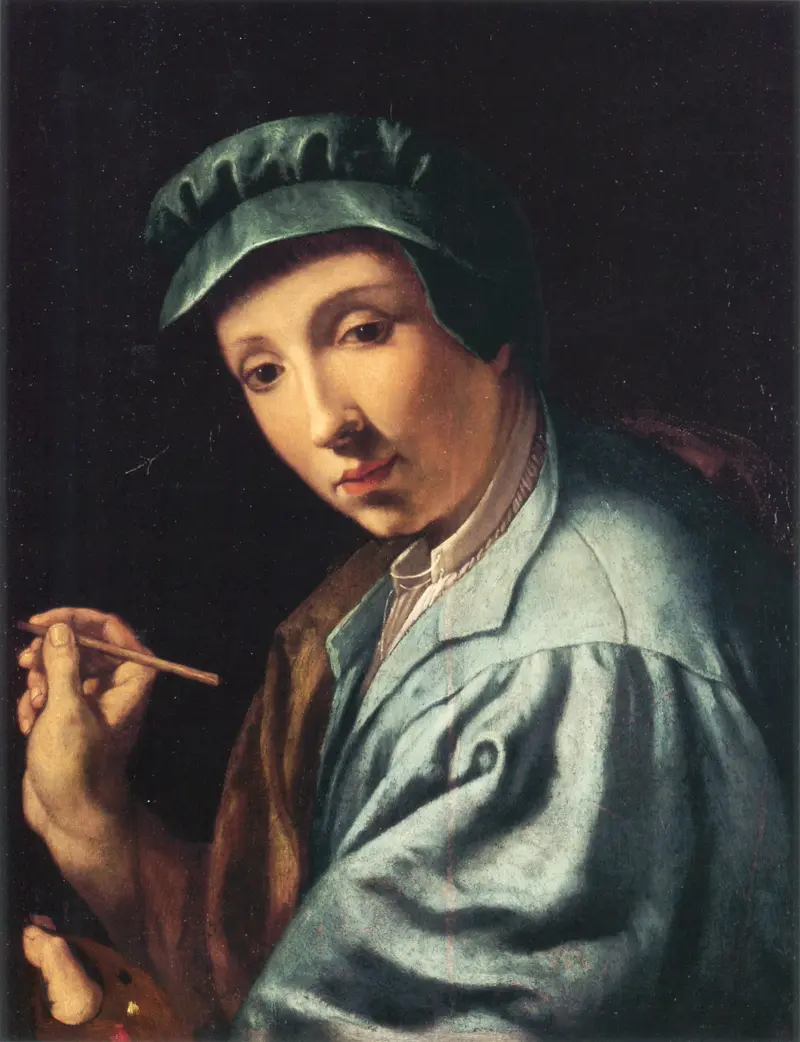
Self-portrait
Alessandro Allori
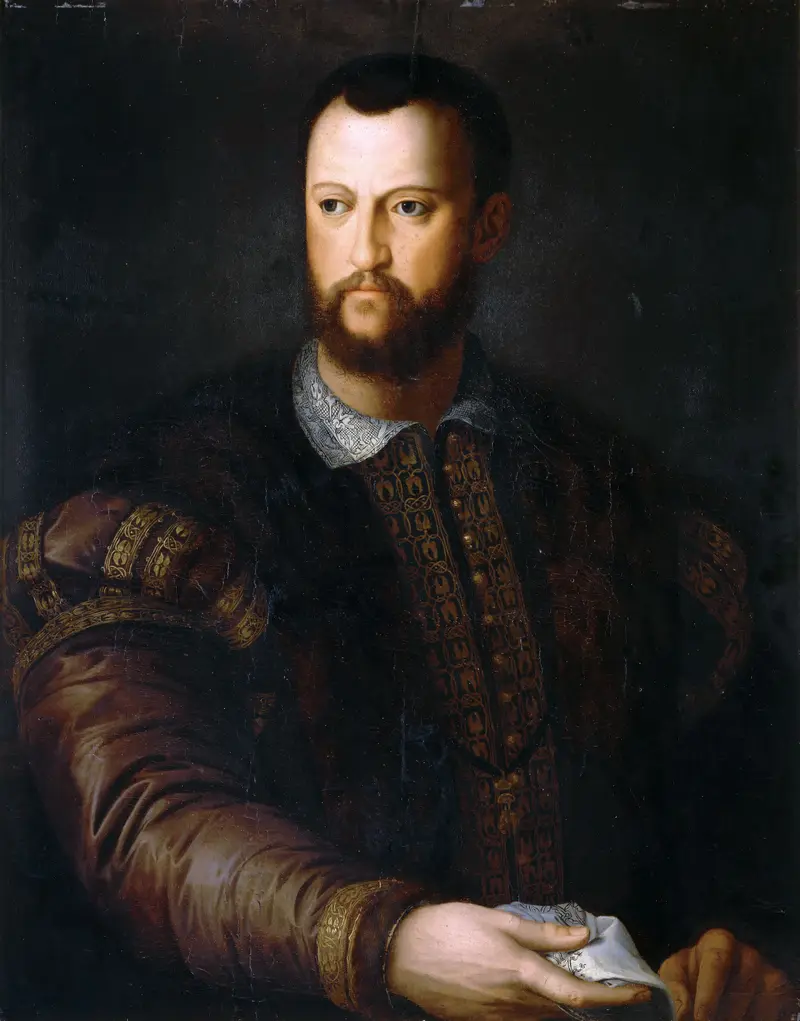
Portrait of Cosimo I de' Medici
Alessandro Allori
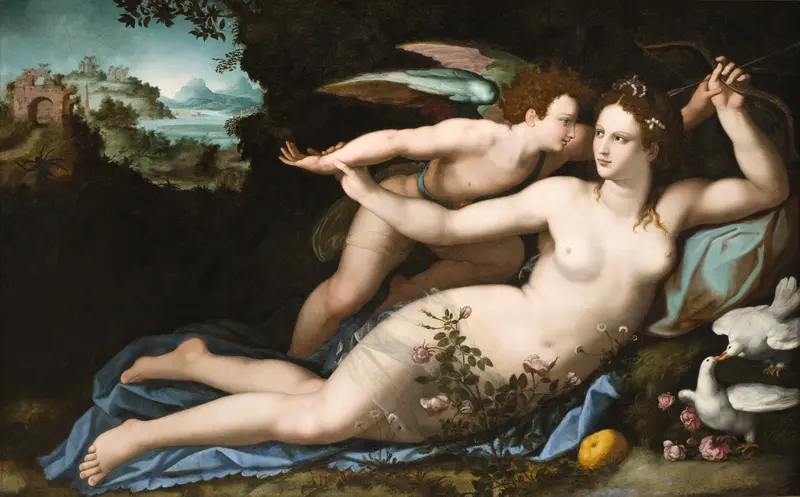
Venus disarming Cupid
Alessandro Allori
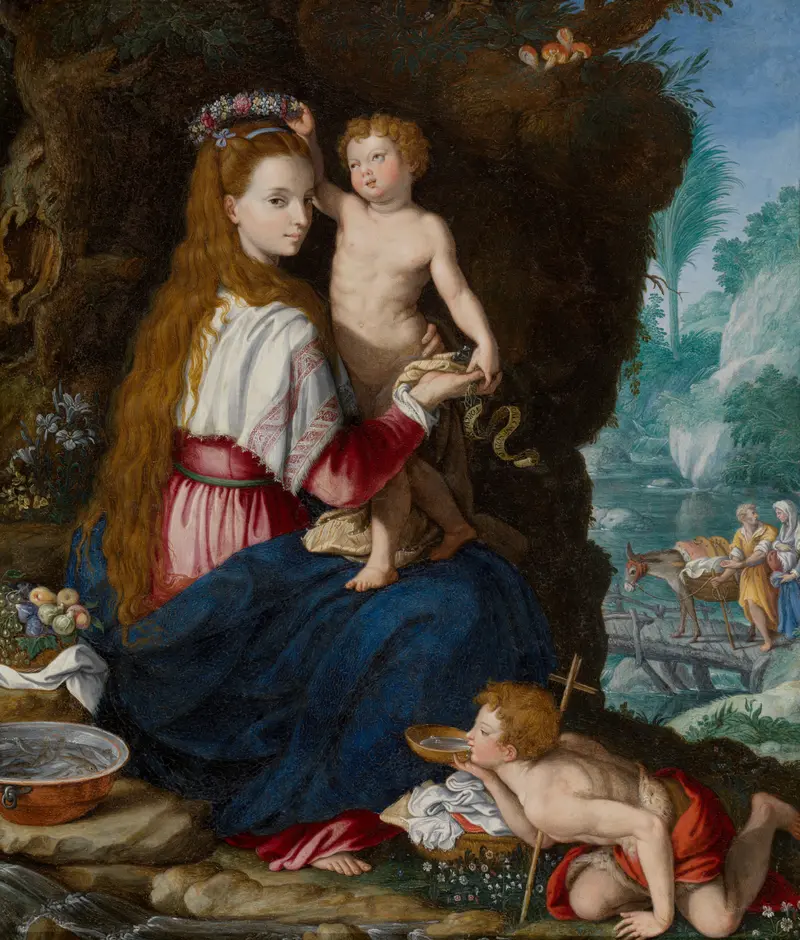
Madonna with Little Saint John
Alessandro Allori
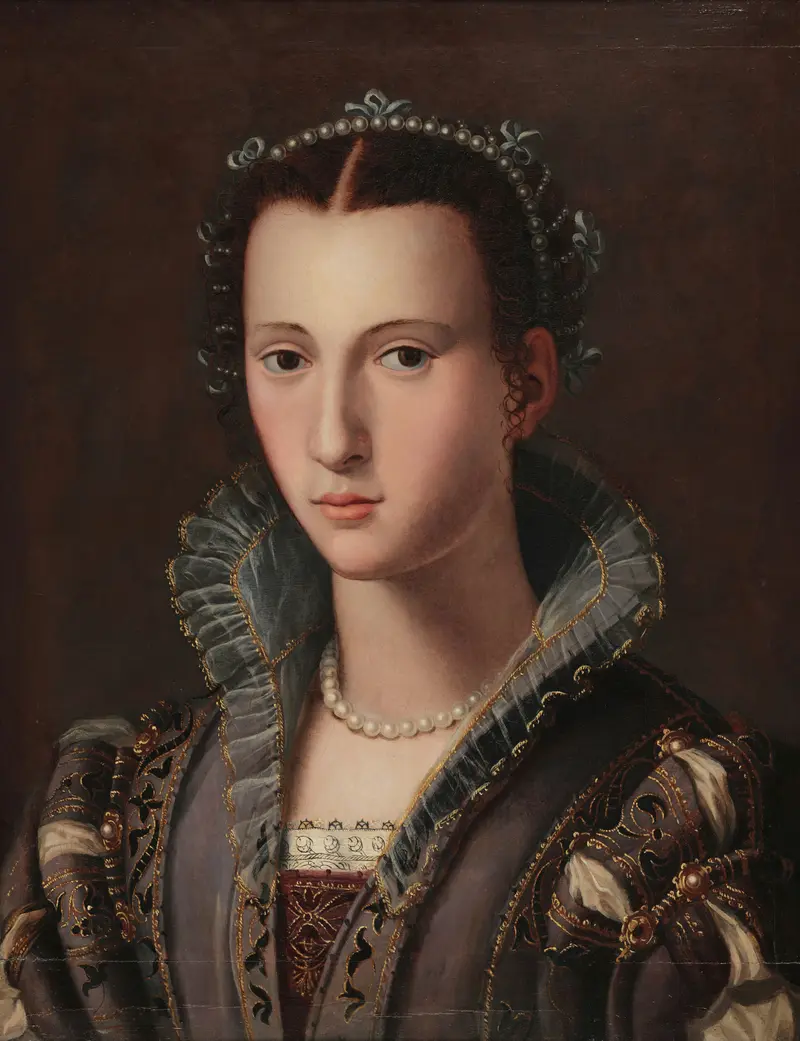
Portrait of a Florentine Lady
Alessandro Allori
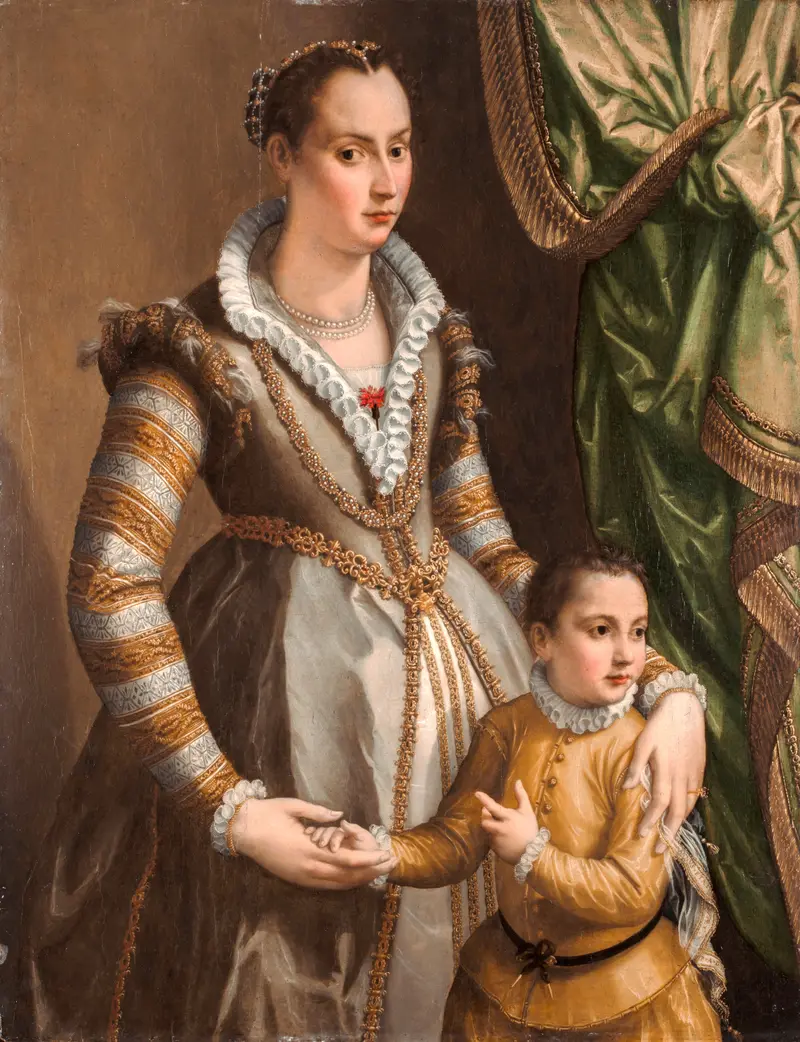
Portrait of a Noblewoman with her Son
Alessandro Allori





