
Portrait of a Woman as Diana — History & Facts
A woman meets your gaze with a calm, direct confidence, her cheeks gently flushed, her lips just parted as if about to speak. She is dressed not in the formal silks of Parisian society, but in the imagined trappings of Diana, goddess of the hunt: a bow in hand, a quiver peeking behind her shoulder, and a leopard skin draped with calculated ease over her arm. The blue sash and the delicate string of pearls at her neck add a note of courtly elegance, while the single rose in her powdered hair hints at both artifice and nature.
Light falls softly over her face and shoulders, drawing the viewer’s eye to her steady expression and the tactile richness of fur and fabric. This is not a portrait of a myth, but a portrait of a woman inhabiting a myth—her identity, despite past speculation, remains unknown, yet her presence is unmistakably real. Works like this one, painted by Jean-Marc Nattier in 1752, were the height of fashion among the elite of eighteenth-century France, where portraiture often blurred the line between reality and allegory. Nattier made a specialty of transforming his sitters into goddesses and heroines, flattering both their beauty and their wit.
Such portraits were more than vanity; they were statements of taste, intellect, and aspiration, commissioned for private display in salons where the game of identity was played with knowing smiles. While history has left few traces of this sitter’s name or story, the painting survives as a testament to an age when artifice was a form of truth, and every detail—from the gleam of the pearls to the twist of the bow—was chosen to enchant the viewer anew.
More Artworks by Jean-Marc Nattier

Madame Crozat de Thiers and Her Daughter
Jean-Marc Nattier
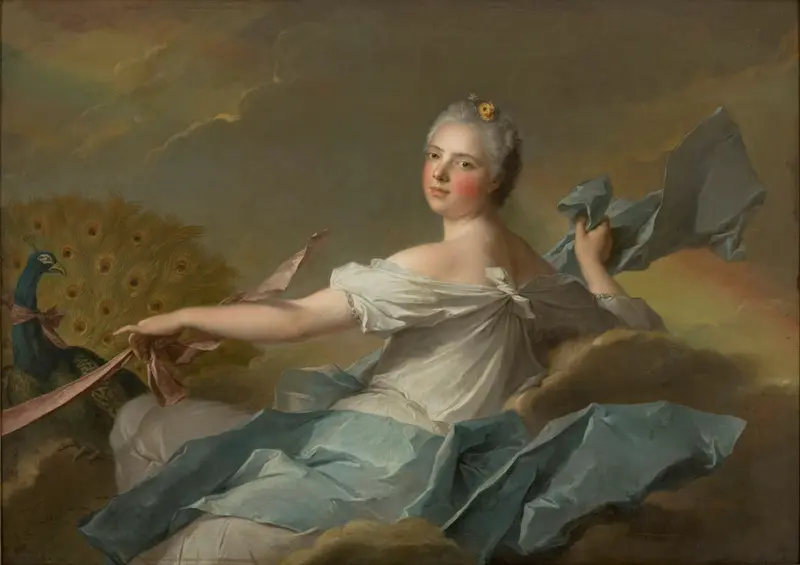
Princess Marie Adélaïde of France - The Air
Jean-Marc Nattier
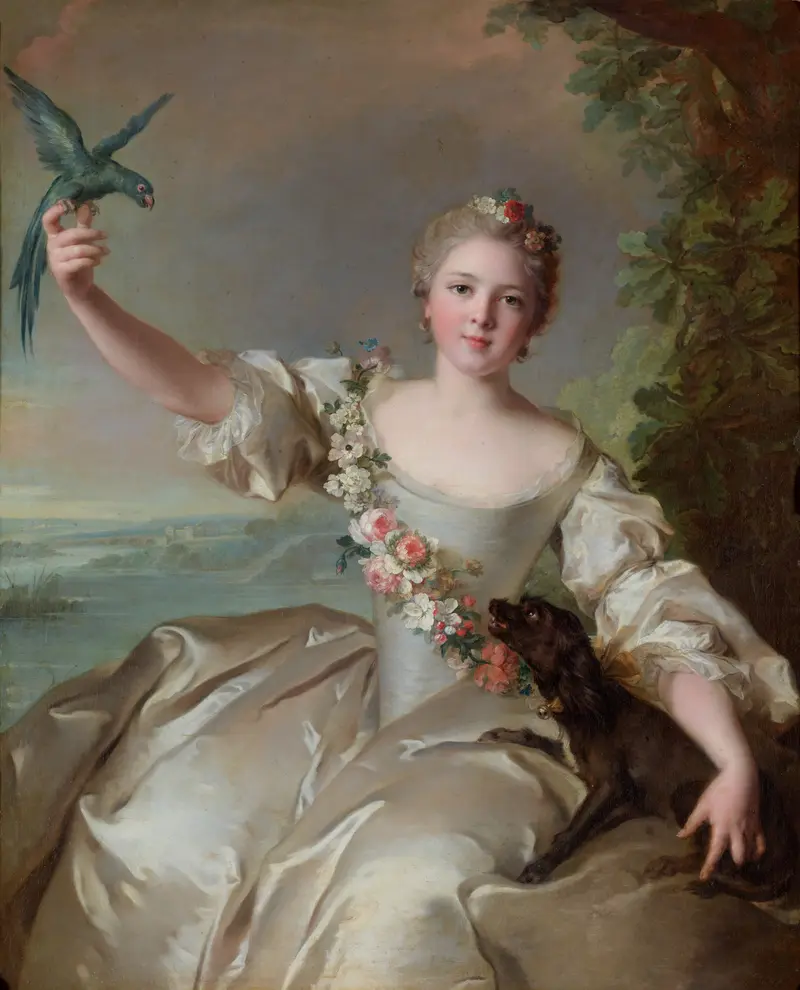
Portrait de Mathilde de Canisy, marquise d'Antin
Jean-Marc Nattier
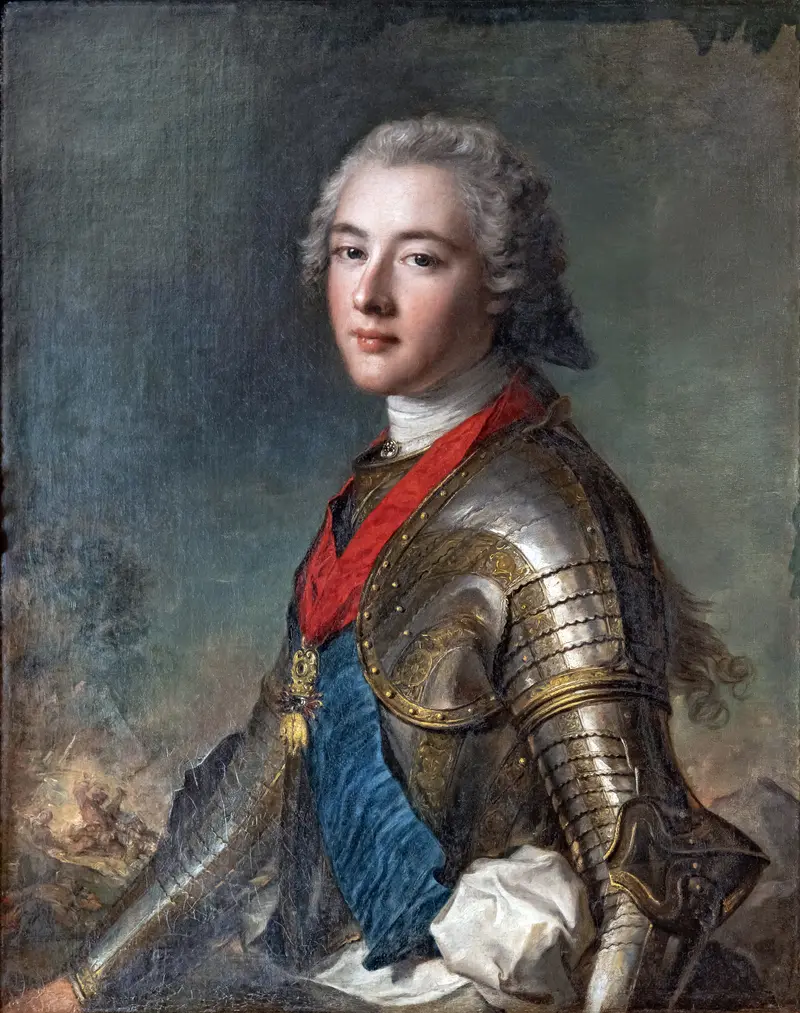
Bemberg Fondation Toulouse - Portrait de Louis Jean Marie de Bourbon, Duc de Penthièvre - Jean Marc Nattier inv.1158 82x65.4
Jean-Marc Nattier
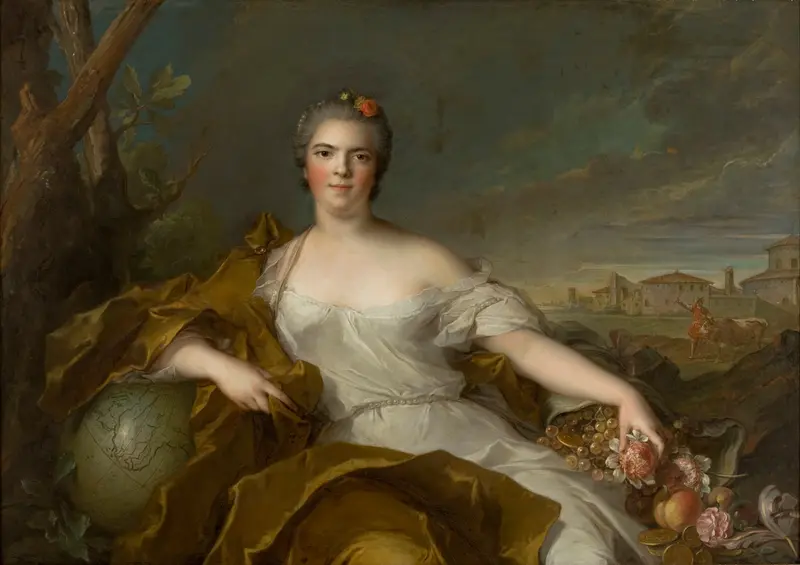
Princess Louise-Élisabeth of France - The Earth
Jean-Marc Nattier
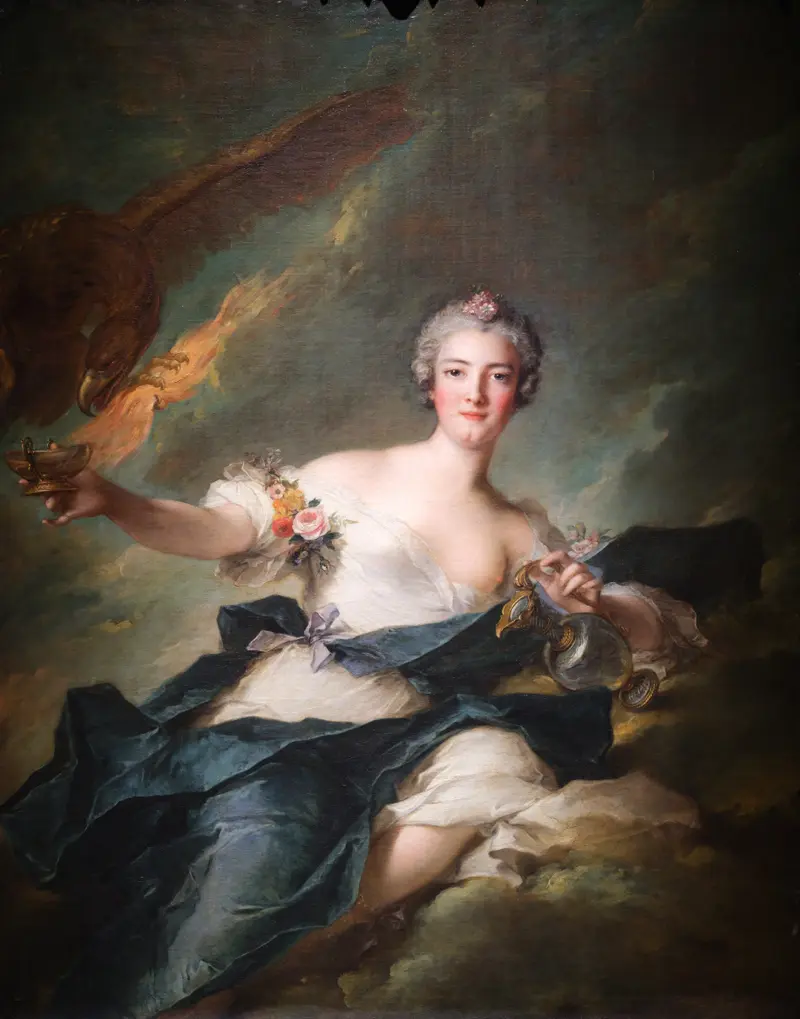
The Duchess of Chaulnes Represented as Hebe
Jean-Marc Nattier
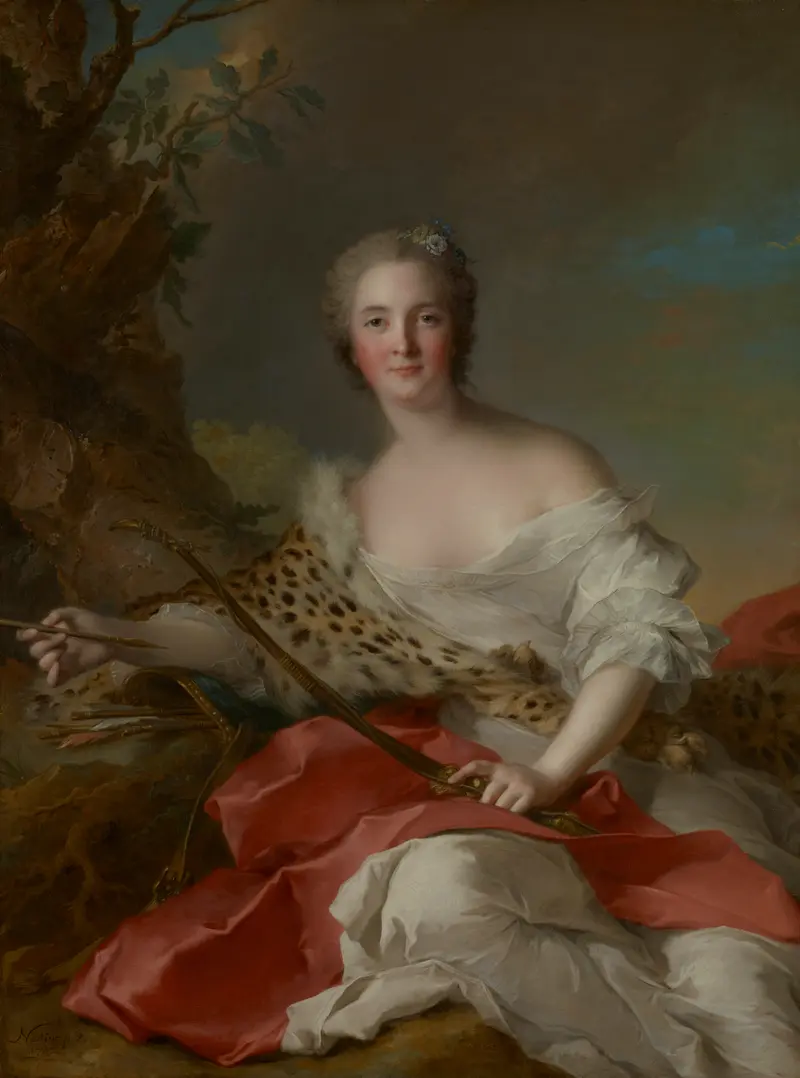
Portrait of Madame Bonnier de la Mosson as Diana (Constance-Gabrielle-Magdeleine du Monciel de Lauraille
Jean-Marc Nattier
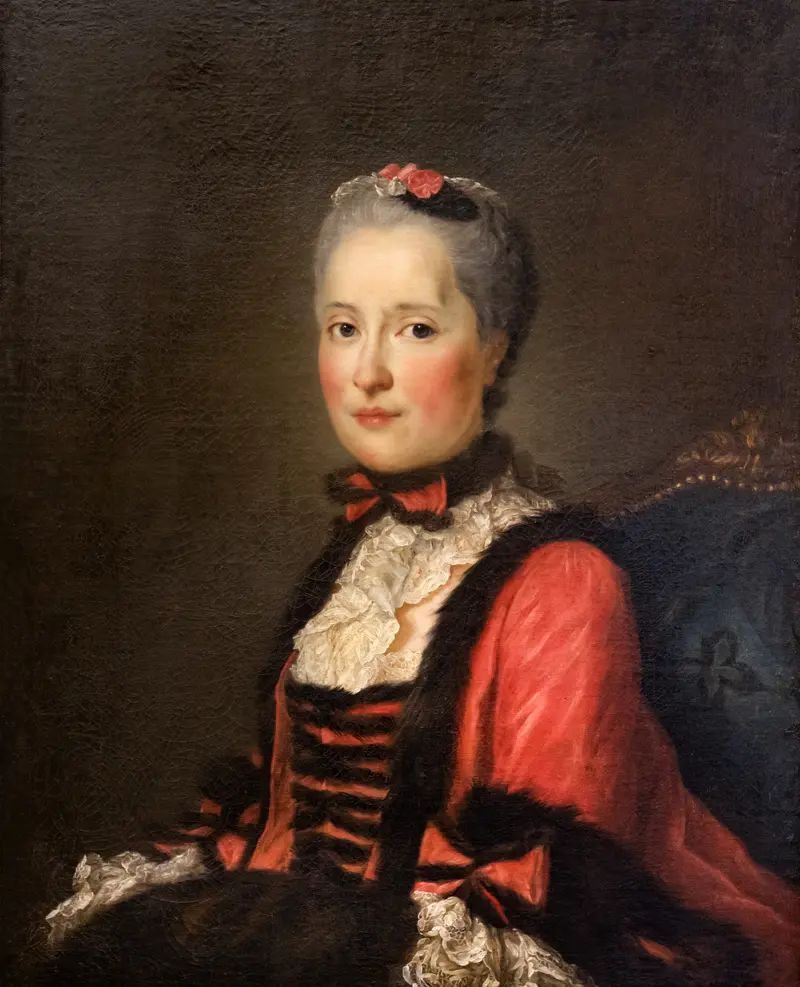
Portrait of Marie-Josephe of Saxony, Dauphine of France
Jean-Marc Nattier
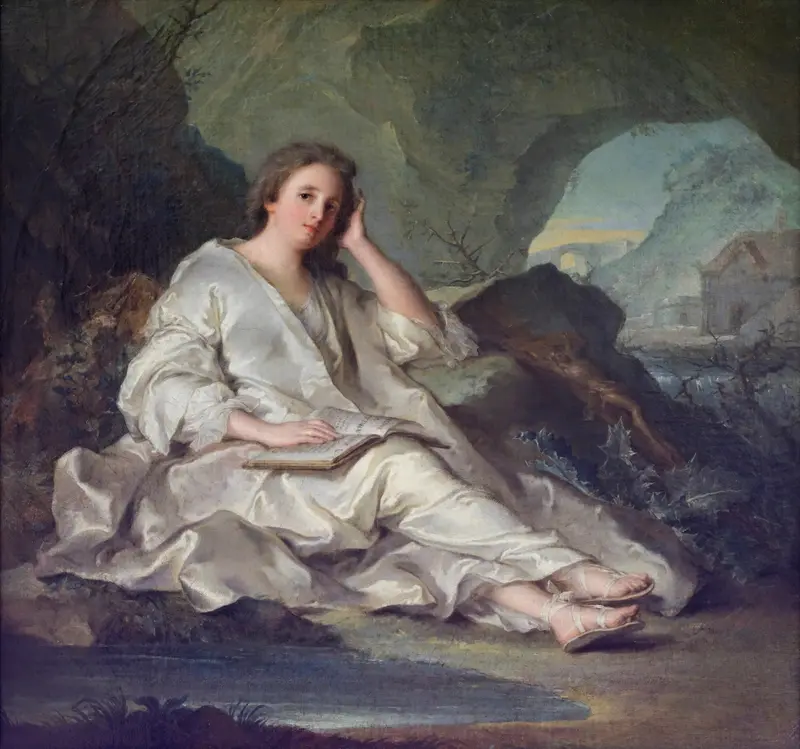
La Madeleine, ou Une Pénitente dans le désert Musée du Louvre Peintures INV 6880 ; MR
Jean-Marc Nattier
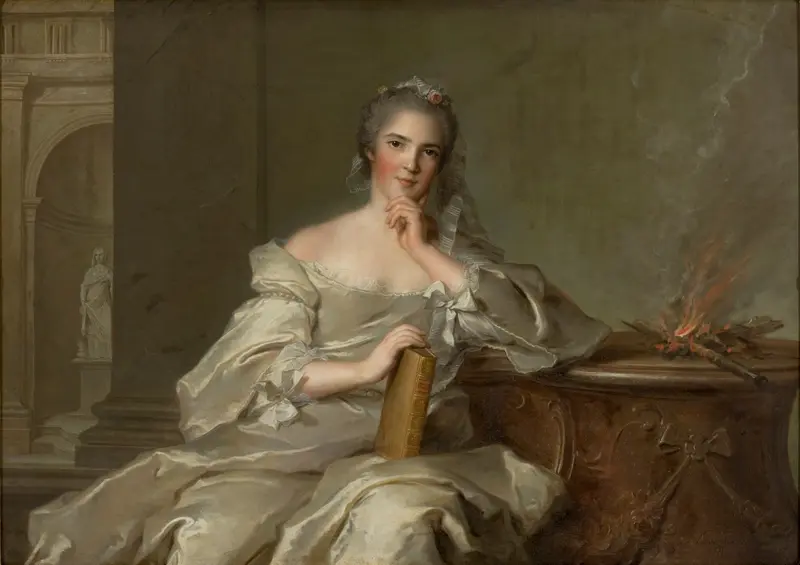
Princess Anne-Henriette of France - The Fire
Jean-Marc Nattier





