
Portrait of a Woman — History & Facts
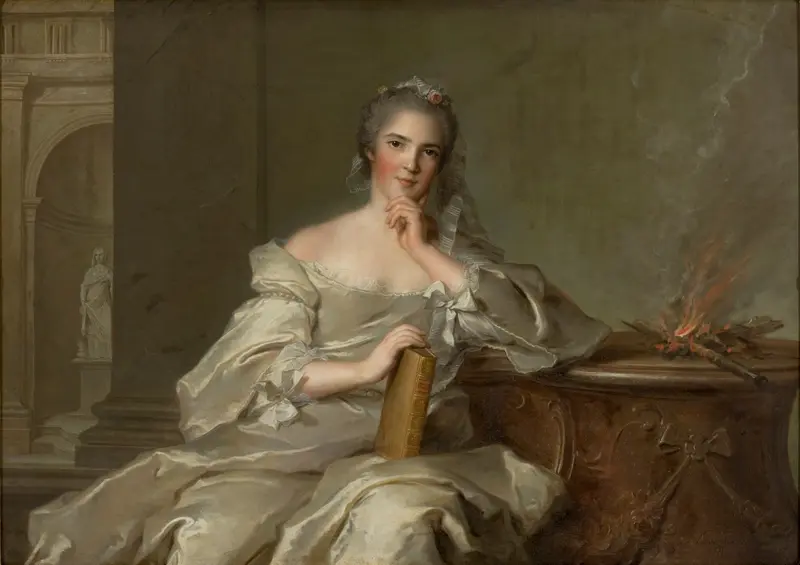
What draws the eye first in Portrait of a Woman by Jean-Marc Nattier is the sitter’s direct, poised gaze—at once reserved and inviting, she meets the viewer with a gentle confidence that seems to float above the elaborate trappings of her dress. The play of light across her face and décolletage sets her apart from the muted, shadowed background, giving her an almost theatrical presence. The blue silk drapery, rendered with Nattier’s typical fluidity, frames her like a stage curtain, while the delicate pink bow and pearls at her breast hint at both wealth and the carefully constructed femininity prized at the French court.
Every detail, from the powdered curls adorned with tiny flowers to the subtle flush on her cheeks, is a calculated signal of grace and refinement. Yet, the sitter’s identity remains a mystery, her individuality gently effaced by the era’s ideal of beauty. This painting belongs to the world of mid-eighteenth-century France, when portraiture was both a social necessity and a display of status for the elite. Jean-Marc Nattier was celebrated for his ability to flatter his sitters, especially the women of the court of Louis XV, and his portraits often blur the line between likeness and fantasy.
Commissioned by those eager to secure their image for posterity—or simply to please the eye of a royal patron—such works were as much about aspiration as reality. The sitter here was once thought to be a royal princess, but history has left her nameless, a reminder of how many faces in Nattier’s gallery have become anonymous emblems of their time. As you look again, consider how much is revealed and how much is concealed in the shimmer of silk and the softness of a smile.
More Artworks by Jean-Marc Nattier

Madame Crozat de Thiers and Her Daughter
Jean-Marc Nattier
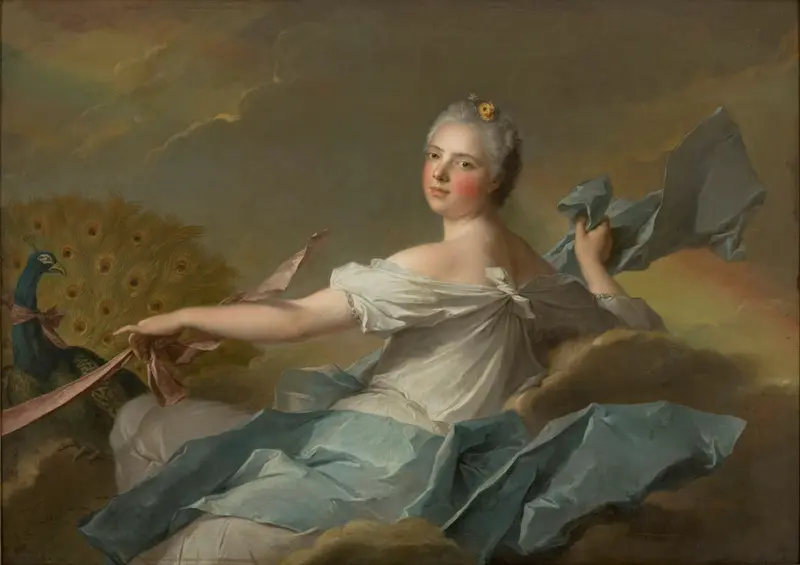
Princess Marie Adélaïde of France - The Air
Jean-Marc Nattier
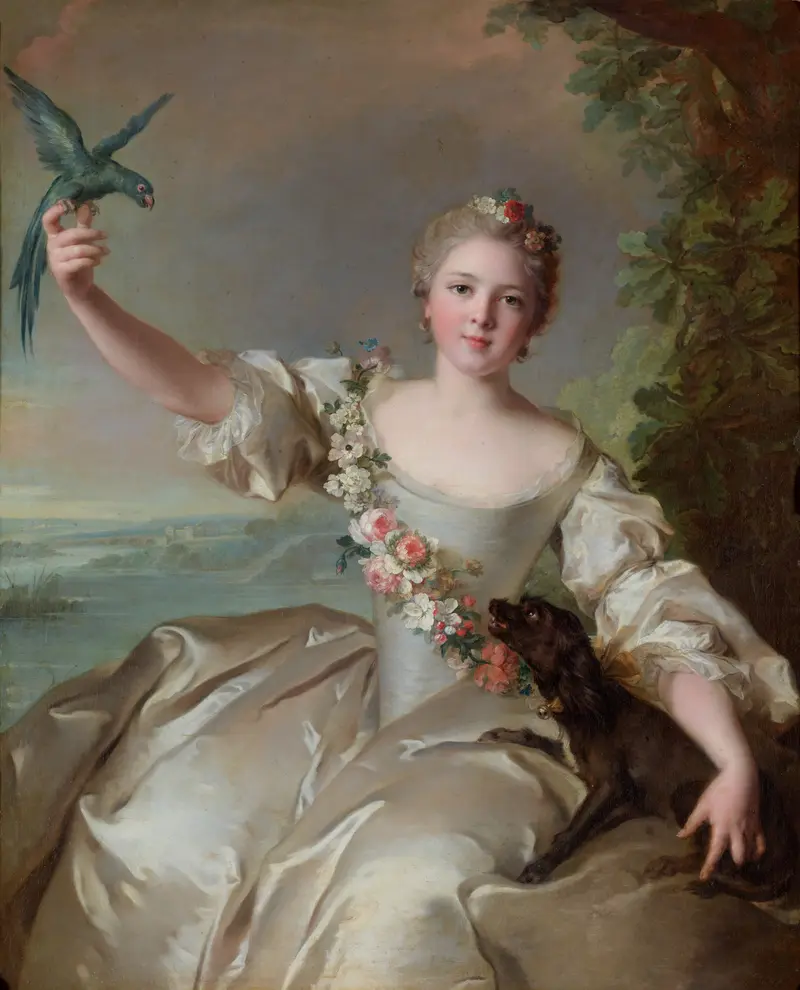
Portrait de Mathilde de Canisy, marquise d'Antin
Jean-Marc Nattier
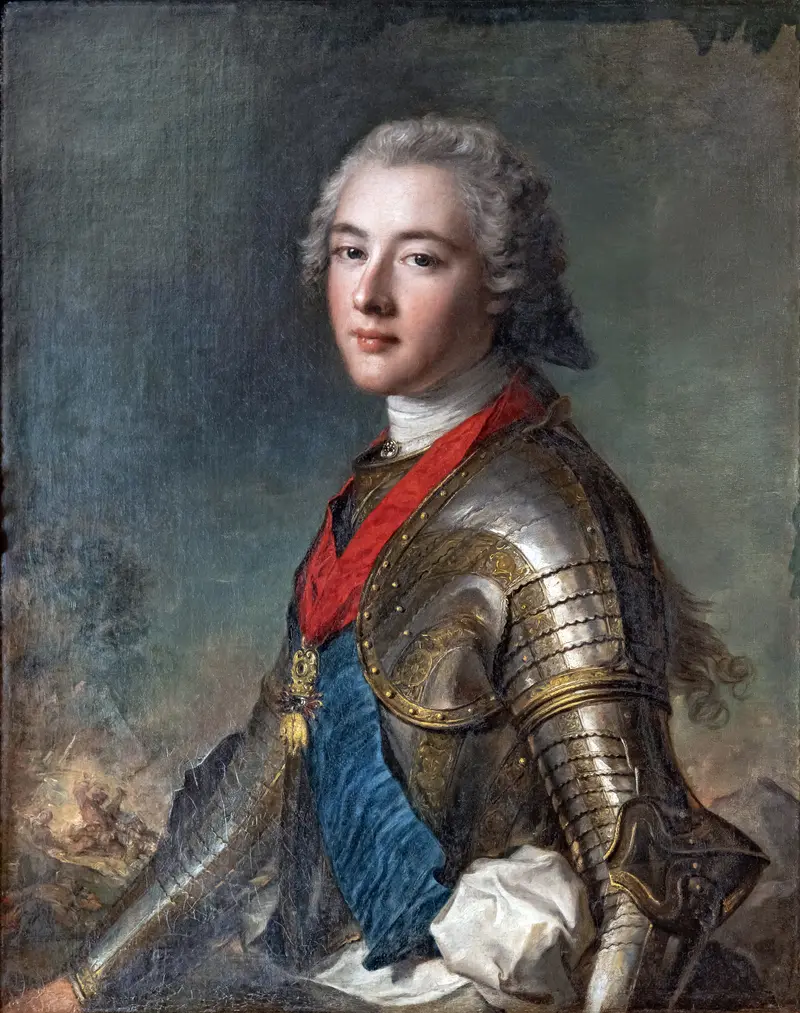
Bemberg Fondation Toulouse - Portrait de Louis Jean Marie de Bourbon, Duc de Penthièvre - Jean Marc Nattier inv.1158 82x65.4
Jean-Marc Nattier
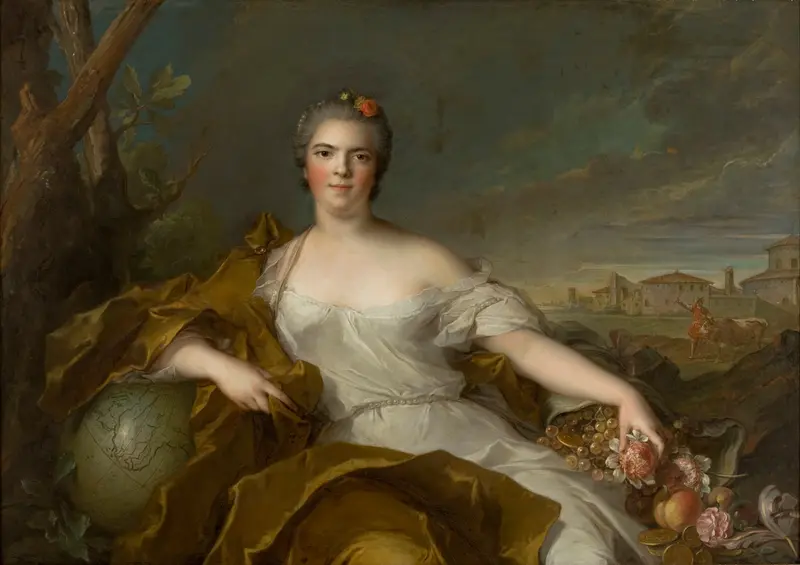
Princess Louise-Élisabeth of France - The Earth
Jean-Marc Nattier
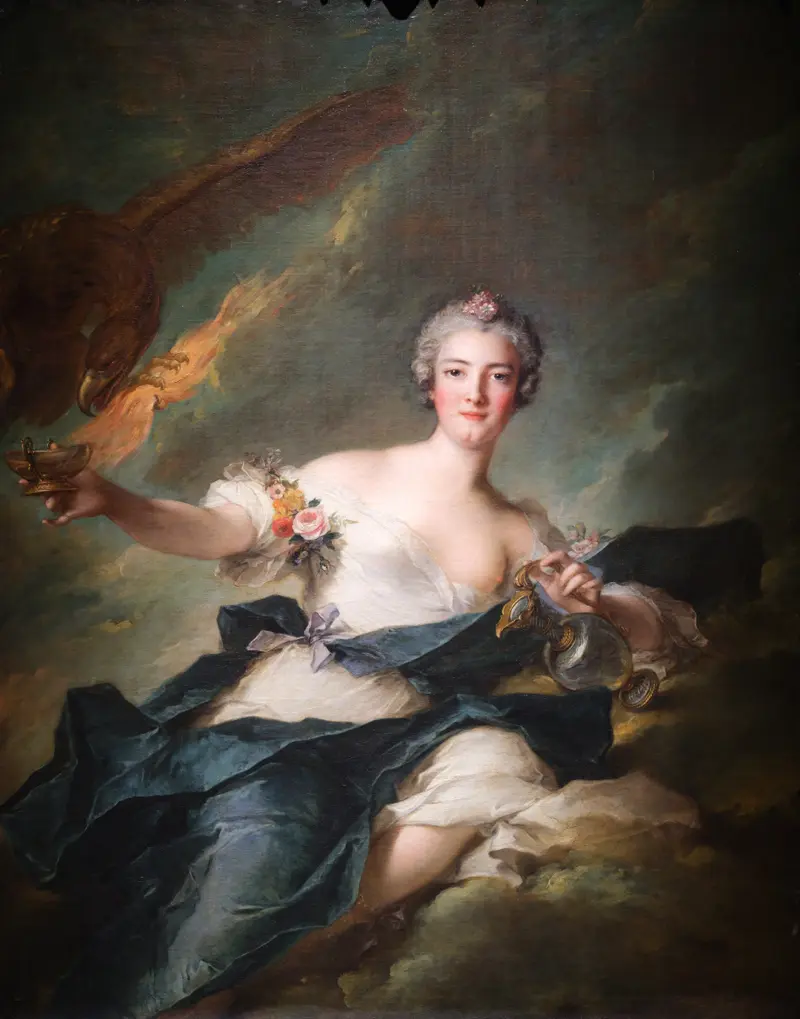
The Duchess of Chaulnes Represented as Hebe
Jean-Marc Nattier
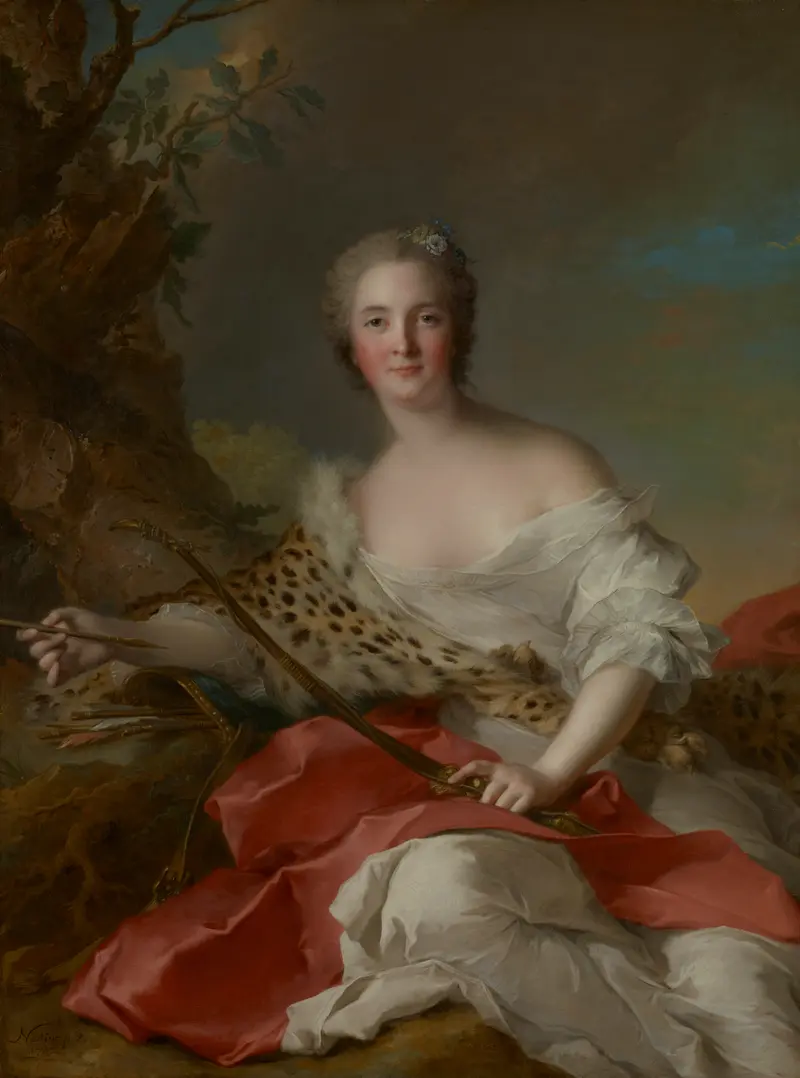
Portrait of Madame Bonnier de la Mosson as Diana (Constance-Gabrielle-Magdeleine du Monciel de Lauraille
Jean-Marc Nattier
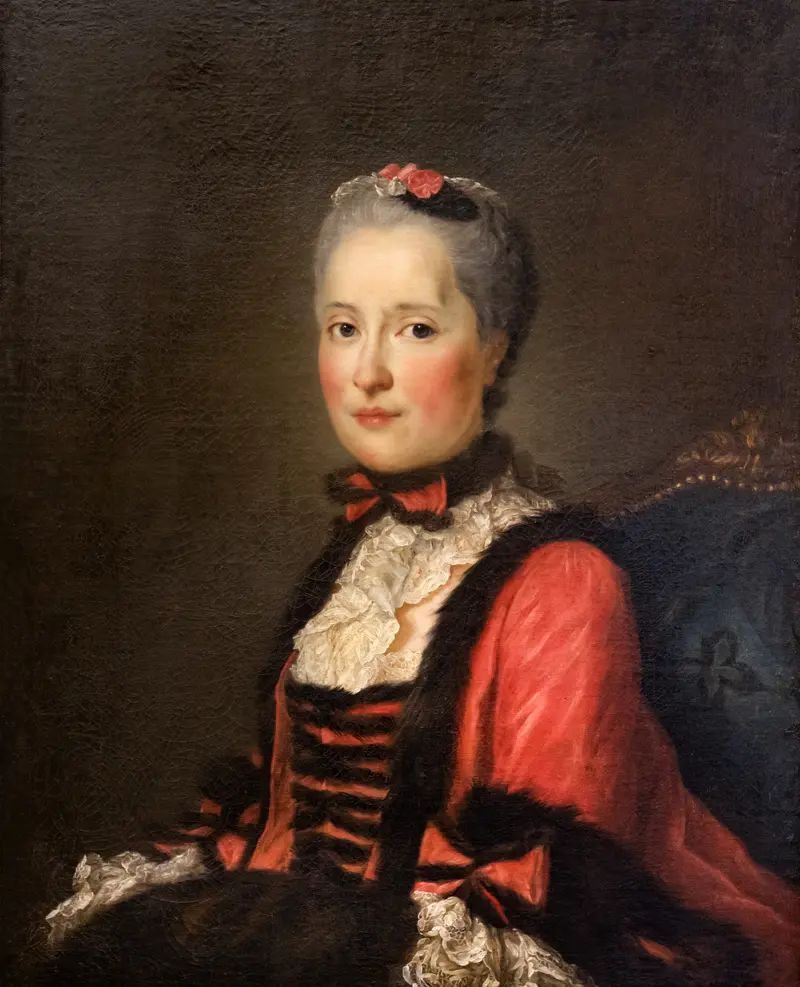
Portrait of Marie-Josephe of Saxony, Dauphine of France
Jean-Marc Nattier
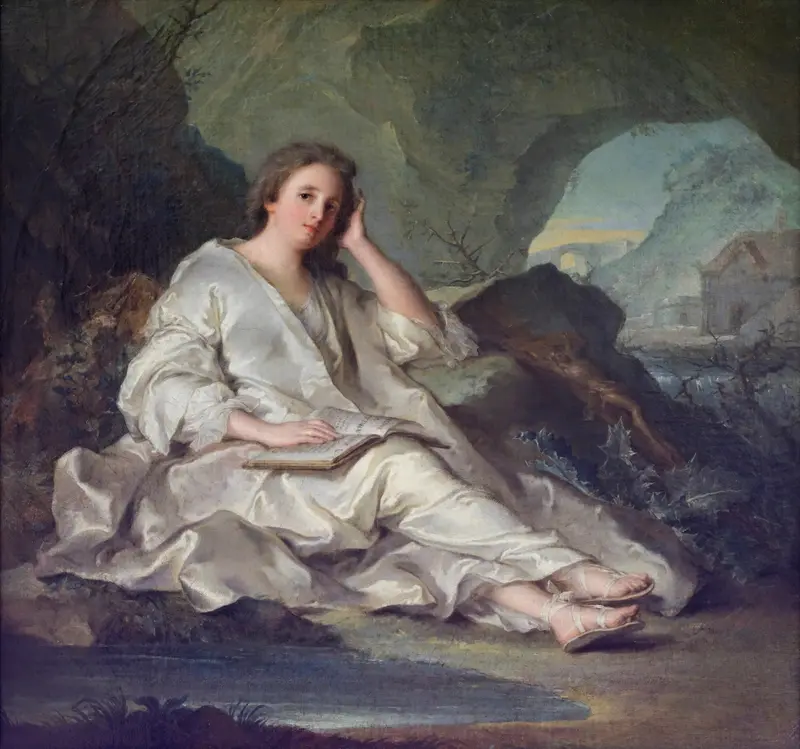
La Madeleine, ou Une Pénitente dans le désert Musée du Louvre Peintures INV 6880 ; MR
Jean-Marc Nattier
Princess Anne-Henriette of France - The Fire
Jean-Marc Nattier





