
Portrait of Louisa Schmid — History & Facts
A woman pauses at the edge of a tangled arbor, her gaze drifting beyond the viewer, her hand supporting her chin in a gesture that suggests both thought and longing. The muted, earthy palette of Portrait of Louisa Schmid by Arnold Böcklin draws the eye to the sitter’s contemplative face, while the soft, late-day light brushes her shoulders and the leaves overhead with a gentle glow. The crumpled white handkerchief in her hand hints at a moment just passed—perhaps a letter read, or a memory revisited—while her simple dress and unadorned setting keep the mood quietly introspective.
Böcklin’s careful attention to the arching boughs frames her figure, giving the composition a sense of enclosure and privacy, as if we are witnessing a private reverie. Painted in 1849, this portrait belongs to a world where likenesses were often commissioned to mark moments of transition or remembrance. In the mid-nineteenth century, portraiture was a way for families to preserve the presence of loved ones, especially as social and geographic mobility increased. Arnold Böcklin would later become known for his symbolist visions, but here, in the Kunstmuseum Basel collection, we find him at the threshold: attentive to the inner life of his sitter, yet grounded in the realism and emotional restraint of his time.
History has kept few traces of Louisa Schmid herself, but the painting’s quiet mood invites you to search her face for the story she holds back.
More Artworks by Arnold Böcklin

Die Toteninsel III
Arnold Böcklin
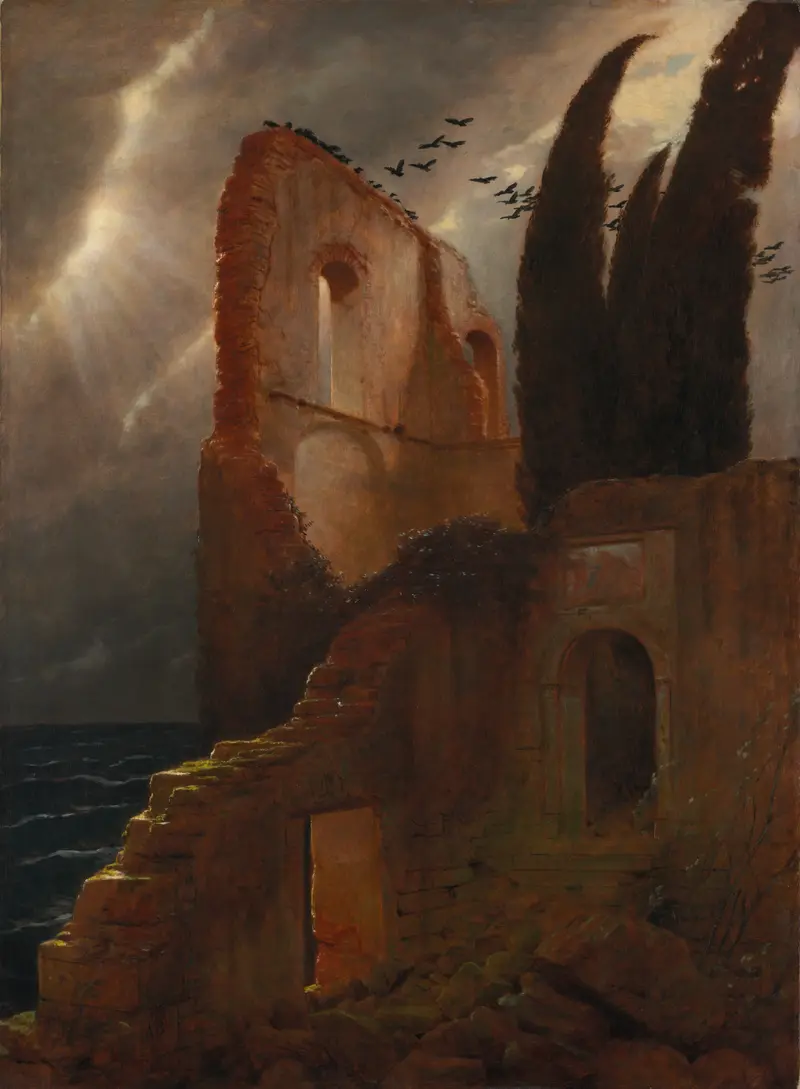
Ruin by the Sea
Arnold Böcklin
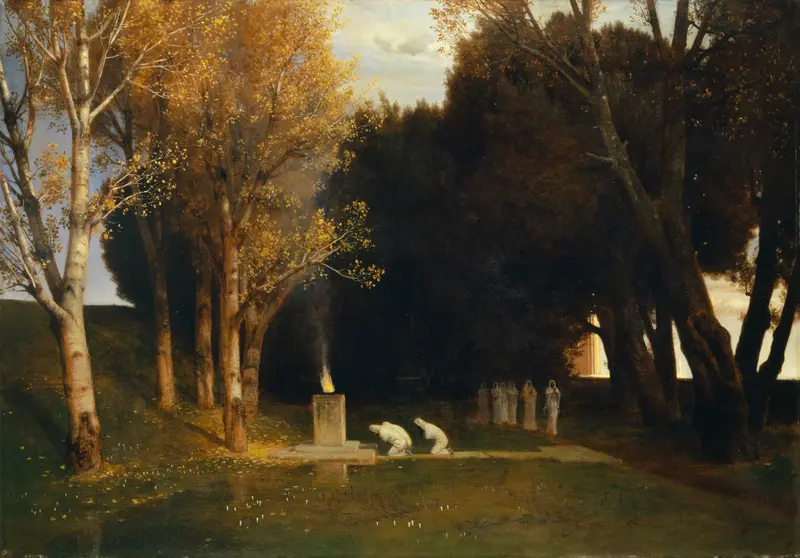
The Sacred Grove
Arnold Böcklin
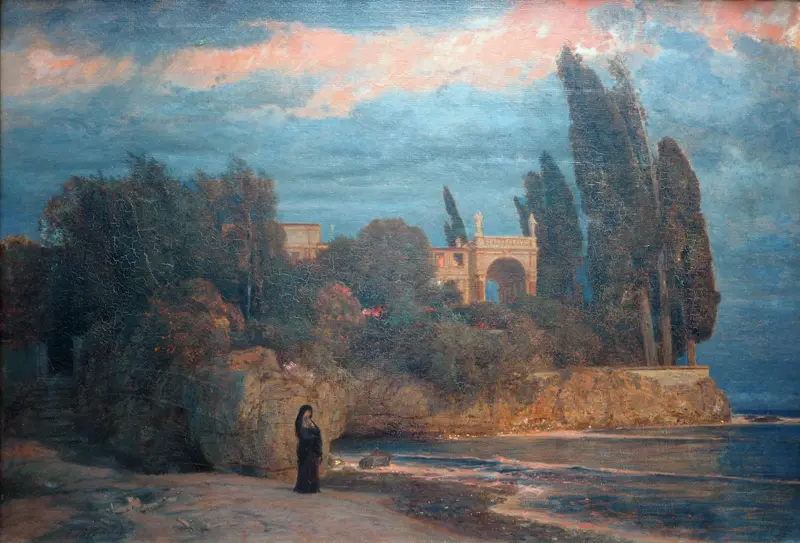
Villa by the Sea
Arnold Böcklin
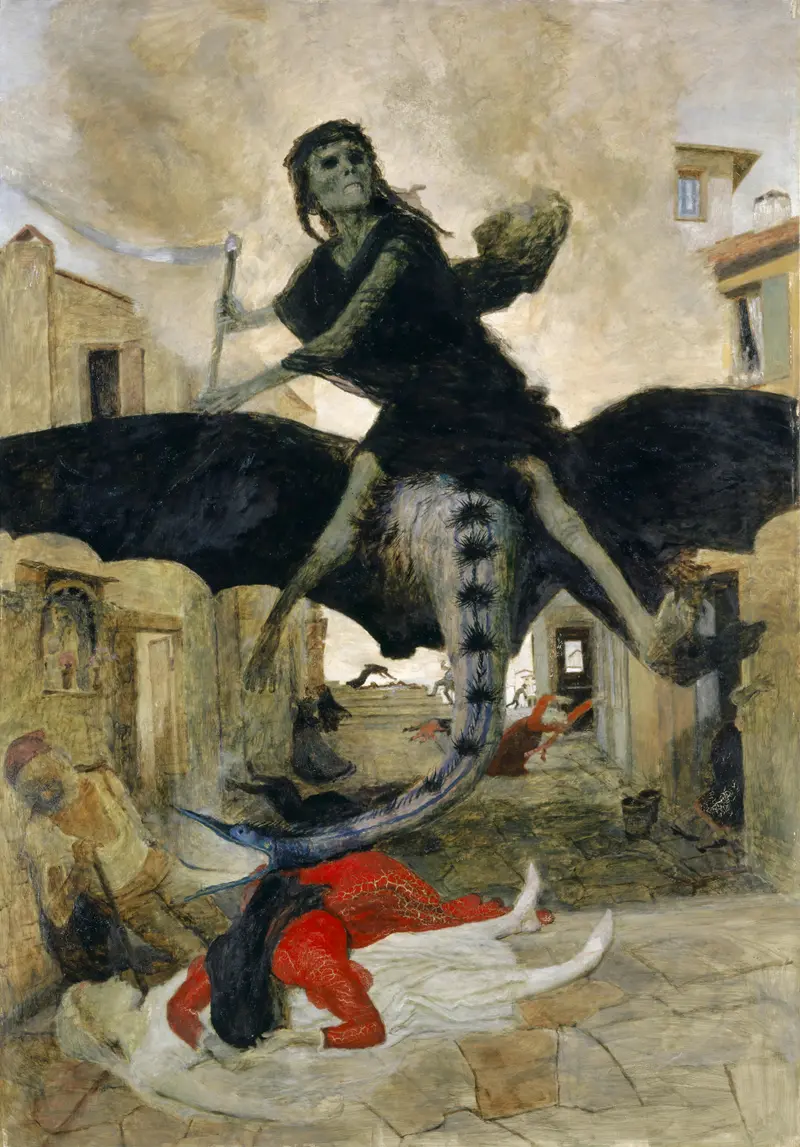
The Plague
Arnold Böcklin
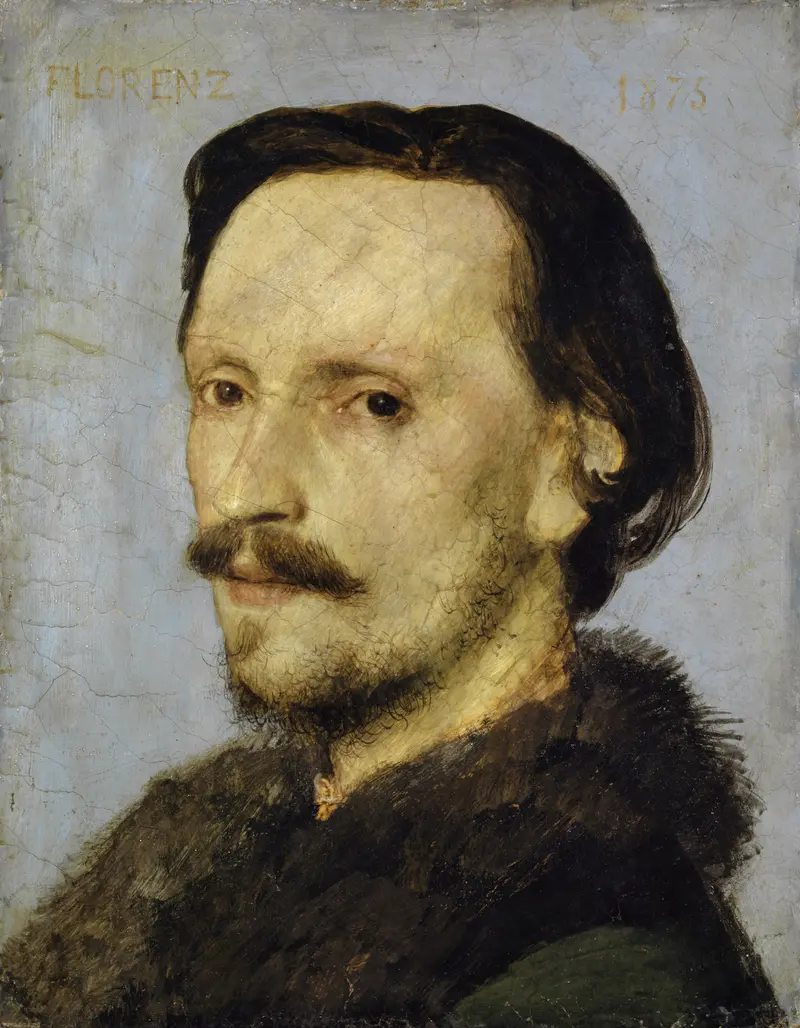
Böcklin Bildnis des Kunsthistorikers Adolph Bayersdorfer, 1875
Arnold Böcklin
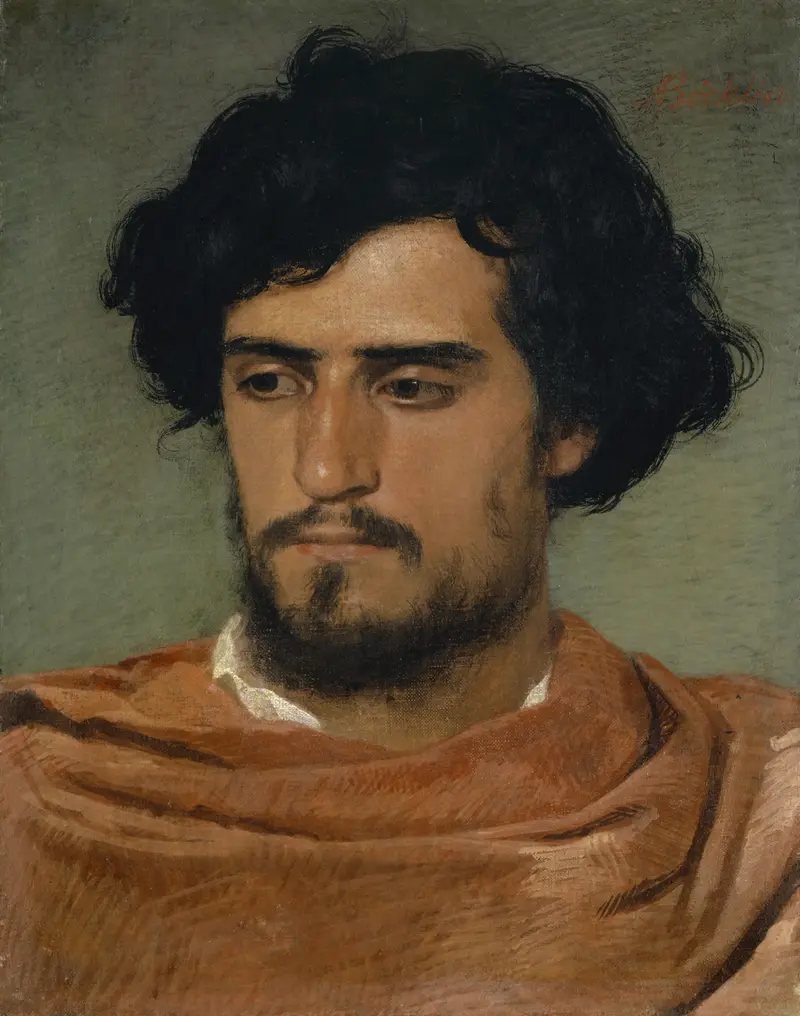
Head of a Roman
Arnold Böcklin
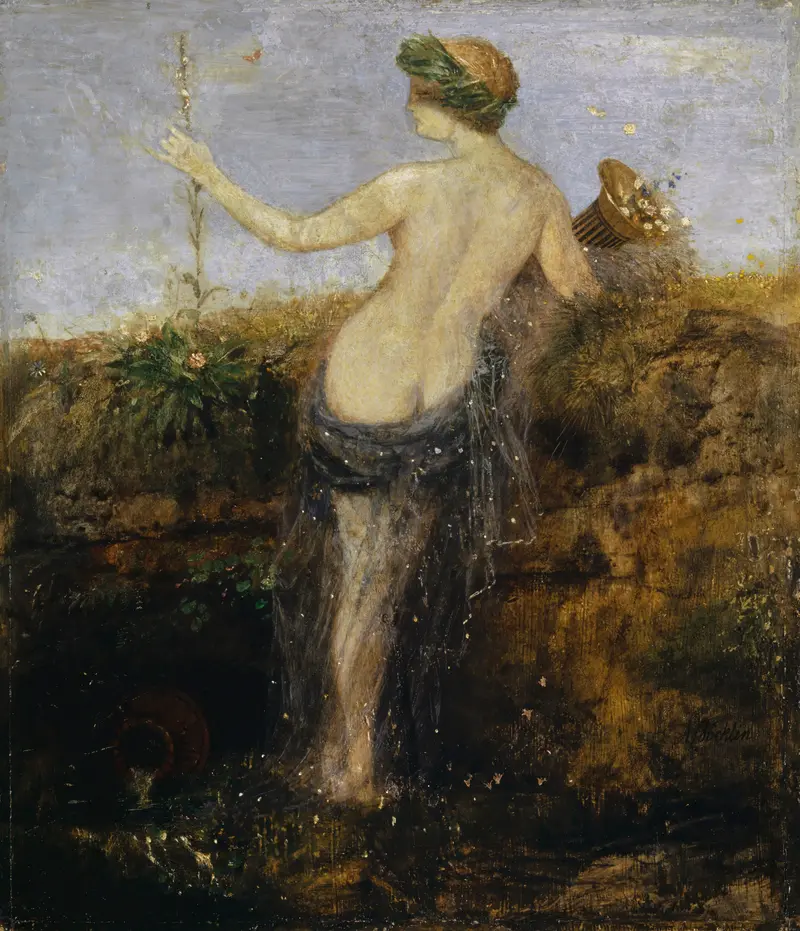
Nymphe with Horn of Plenty
Arnold Böcklin
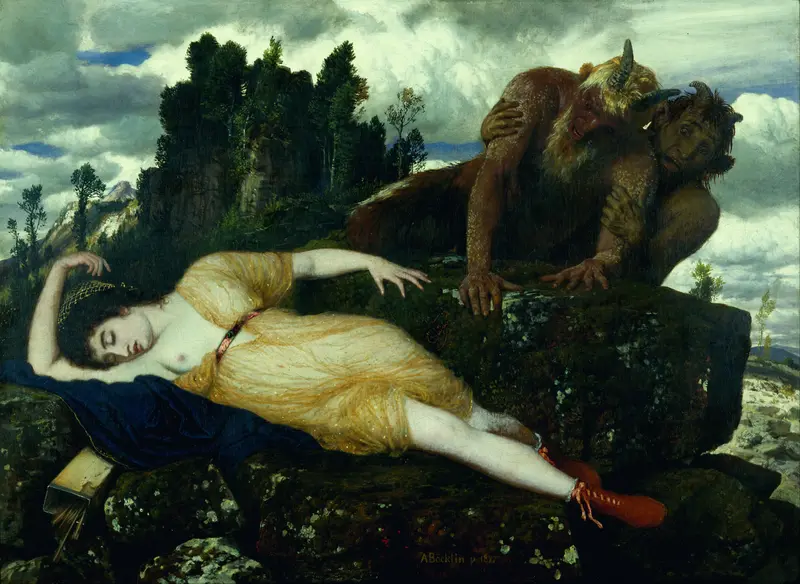
Sleeping Diana Watched by Two Fauns
Arnold Böcklin
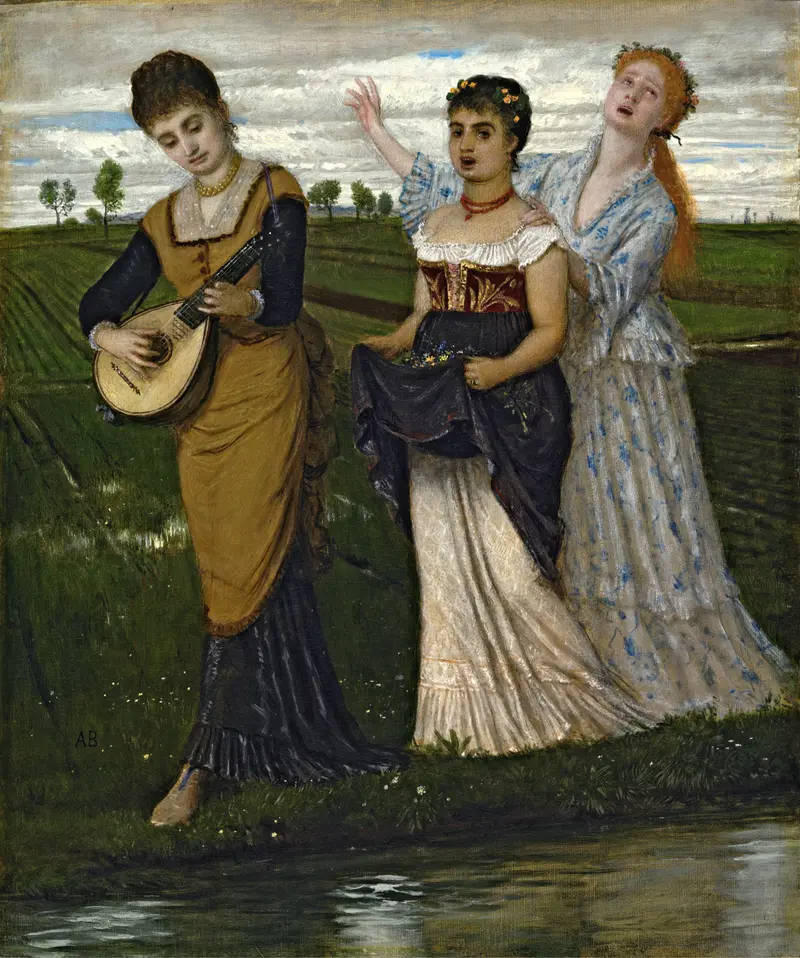
Spring (Songs of Spring)
Arnold Böcklin





