
Portrait of Maria Leszczyńska — History & Facts
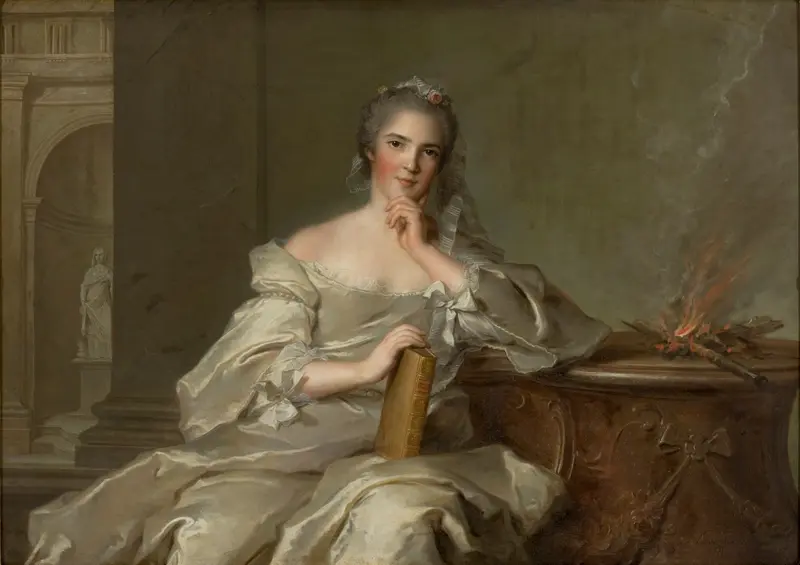
A cascade of red silk and lace draws the eye first, but it is the sitter’s gaze—thoughtful, almost distracted—that holds it. Her hand rests lightly on an open book, a detail that quietly insists on her intellect as much as her status. The painter, Jean-Marc Nattier, chooses not the stiff formality of court portraiture, but a moment of gentle reflection: the sitter’s head is turned, her expression softened by the play of light across her face.
The black lace scarf frames her features, setting off the pale complexion and lending a note of intimacy, as though we have entered the room unannounced. Works like this, painted in the mid-18th century, were often commissioned to celebrate lineage, learning, or personal virtue—sometimes all three. The delicate rendering of fabric and flesh was a hallmark of Nattier’s era, when French portraiture delighted in both theatricality and realism. This painting, now in the National Museum in Warsaw and dated after 1748, belongs to a world where royal and noble women were both subjects and symbols, their likenesses circulating through courts and collections as tokens of alliance and taste.
History has kept few traces of this specific portrait’s journey, but its quiet confidence invites us to linger, searching the sitter’s face for the thoughts behind her poised exterior.
More Artworks by Jean-Marc Nattier

Madame Crozat de Thiers and Her Daughter
Jean-Marc Nattier
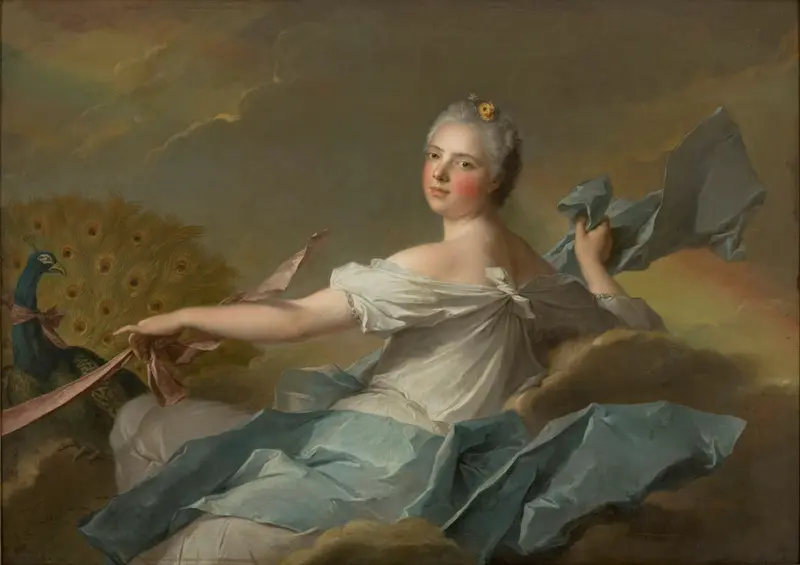
Princess Marie Adélaïde of France - The Air
Jean-Marc Nattier
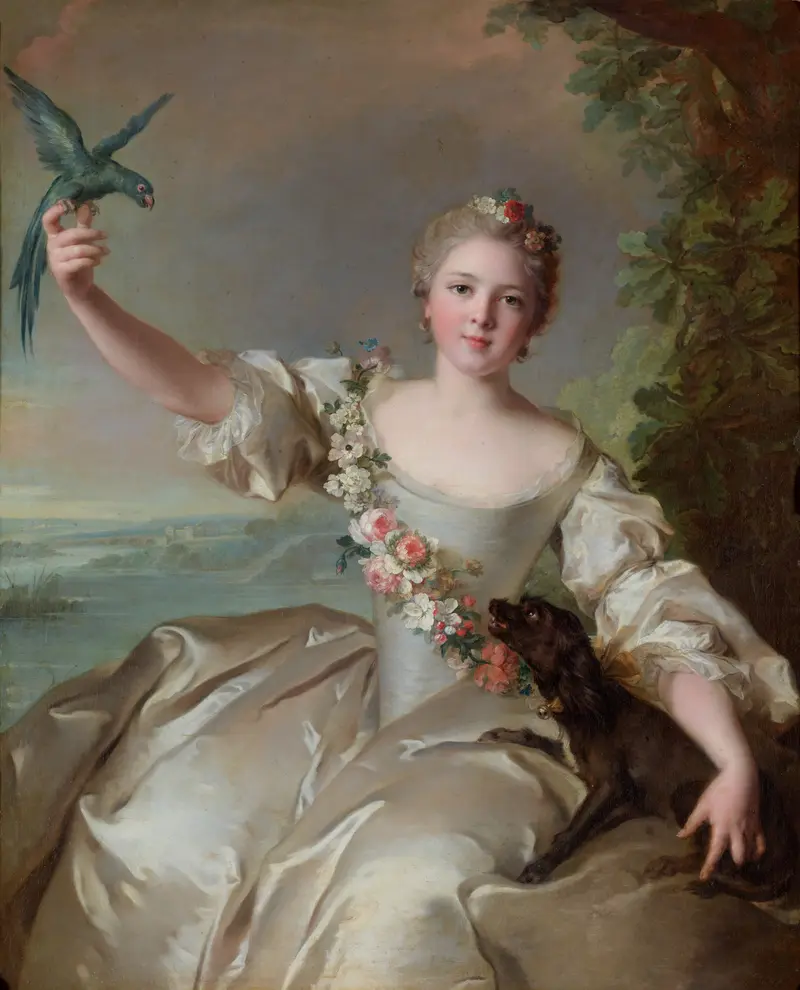
Portrait de Mathilde de Canisy, marquise d'Antin
Jean-Marc Nattier
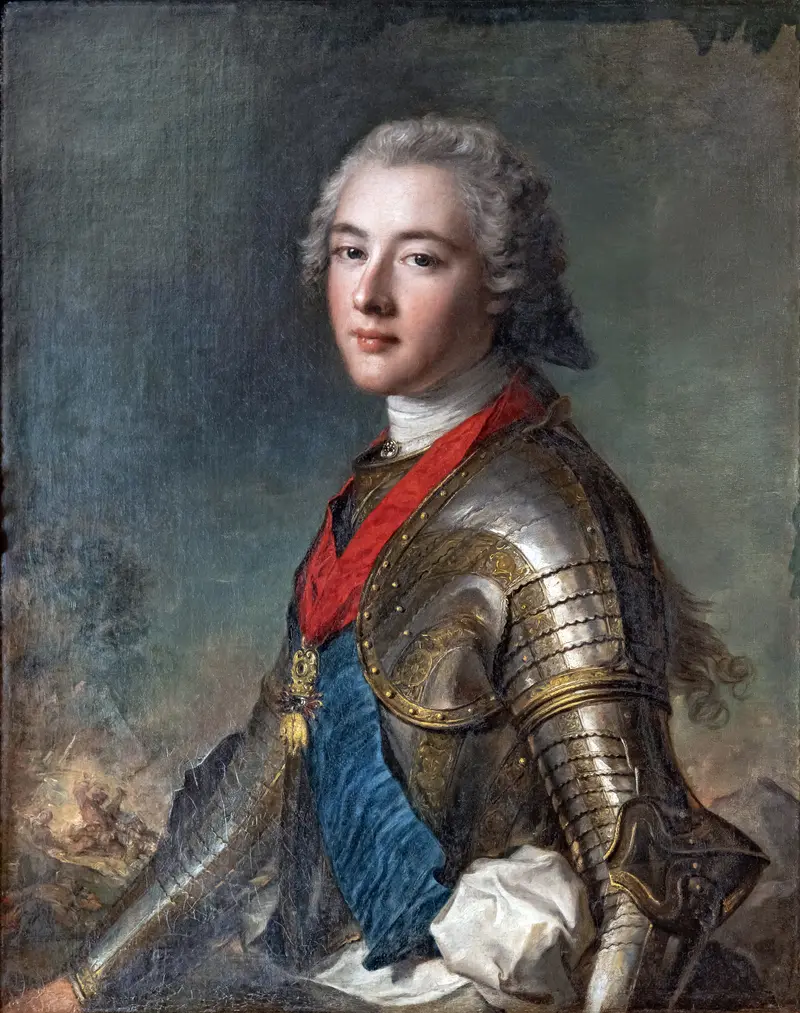
Bemberg Fondation Toulouse - Portrait de Louis Jean Marie de Bourbon, Duc de Penthièvre - Jean Marc Nattier inv.1158 82x65.4
Jean-Marc Nattier
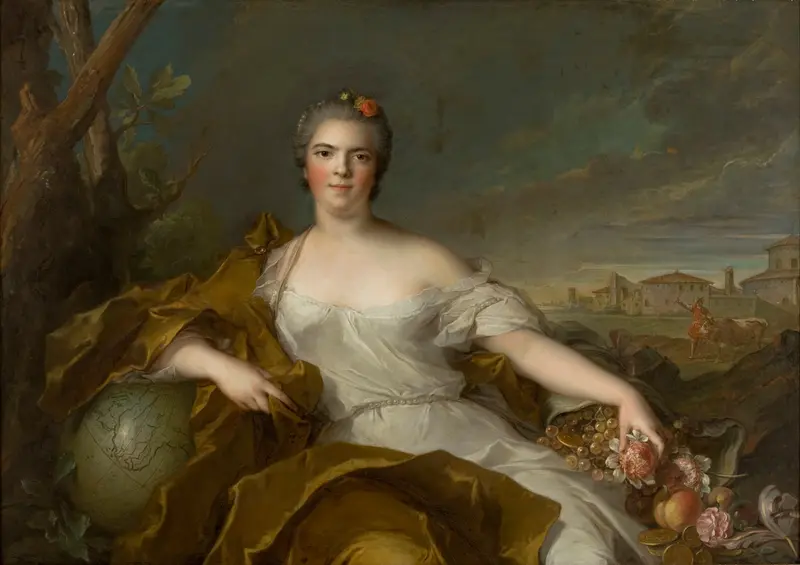
Princess Louise-Élisabeth of France - The Earth
Jean-Marc Nattier
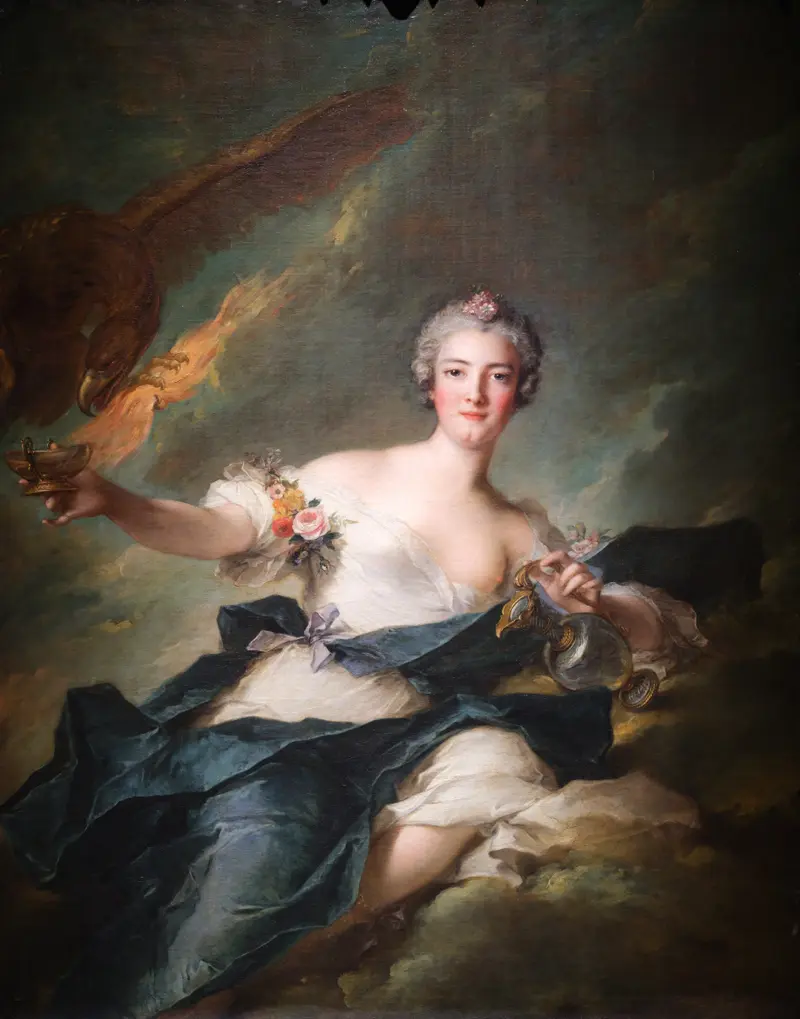
The Duchess of Chaulnes Represented as Hebe
Jean-Marc Nattier
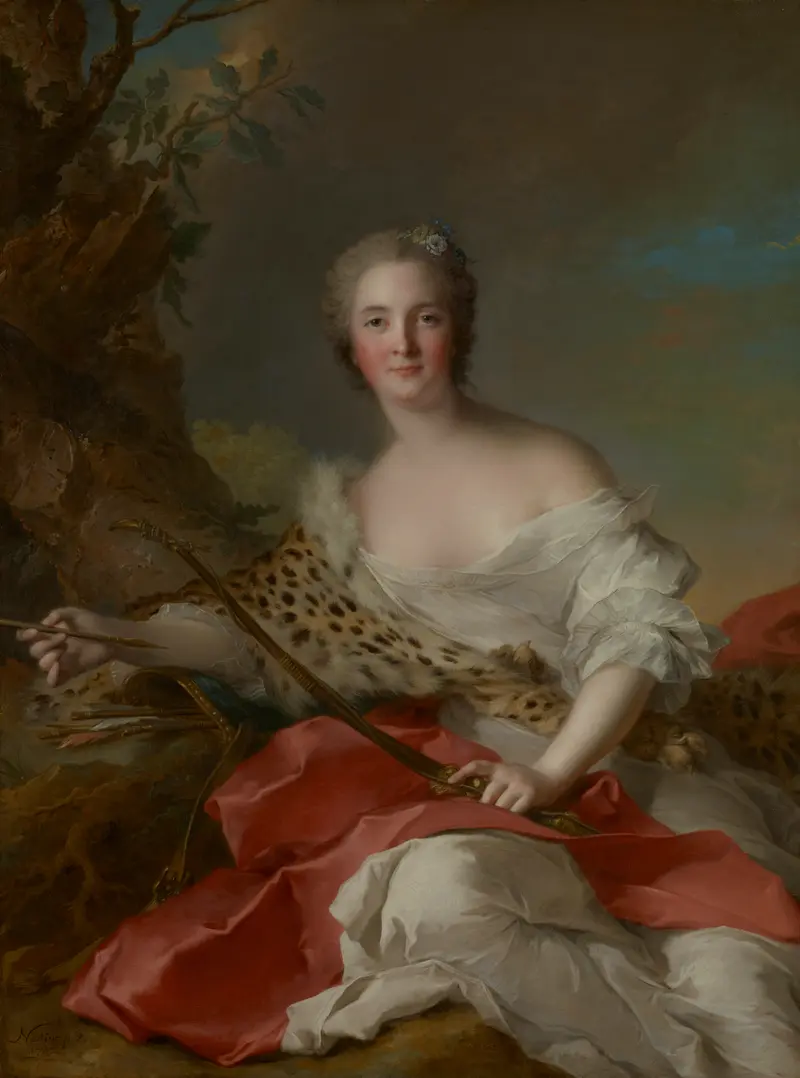
Portrait of Madame Bonnier de la Mosson as Diana (Constance-Gabrielle-Magdeleine du Monciel de Lauraille
Jean-Marc Nattier
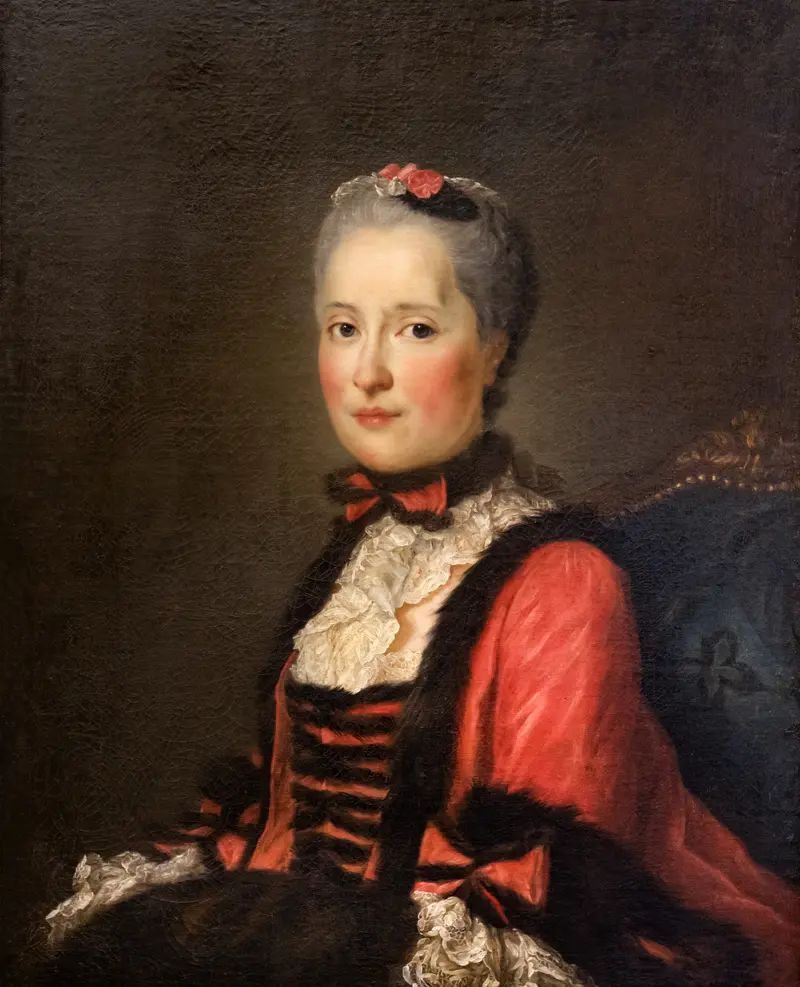
Portrait of Marie-Josephe of Saxony, Dauphine of France
Jean-Marc Nattier
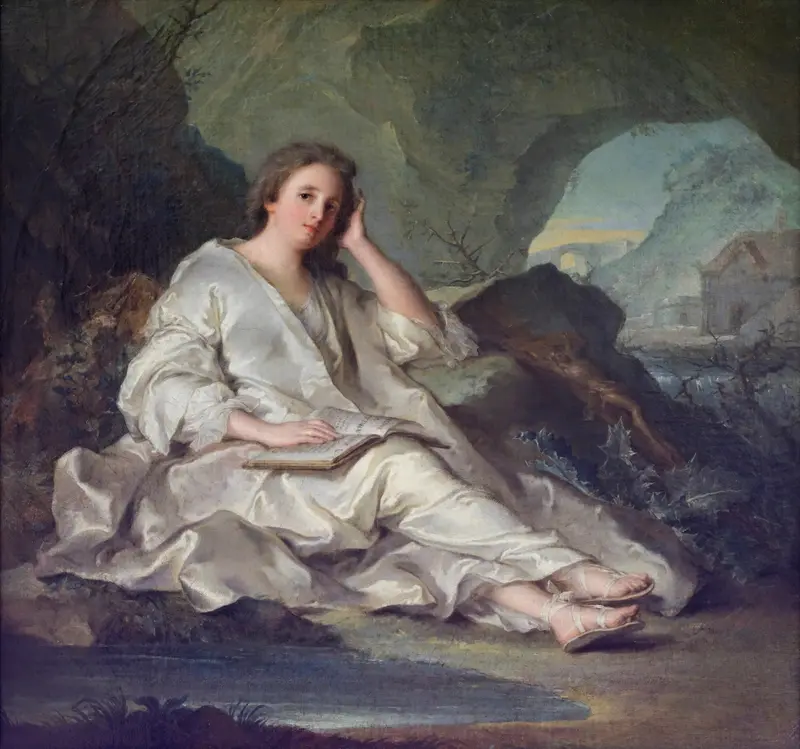
La Madeleine, ou Une Pénitente dans le désert Musée du Louvre Peintures INV 6880 ; MR
Jean-Marc Nattier
Princess Anne-Henriette of France - The Fire
Jean-Marc Nattier





