
Portrait of the Duchess of Parma and her Daughter Isabelle — History & Facts
The first thing to catch the eye in Portrait of the Duchess of Parma and her Daughter Isabelle is the gentle choreography between mother and child, their hands entwined by a garland of flowers. The Duchess, poised and serene, commands the foreground with a gaze that is both direct and inviting, while young Isabelle leans in, her expression open and luminous. The sweep of blue silk and the delicate pearls at the Duchess’s waist are not just finery—they signal rank and the choreography of courtly life, but also a kind of maternal softness.
Nattier’s light, cool palette bathes the scene in a silvery atmosphere, drawing the viewer’s attention to the faces and the subtle interplay of gesture: the Duchess’s hand lightly resting on her daughter’s, the child’s fingers curled around lilies and roses, symbols of innocence and dynastic hope. This portrait belongs to a world where images were currency in the game of dynastic alliances and royal favor. In 1750, when Jean-Marc Nattier painted this work, the French court prized such portraits as both private keepsakes and public statements—here, the eldest daughter of Louis XV is shown during a visit home, presenting her own daughter to the king. Nattier, celebrated for his ability to blend naturalism with the grandeur of the Baroque, was in high demand among the royal family precisely for this talent: he could make even the most formal sitters appear approachable, yet never ordinary.
Today, the painting resides in the Hillwood Museum collection, a quiet testament to both the ambitions and affections of eighteenth-century royalty—inviting us to linger over the details, and imagine the lives behind the silk and flowers.
More Artworks by Jean-Marc Nattier

Madame Crozat de Thiers and Her Daughter
Jean-Marc Nattier
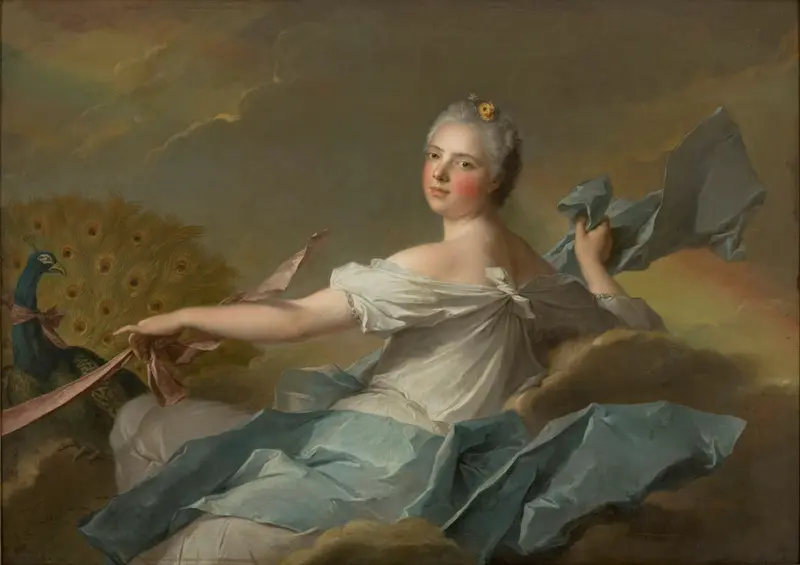
Princess Marie Adélaïde of France - The Air
Jean-Marc Nattier
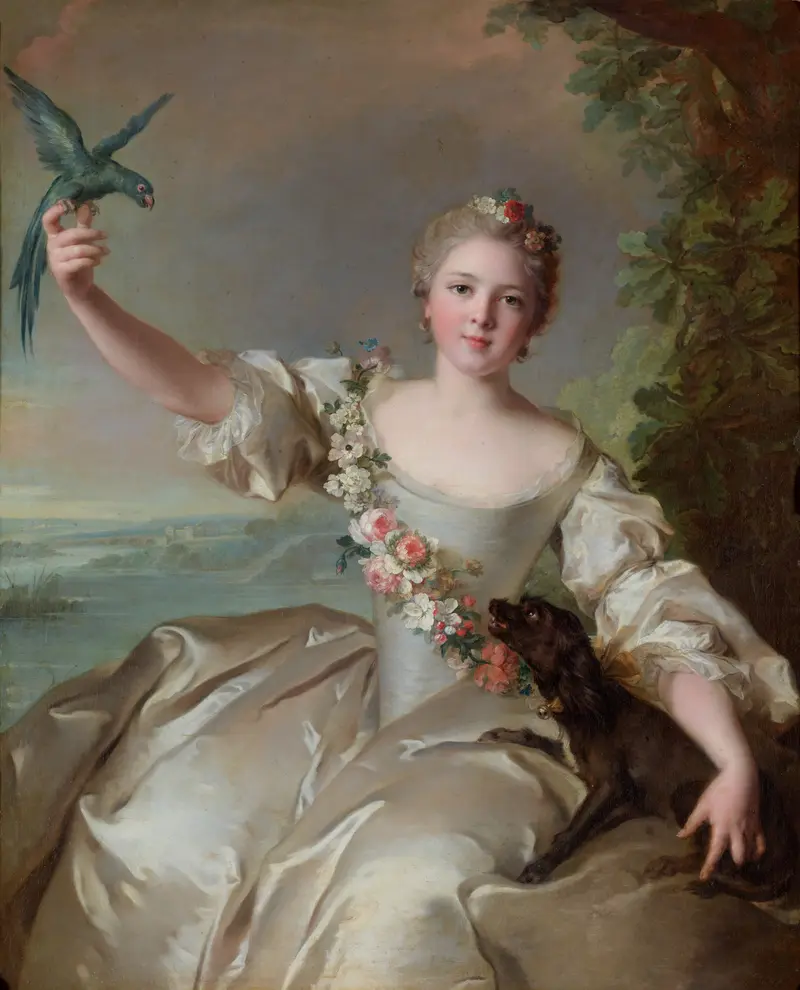
Portrait de Mathilde de Canisy, marquise d'Antin
Jean-Marc Nattier
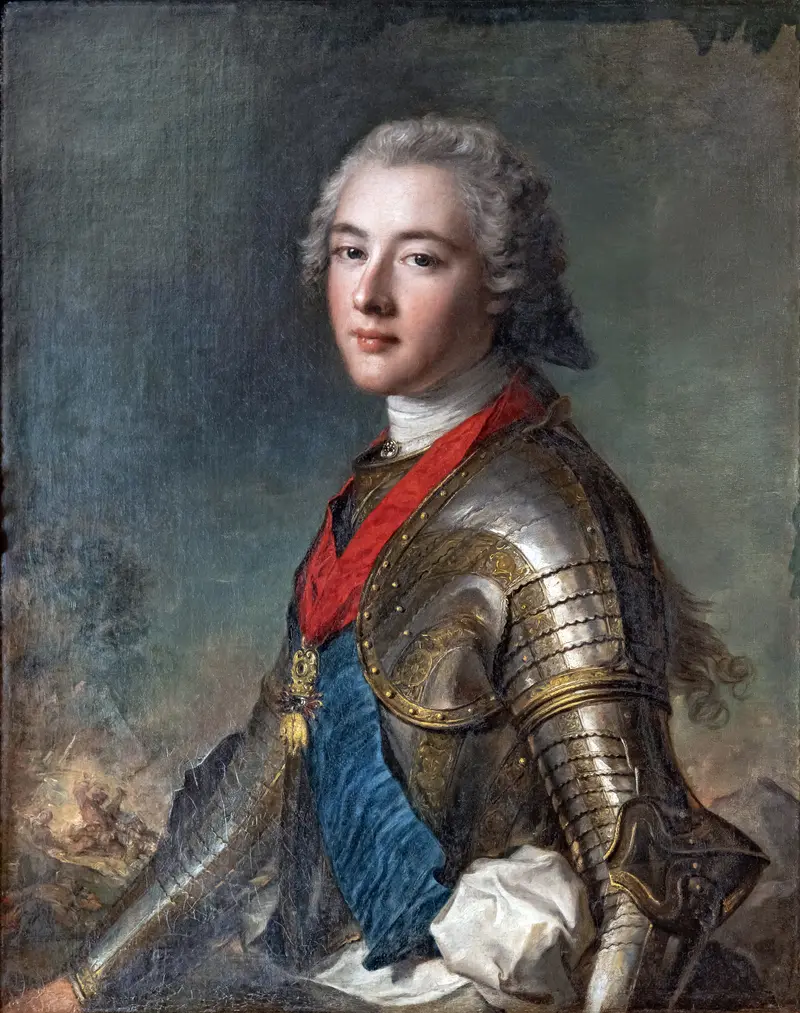
Bemberg Fondation Toulouse - Portrait de Louis Jean Marie de Bourbon, Duc de Penthièvre - Jean Marc Nattier inv.1158 82x65.4
Jean-Marc Nattier
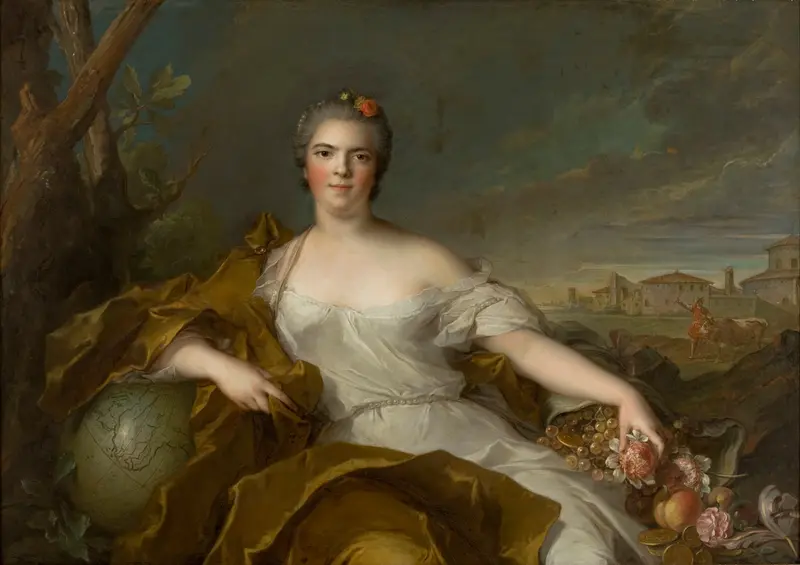
Princess Louise-Élisabeth of France - The Earth
Jean-Marc Nattier
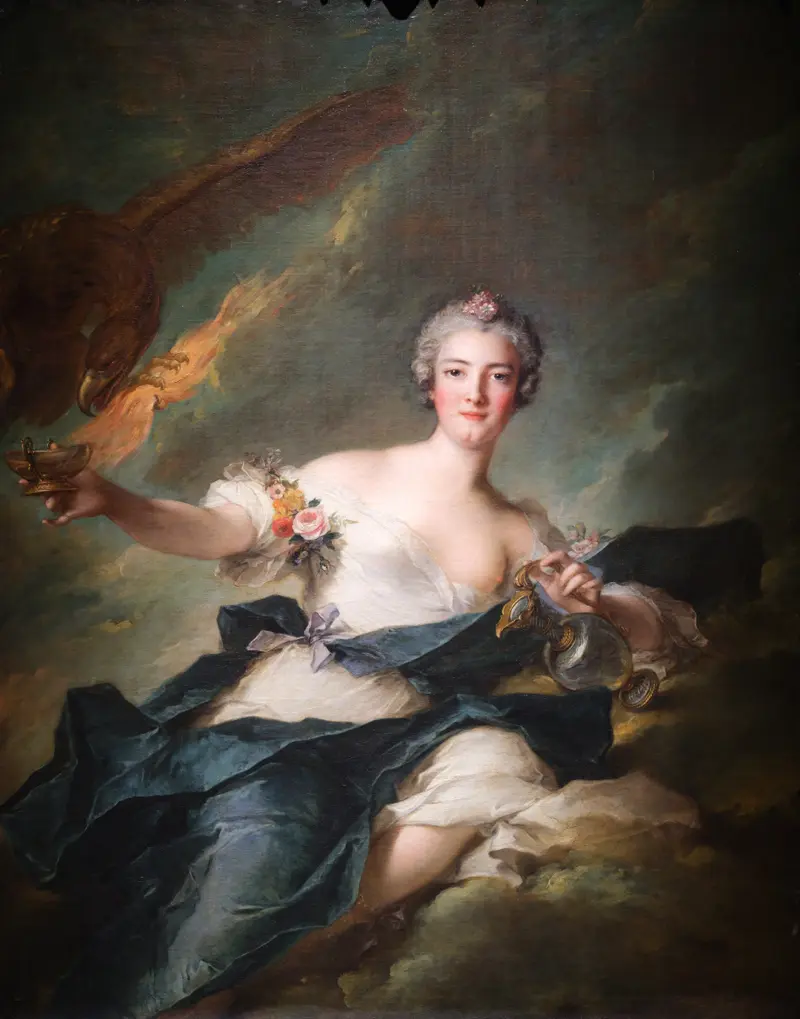
The Duchess of Chaulnes Represented as Hebe
Jean-Marc Nattier
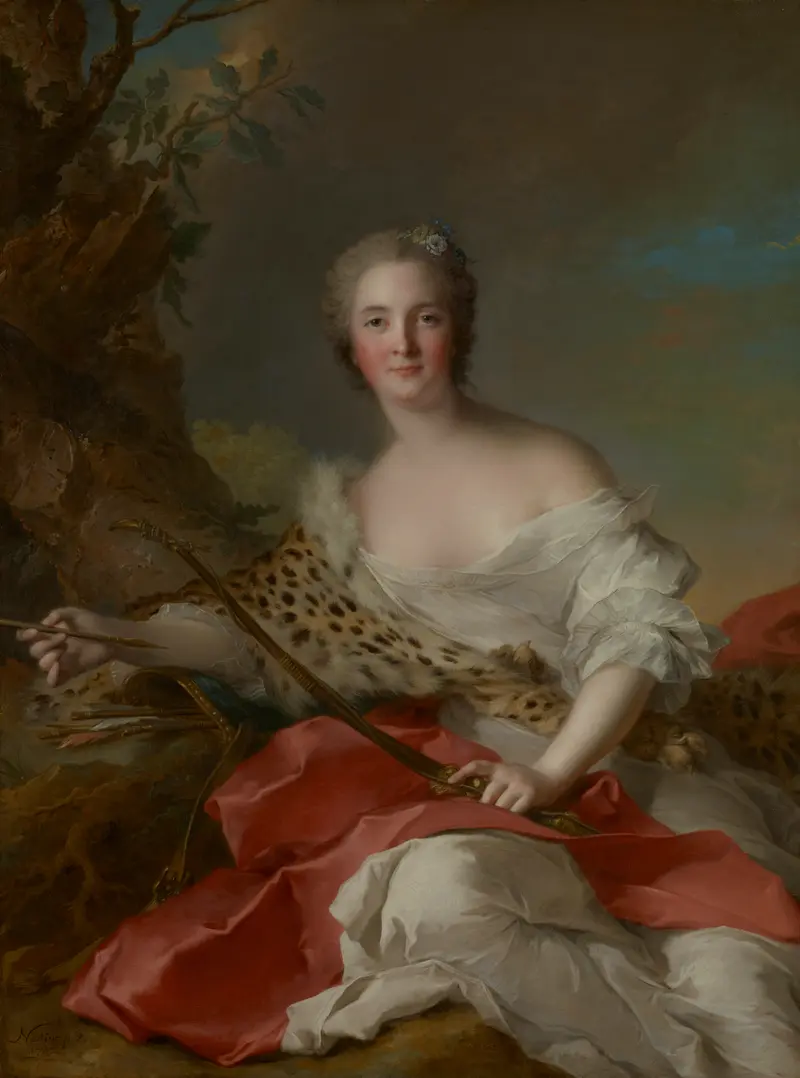
Portrait of Madame Bonnier de la Mosson as Diana (Constance-Gabrielle-Magdeleine du Monciel de Lauraille
Jean-Marc Nattier
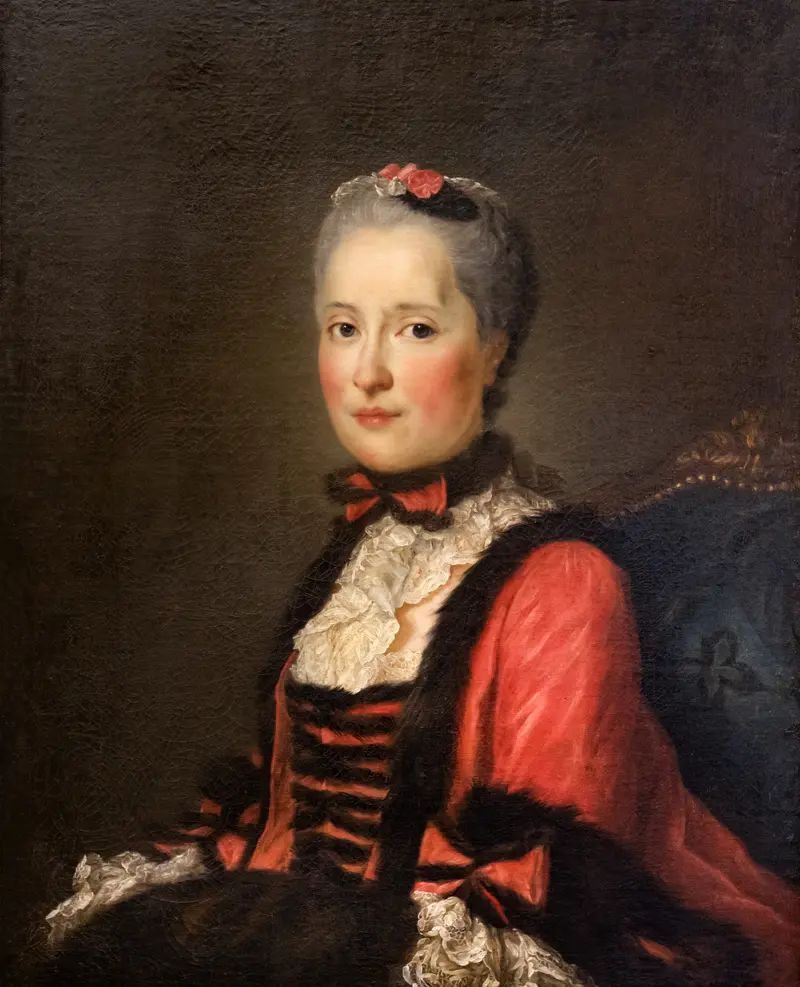
Portrait of Marie-Josephe of Saxony, Dauphine of France
Jean-Marc Nattier
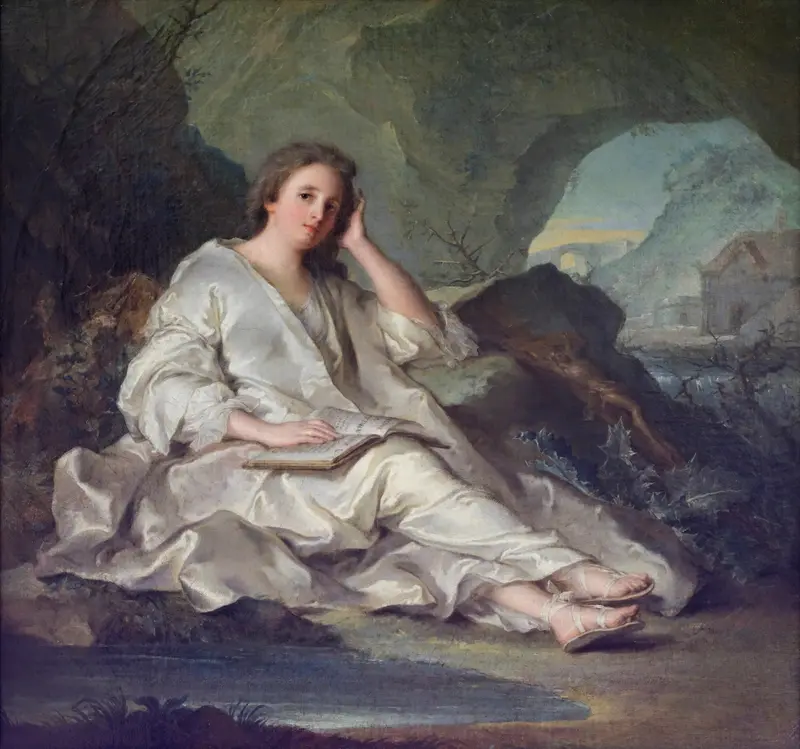
La Madeleine, ou Une Pénitente dans le désert Musée du Louvre Peintures INV 6880 ; MR
Jean-Marc Nattier
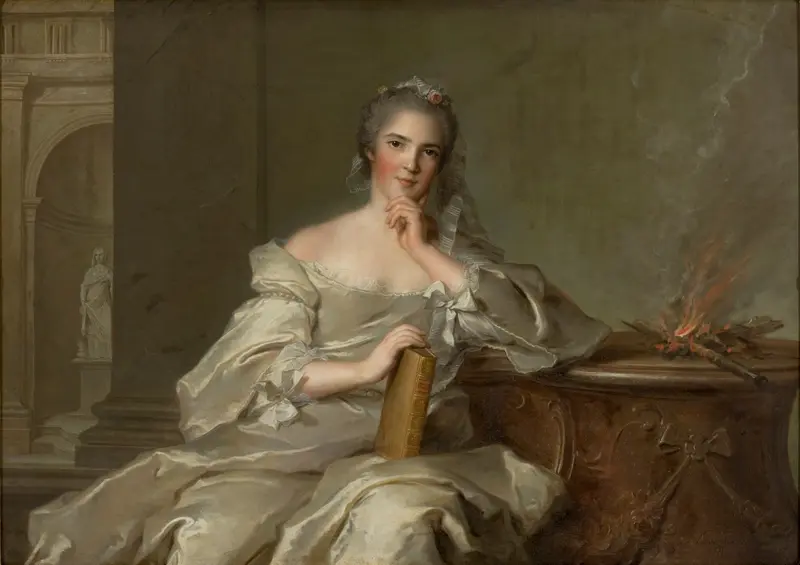
Princess Anne-Henriette of France - The Fire
Jean-Marc Nattier





