
Presumed portrait of Philippine Élisabeth d'Orléans — History & Facts
A young woman meets the viewer’s gaze with a calm assurance, her fingers poised on the strings of a mandolin as if she has just paused in her music. The scene is alive with detail: a cherubic child, likely a personification of Cupid, leans in with a score, guiding her song. The sweep of her silk gown, the luminous red set against the deep black, draws the eye to her hands and the delicate instrument, while the background—an open sky, classical columns, and a glimpse of French fleur-de-lis—anchors her in a world of privilege and performance.
Every element here is a signal, from the playful putto to the sheen of her dress, that this is a portrait not just of a person, but of her role and aspirations. Painted in 1731, this work belongs to the world of early eighteenth-century France, when portraits of aristocratic women often blended allegory, music, and myth to flatter both sitter and viewer. Whether the subject is Philippine Élisabeth d'Orléans or her cousin Louise Anne de Bourbon, as the source suggests, the image speaks to the era’s fascination with grace, accomplishment, and lineage. Such portraits were commissioned to celebrate status and cultivate a refined public image, their settings and symbols carefully chosen to convey taste and virtue.
The uncertainty that lingers around the sitter’s identity is a reminder that history often leaves us with more questions than answers—but the painting’s invitation to linger over its details remains as clear as ever.
More Artworks by Jean-Marc Nattier

Madame Crozat de Thiers and Her Daughter
Jean-Marc Nattier
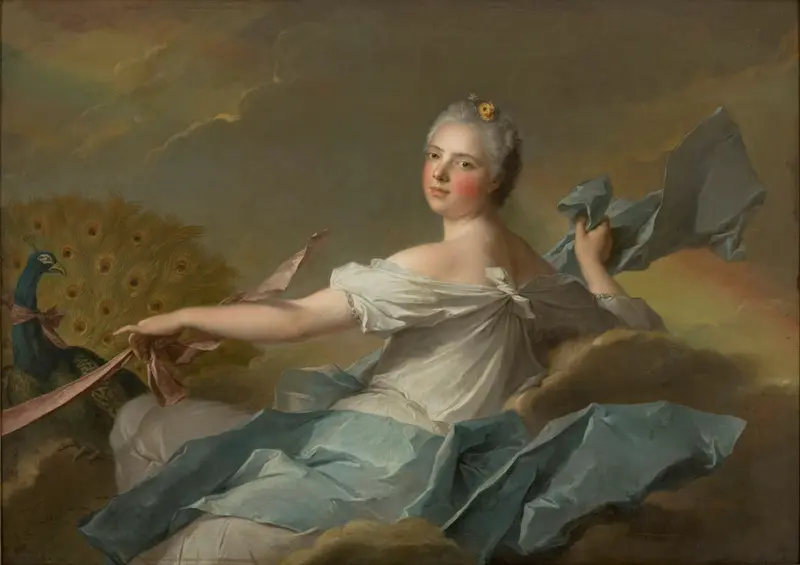
Princess Marie Adélaïde of France - The Air
Jean-Marc Nattier
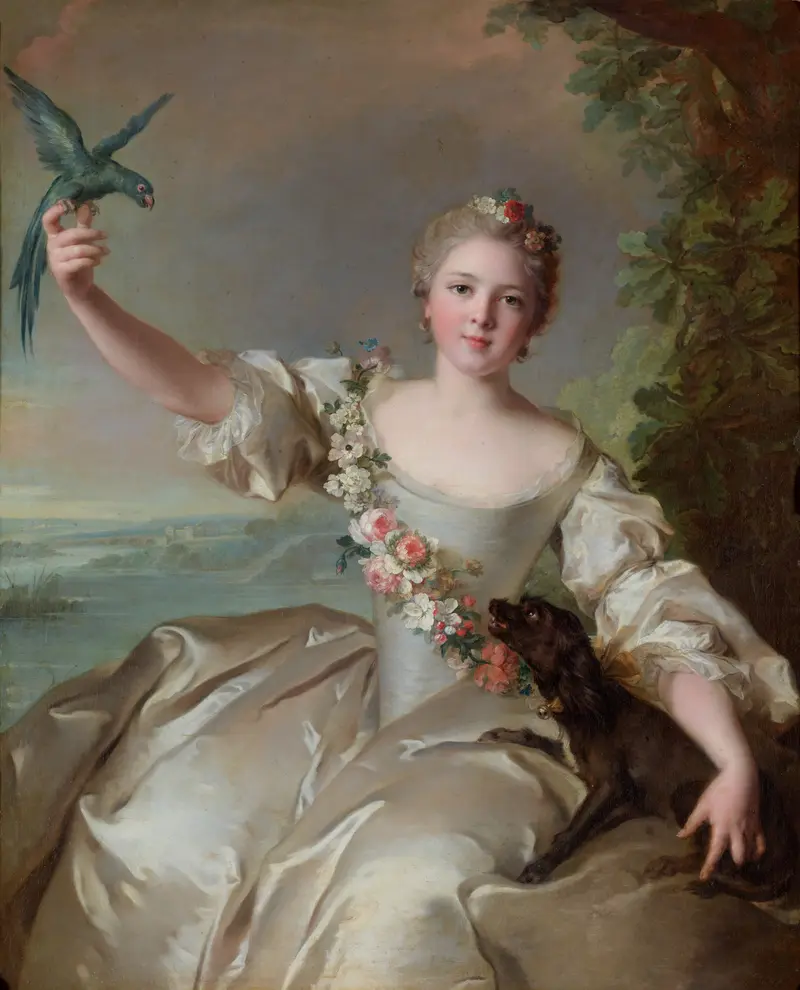
Portrait de Mathilde de Canisy, marquise d'Antin
Jean-Marc Nattier
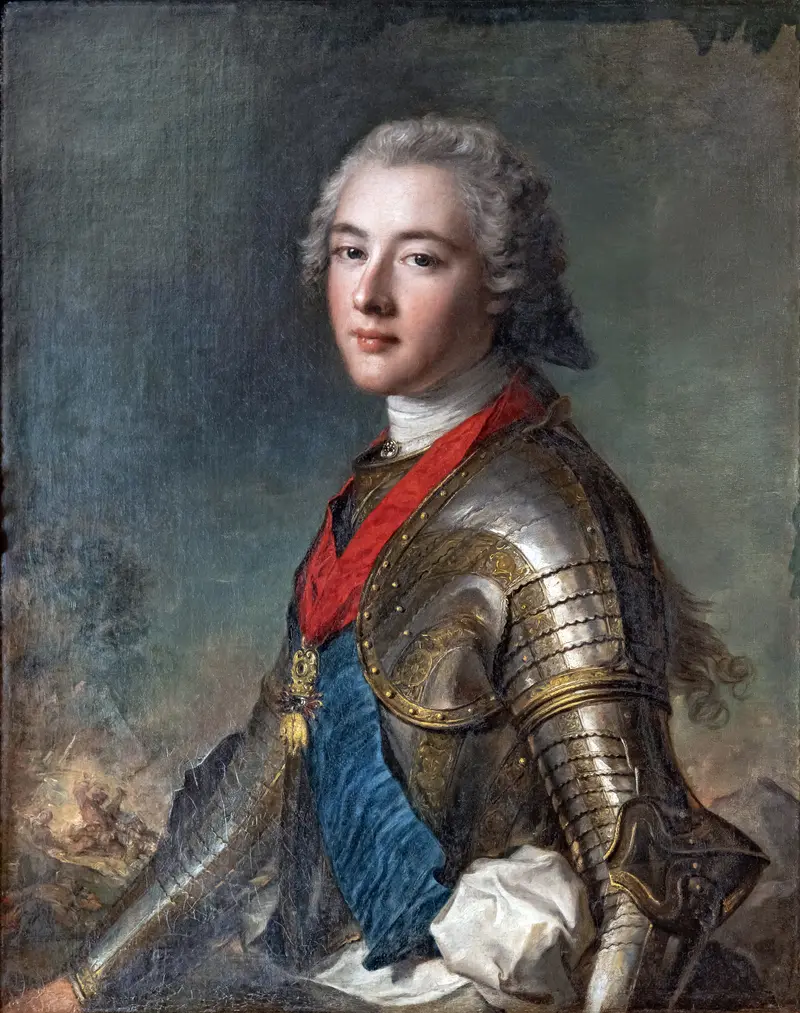
Bemberg Fondation Toulouse - Portrait de Louis Jean Marie de Bourbon, Duc de Penthièvre - Jean Marc Nattier inv.1158 82x65.4
Jean-Marc Nattier
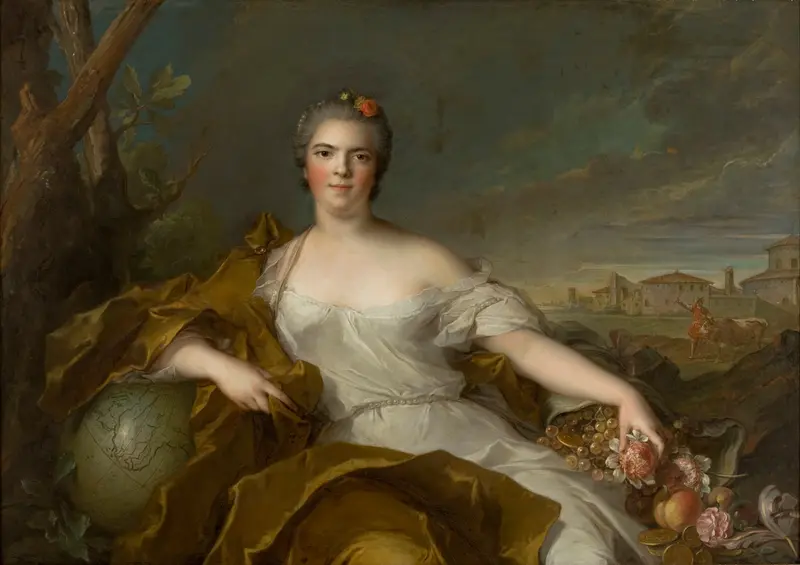
Princess Louise-Élisabeth of France - The Earth
Jean-Marc Nattier
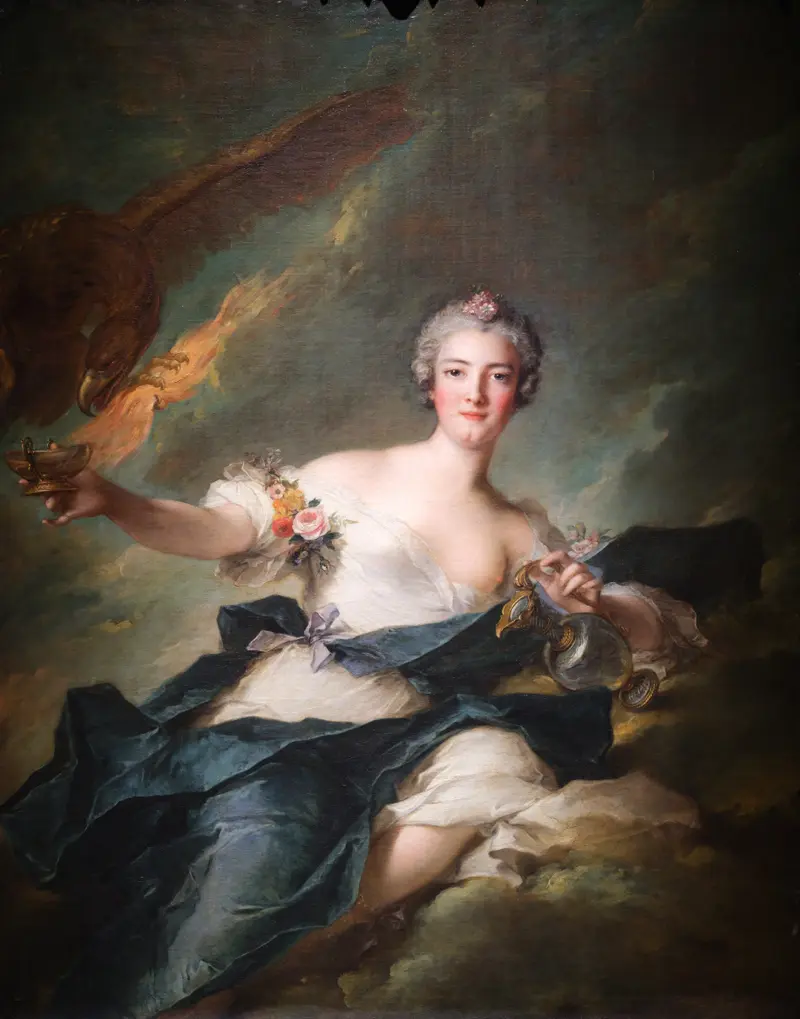
The Duchess of Chaulnes Represented as Hebe
Jean-Marc Nattier
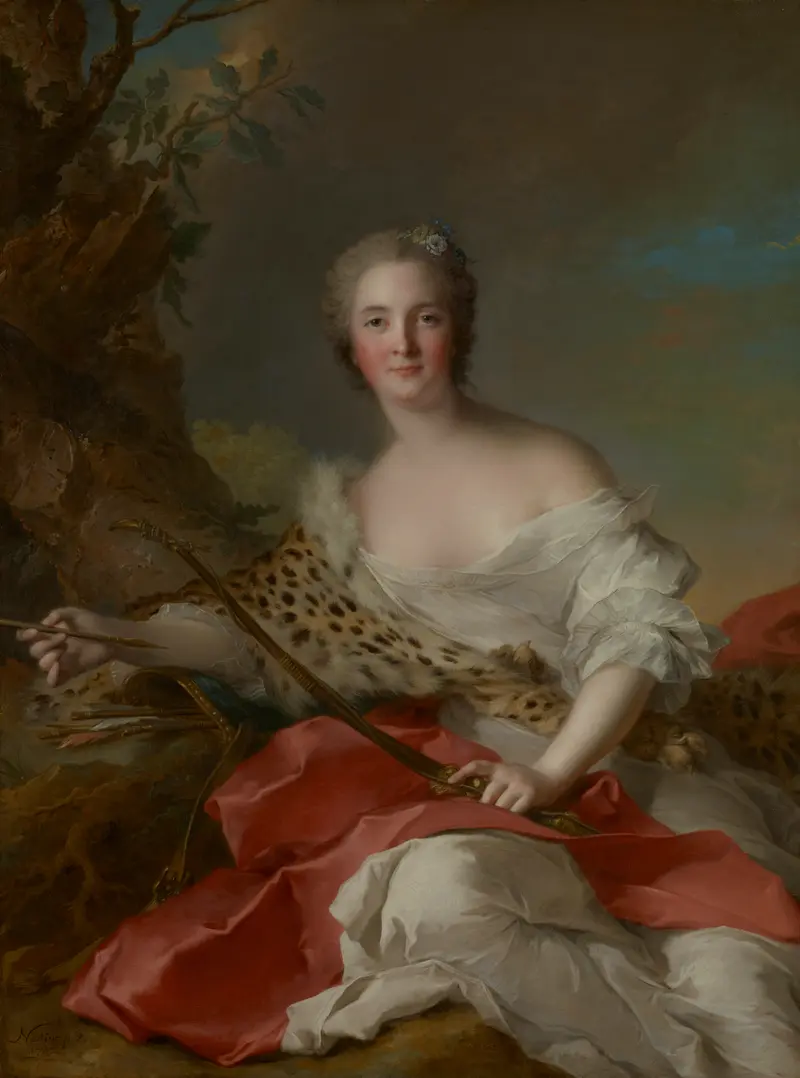
Portrait of Madame Bonnier de la Mosson as Diana (Constance-Gabrielle-Magdeleine du Monciel de Lauraille
Jean-Marc Nattier
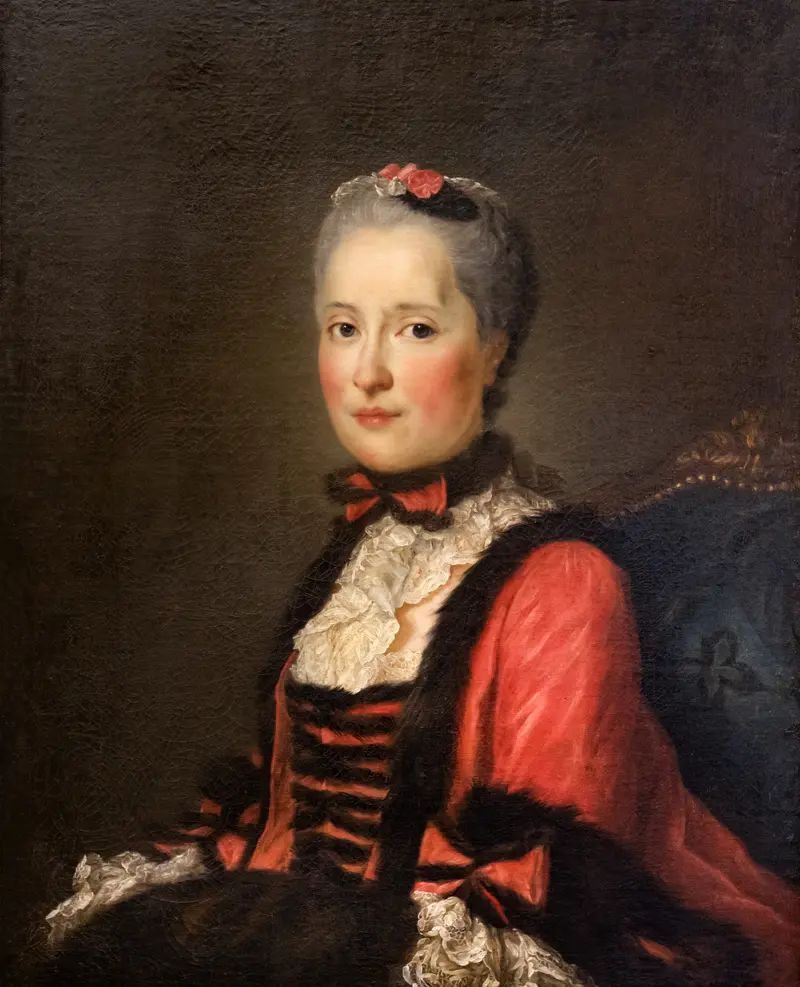
Portrait of Marie-Josephe of Saxony, Dauphine of France
Jean-Marc Nattier
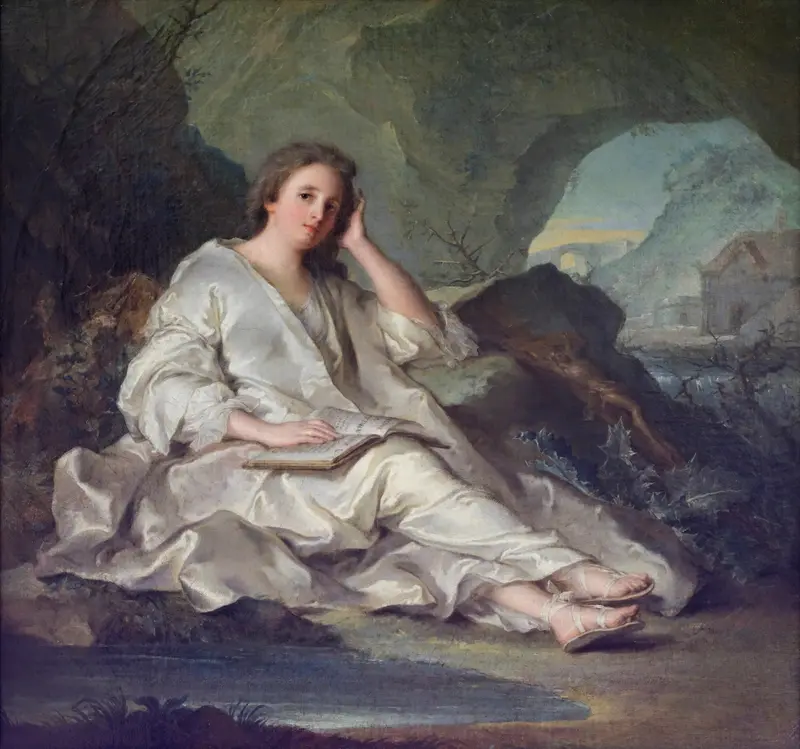
La Madeleine, ou Une Pénitente dans le désert Musée du Louvre Peintures INV 6880 ; MR
Jean-Marc Nattier
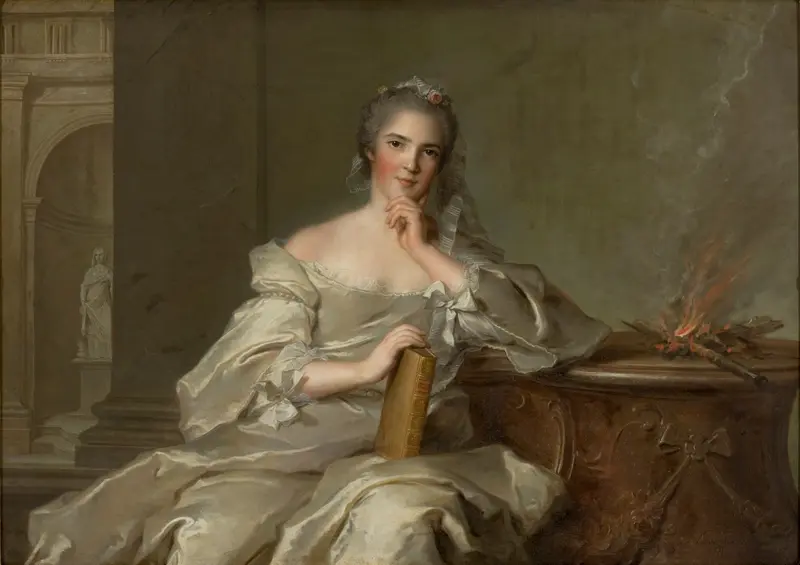
Princess Anne-Henriette of France - The Fire
Jean-Marc Nattier





