
Primavera — History & Facts
A group of eight figures and a winged child appear in a lush grove filled with orange trees and scattered flowers. On the far left, a man draped in a red cloak stands with one arm raised, his gaze directed upward as he gestures toward the branches above. Next to him, three women in translucent white gowns join hands in a circular dance, their bodies turned gracefully toward each other.
Each of the three women displays a different pose and expression: one looks outward, another glances at her companions, and the third tilts her head back slightly. At the center, a woman stands apart from the others, wearing a long dress with a red drape and a medallion at her neck, her head gently inclined and her right hand raised. Above her, a small winged figure flies horizontally, aiming a bow and arrow toward the group of dancing women. To the right, a woman in a floral-patterned dress stands with her hands clasped, her body turned slightly as she faces the viewer.
Beside her, another woman in a sheer gown bends forward, her mouth open as if speaking or exhaling flowers, while her arm reaches toward the woman in the floral dress. At the far right, a blue-clad male figure emerges from the shadows among the trees, reaching forward as if to grasp the woman who bends away from him. The background is densely filled with dark trees bearing golden fruit, and the ground is covered in a carpet of small, colorful flowers.
The figures are arranged in a frieze-like composition, each carefully spaced across the width of the scene. The light falls evenly across the foreground figures, highlighting the transparent fabrics, intricate floral patterns, and the smooth, pale skin tones. Fine, delicate brushwork defines the hair, garments, and details of the foliage, while the overall surface appears smooth and highly finished. Primavera was painted by Sandro Botticelli in the 1480s.
The scene brings together figures from classical mythology, set in a garden filled with orange trees and flowers. The work is described as a mythological painting and an allegory, with interpretations often relating to the flourishing of Spring. The composition is associated with the Early Renaissance movement.
Sources: Uffizi Gallery, record 8360 · Wikidata Q549847 · Wikipedia: Primavera (Botticelli) · Image source (Wikimedia Commons)
More Artworks by Sandro Botticelli
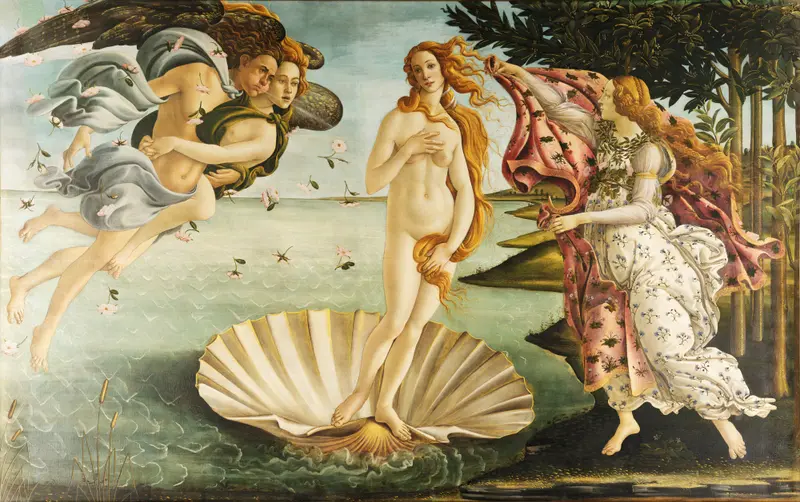
The Birth of Venus
Sandro Botticelli
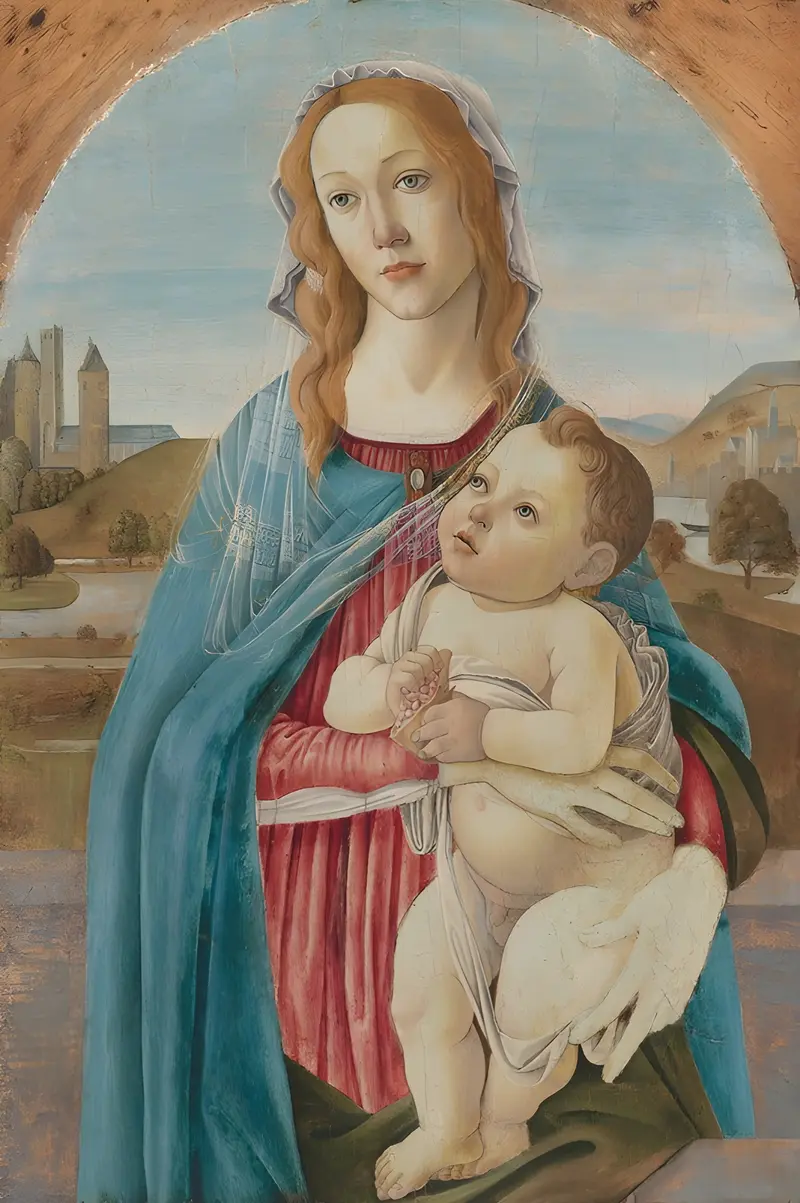
Virgin and Child
Sandro Botticelli
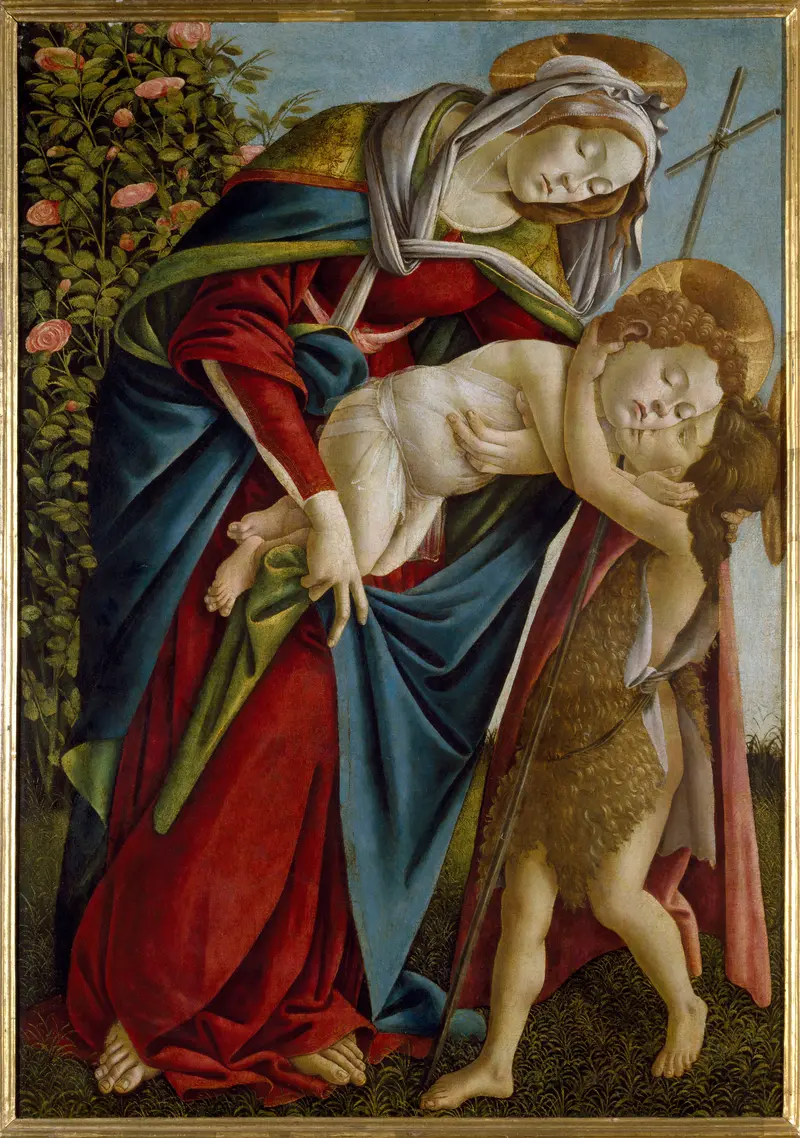
Madonna and Child and the Young St John the Baptist
Sandro Botticelli
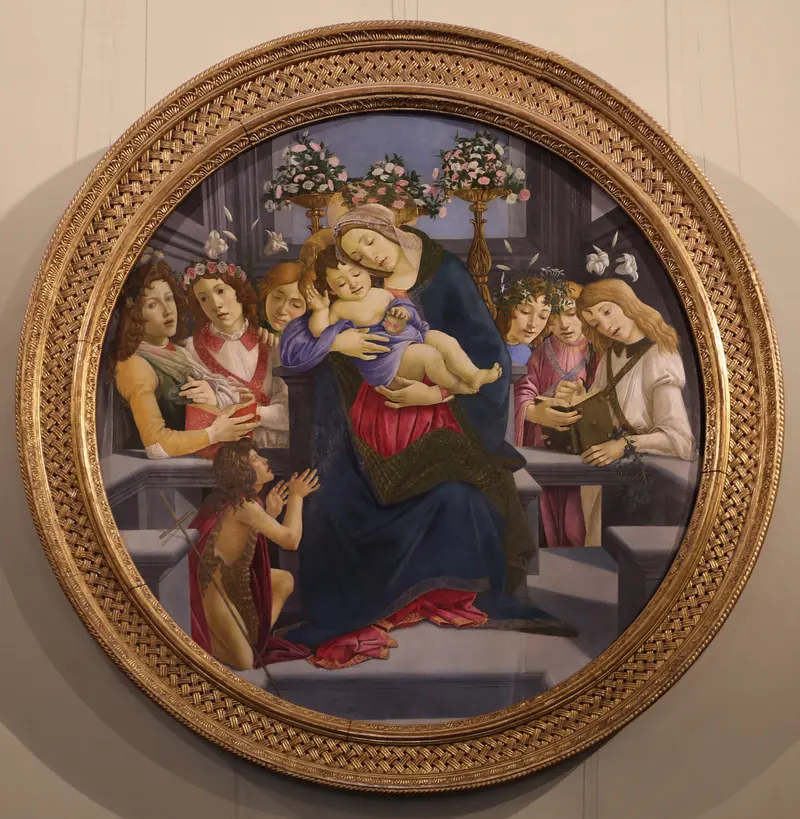
Madonna and Child with six angels and Saint John the Baptist as Child
Sandro Botticelli

Virgin and Child with the Young Saint John the Baptist
Sandro Botticelli
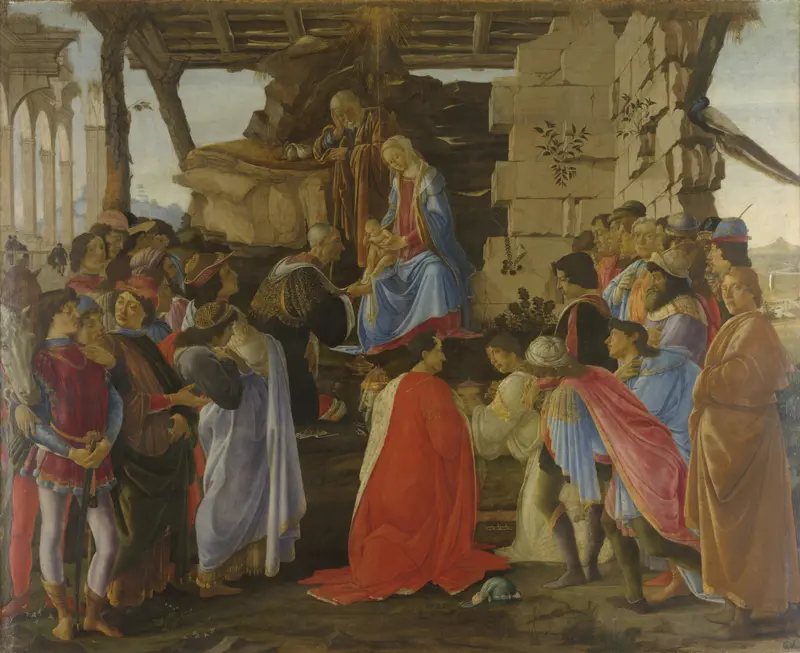
Adoration of the Magi
Sandro Botticelli
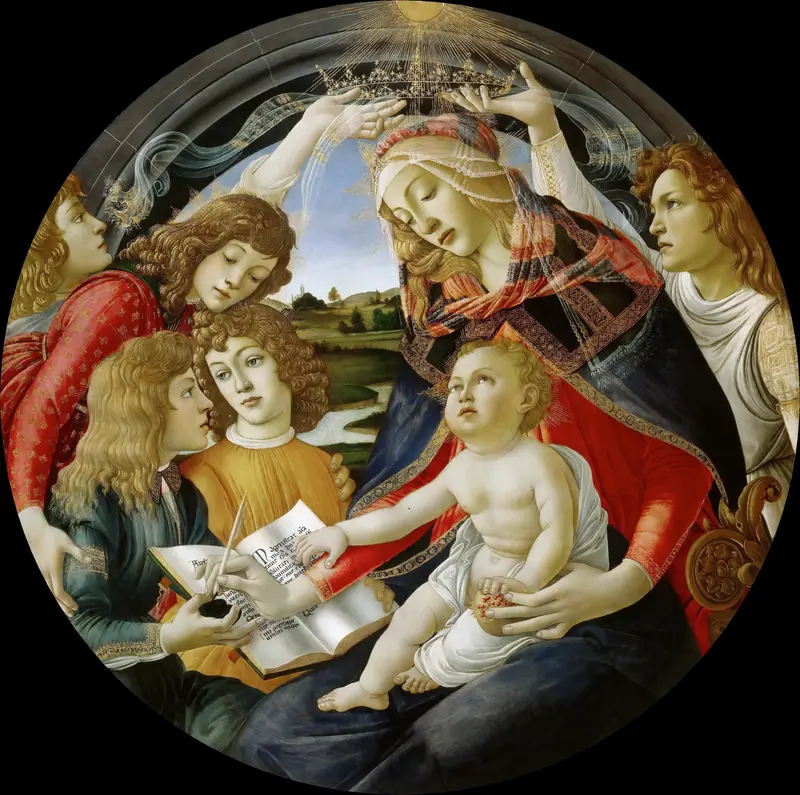
Madonna of the Magnificat
Sandro Botticelli
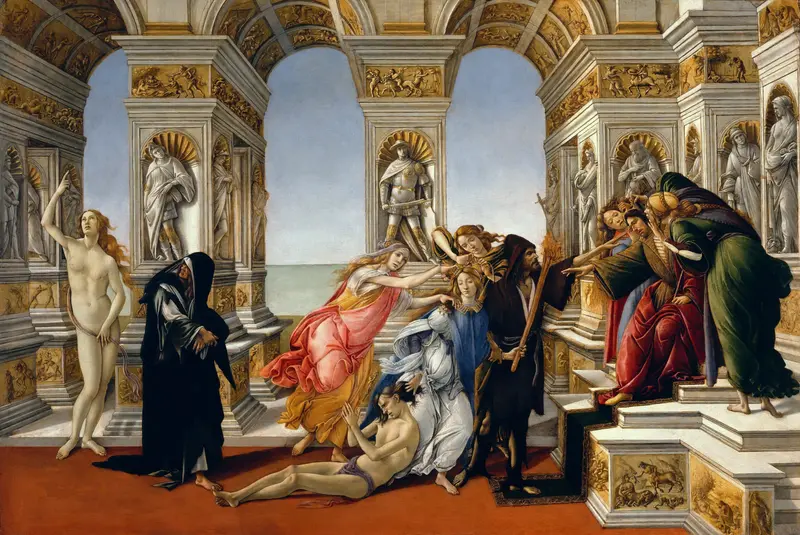
Calumny of Apelles
Sandro Botticelli
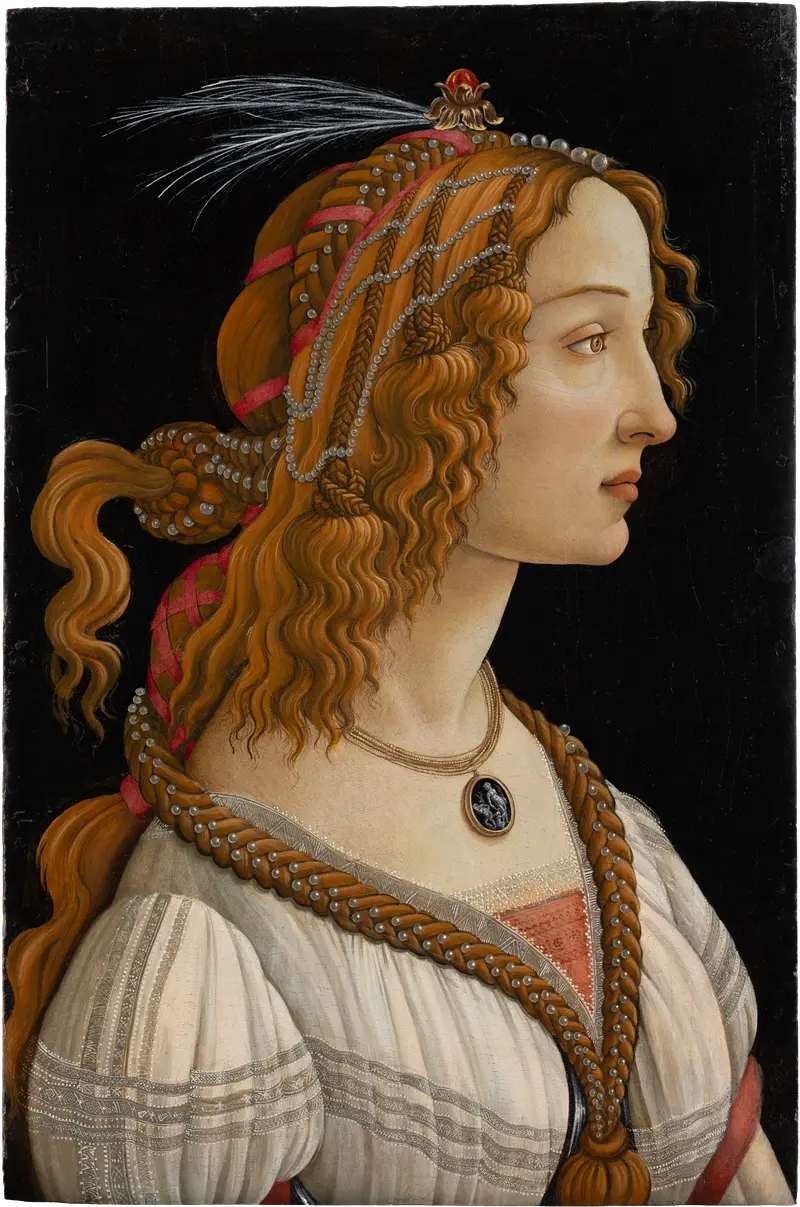
Idealized Portrait of a Lady (Portrait of Simonetta Vespucci as Nymph)
Sandro Botticelli
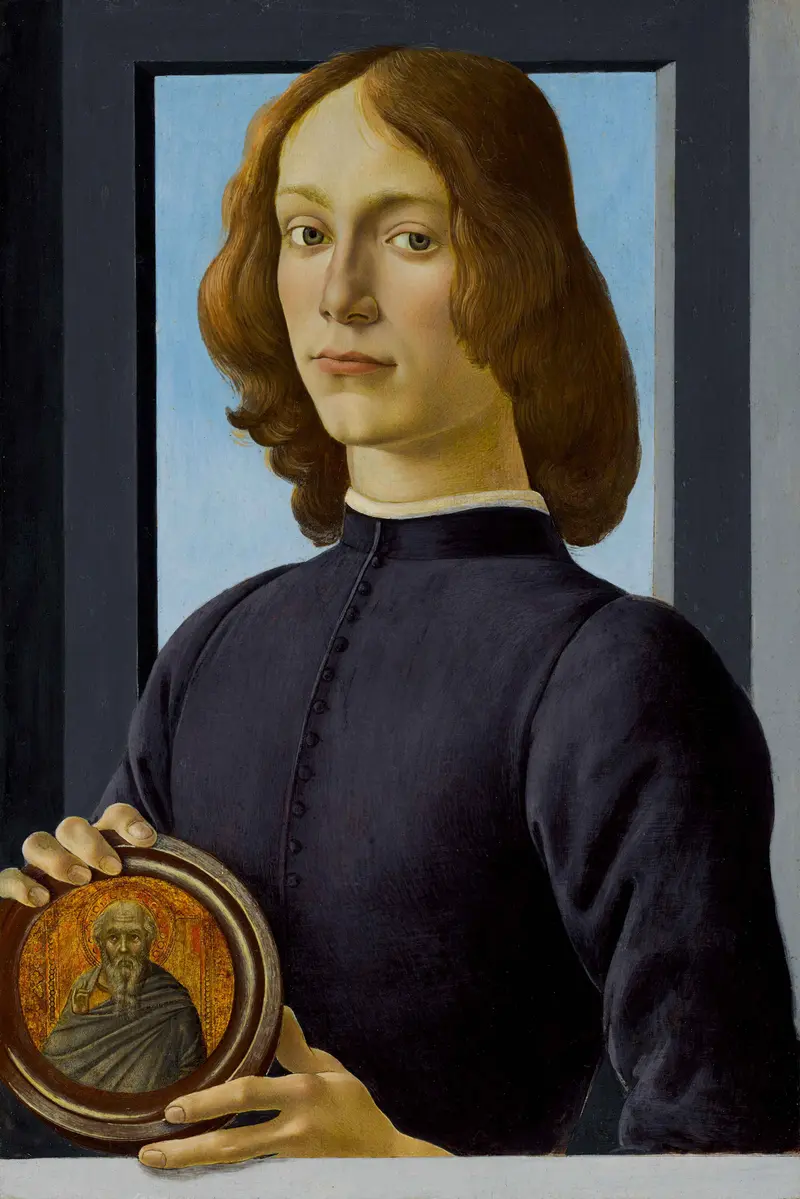
Portrait of a young man holding a roundel
Sandro Botticelli





