
Procession of Pardon in Brittany — History & Facts
When Procession of Pardon in Brittany was first exhibited at the Salon of 1869, Parisian critics were struck by its solemn realism and the respectful attention it paid to rural ritual. Jules Breton had spent months in the remote villages of Brittany, immersing himself in the region’s unique blend of Catholic devotion and age-old tradition. The annual Pardon—a communal act of repentance and celebration held in towns like Pont-Aven—was unfamiliar to urban audiences, and Breton’s painting offered a rare window into this world.
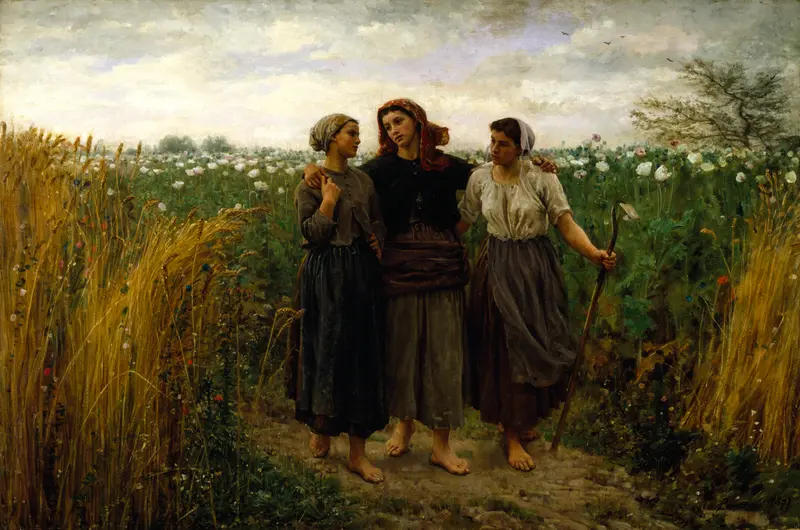
The work quickly became one of the most discussed images of its year, praised for its dignity and its refusal to sentimentalize. The painting captures the moment when a line of Breton women, clad in their distinctive lace headdresses and black shawls, process solemnly across a windswept field. In their hands they carry banners, rosaries, and small relics, each object a testament to faith and community. The low horizon and gathering clouds press down, emphasizing the gravity of the ritual and the humility of the figures.
Breton’s careful attention to local costume and landscape sets his approach apart from the more theatrical religious scenes of Jean-Léon Gérôme or the sentimental peasant genre of Jean-François Millet. Here, the focus is on collective endurance and the quiet heroism of ordinary people. The precise early history of this painting is not fully documented, but it is known that Jules Breton produced several works on Breton themes during the late 1860s, responding to a growing French fascination with regional cultures. Procession of Pardon in Brittany was likely acquired by a private collector soon after its Salon debut, and it has since passed through several hands, appearing in major exhibitions of 19th-century French art.
Today, it stands as a key example of Breton’s mature style, bridging the worlds of academic painting and rural realism. The work remains a touchstone for anyone interested in the intersection of faith, tradition, and modernity in French art.
More Artworks by Jules Breton

The Song of the Lark
Jules Breton
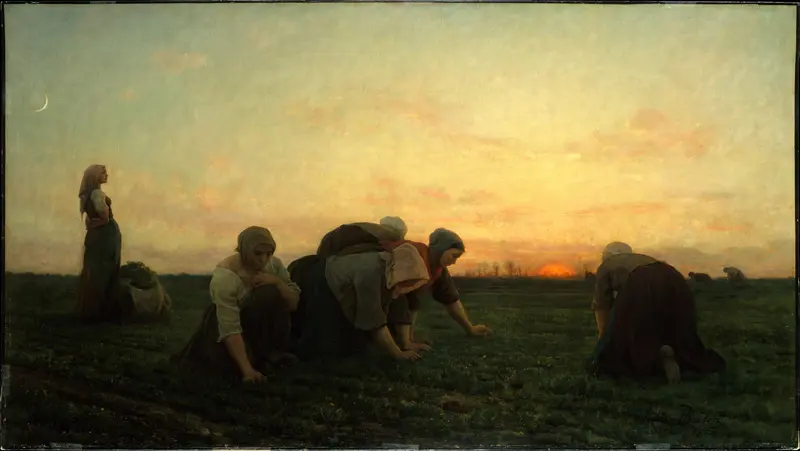
The Weeders
Jules Breton
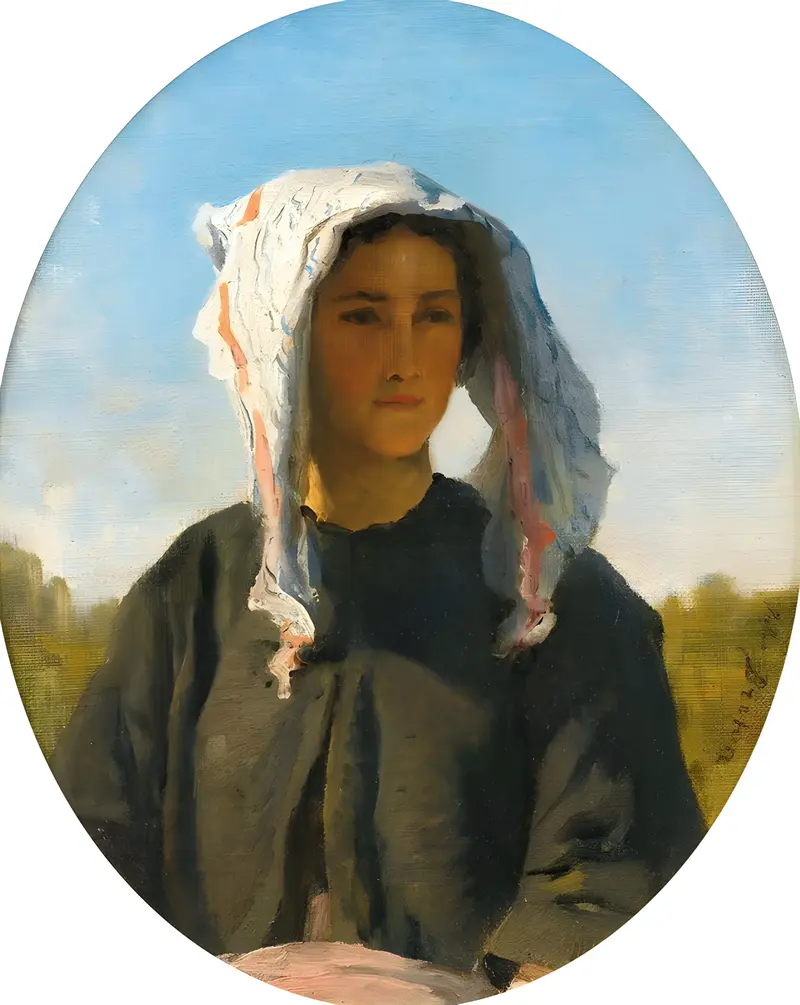
Portrait de jeune Paysanne Bordelaise
Jules Breton
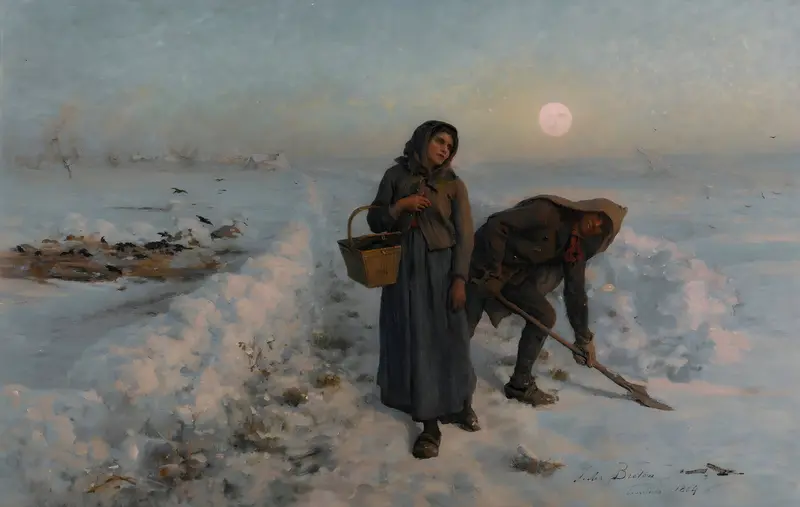
Sur la route en hiver; artois
Jules Breton
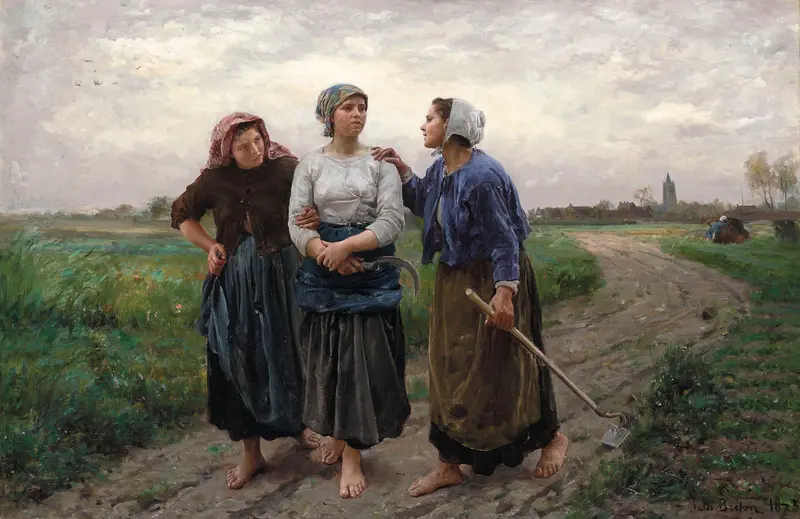
Les amies
Jules Breton
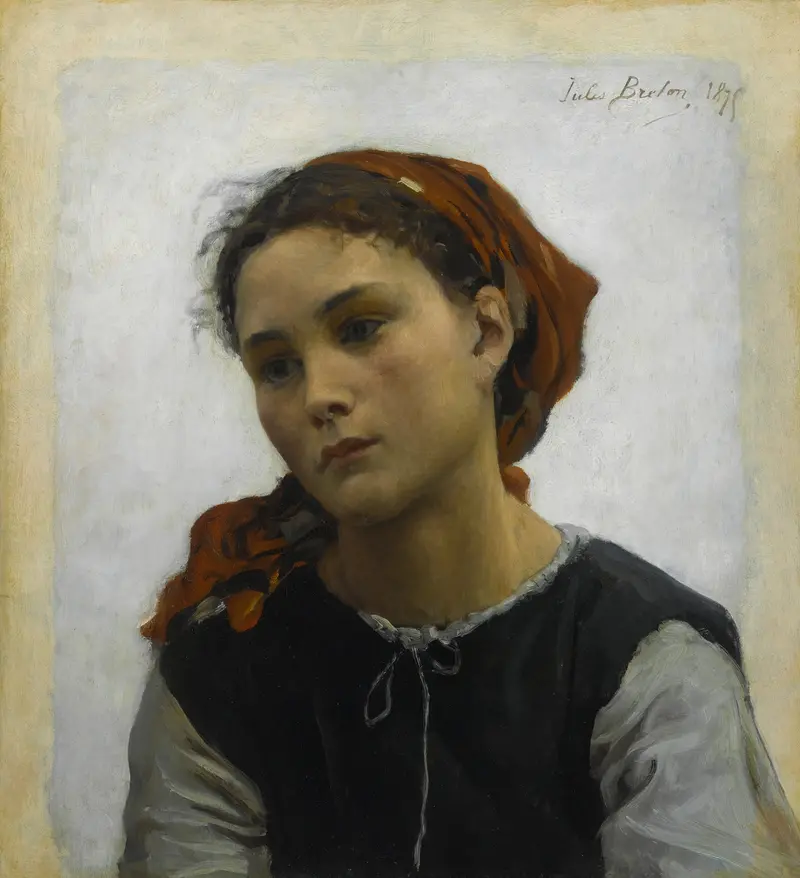
Innocente
Jules Breton
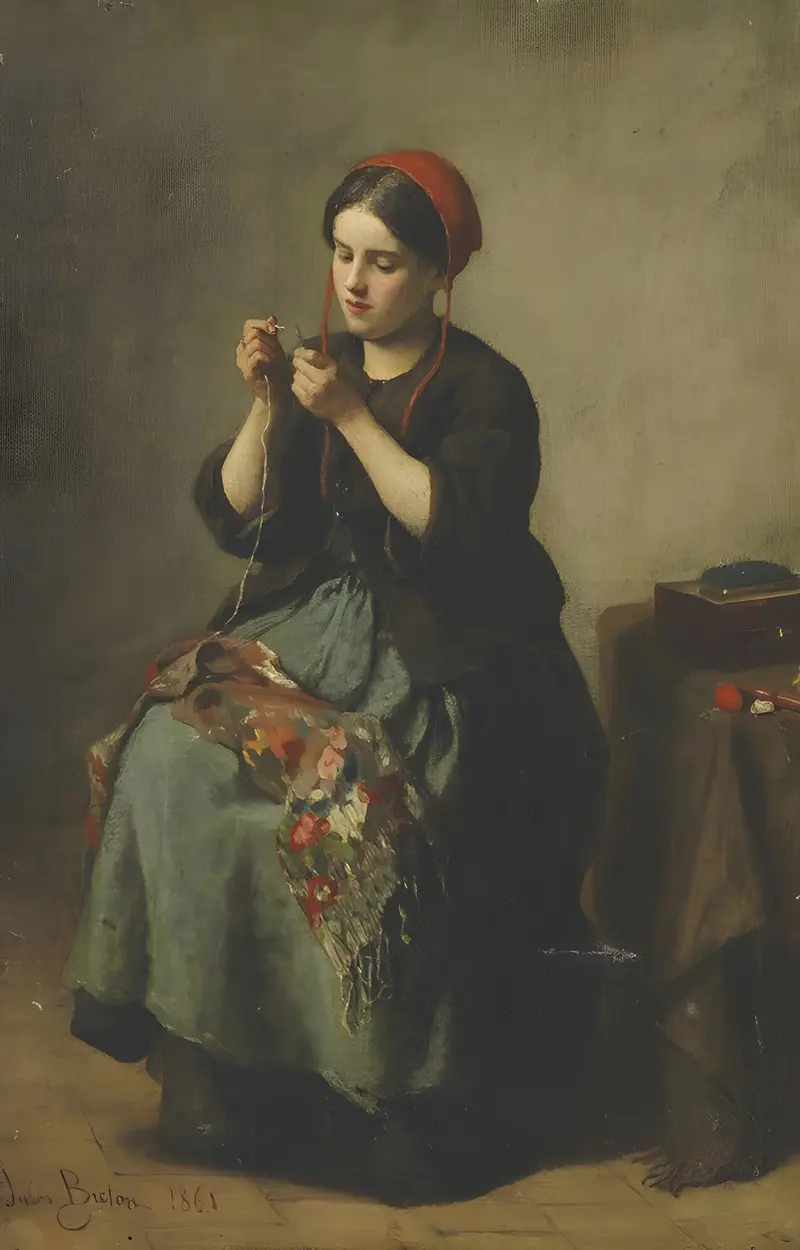
Peasant woman threading a needle
Jules Breton
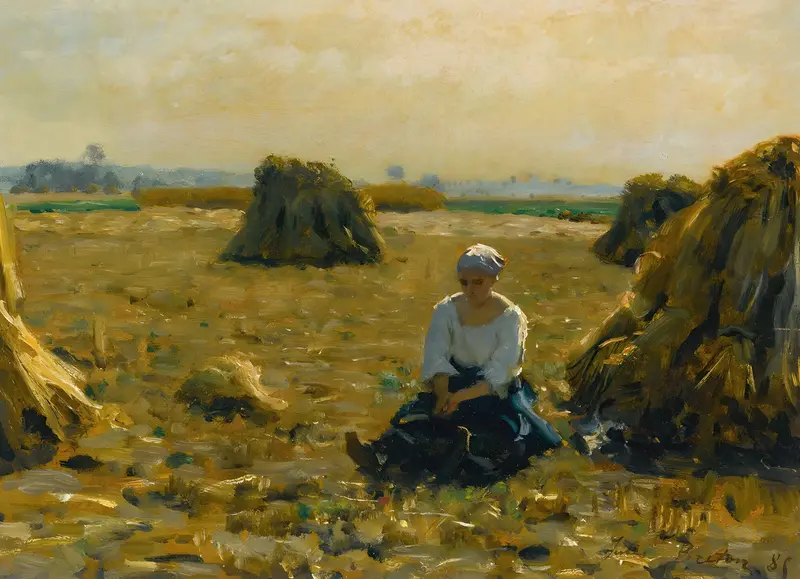
Jeune femme dans les champs
Jules Breton
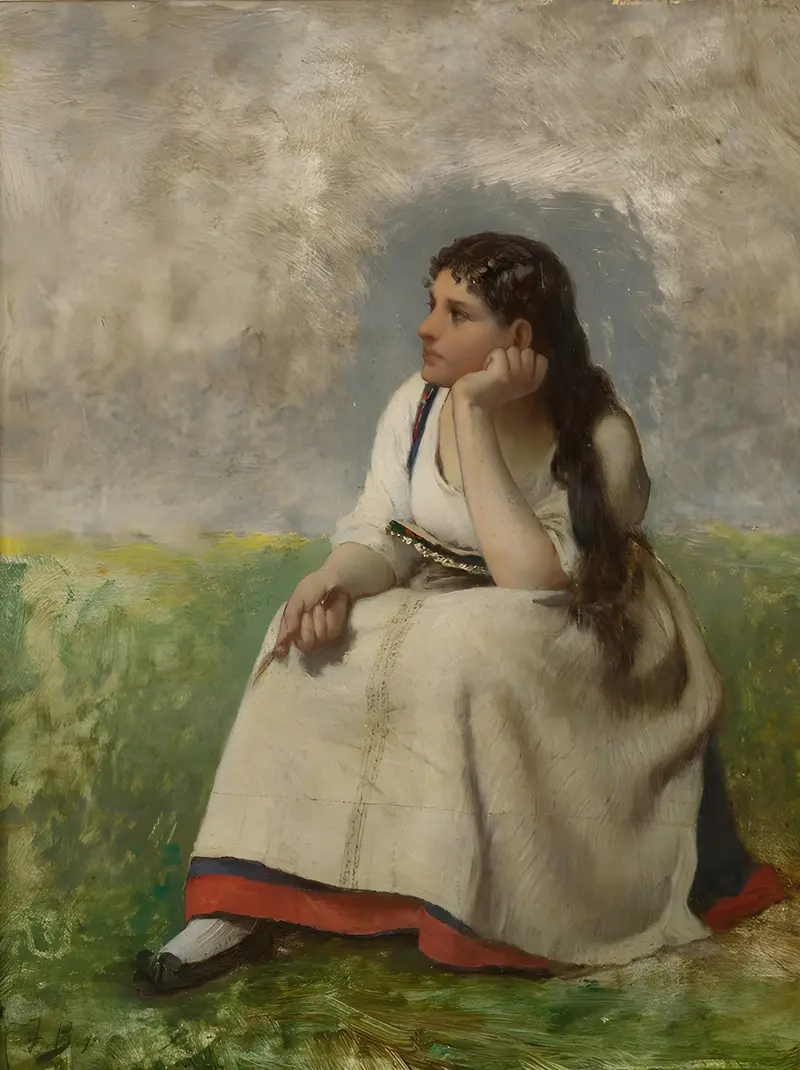
Jeune Fille Pensive
Jules Breton
Returning from the Fields
Jules Breton
More Genre Scene Art

Banquet of the Officers of the St George Civic Guard
Frans Hals

Rembrandt and Saskia in the Scene of the Prodigal Son
Rembrandt van Rijn

Bal du moulin de la Galette
Pierre-Auguste Renoir

Quadrille at the Moulin Rouge
Henri de Toulouse-Lautrec

A Burial at Ornans
Gustave Courbet

When Will You Marry?
Paul Gauguin