
Prosobranchia (Sea Snails) — History & Facts
What first seizes the eye in Prosobranchia (Sea Snails) is the extraordinary sense of drama conjured from the simple forms of shells. Against a pitch-black void, each shell floats as if on a stage, their spirals and spines rendered with such clarity that they seem to hover between the worlds of science and ornament. The central shell, bristling with ridges and elaborate frills, commands attention, its surface catching the light in a way that makes it almost sculptural.
Around it, other forms radiate—some smooth and conical, others bristling with spikes or coiled into hypnotic whorls—each one a marvel of natural architecture. The artist’s eye for symmetry and pattern guides the viewer through the composition, inviting close inspection of every groove and ridge. Created in 1904 for the celebrated Kunstformen der Natur, this plate is a testament to the era’s fascination with cataloguing and celebrating the diversity of the natural world. Such works were not merely scientific illustrations, but part of a broader movement in which art and science became partners in discovery—commissioned for encyclopedias, classrooms, and collectors’ cabinets alike.
Ernst Haeckel’s images, blending precision with a sense of wonder, mirrored the period’s hunger for knowledge and its faith in the beauty of nature’s order. History has kept few traces of the individual journeys of these prints, but their impact endures: they invite us to look again, and more closely, at the hidden worlds beneath the waves.
More Artworks by Ernst Haeckel
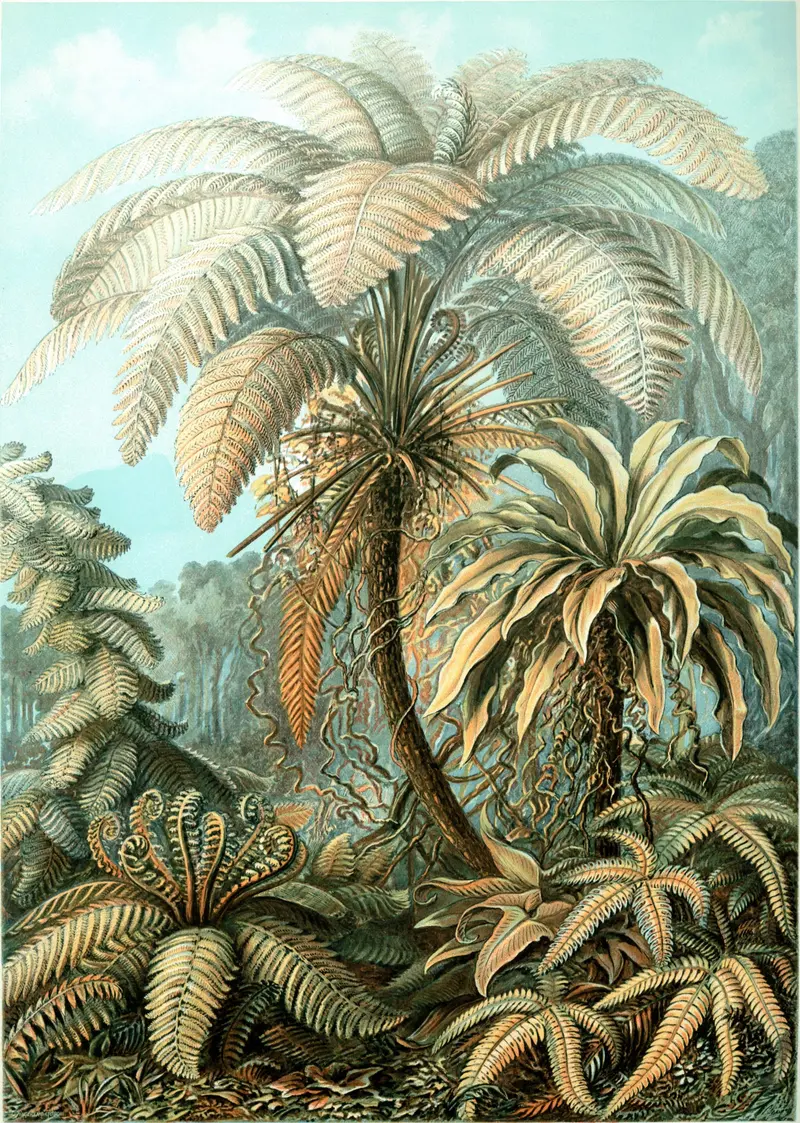
Filicinae (Ferns)
Ernst Haeckel
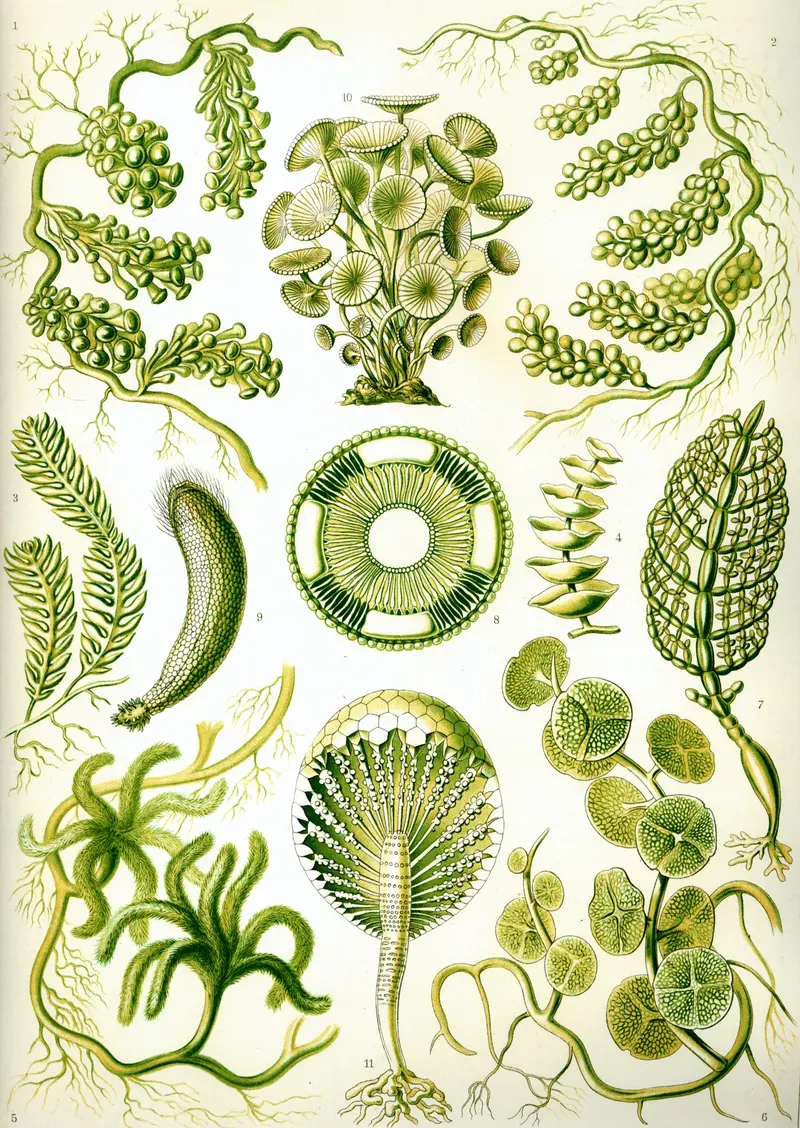
Siphoneae (Green Algae)
Ernst Haeckel

Cirripedia (Barnacles)
Ernst Haeckel

Actiniae (Sea Anemones)
Ernst Haeckel
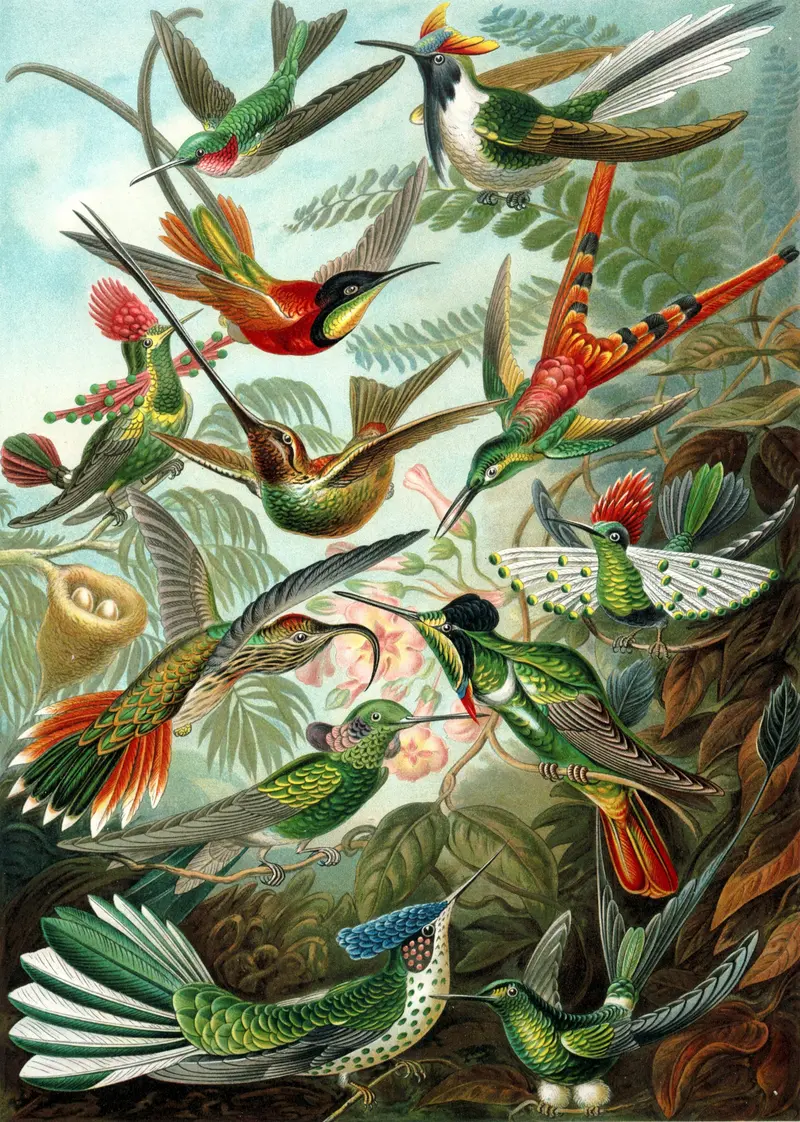
Trochilidae (Hummingbirds)
Ernst Haeckel
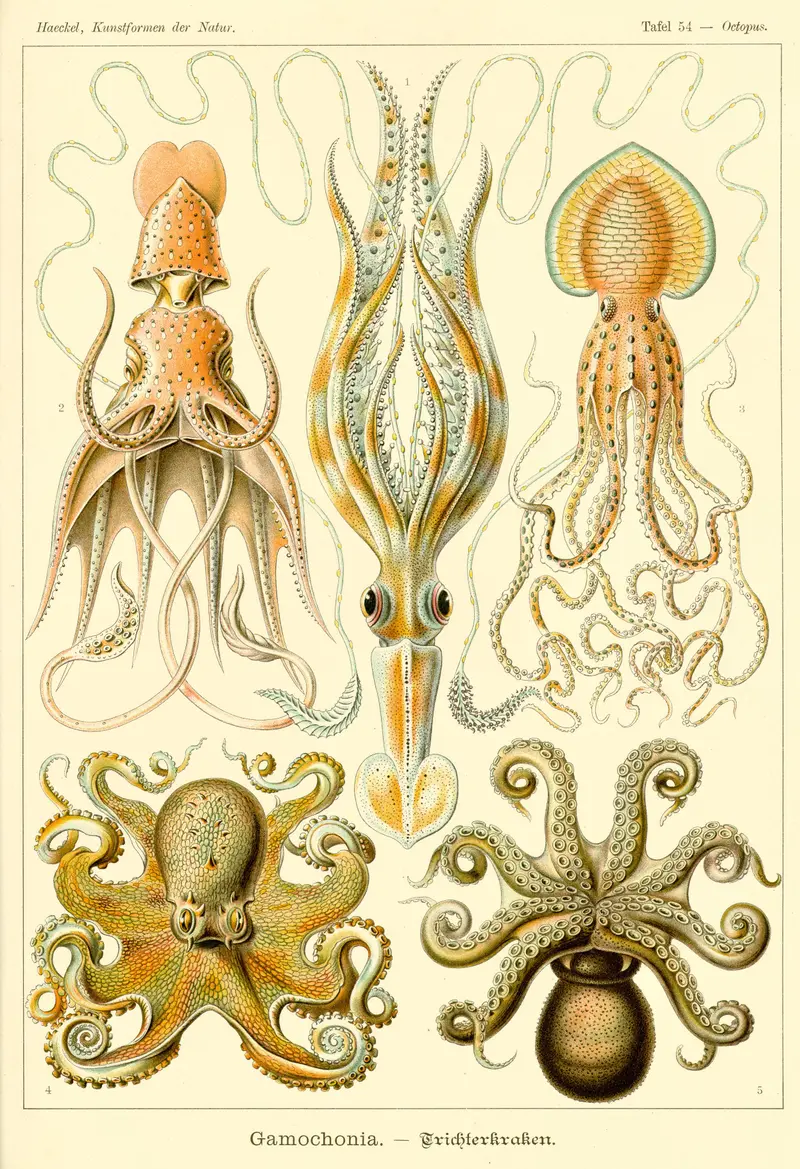
Gamochonia (Cephalopods)
Ernst Haeckel
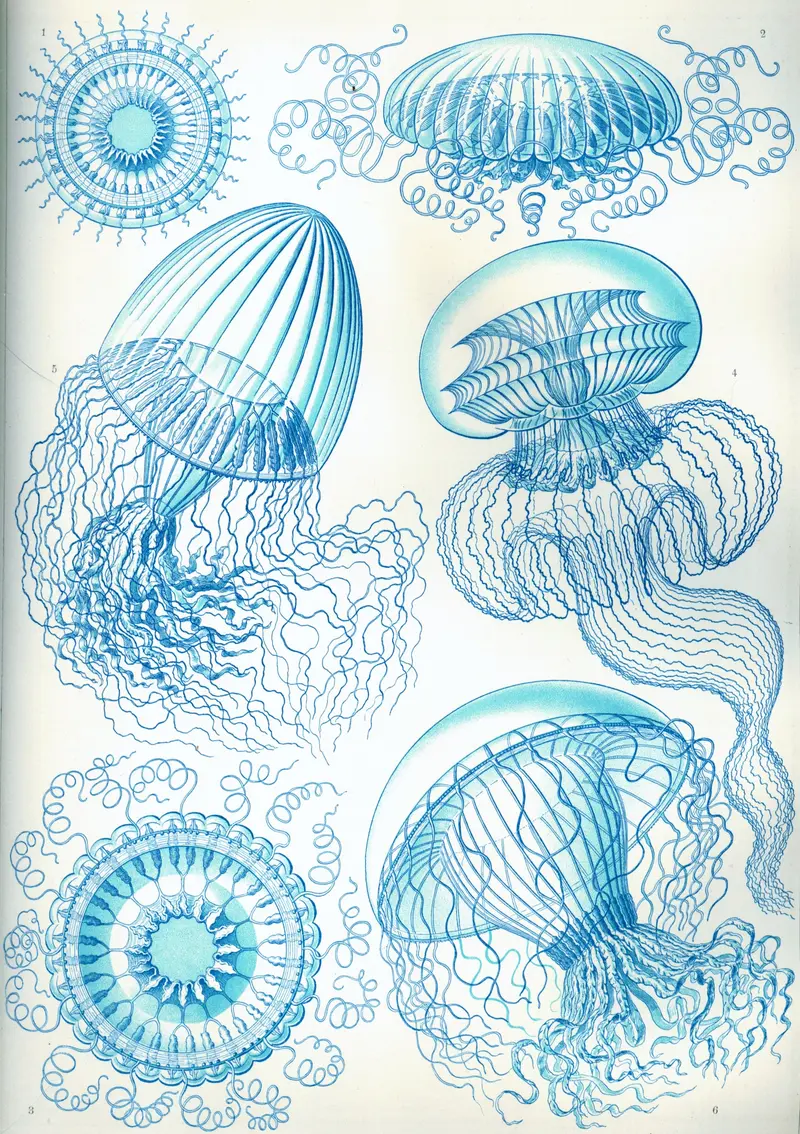
Leptomedusae (Jellyfish)
Ernst Haeckel
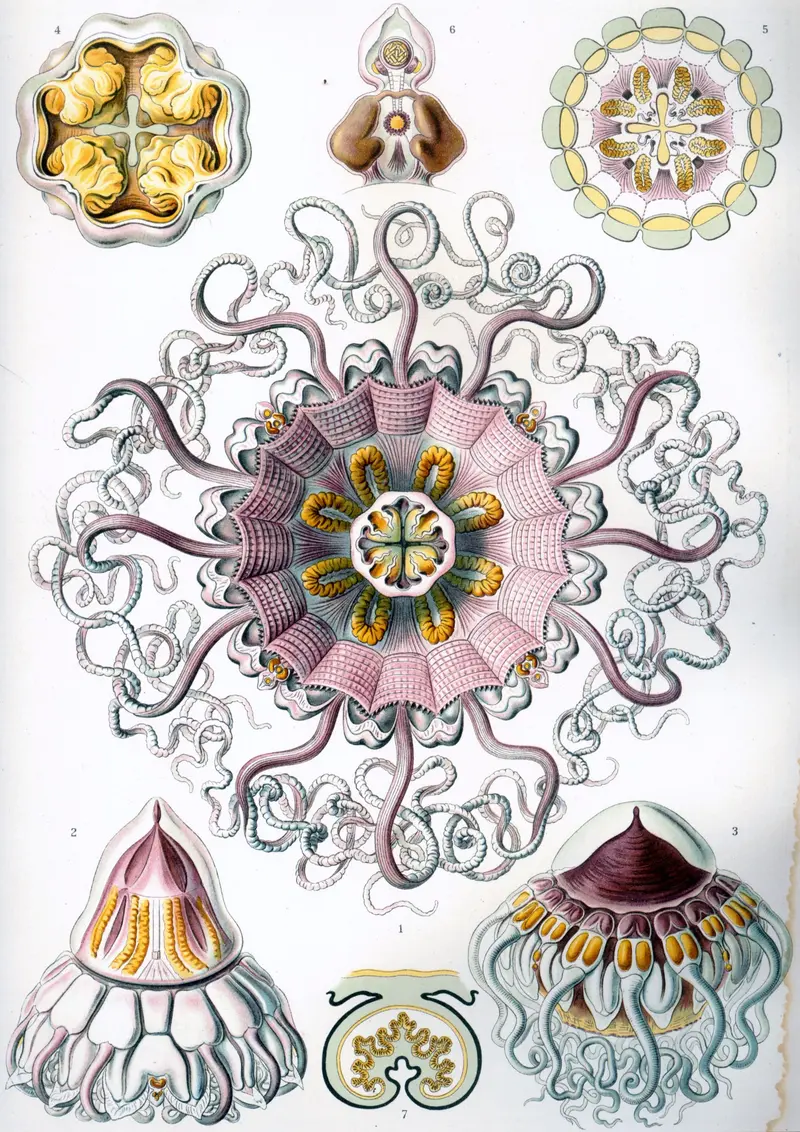
Peromedusae (Jellyfish)
Ernst Haeckel
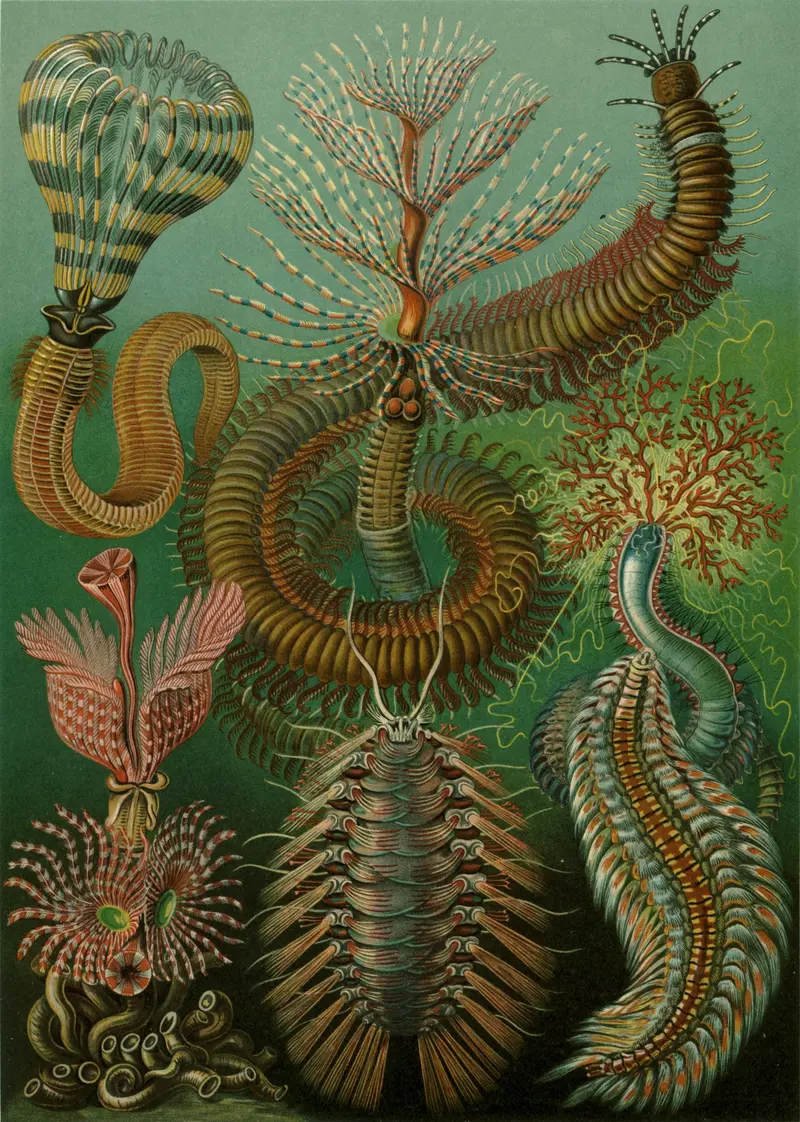
Chaetopoda (Bristle Worms)
Ernst Haeckel
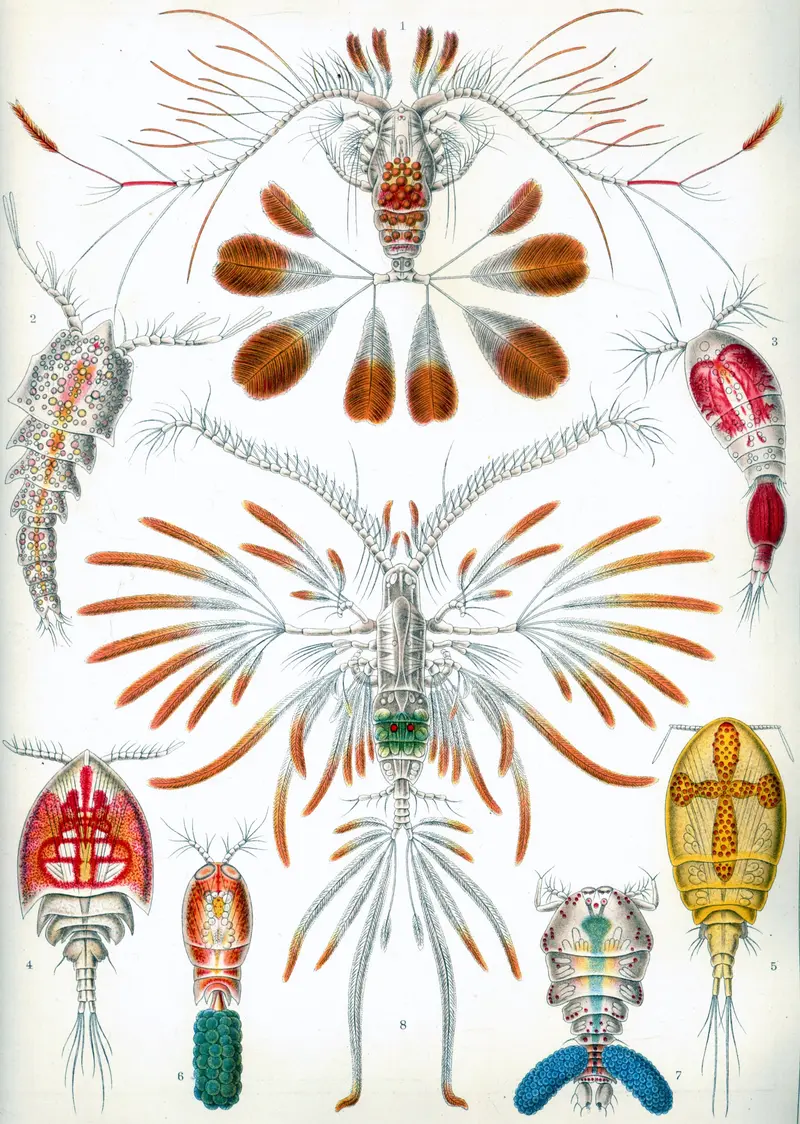
Copepoda (Copepods)
Ernst Haeckel





