
Provins (Seine et Marne) — History & Facts
What draws the eye first in Provins (Seine et Marne) is the way the old stone building dominates the scene, its steep roof casting a deep shadow that anchors the composition. The artist, Auguste Lepère, invites us to linger in the open square, where a woman bends to speak with two children, their small cluster quietly echoing the larger gathering of figures in the background. The careful web of lines gives every surface a tactile presence—the roughness of stone, the leafy softness of trees, the billowing sky above.
Light falls across the square in wide, pale bands, guiding the viewer from the shaded arches at right to the sunlit facades and distant townsfolk, each detail reinforcing the sense of a lived-in, historic place. By 1910, the rural townscape was a subject both nostalgic and quietly radical, as France’s villages faced the onrush of modernity. Artists like Lepère—renowned for his printmaking—turned to etching and drawing to capture the texture of provincial life, often for a growing urban audience hungry for reminders of an older France. This work, now held by the National Gallery of Art and shared under their open access policy, stands as a record of that transition: a moment when the ordinary rhythms of a small town were seen as worthy of preservation.
History has kept few traces of the everyday people shown here, but their world remains vivid—inviting us to step into the square and imagine the stories unfolding just beyond the frame.
More Artworks by Auguste Lepère

Le Pont-Neuf (Paris)
Auguste Lepère
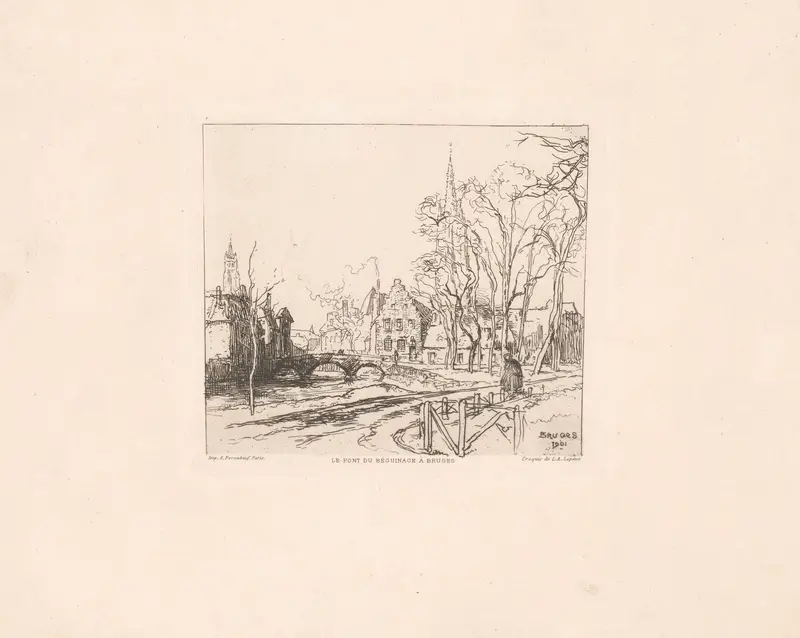
Le pont du Beguinage à Bruges
Auguste Lepère
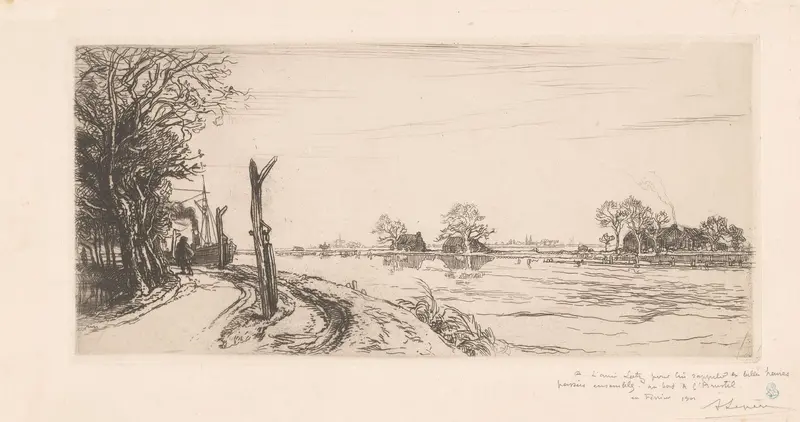
Au bord de l’Amstel
Auguste Lepère
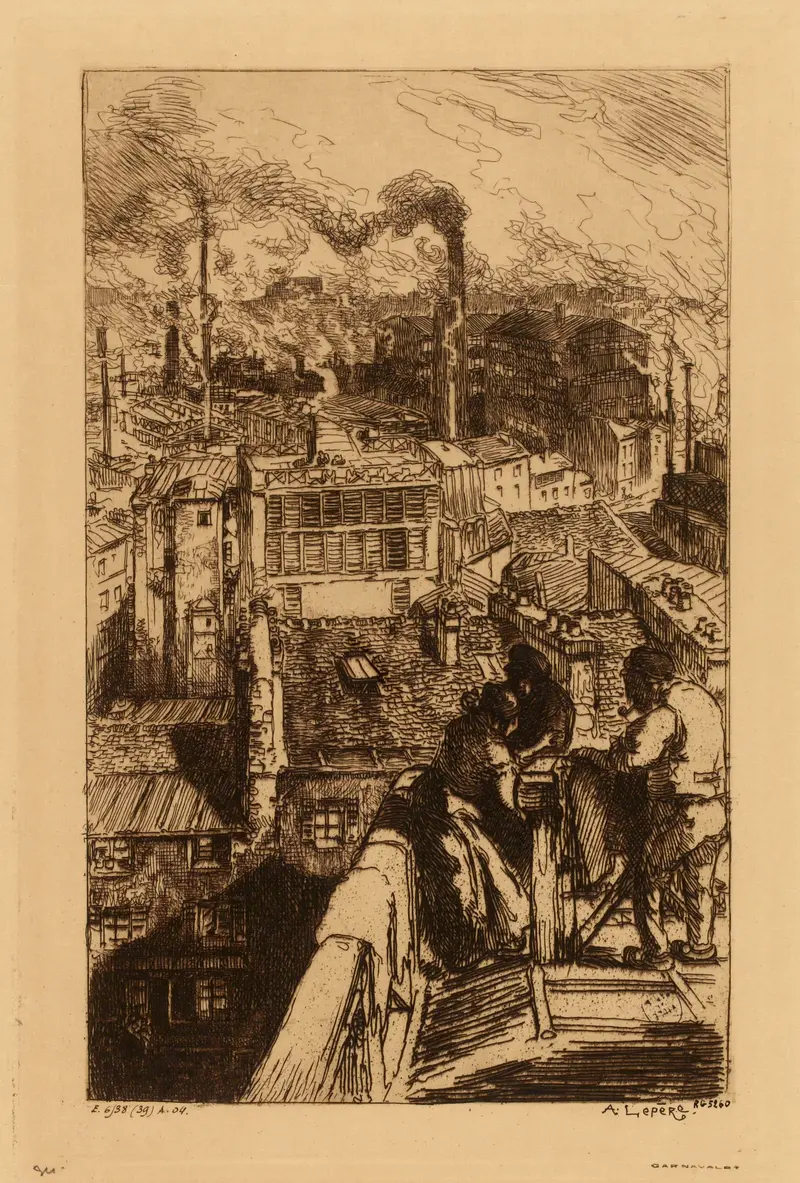
Le quartier des Gobelins
Auguste Lepère
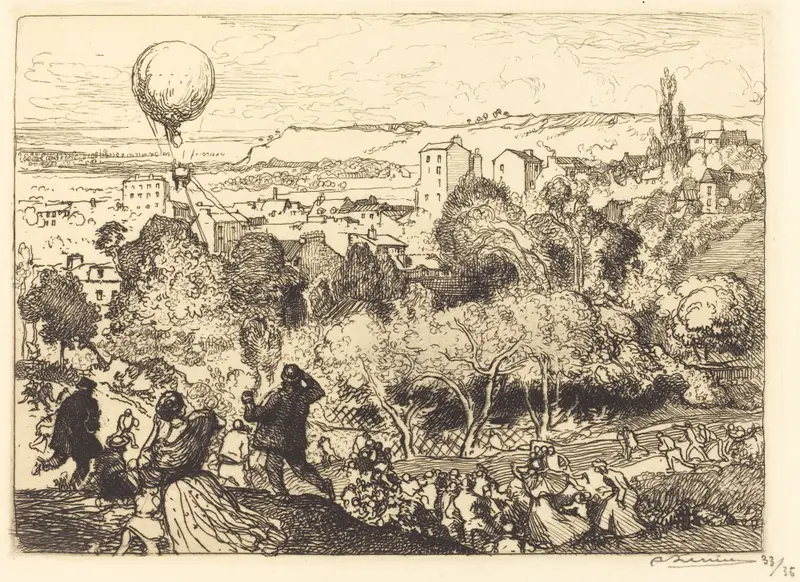
The Falling Balloon, in Pre-Saint-Gervais (Lebaloon qui tombe, au Pre-Saint-Gervais)
Auguste Lepère
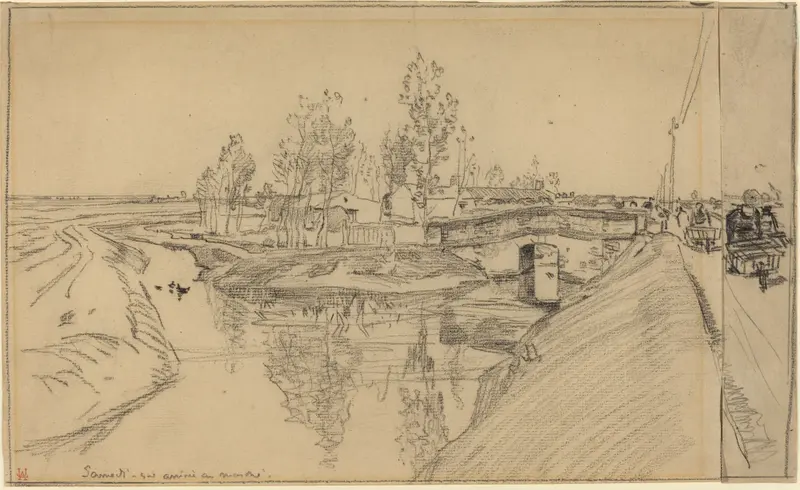
Arrivee au Marche
Auguste Lepère
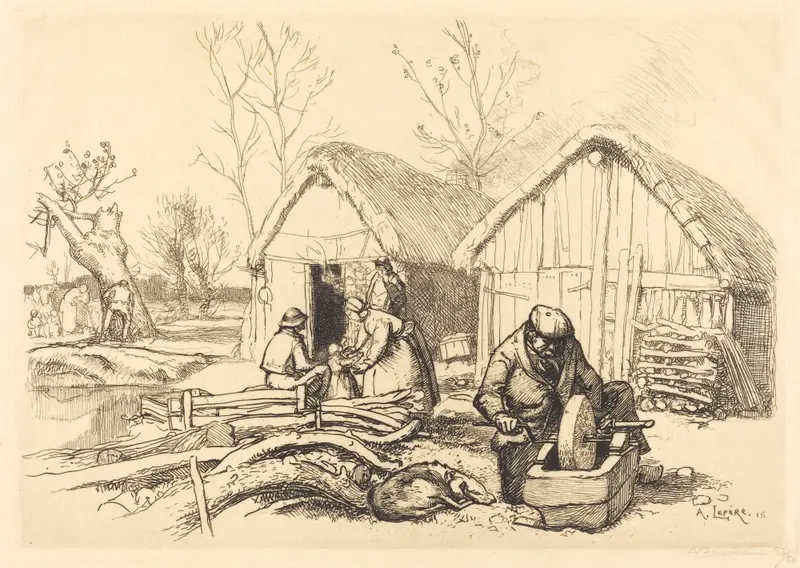
The House of the Woodcutter, Vendee (La maison du bucheron, Vendee)
Auguste Lepère
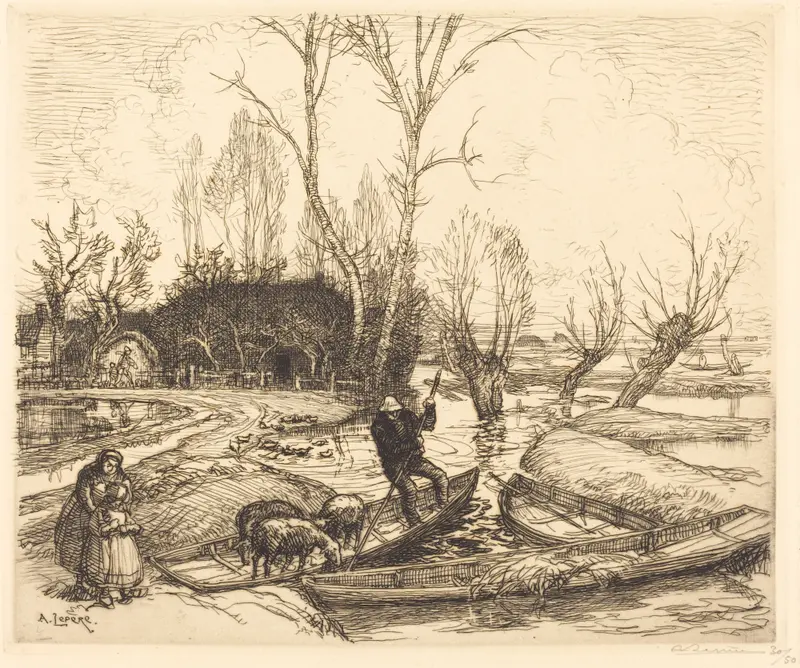
In the Deluged Marsh - The Shepherd (Au marais inonde - Le berger)
Auguste Lepère
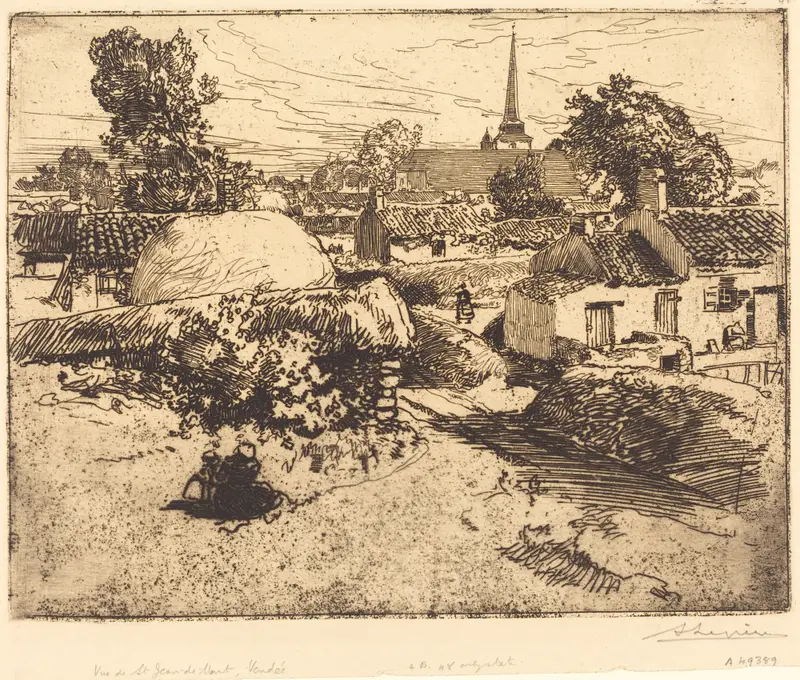
View of St.-Jean-de-Mont, Vendee (Vue de St.-Jean-de-Mont, Vendee)
Auguste Lepère
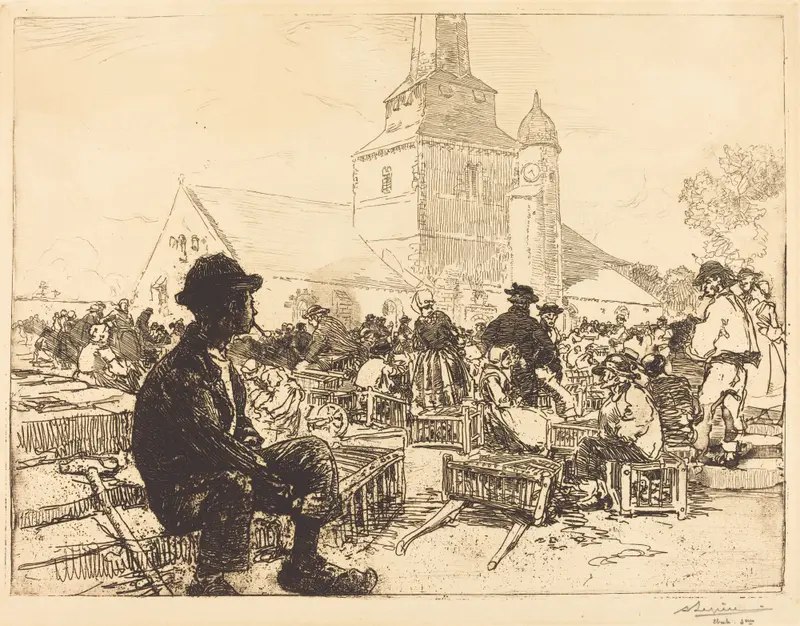
Poultry Market at St.-Jean-de-Mont (Marche a la volaille, a St.-Jean-de-Mont)
Auguste Lepère
More Landscape Art

The Starry Night
Vincent van Gogh

View of Delft
Johannes Vermeer

Water Lilies
Claude Monet

The Grand Canal, Venice, looking north-west from the Ca' Corner to the Ca' Contarini degli Scrigni, with the campanile of Santa Maria della Carità
Canaletto

Windsor Castle
Canaletto

The Grand Canal looking North-East from the Palazzo Dolfin-Manin to the Rialto Bridge
Canaletto