Ram en geit — History & Facts
Who listens when art speaks of silence? In the ethereal stillness of Ram en geit, the truth resonates in the gentle interplay of nature and the figures that inhabit it. Look to the left at the serene ram, its woolly texture almost palpable, captured in a moment of tranquil contemplation. Notice how the soft light spills across the scene, illuminating the delicate contours of the goat—its alert stance contrasting with the calm demeanor of its companion. The palette is a harmonious blend of earthy tones, inviting the viewer to pause and reflect on the quiet majesty of pastoral life. As you delve deeper, consider the subtle tension between the animals and the surrounding wilderness.
The meticulous detail in the foliage hints at a lush environment, yet there’s an underlying sense of vulnerability present in the animals' gaze. This duality—the peace of the scene and an implicit awareness of nature's unpredictability—whispers of the transient truth that exists in every moment. Created between 1648 and 1652, the landscape reflects Nicolaes Pietersz Berchem's exploration of pastoral themes during a time when the Dutch Golden Age was flourishing. The artist was inspired by his travels through Italy, where he marveled at the interplay of light and shadow in natural settings.
This piece embodies the era's fascination with idyllic rural life, while also asserting the artist's unique voice amidst a sea of contemporary influences.
More Artworks by Nicolaes Pietersz Berchem
Browse all →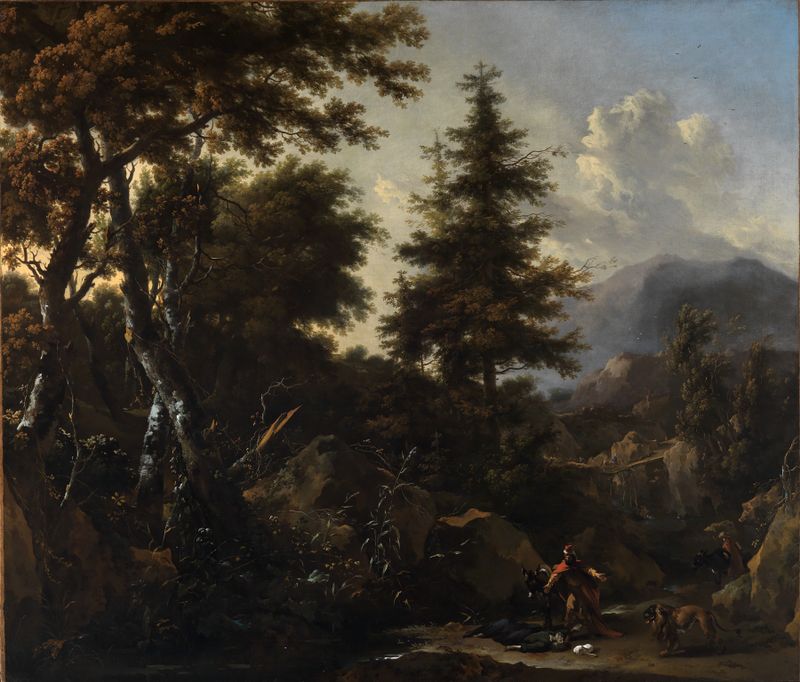
Schlucht im Bergwald mit alttestamentlicher Staffage
Nicolaes Pietersz Berchem
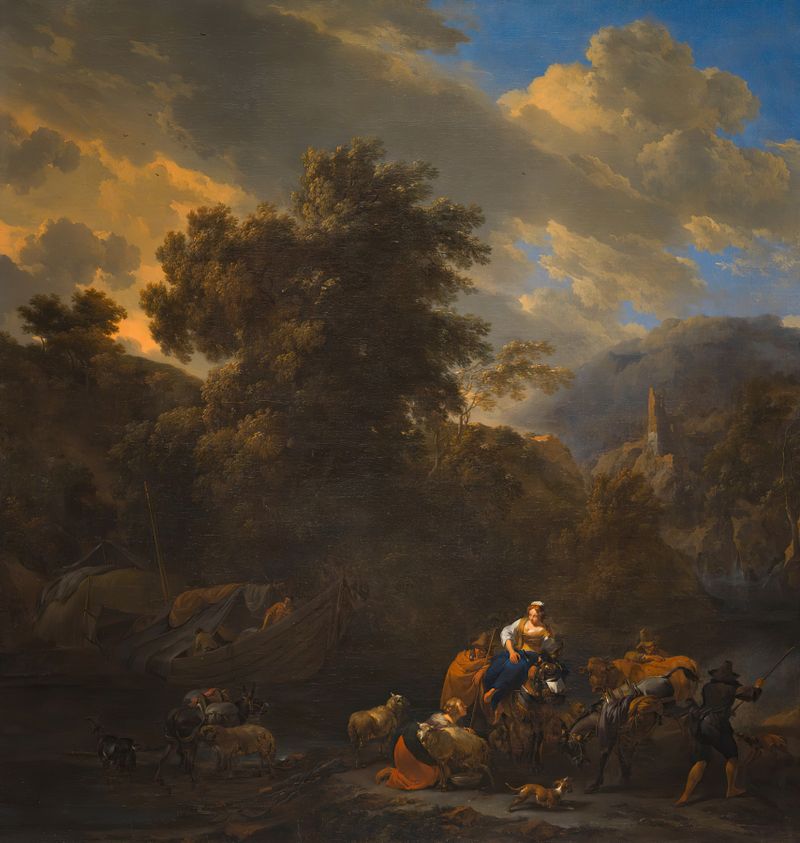
Italianate Landscape with Figures and Pack Animals on the Banks of a River
Nicolaes Pietersz Berchem
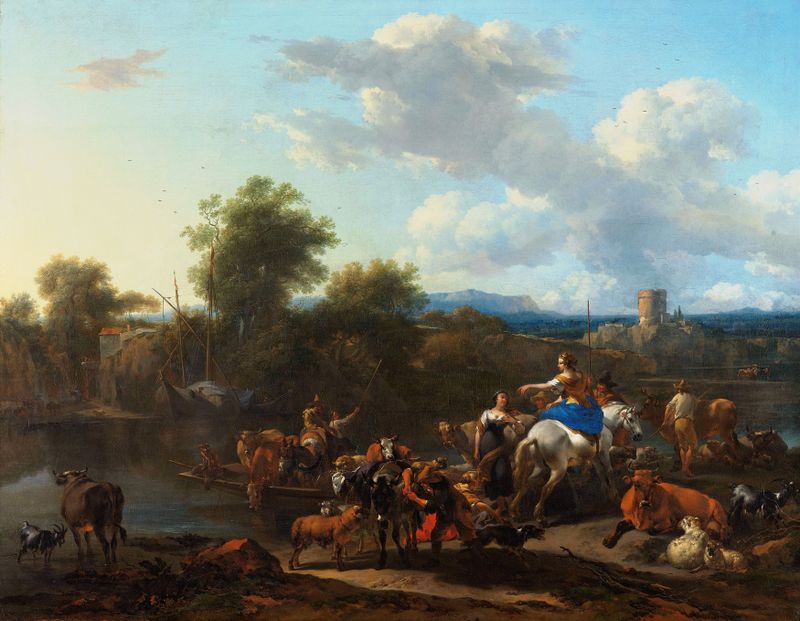
The Cattle Ferry
Nicolaes Pietersz Berchem
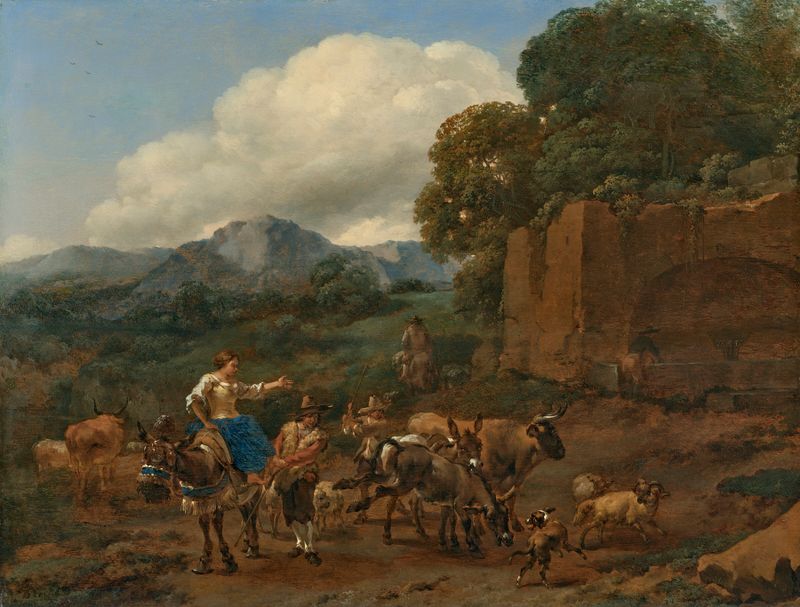
An Italianate landscape with a shepherdess on a mule and a shepherd, herding cattle, sheep, donkeys and dogs on a mountain track next to ruins
Nicolaes Pietersz Berchem
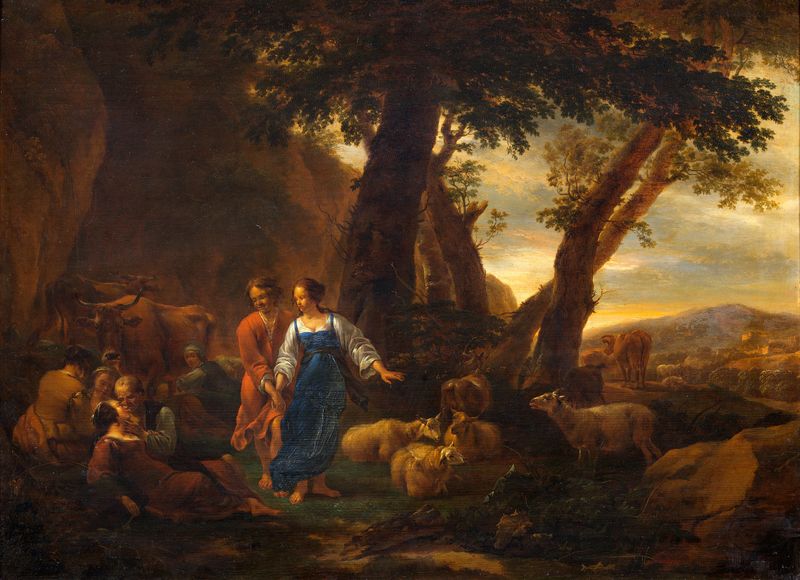
Landscape with Peasants and Cattle
Nicolaes Pietersz Berchem
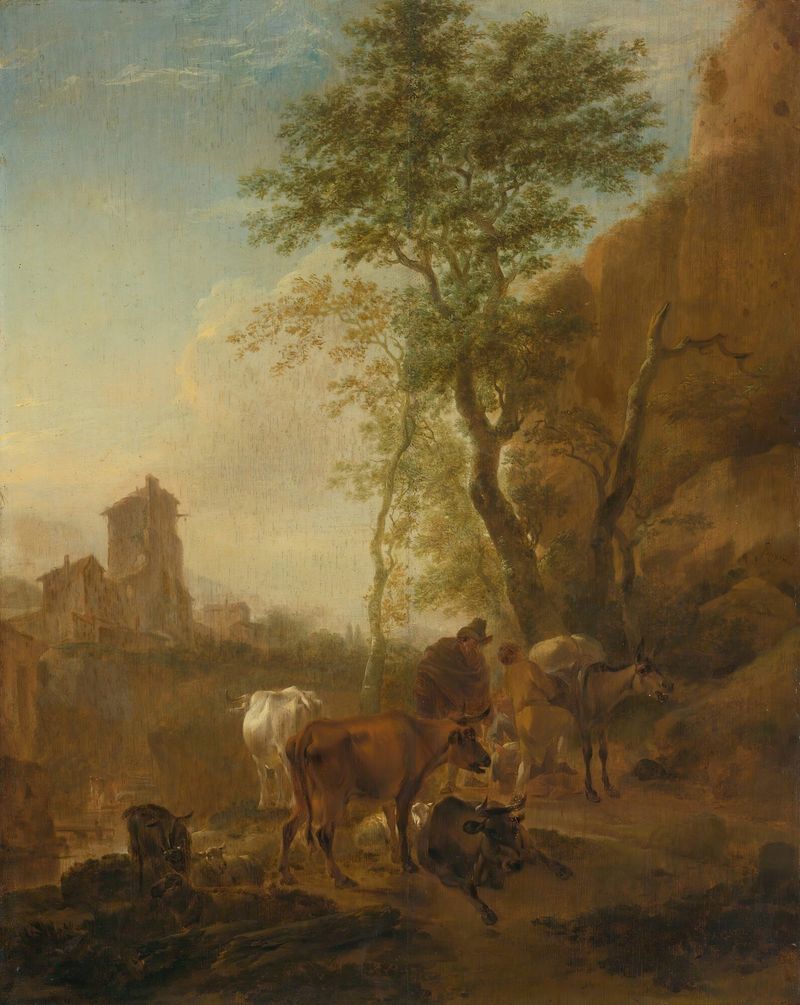
Italianate Landscape With Cows
Nicolaes Pietersz Berchem
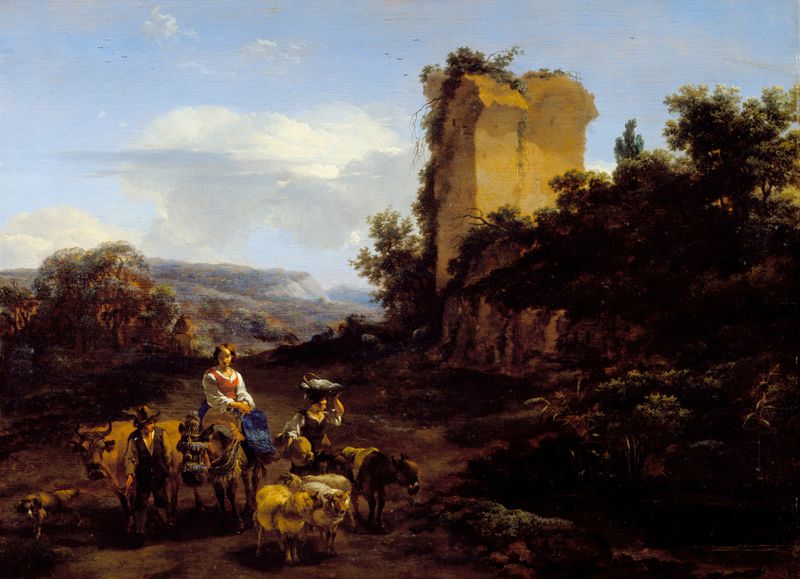
Landscape with Ruins and Travelers
Nicolaes Pietersz Berchem
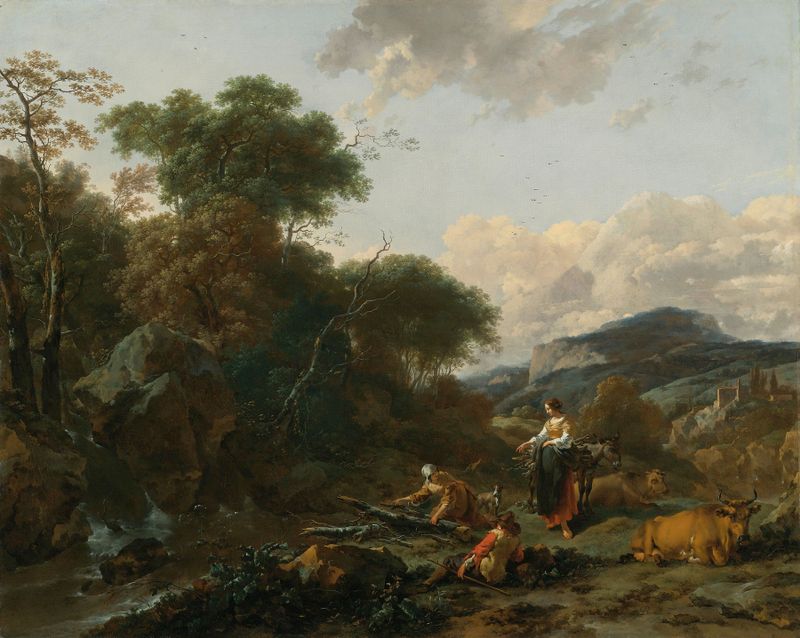
A Landscape With Figures
Nicolaes Pietersz Berchem
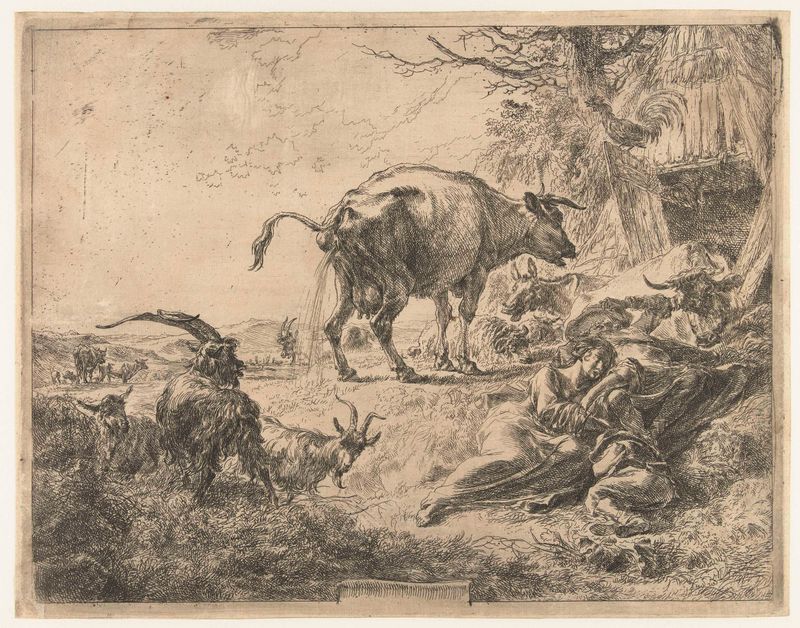
Slapende herdersfamilie en rustend vee
Nicolaes Pietersz Berchem
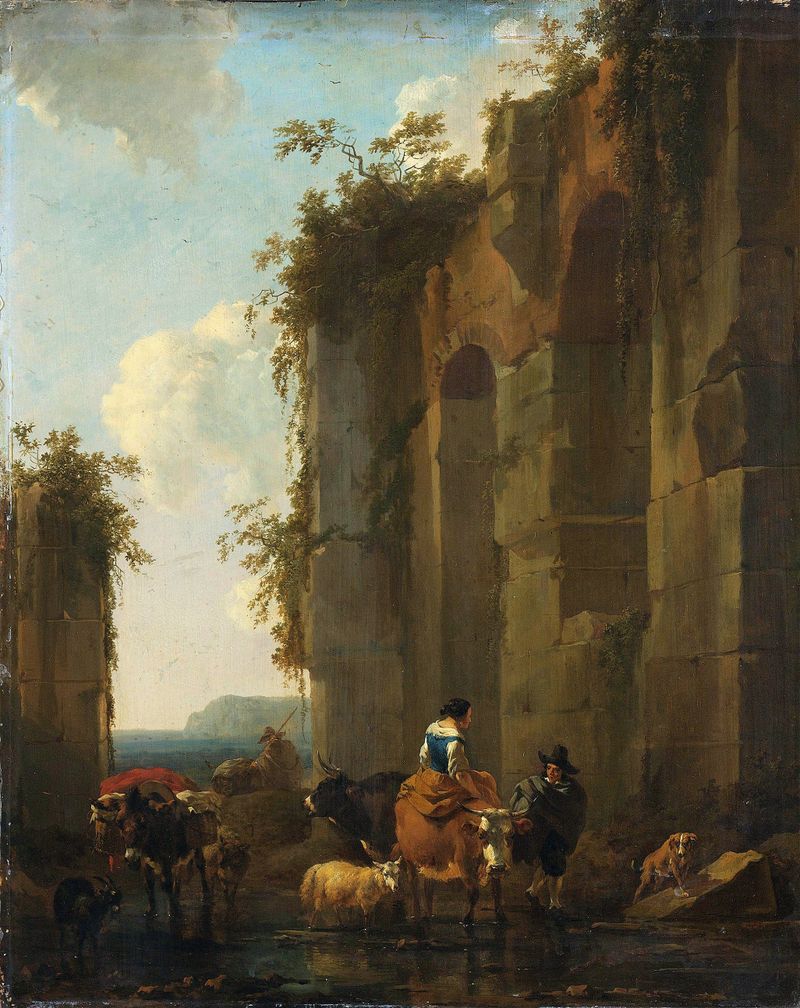
Ruins in Italy
Nicolaes Pietersz Berchem