
Raynham Hall, Norfolk — History & Facts
Is this a mirror — or a memory? The ethereal quality of light dances across the canvas, beckoning viewers to consider the fleeting nature of time and the layers of existence that lie within a single frame. Look to the center of the composition, where Raynham Hall stands majestically, enveloped in a soft embrace of pale greens and blues. The sweeping foliage frames the stately architecture, while the water reflects not just the structure, but the world around it. Notice how the delicate brushwork creates a sense of movement in the trees, lending an air of vitality to this seemingly serene scene.
The subtle blues in the sky shift into warm earth tones below, merging the natural with the architectural in a harmony that is at once grounding and transcendent. Delve deeper into the contrast between the solidity of the hall and the fluidity of the surrounding landscape. This juxtaposition speaks to the essence of transformation, where the human-made structure is both a marker of permanence and a mere whisper against the ever-changing backdrop of nature. Cotman’s choice of a reflective water surface invites contemplation on memory; what is captured here is not just what was seen, but what lingers in the heart of the observer.
The painting becomes a vessel for echoing moments of beauty and nostalgia, suggesting that places can hold the remnants of time. In 1818, Cotman was residing in Norwich, grappling with personal challenges and the evolving landscape of landscape painting. As an influential member of the Norwich School, he sought to articulate the beauty of his native England, breaking free from the constraints set by previous art movements. This piece reflects both his mastery of watercolor and his intent to capture a moment that is inherently transient, encapsulating a dialogue between memory and the physical realm.
More Artworks by John Sell Cotman
Browse all →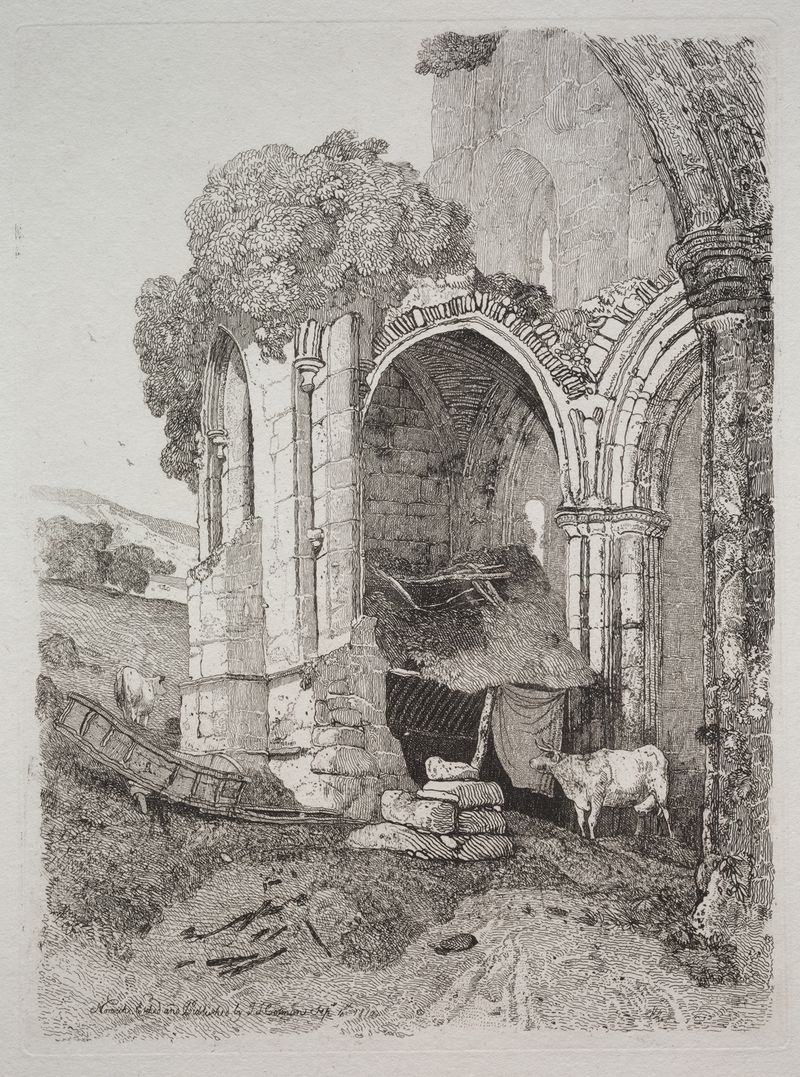
Rievaulx Abbey, Yorkshire
John Sell Cotman
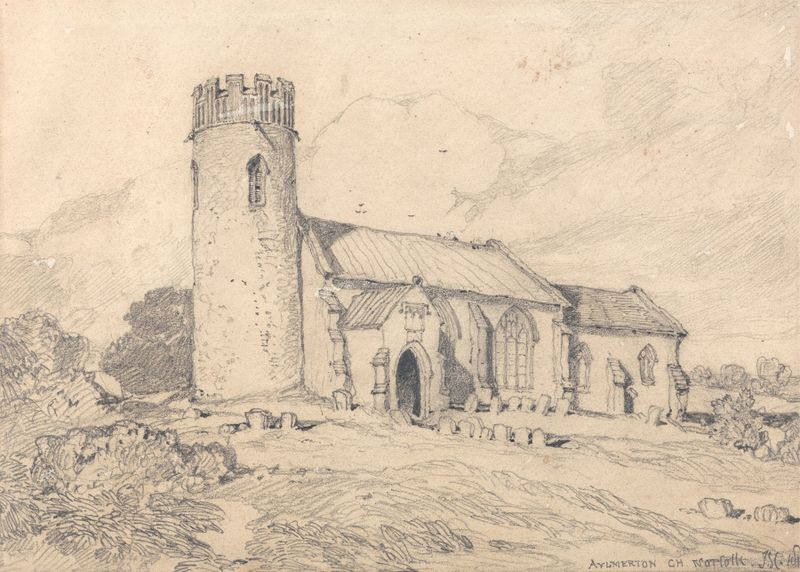
Aylmerton Church; Norfolk, from the South-West
John Sell Cotman
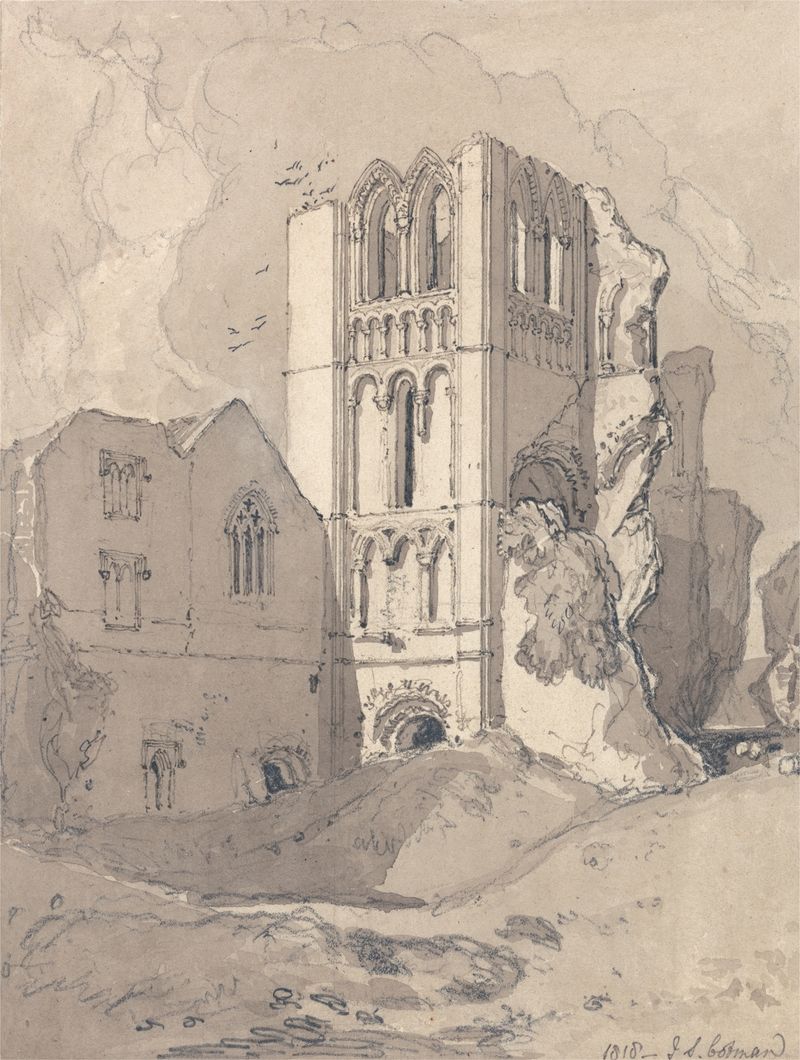
Castle Acre Priory, Norfolk
John Sell Cotman
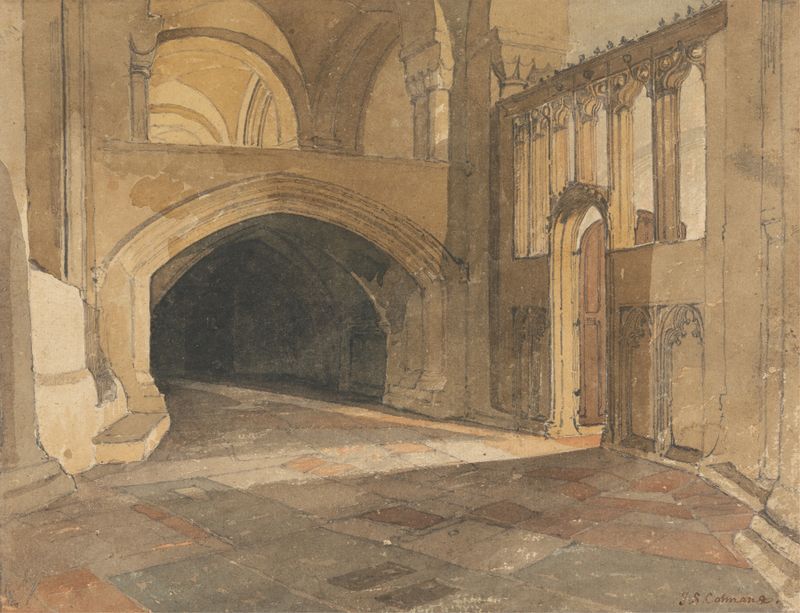
Norwich Cathedral; Entrance to Jesus Chapel
John Sell Cotman
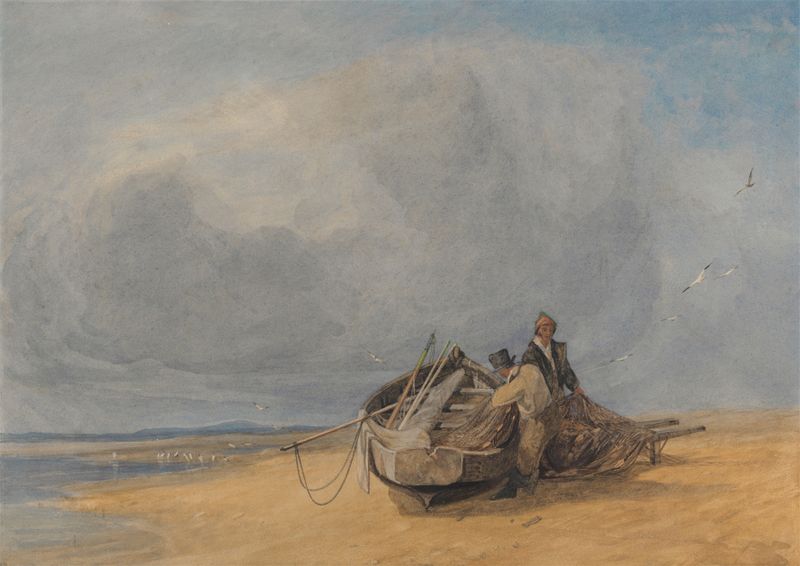
Yarmouth Sands, Norfolk
John Sell Cotman
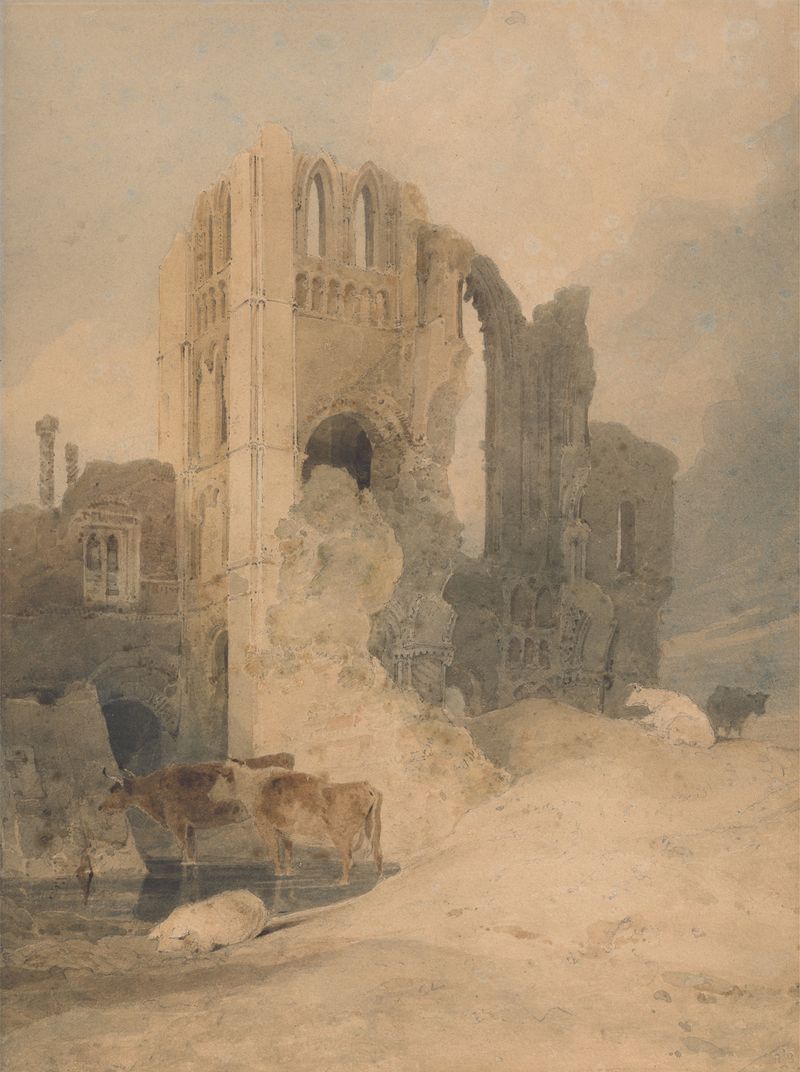
Castle Acre Priory, Norfolk
John Sell Cotman
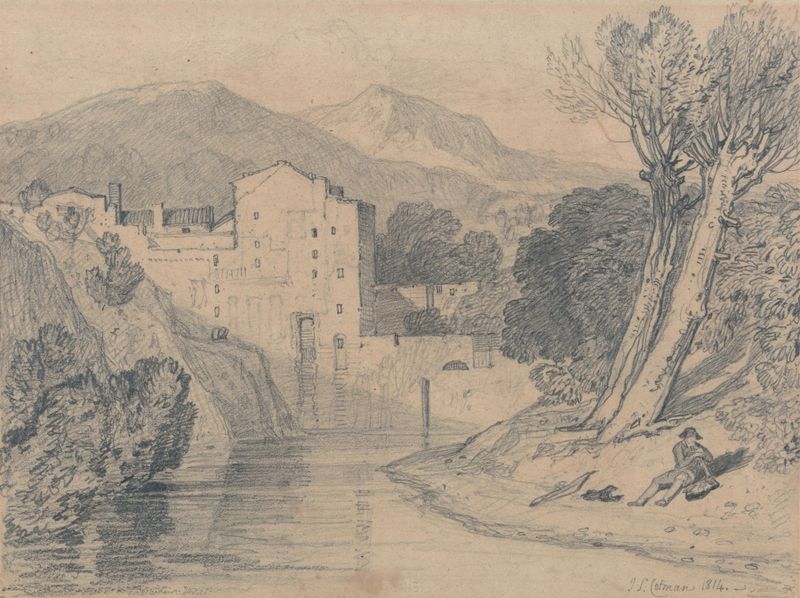
Near Whitby, Yorkshire
John Sell Cotman
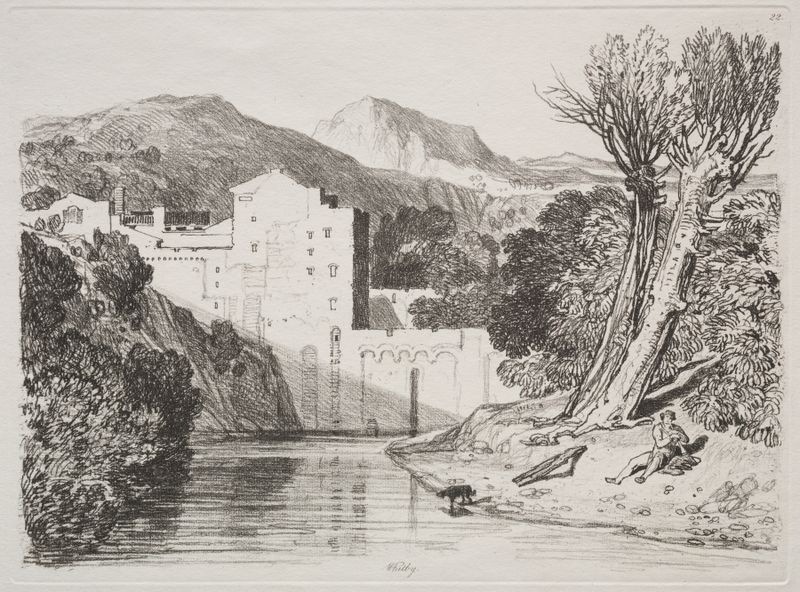
Whitby
John Sell Cotman
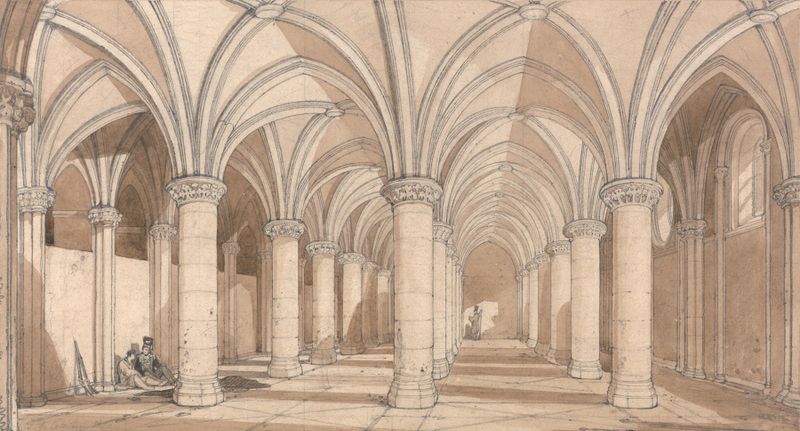
The Barons’ Hall, Mont Saint Michel
John Sell Cotman
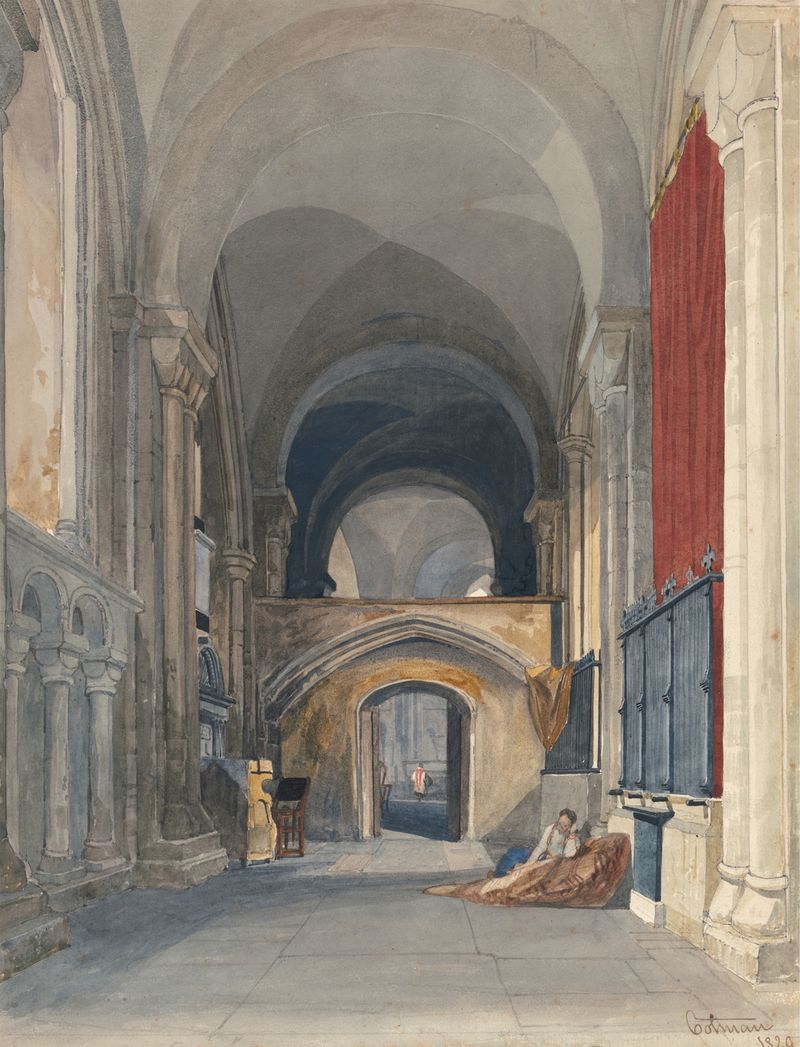
Norwich Cathedral; Interior of the North Aisle of the Choir, Looking East
John Sell Cotman
More Architecture Art
Browse all →
The statue of Liberty
Frédéric Auguste Bartholdi

View of Houses in Delft, Known as ‘The Little Street’
Johannes Vermeer

View of Houses in Delft, Known as ‘The Little Street’
Johannes Vermeer

The Cathedral in Rouen. The portal, Grey Weather
Claude Monet

The yellow house
Vincent van Gogh

The Church in Auvers-sur-Oise, View from the Chevet
Vincent van Gogh