
Reekie, Glasgow — History & Facts
In the muted twilight of an industrial city, the air hangs heavy with a haunting stillness, as shadows whisper secrets of forgotten dreams. A lone figure wanders through the fog, lost in contemplation, while the distant glow of gas lamps flickers with an eerie allure. The landscape teeters on the edge of sanity, where beauty and madness intertwine. Look to the center of the canvas, where the fog blankets the cobblestone street, beckoning the viewer into a world painted in shades of blue and gray.
Notice how the soft, diffused light dances upon the surfaces, creating a shimmering effect that suggests both serenity and unease. The trees arch like skeletal hands toward the sky, framing the street and guiding the eye toward the ghostly glow of the buildings in the background. Each brushstroke is meticulous, revealing the artist’s deep reverence for the melancholic beauty of urban life. Within this scene, contrasts abound: the flickering light signifies both hope and despair, each gas lamp a beacon in a landscape shrouded in uncertainty.
The solitary figure evokes feelings of isolation, inviting the viewer to ponder their own place within this haunting tableau. Grimshaw captures a moment where the beauty of the natural world collides with the starkness of industrial progress, reflecting a society teetering between romantic ideals and the encroaching madness of modernity. In this period, John Atkinson Grimshaw painted works like this one while living in Leeds during the late 19th century. The rise of the industrial revolution profoundly influenced his perspective as he sought to capture the intersection of nature and industry.
This painting exemplifies his mastery of nocturnal scenes, where the interplay of light and shadow reveals the fragility of the human experience amid a rapidly changing world.
More Artworks by John Atkinson Grimshaw
Browse all →
Under the Silvery Moonbeams
John Atkinson Grimshaw
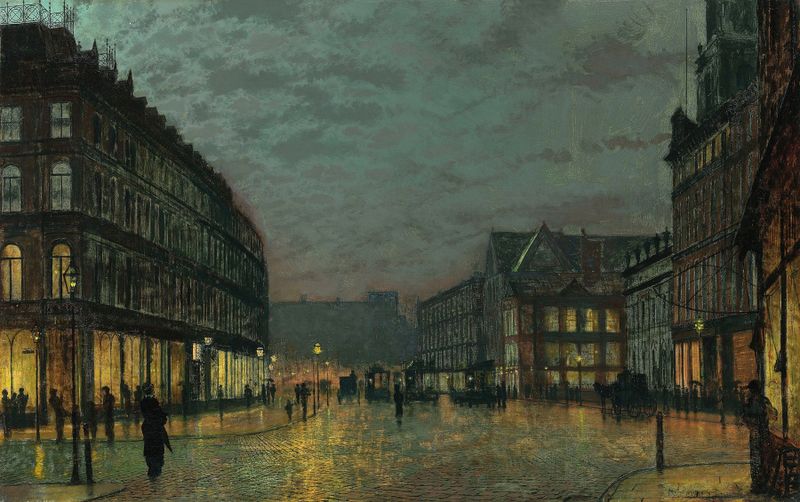
Boar Lane, Leeds by lamplight
John Atkinson Grimshaw
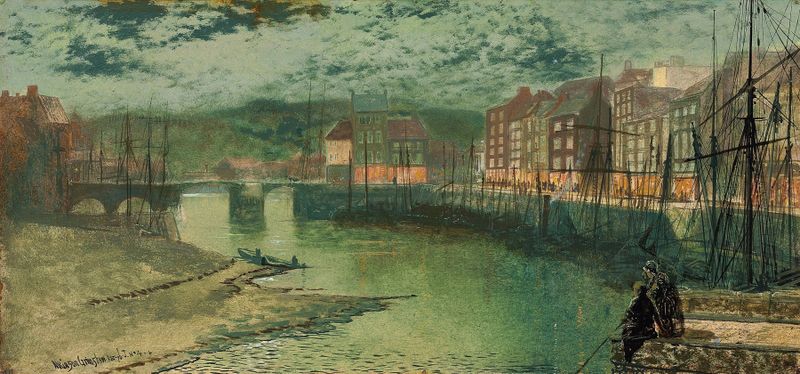
Whitby docks
John Atkinson Grimshaw

Old Chelsea
John Atkinson Grimshaw

Late October
John Atkinson Grimshaw
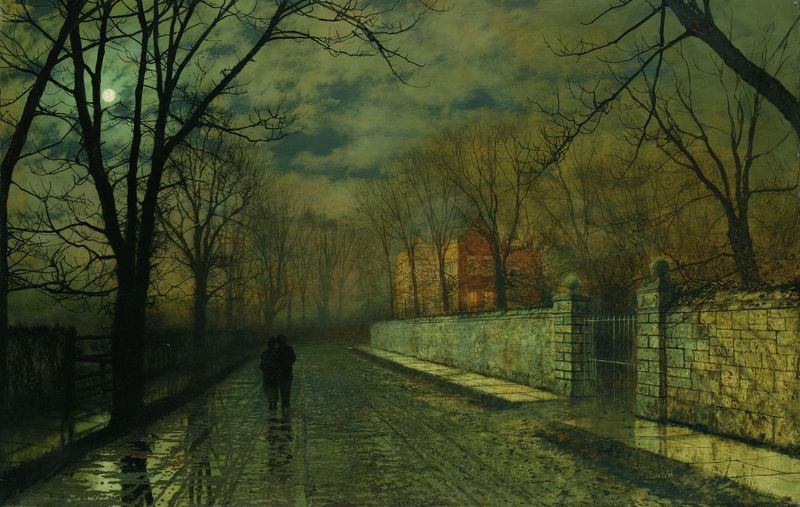
Figures In A Moonlit Lane After Rain
John Atkinson Grimshaw

Liverpool Lights
John Atkinson Grimshaw
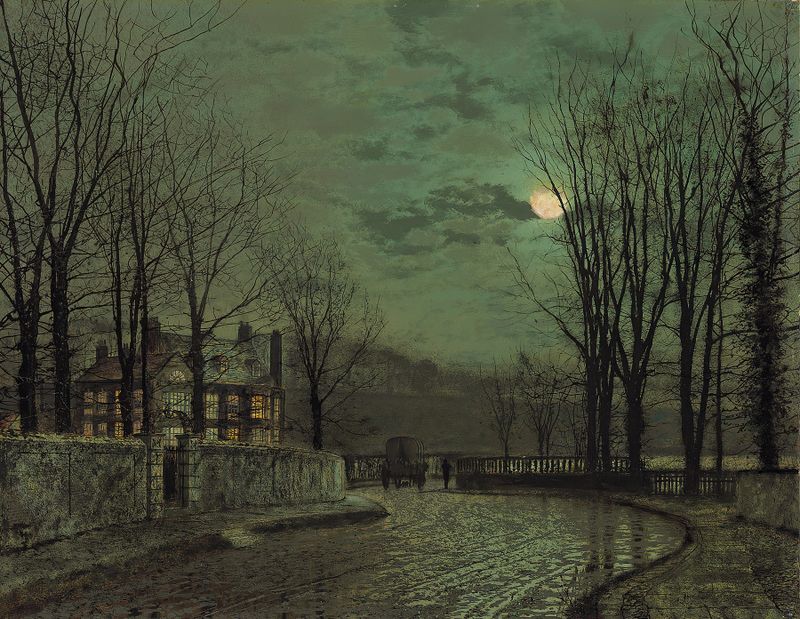
November Moonlight
John Atkinson Grimshaw
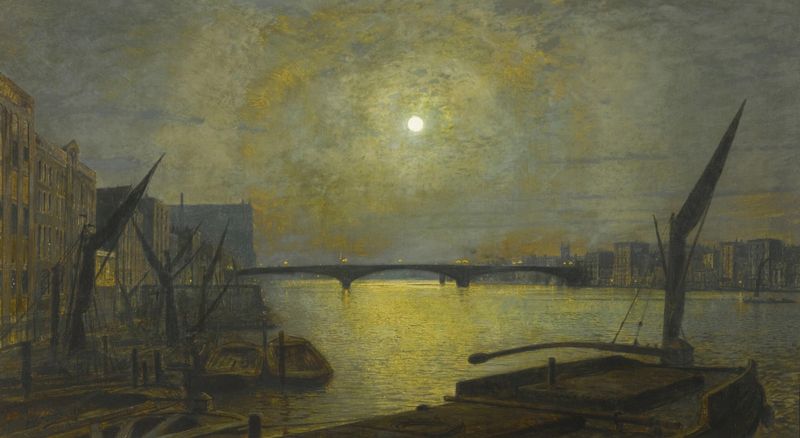
Southwark Bridge from Blackfriars by Moonlight
John Atkinson Grimshaw

Whitby From Scotch Head, Moonlight On The Esk
John Atkinson Grimshaw





