Retour du Bois — History & Facts
The restless energy of a city in motion pulses through this print, where the monumental Arc de Triomphe stands not as a silent relic, but as a living backdrop to the daily flow of Parisian life. The eye is drawn first to the swirl of figures and carriages, their forms blurred and urgent, as if caught mid-stride by the quick hand of Auguste Lepère. The tree in the foreground leans into the scene, its branches echoing the movement of the crowd below, while the light carves out the arch's massive shape, anchoring chaos with stone certainty.
This is not a static view, but a moment snatched from the city’s endless parade—one where every gesture and shadow hints at the clamor and rhythm of early 20th-century Paris. Created in 1910, Retour du Bois belongs to a genre that flourished as urban life transformed under the pressures of modernity. Artists like Lepère turned to printmaking to capture the fleeting impressions of city streets, the mingling of classes, and the spectacle of public spaces. Such works were often collected by a growing bourgeoisie eager to possess scenes of their own world, while the print medium allowed for wider circulation than a painting or drawing.
Though little is recorded about this specific impression, its presence in the Rijksmuseum today speaks to the enduring fascination with both the city and the restless human tide that animates it—inviting viewers to step into the throng and feel the city’s pulse for themselves.
More Artworks by Auguste Lepère

Le Pont-Neuf (Paris)
Auguste Lepère
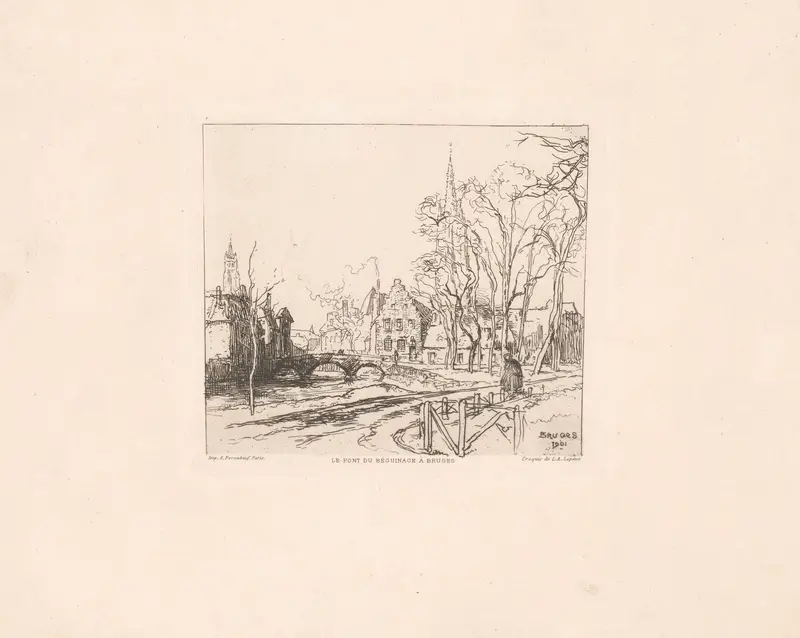
Le pont du Beguinage à Bruges
Auguste Lepère
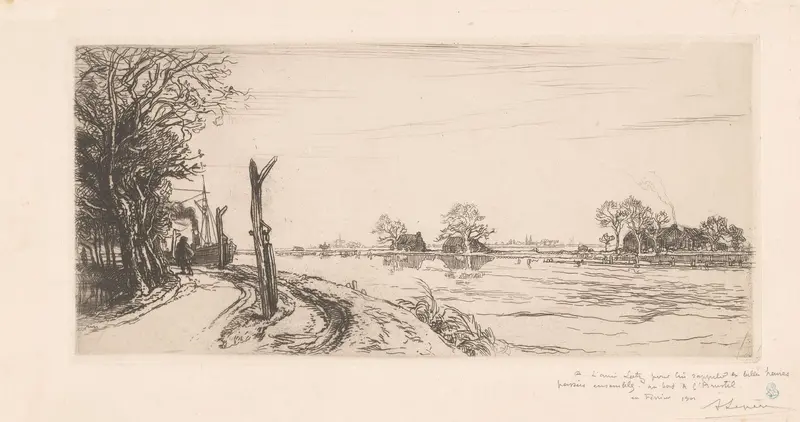
Au bord de l’Amstel
Auguste Lepère
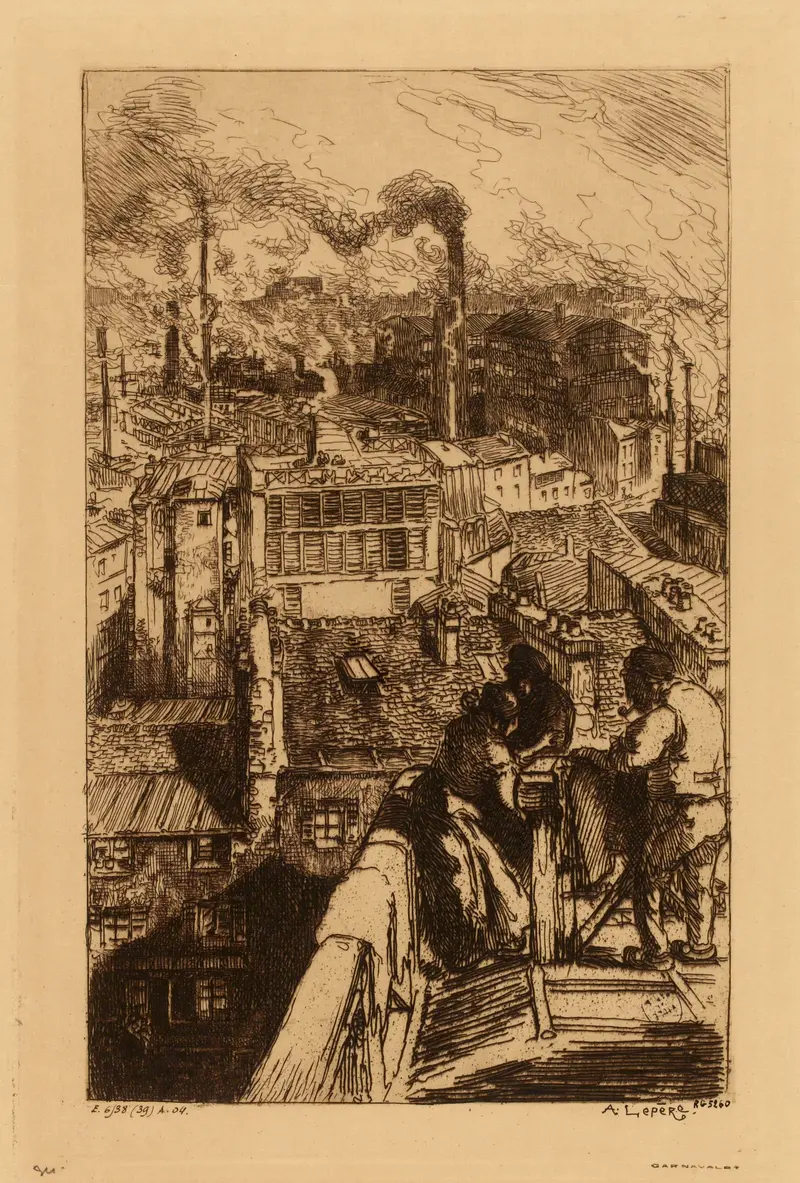
Le quartier des Gobelins
Auguste Lepère
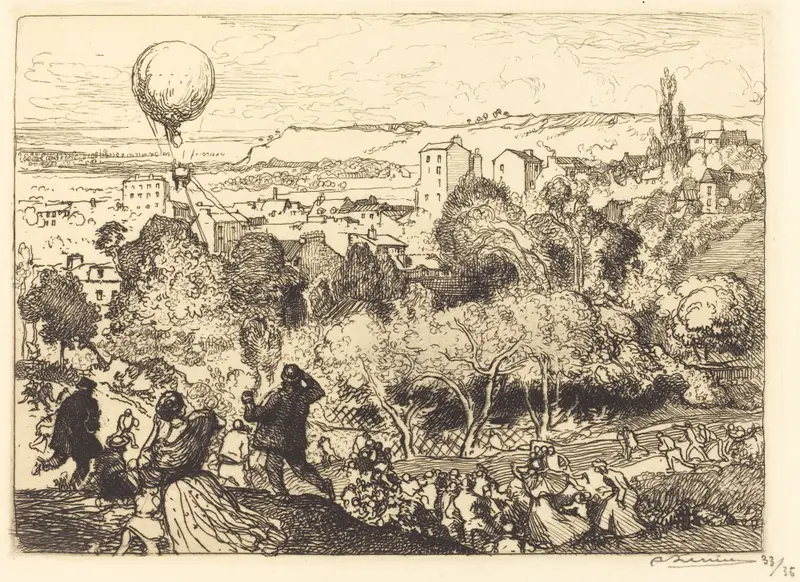
The Falling Balloon, in Pre-Saint-Gervais (Lebaloon qui tombe, au Pre-Saint-Gervais)
Auguste Lepère
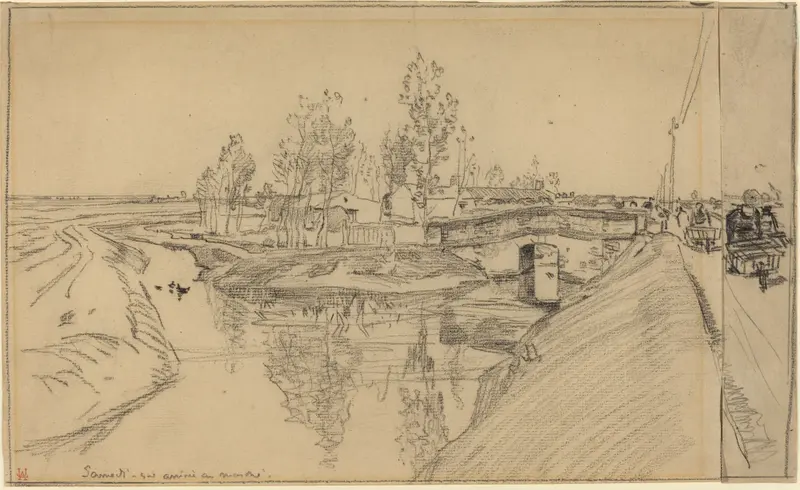
Arrivee au Marche
Auguste Lepère
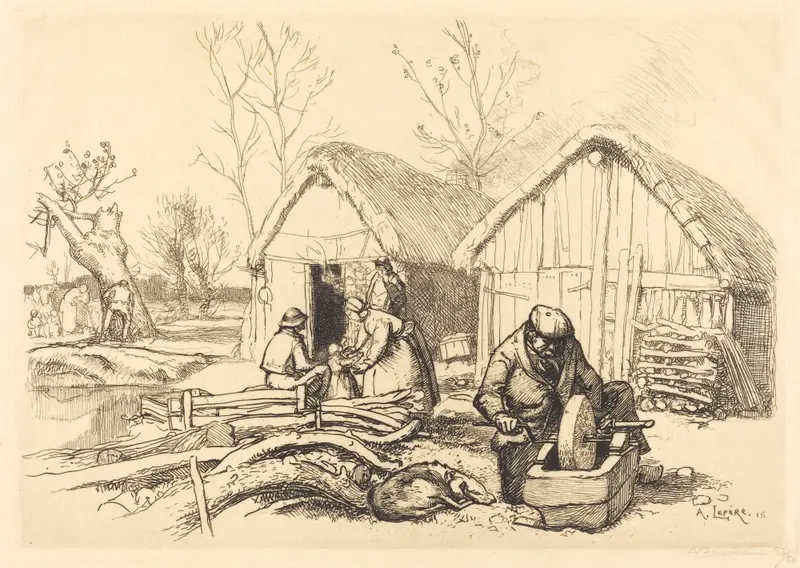
The House of the Woodcutter, Vendee (La maison du bucheron, Vendee)
Auguste Lepère
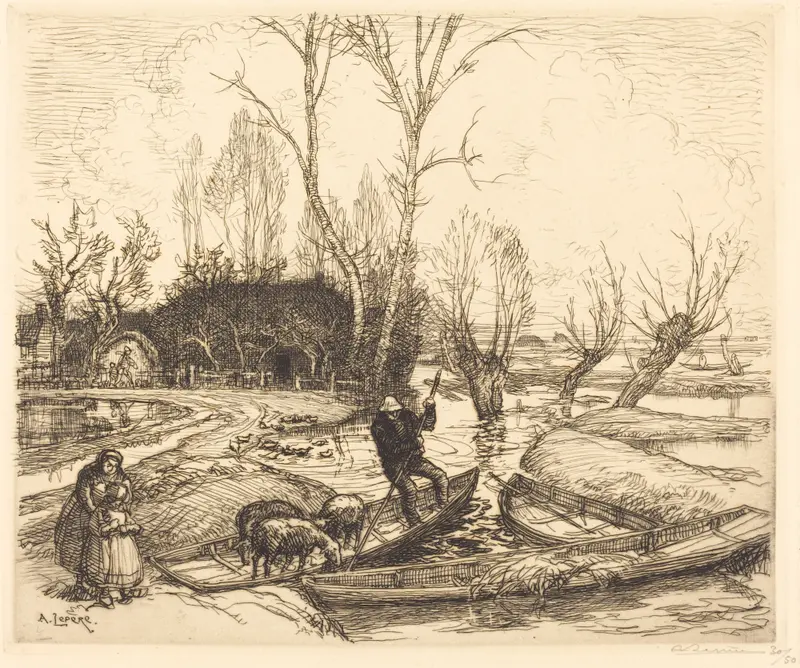
In the Deluged Marsh - The Shepherd (Au marais inonde - Le berger)
Auguste Lepère
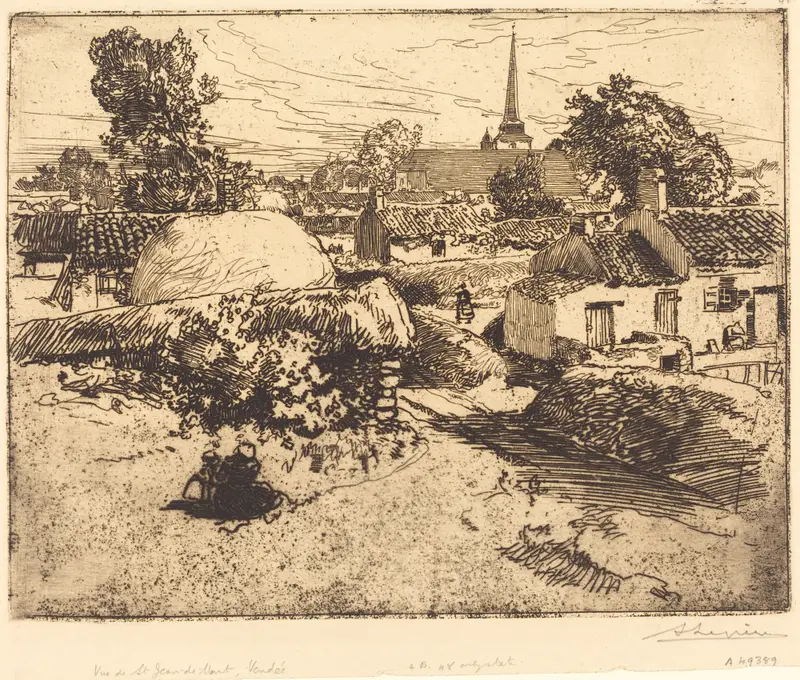
View of St.-Jean-de-Mont, Vendee (Vue de St.-Jean-de-Mont, Vendee)
Auguste Lepère
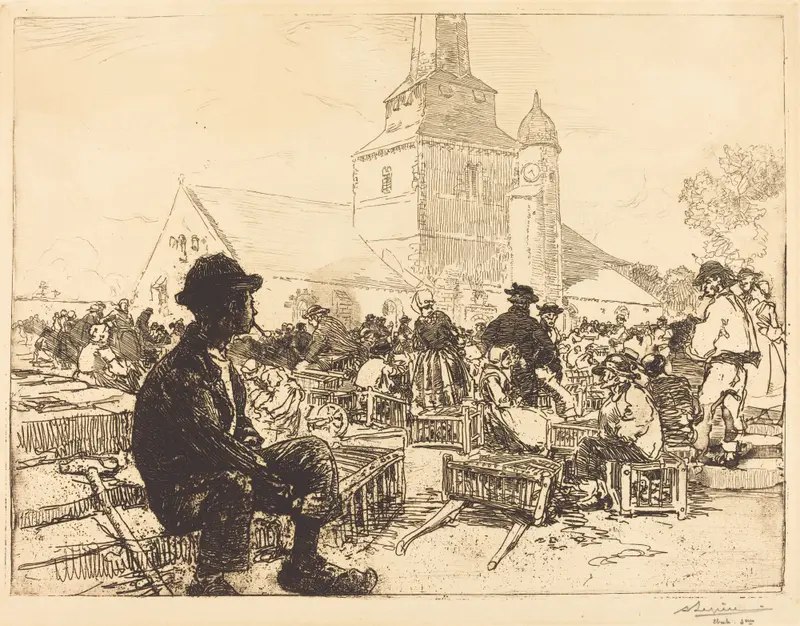
Poultry Market at St.-Jean-de-Mont (Marche a la volaille, a St.-Jean-de-Mont)
Auguste Lepère