
River and Rocks — History & Facts
Could beauty survive in a century of chaos? In River and Rocks, the turbulent interplay of nature invites us to ponder this question, suggesting that amid disorder, serenity can still flourish. Look to the left at the gentle flow of the river, where the water sparkles with a myriad of blues and greens. The rocks, sturdy and unyielding, contrast sharply with the fluidity of the river, creating a visual dialogue between permanence and transience. Notice the textured brushstrokes that Courbet employs, capturing the ruggedness of the stones while imparting a sense of movement in the water — a masterful technique that emphasizes the dynamism of the natural world. Delve deeper into the painting’s emotional landscape, where the chaos of rushing water reflects the turbulence of the era.
The contrast between the serene river and the formidable rocks symbolizes the struggle between calmness and the forces that threaten to disrupt it. This tension is heightened by the muted palette, evoking a sense of introspection and resilience in the face of turmoil. During the years 1873 to 1877, Courbet painted River and Rocks while residing in France, a time marked by political upheaval and social change. The artist was grappling with his own controversies and the evolving art world that increasingly favored Impressionism.
Yet, in this work, he remains steadfast in his commitment to realism, capturing the raw beauty of nature amidst the backdrop of chaos surrounding him.
More Artworks by Gustave Courbet
Browse all →
Marine
Gustave Courbet
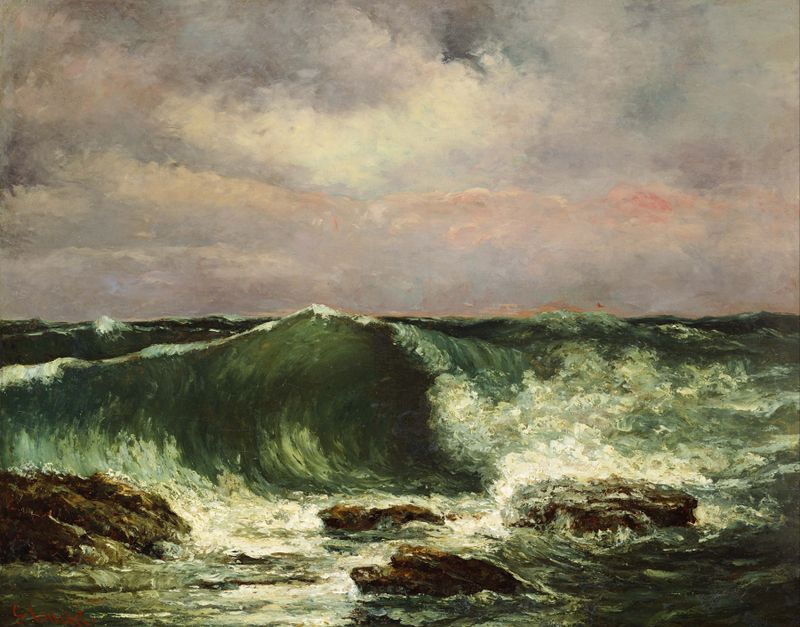
Waves
Gustave Courbet

Étretat; Les Falaises
Gustave Courbet
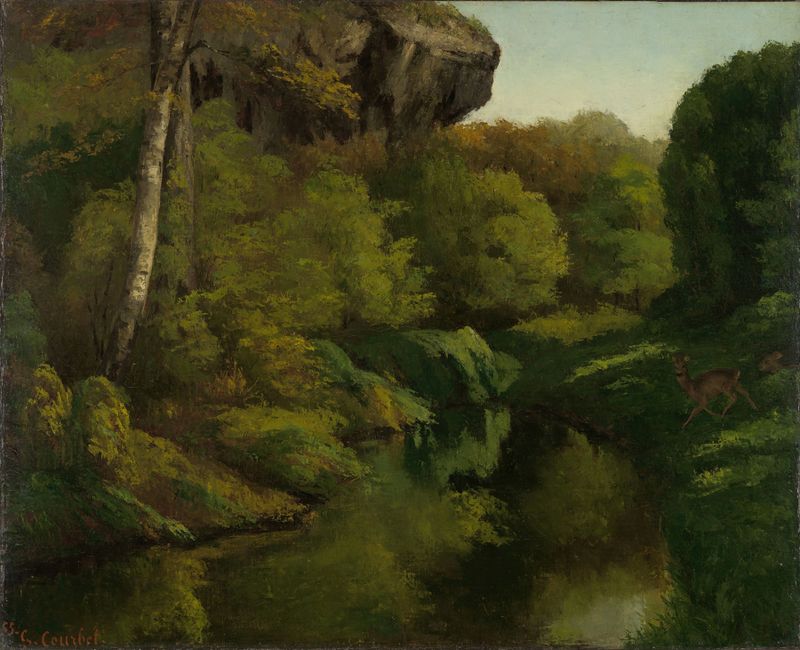
View in the Forest of Fontainebleau
Gustave Courbet
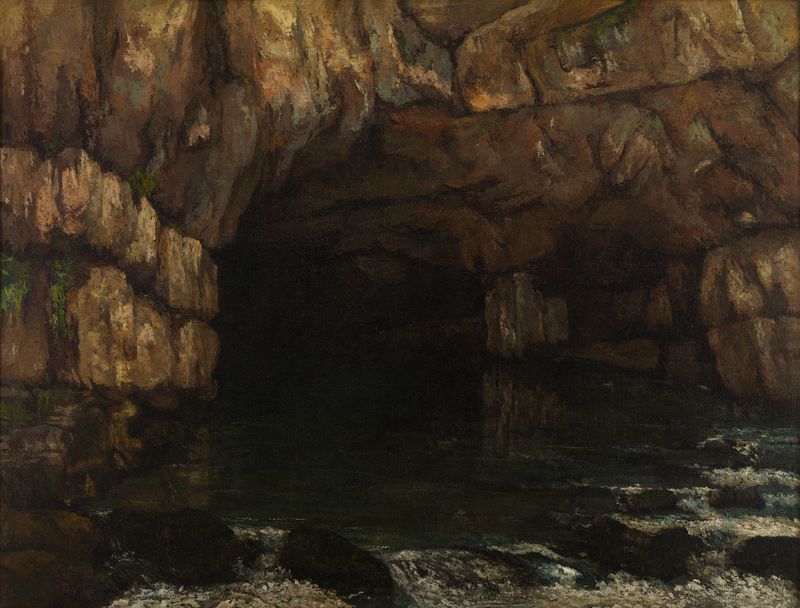
La source de la Loue (The Source of the Loue)
Gustave Courbet

Low Tide at Trouville
Gustave Courbet
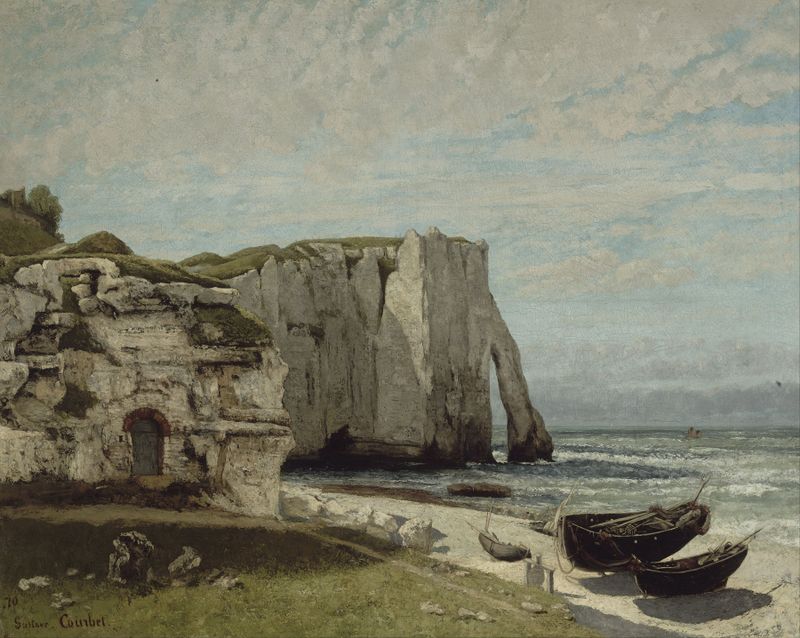
The Etretat Cliffs after the Storm
Gustave Courbet
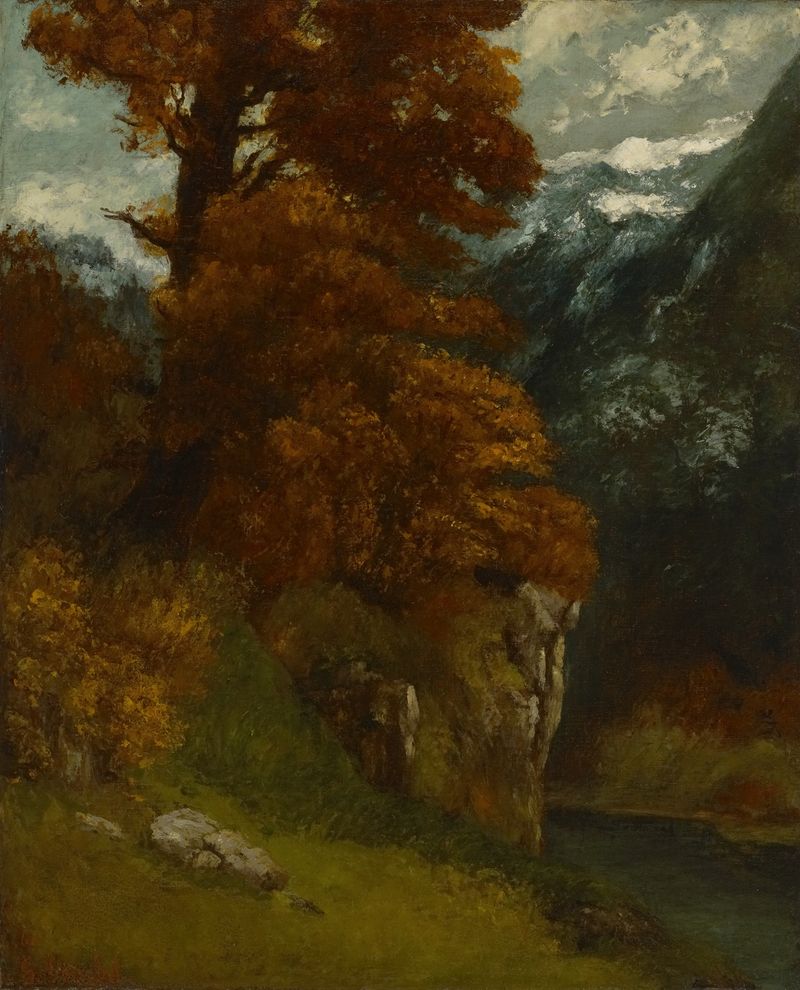
The Glen at Ornans (Bords du Doubs; Effet d’Automne)
Gustave Courbet
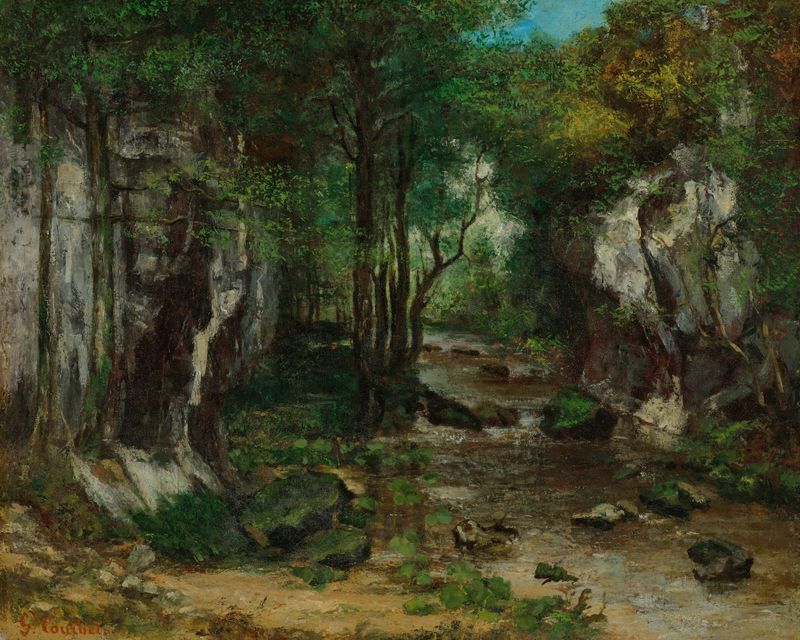
Le Ruisseau de Puits Noir
Gustave Courbet
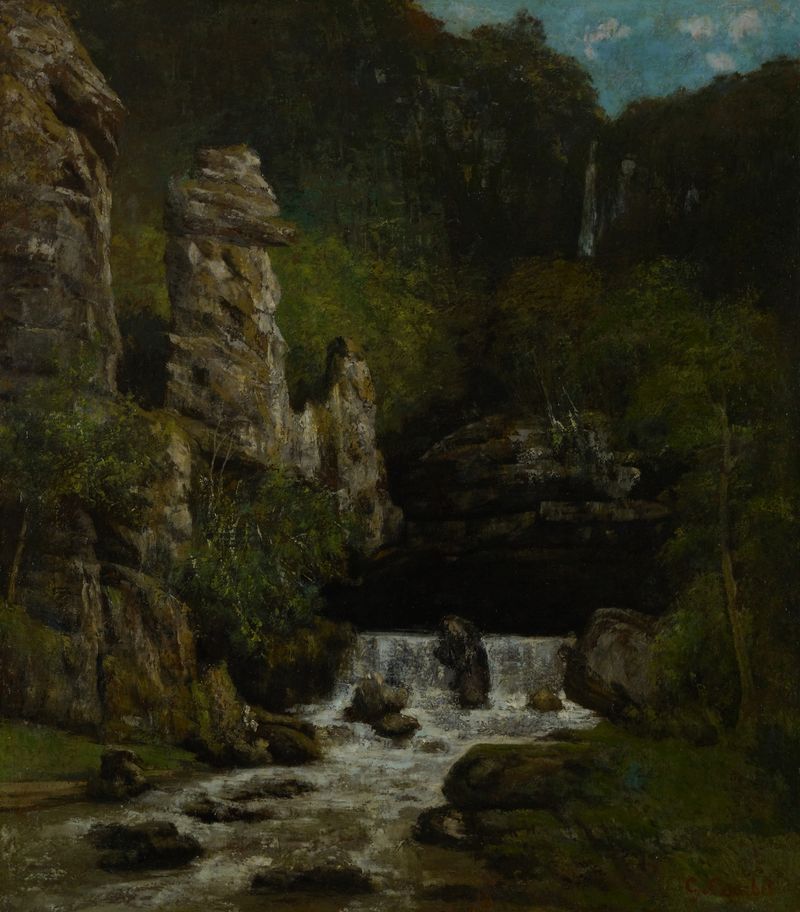
Landscape with a Waterfall
Gustave Courbet





