
River Landscape with a Ferry — History & Facts
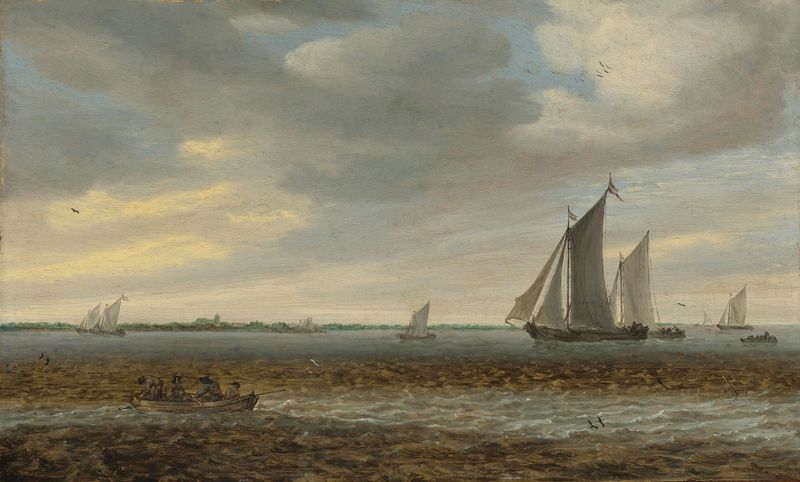
Could beauty survive in a century of chaos? In River Landscape with a Ferry, a serene interplay of nature and humanity unfolds, suggesting that faith in beauty might indeed persist amidst turmoil. Look to the left at the ferry gliding across the river, a vessel of connection amidst the vast landscape. The water, rendered in varying shades of blue and green, reflects the soft light of the sky, which transitions from azure to golden hues as the day nears its close. Notice how the lush foliage frames the scene, with verdant trees arching gracefully, creating a natural sanctuary that invites the viewer’s gaze.
The careful brushwork and the meticulous detailing of the clouds elevate the tranquility and timelessness of this setting. Beneath the surface of this picturesque tableau lies a significant tension: the juxtaposition of the human element against the grandeur of nature. The ferry—representative of human endeavor—suggests a journey, a transition, while the surrounding landscape symbolizes stability and continuity. This contrast evokes a sense of hope, indicating that even as life flows and changes, moments of beauty can anchor us.
The play of light and shadow across the scene further emphasizes this duality, illuminating the fragility and resilience of both nature and human spirit. Jacob Salomonsz. van Ruysdael painted this work in 1656, a period marked by both artistic innovation and societal unrest in the Netherlands. Emerging from the Golden Age of Dutch painting, he was deeply influenced by the natural environment and the evolution of landscape painting.
This artwork reflects his mastery in capturing the interplay of light and atmosphere, showcasing the profound connection between humanity and the natural world during a time of both prosperity and conflict.
More Artworks by Jacob Salomonsz. van Ruysdael
Browse all →
River Landscape With Fishermen And Cattle, The Grote Kerk Of Alkmaar Beyond
Jacob Salomonsz. van Ruysdael
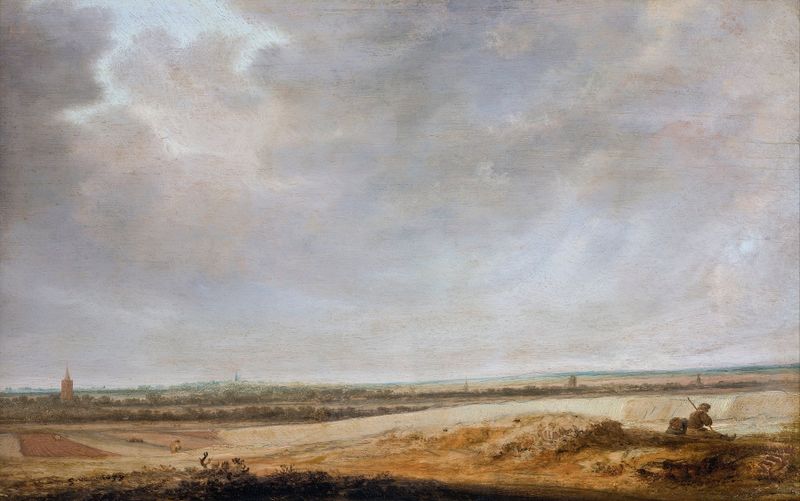
Landscape with Cornfields
Jacob Salomonsz. van Ruysdael

View of Sailing Boats on a Lake
Jacob Salomonsz. van Ruysdael
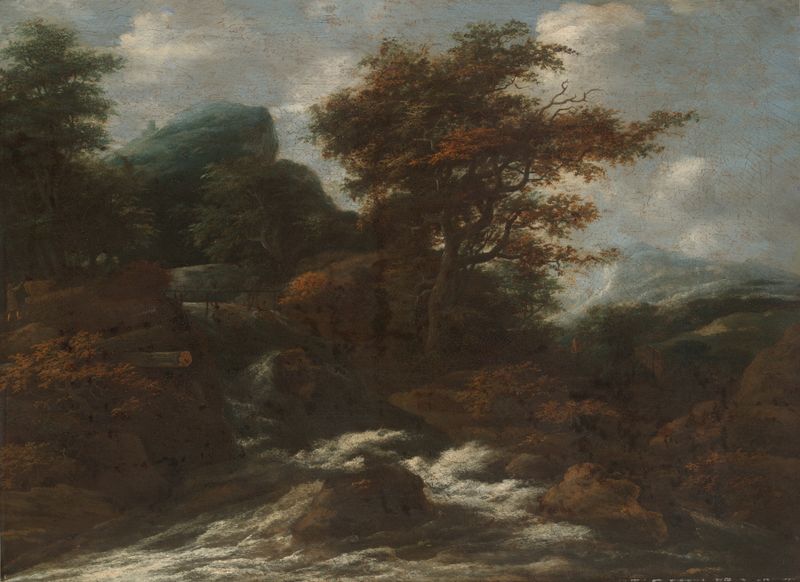
Landscape with Waterfalls
Jacob Salomonsz. van Ruysdael
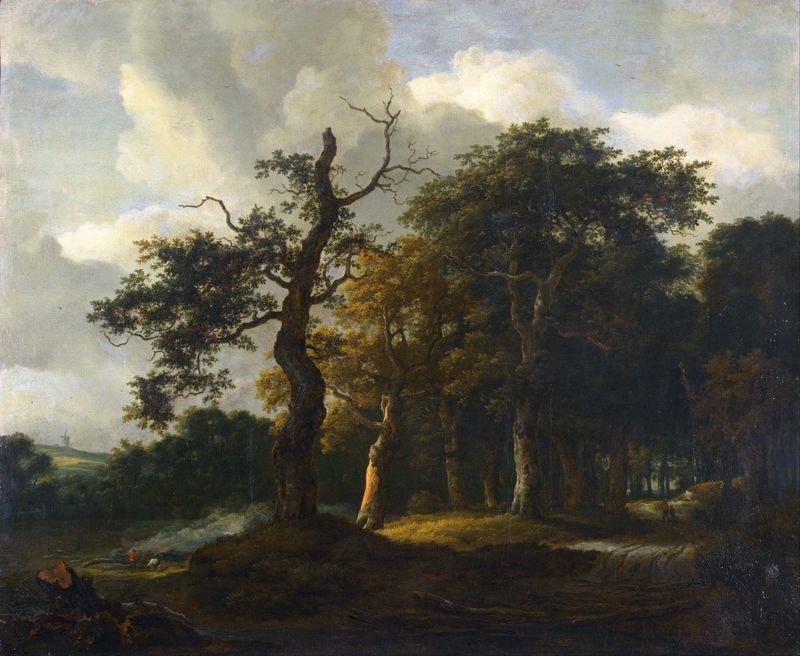
A Road through an Oak Wood
Jacob Salomonsz. van Ruysdael
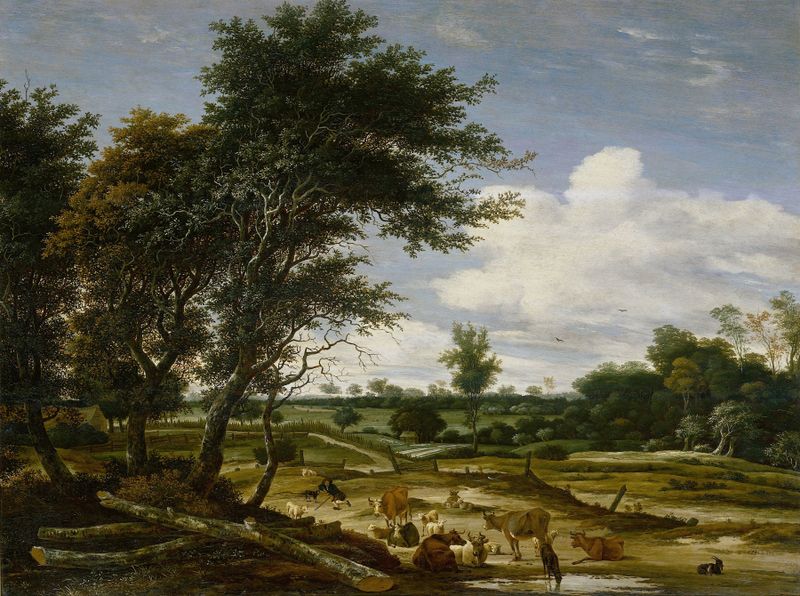
Landscape with herdsmen and cattle
Jacob Salomonsz. van Ruysdael
Sailboats And A Rowboat In Coastal Waters
Jacob Salomonsz. van Ruysdael

Marine
Jacob Salomonsz. van Ruysdael

River Landscape
Jacob Salomonsz. van Ruysdael

A Dune Landscape
Jacob Salomonsz. van Ruysdael





