
Rock study — History & Facts
A wall of stone stands before the viewer, fractured and monumental, its surfaces catching the last warmth of daylight. The eye is drawn first to the angular block jutting forward, its pale face marked by cracks and weather, then up to the greenery that crowns the formation—a quiet reminder that even the hardest rock yields, in time, to the persistence of life. The palette is earthy and restrained, the brushwork attentive to the subtle shifts of shadow and mineral color.
Every crevice and ledge seems chosen for its character, as if the artist were not only recording a place but searching for meaning in the patient architecture of nature. This is not a grand landscape, but an intimate encounter with the bones of the earth. Painted in 1846, Rock study belongs to a moment when artists like Arnold Böcklin sought truth in the direct observation of the natural world, often venturing outdoors with sketchbooks and small panels. Such studies were rarely made for public display; instead, they served as exercises in seeing, or as raw material for larger compositions.
The practice reflected the growing influence of natural science and Romanticism, as painters and poets alike found inspiration in wild, unspoiled places. History has kept few traces of this particular work beyond its recent appearance at auction in Munich, but its quiet intensity invites us to look again—at both the painting and the world it describes.
More Artworks by Arnold Böcklin

Die Toteninsel III
Arnold Böcklin
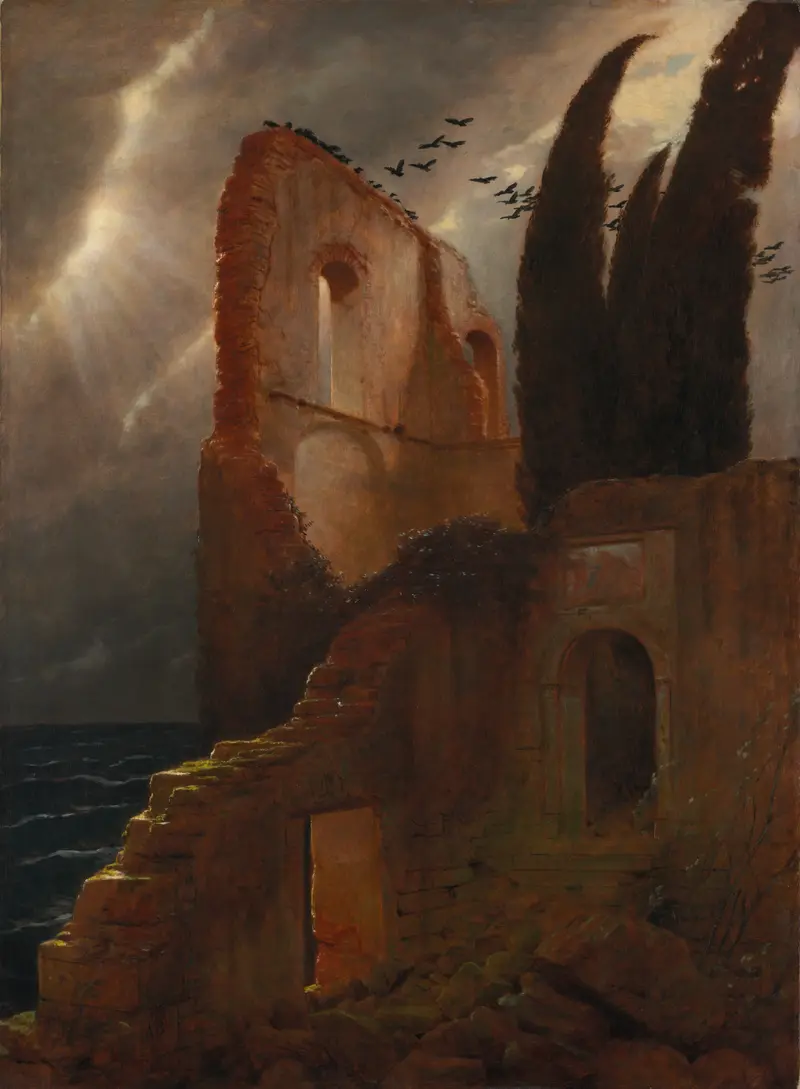
Ruin by the Sea
Arnold Böcklin
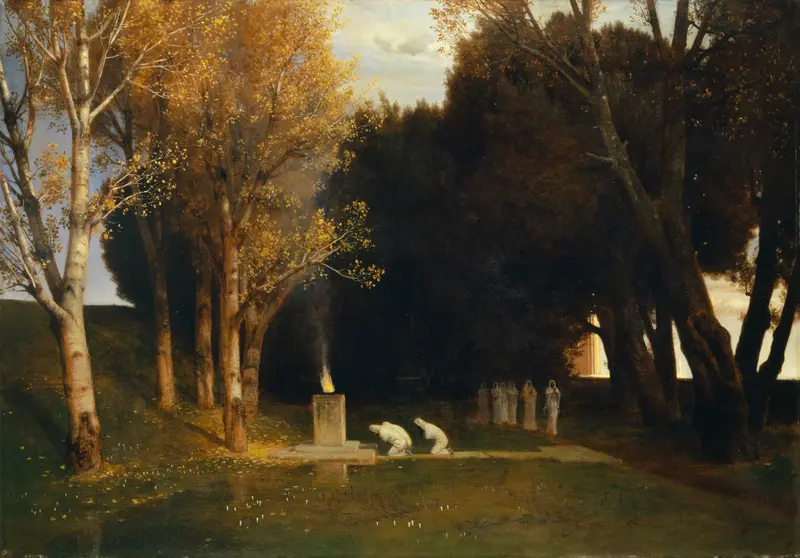
The Sacred Grove
Arnold Böcklin
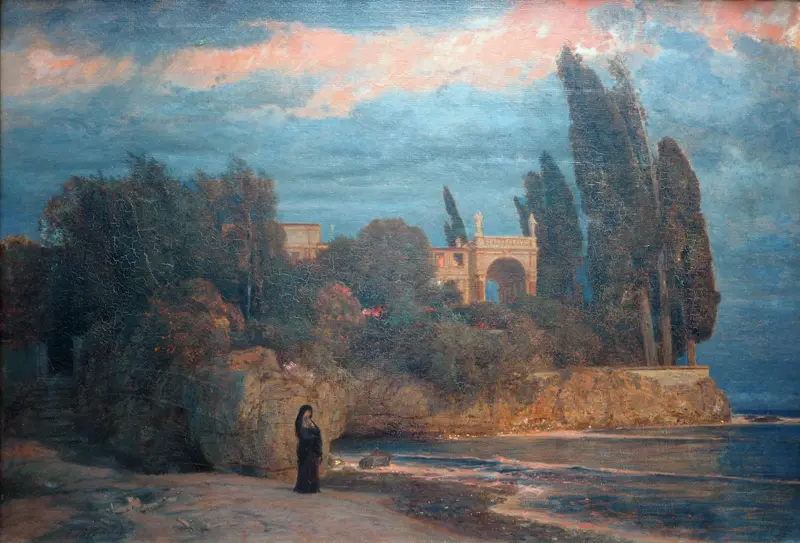
Villa by the Sea
Arnold Böcklin
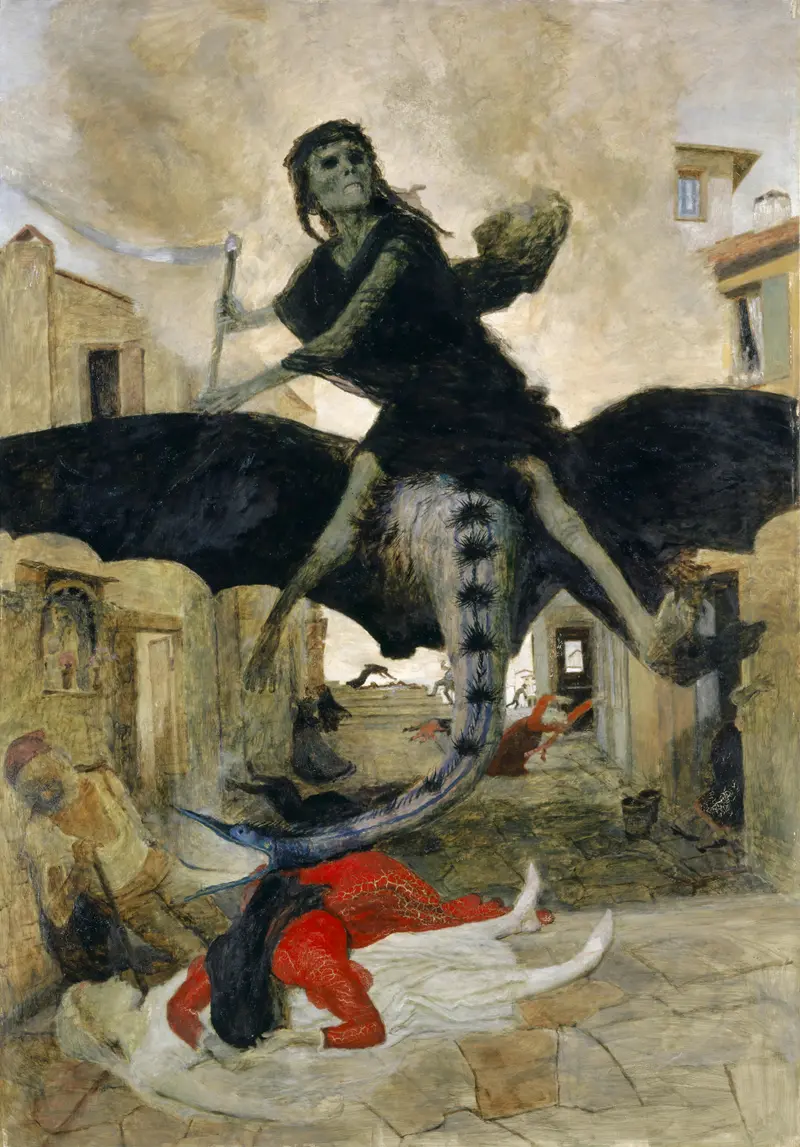
The Plague
Arnold Böcklin
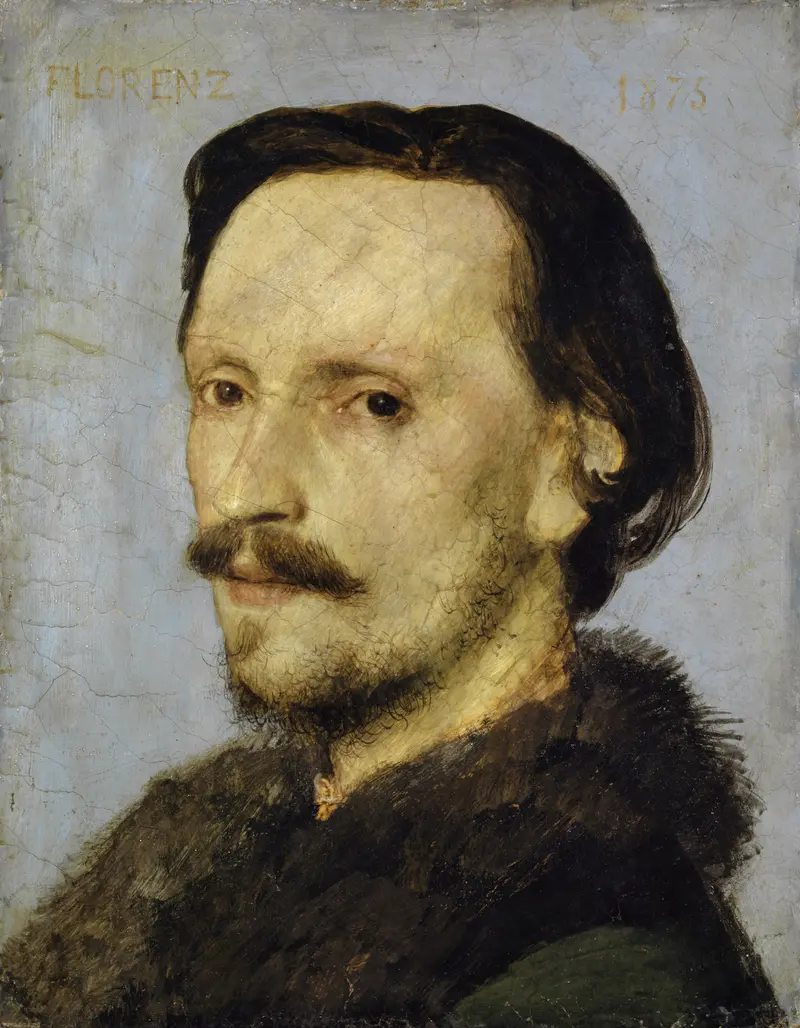
Böcklin Bildnis des Kunsthistorikers Adolph Bayersdorfer, 1875
Arnold Böcklin
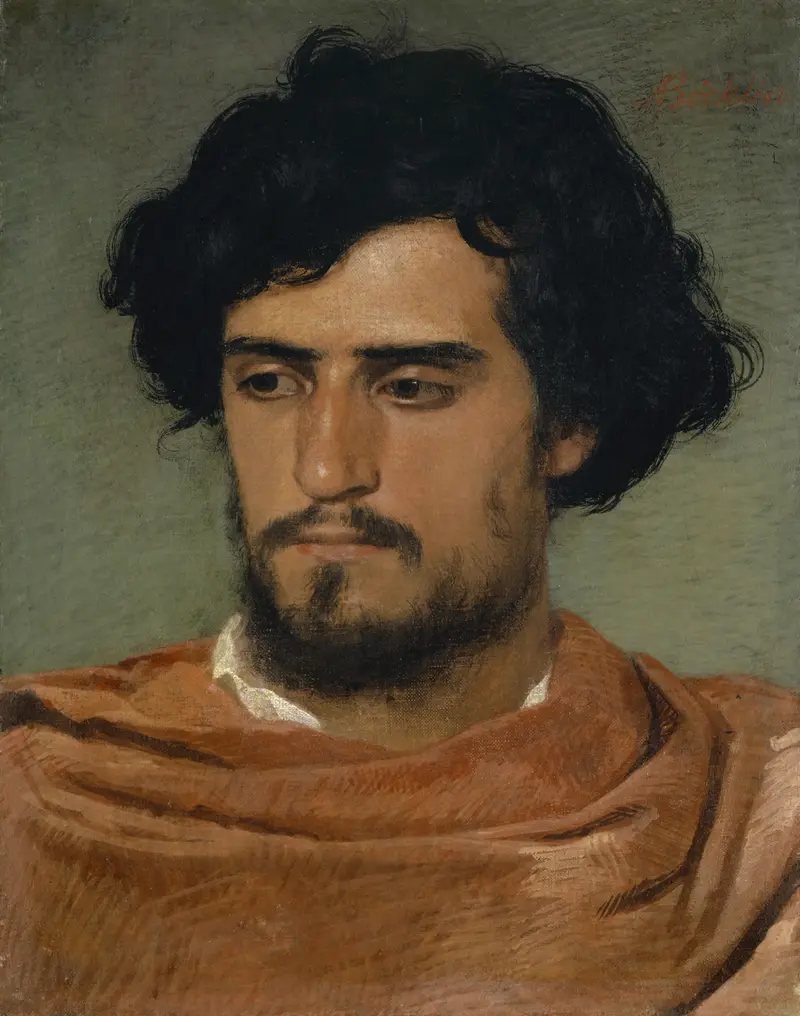
Head of a Roman
Arnold Böcklin
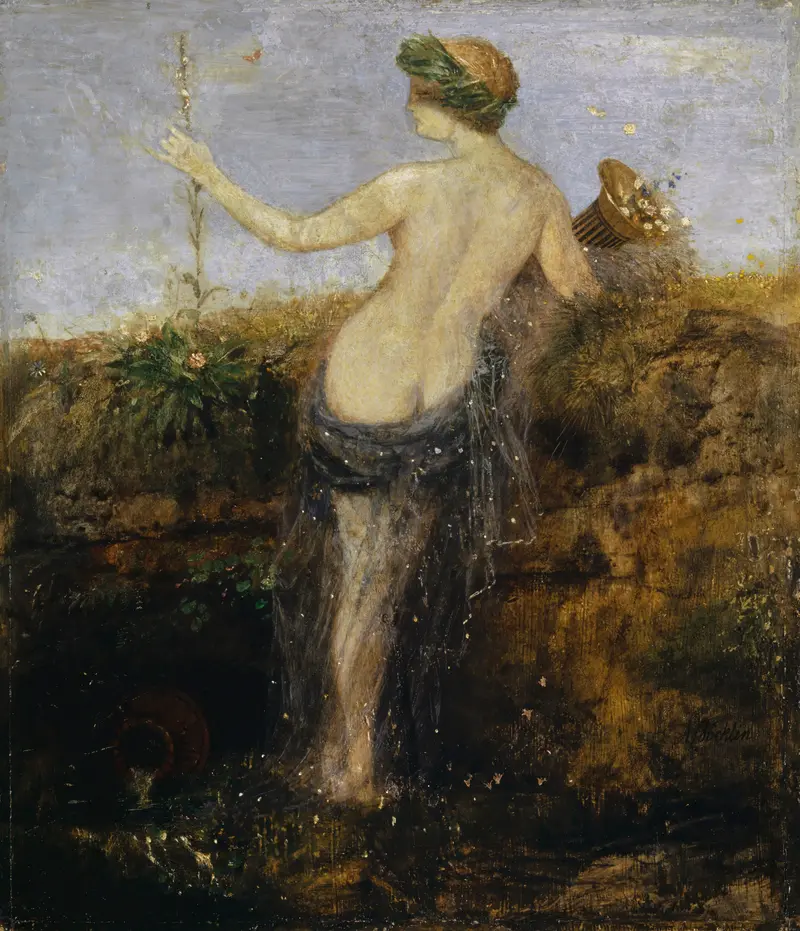
Nymphe with Horn of Plenty
Arnold Böcklin

Sleeping Diana Watched by Two Fauns
Arnold Böcklin
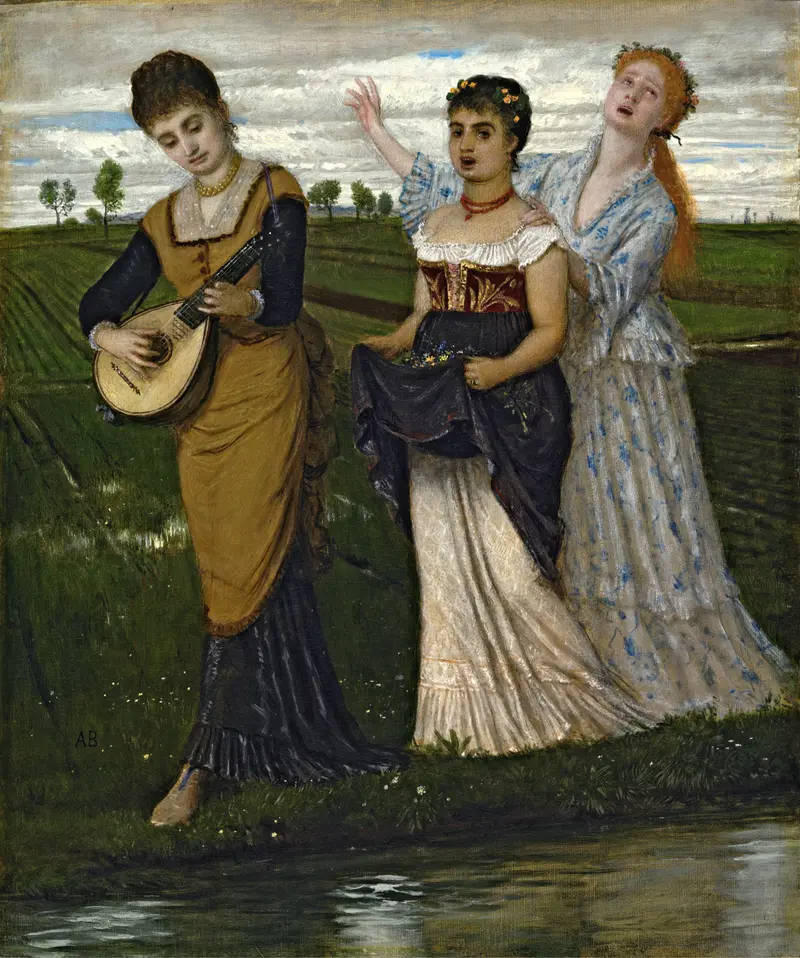
Spring (Songs of Spring)
Arnold Böcklin
More Landscape Art

The Starry Night
Vincent van Gogh

View of Delft
Johannes Vermeer

Water Lilies
Claude Monet

The Grand Canal, Venice, looking north-west from the Ca' Corner to the Ca' Contarini degli Scrigni, with the campanile of Santa Maria della Carità
Canaletto

Windsor Castle
Canaletto

The Grand Canal looking North-East from the Palazzo Dolfin-Manin to the Rialto Bridge
Canaletto