
Rocks at Mouthier — History & Facts
Did the painter know this moment would outlive them? In Rocks at Mouthier, the heavy presence of the natural world speaks to an obsession that transcends time, inviting reflection on the permanence of creation amidst the fleeting nature of existence. Look to the left at the sturdy, jagged rocks, their surfaces rugged and textured, telling stories of time’s relentless passage. Focus on the interplay of light and shadow, where sunlight filters through the foliage, illuminating the lush greens and highlighting the raw, earthy browns of the stones. The painter’s brushstrokes breathe life into each contour, creating a sense of movement that pulls the viewer into the scene, as if the rocks themselves are poised to share their secrets. Delve deeper into the contrasting elements of serenity and solidity; the calm surrounding air juxtaposes the unyielding nature of the rocks, suggesting a tension between the ethereal and the enduring.
The meticulous attention to detail reflects an obsession not only with the landscape but also with capturing the essence of endurance. Each crevice and shadow speaks to a larger narrative of resilience, encouraging contemplation of humanity's place within the vastness of nature. Courbet painted this work during a period marked by the rise of Realism, around the late 1850s, in France. At that time, he was grappling with his artistic identity, seeking to represent the world with authenticity and depth.
The natural landscapes he depicted became a canvas for his beliefs, reflecting the broader artistic shift toward appreciating nature's raw beauty while also confronting the struggles of modern existence.
More Artworks by Gustave Courbet
Browse all →
Marine
Gustave Courbet
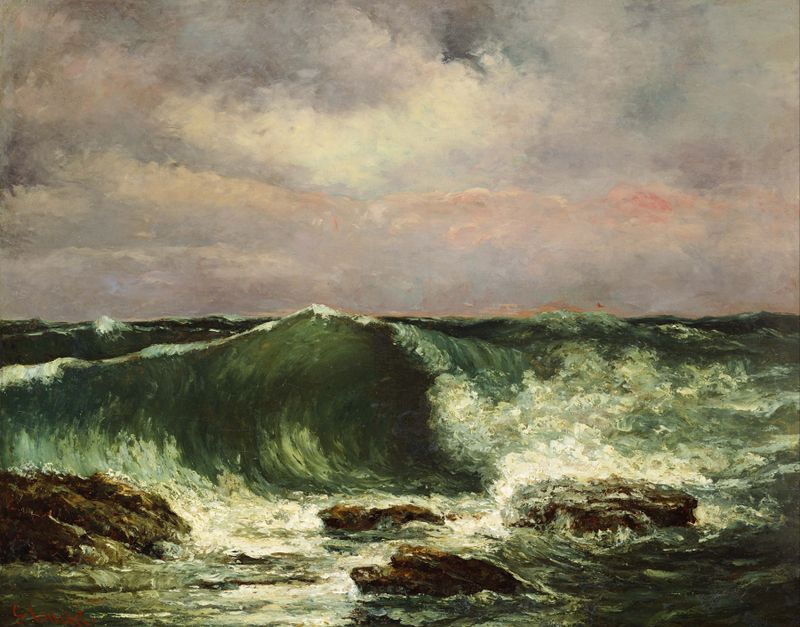
Waves
Gustave Courbet

Étretat; Les Falaises
Gustave Courbet
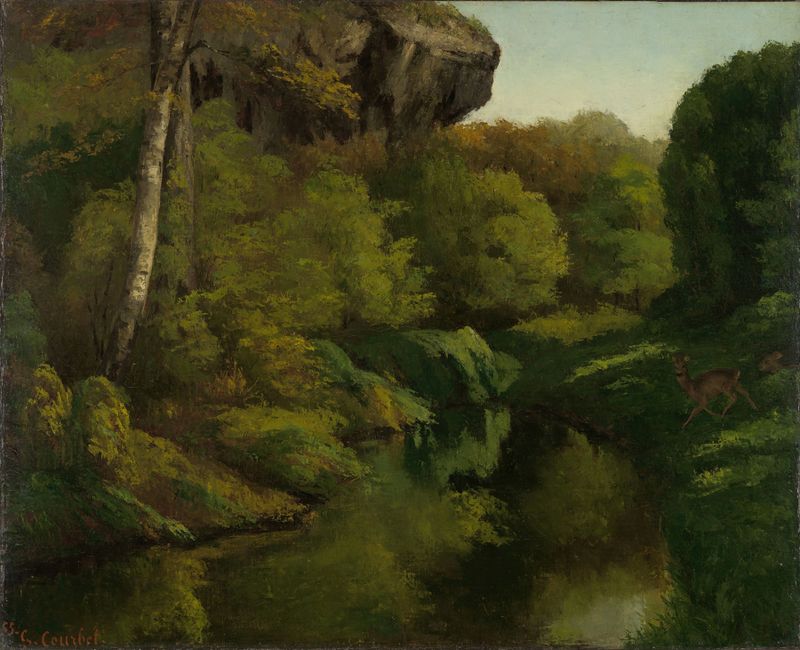
View in the Forest of Fontainebleau
Gustave Courbet
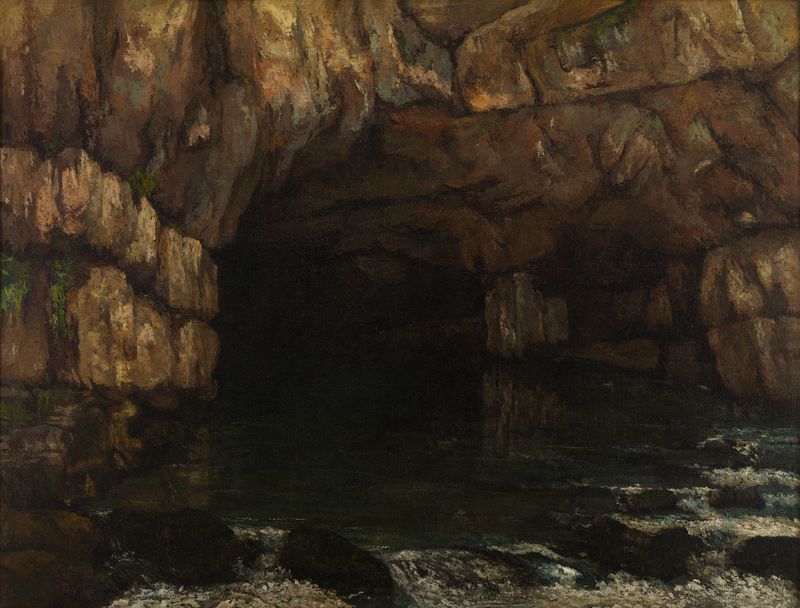
La source de la Loue (The Source of the Loue)
Gustave Courbet

Low Tide at Trouville
Gustave Courbet
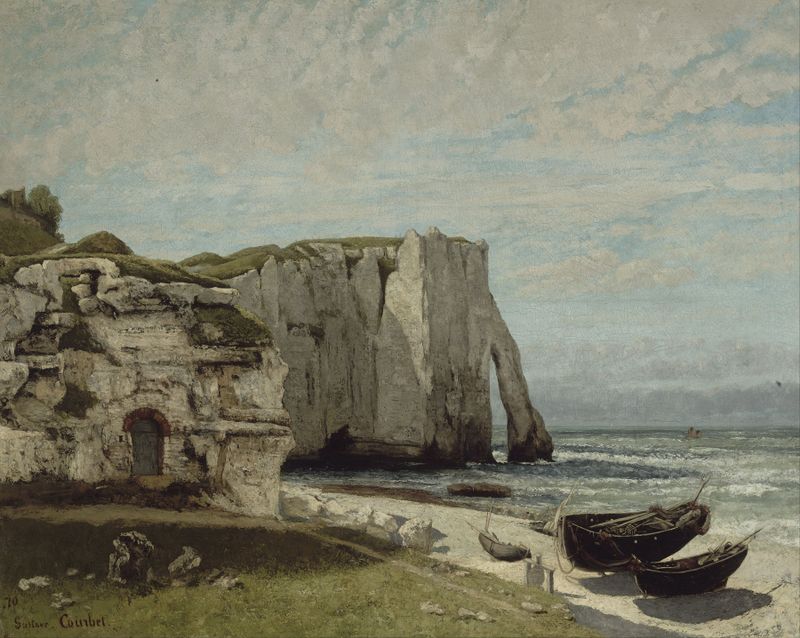
The Etretat Cliffs after the Storm
Gustave Courbet
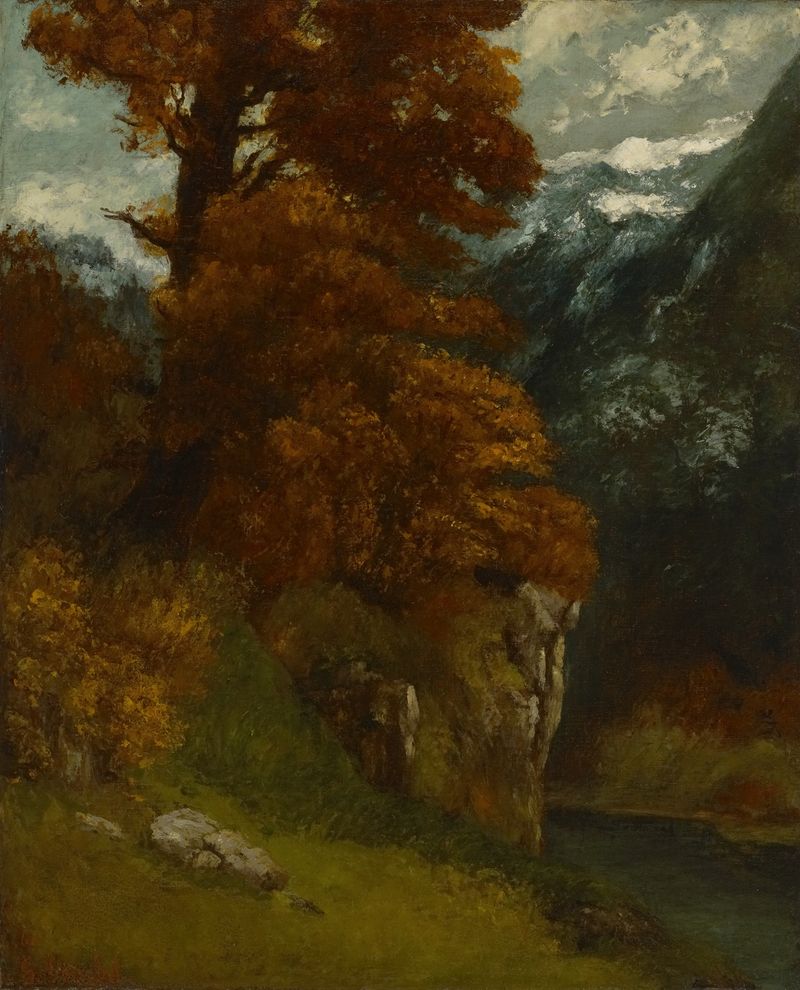
The Glen at Ornans (Bords du Doubs; Effet d’Automne)
Gustave Courbet
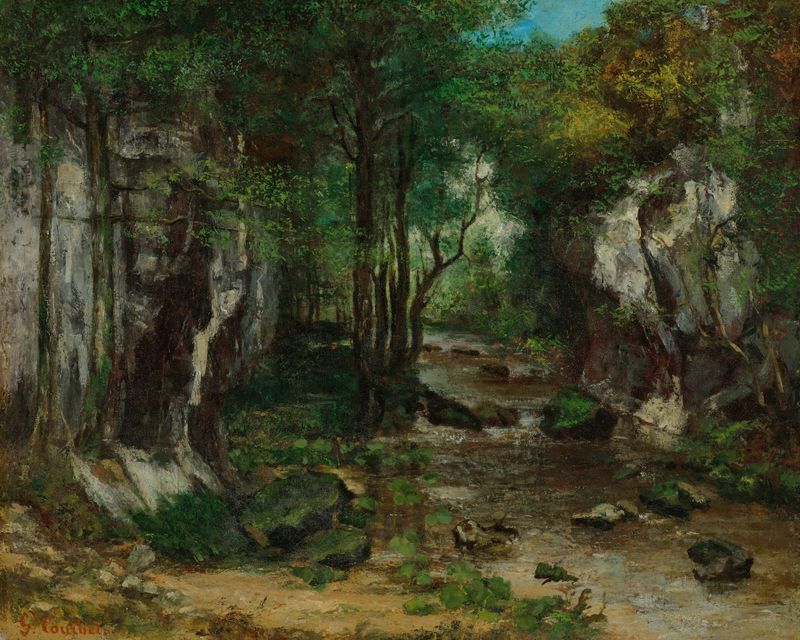
Le Ruisseau de Puits Noir
Gustave Courbet
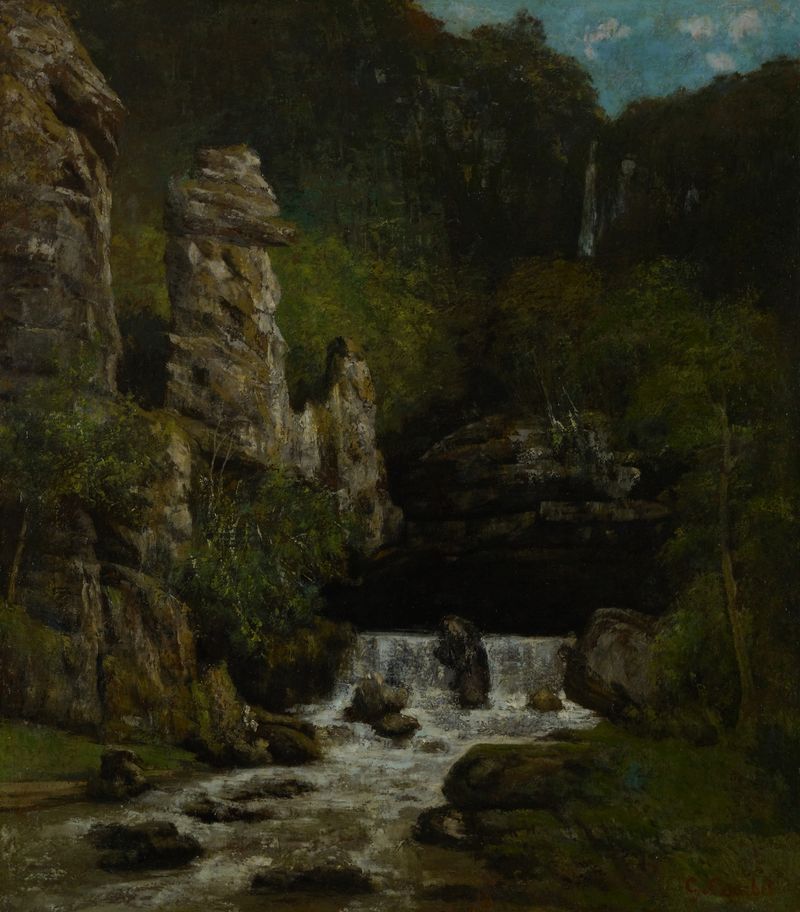
Landscape with a Waterfall
Gustave Courbet





