
Rocky hill country with bridge — History & Facts
A single figure crosses the pale arc of a bridge, dwarfed by the tangled, sunlit wildness that spills down the rocky hill. The eye is drawn first to that bridge—a human trace in a landscape that seems older and wilder than any passerby. Böcklin’s brushwork lets the foliage blur and shimmer, as if the heat of the day is rising off the ground, while the bright blue sky, scattered with clouds, opens the scene to the infinite.
Every element leads you back to the relationship between the smallness of people and the vastness of nature: the figure’s red garment is a signal, a reminder, but also a question—what does it mean to cross into such a place? Painted in 1858, Rocky hill country with bridge belongs to a moment when artists across Europe were turning their gaze away from grand historical narratives and toward the landscape itself. For painters like Arnold Böcklin, the land was not just a backdrop but a living subject, shaped by memory, myth, and the new science of geology. In this work, the bridge is both literal and symbolic—a link between the cultivated and the wild, the present and the ancient.
Little is recorded about the specific journey of this painting, now in the GalleriX collection, but its quiet drama is typical of the mid-19th-century fascination with nature’s power and mystery. Look again at the shadows, the distant temple-like forms, the way the light pools on stone and leaf: the painting invites you to cross that bridge, too, and lose yourself in the country beyond.
More Artworks by Arnold Böcklin

Die Toteninsel III
Arnold Böcklin
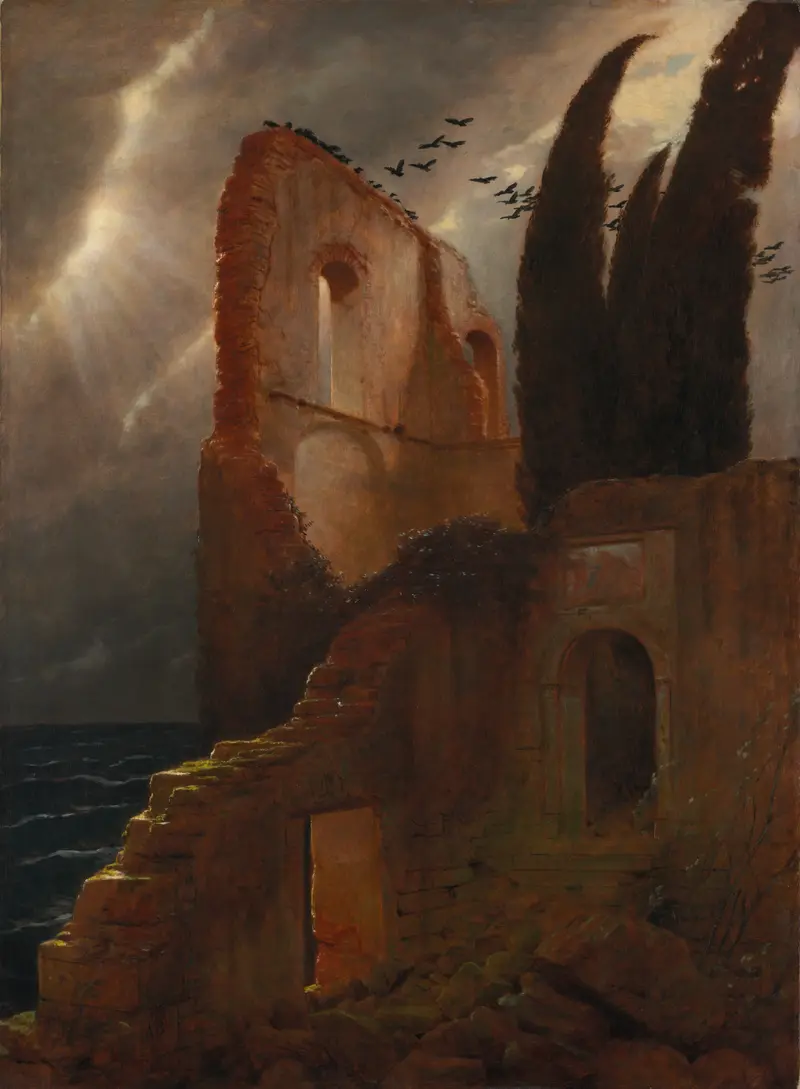
Ruin by the Sea
Arnold Böcklin
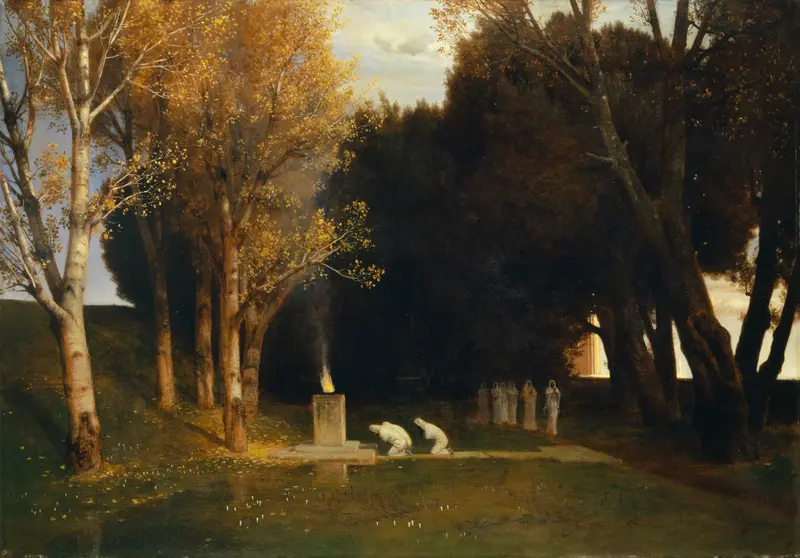
The Sacred Grove
Arnold Böcklin
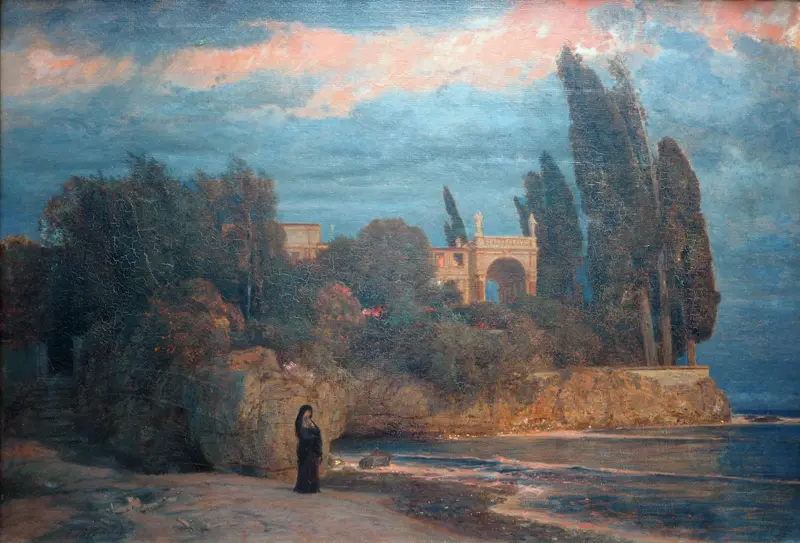
Villa by the Sea
Arnold Böcklin
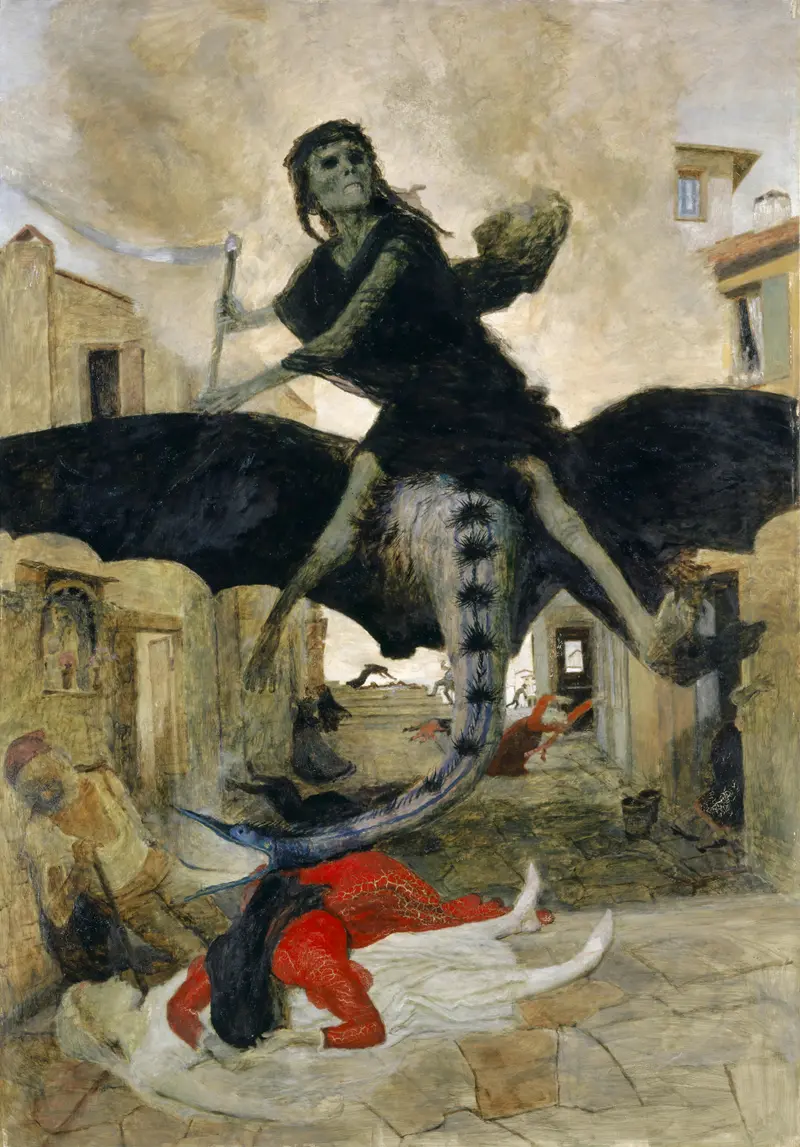
The Plague
Arnold Böcklin
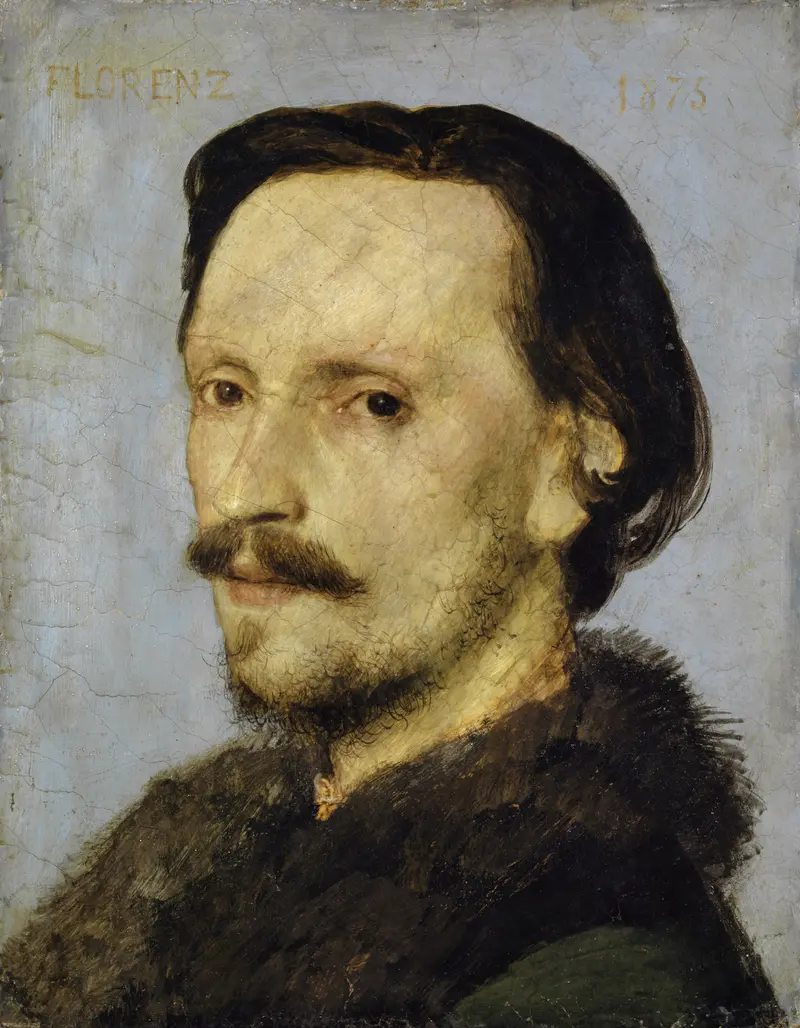
Böcklin Bildnis des Kunsthistorikers Adolph Bayersdorfer, 1875
Arnold Böcklin
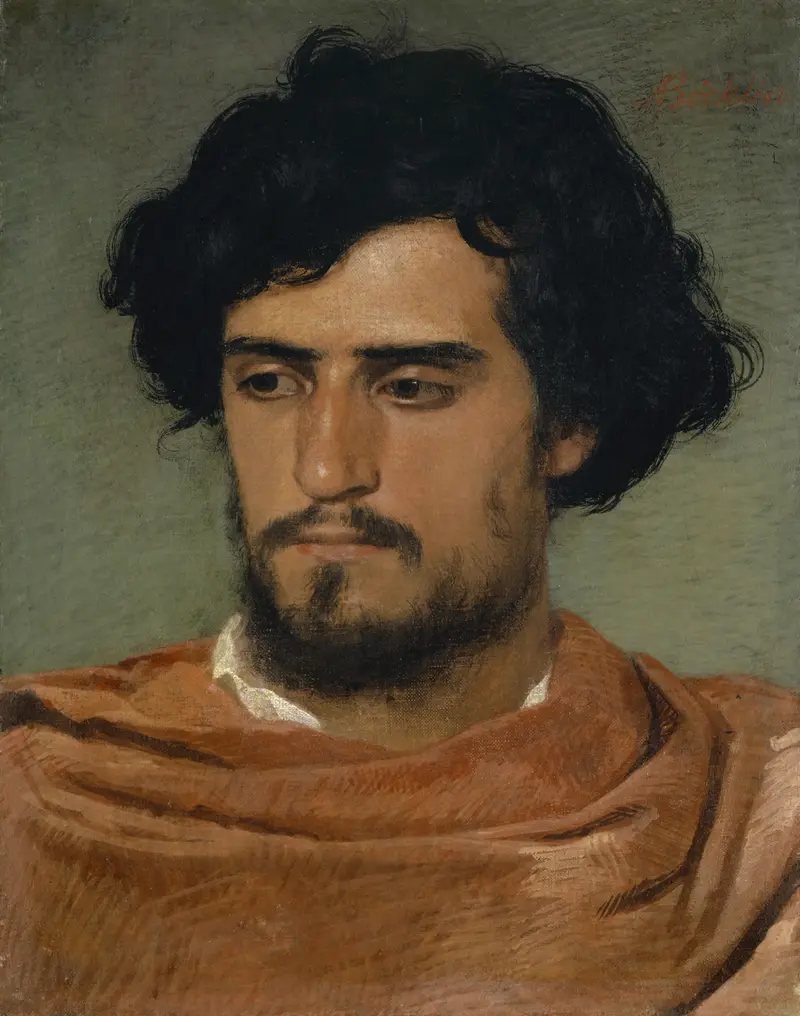
Head of a Roman
Arnold Böcklin
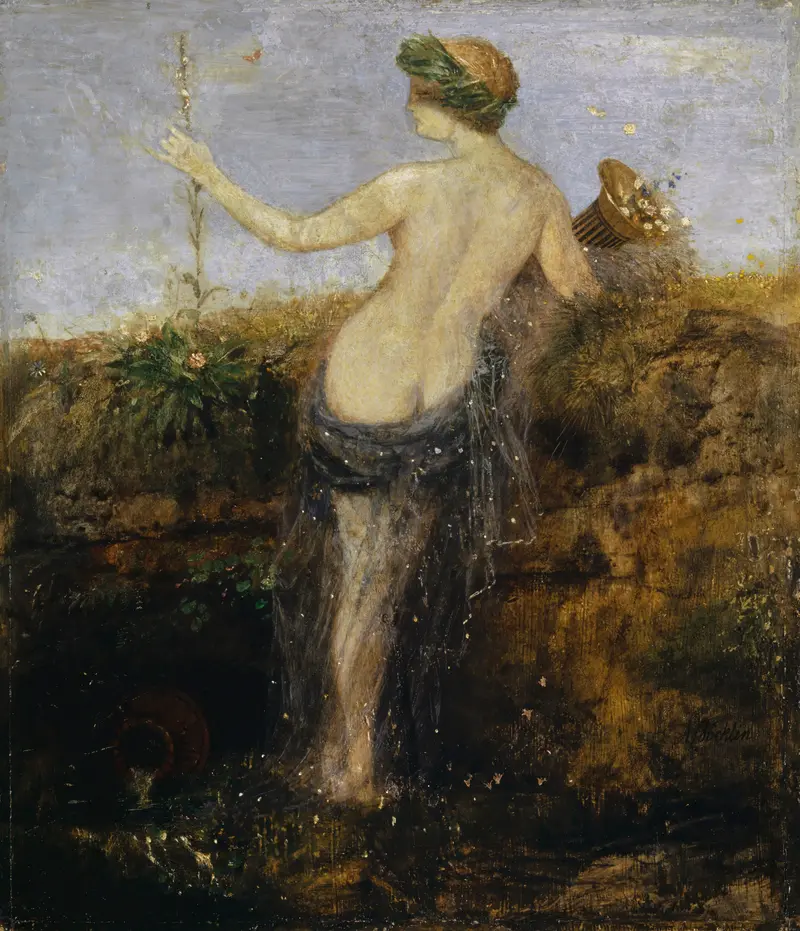
Nymphe with Horn of Plenty
Arnold Böcklin
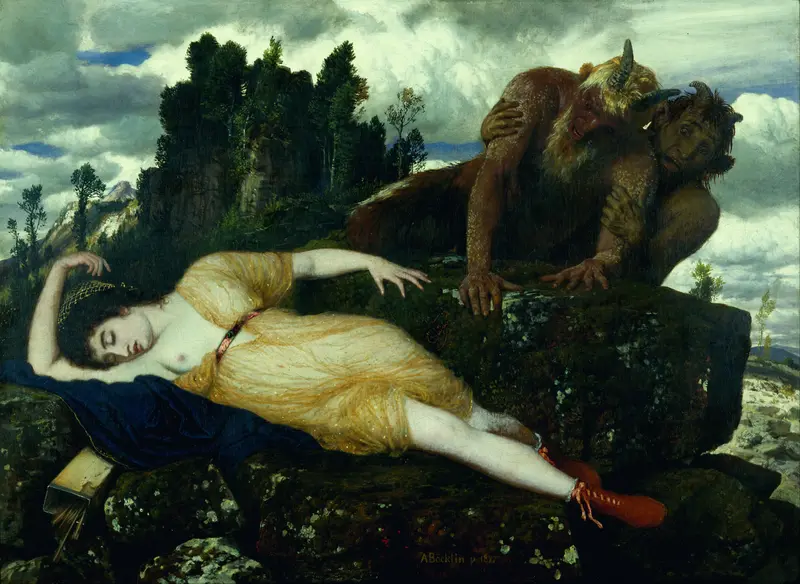
Sleeping Diana Watched by Two Fauns
Arnold Böcklin
Spring (Songs of Spring)
Arnold Böcklin
More Landscape Art

The Starry Night
Vincent van Gogh

View of Delft
Johannes Vermeer

Water Lilies
Claude Monet

The Grand Canal, Venice, looking north-west from the Ca' Corner to the Ca' Contarini degli Scrigni, with the campanile of Santa Maria della Carità
Canaletto

Windsor Castle
Canaletto

The Grand Canal looking North-East from the Palazzo Dolfin-Manin to the Rialto Bridge
Canaletto