
Rotatoria (Rotifers) — History & Facts
What first catches the eye in Rotatoria (Rotifers) is the almost architectural intricacy of life at a scale invisible to the naked eye. Each organism bursts with delicate symmetry, their forms radiating outward in feathery fans, spiked whorls, and latticed filigree. The artist’s hand guides us from the dense, crown-like tufts at the top through the branching, antlered structures and down to the coiled tails and delicate appendages below.
Every detail is purposeful: the repeated use of golden ochre highlights the organic unity among these wildly varied shapes, while the fine black lines suggest both scientific precision and a sense of movement, as if these creatures might suddenly begin to spin or swim from the page. The composition invites the viewer to marvel at the hidden geometry of nature, where even the smallest drop of pond water becomes a cathedral of forms. Created in 1904 for the celebrated Kunstformen der Natur, this plate reflects a moment when art and science joined hands to reveal the wonders of the microscopic world. Such works were not mere decoration, but visual arguments for the beauty and complexity of life, intended to educate and inspire a public newly fascinated by the revelations of the microscope.
Ernst Haeckel, the mind behind these images, was both biologist and artist, part of a generation that saw taxonomy and illustration as twin pursuits. History has kept few traces of the individual journeys of these prints, but their influence lingers wherever curiosity about the natural world is kindled. Look again, and see how every line and curve is a bridge between observation and imagination.
More Artworks by Ernst Haeckel
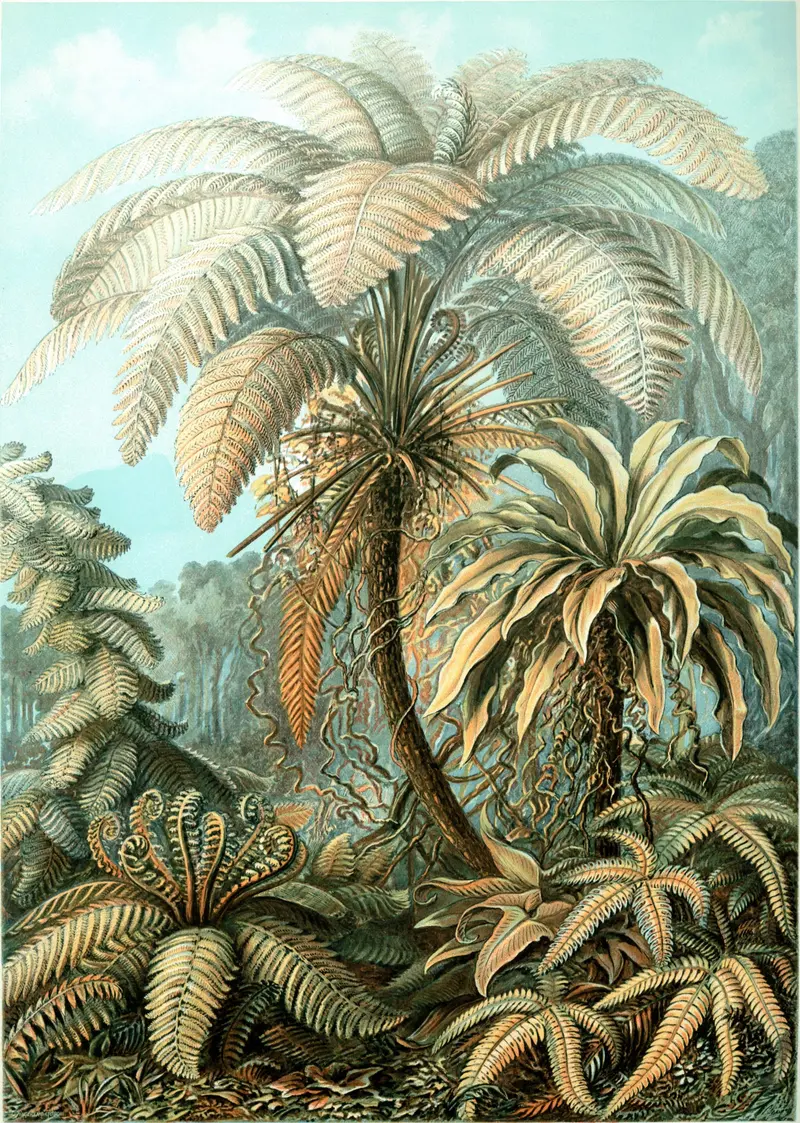
Filicinae (Ferns)
Ernst Haeckel
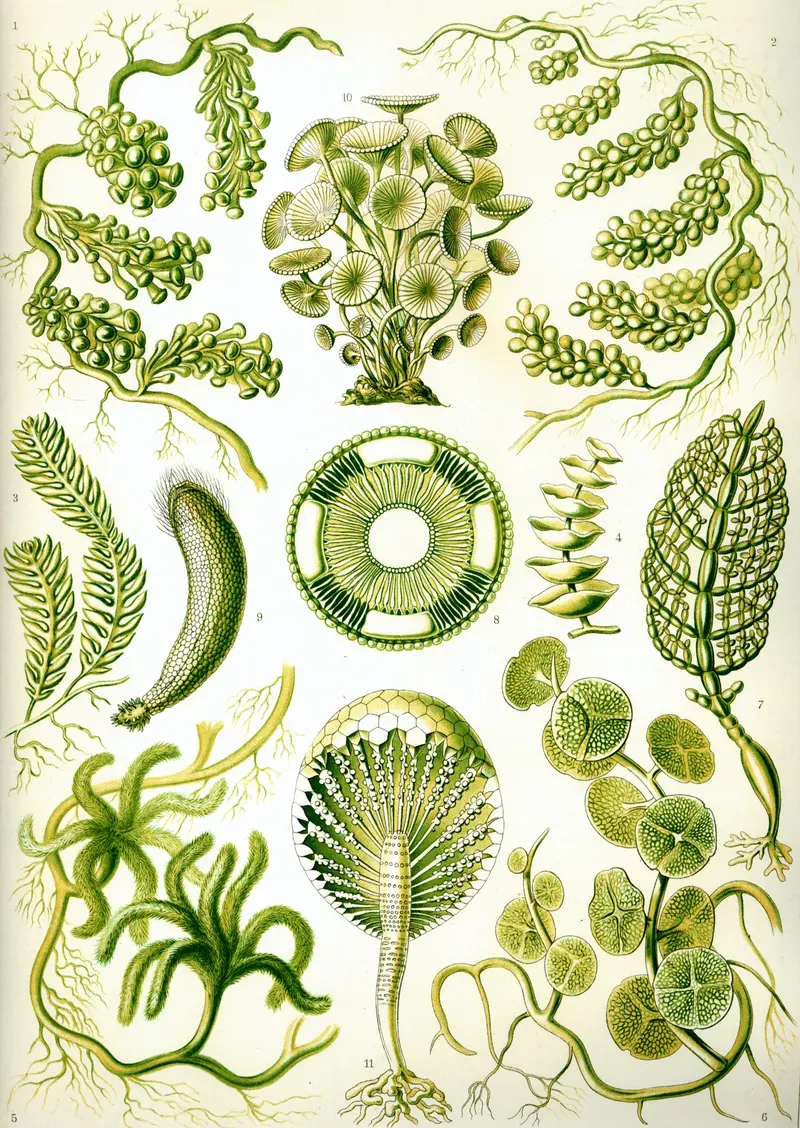
Siphoneae (Green Algae)
Ernst Haeckel

Cirripedia (Barnacles)
Ernst Haeckel

Actiniae (Sea Anemones)
Ernst Haeckel
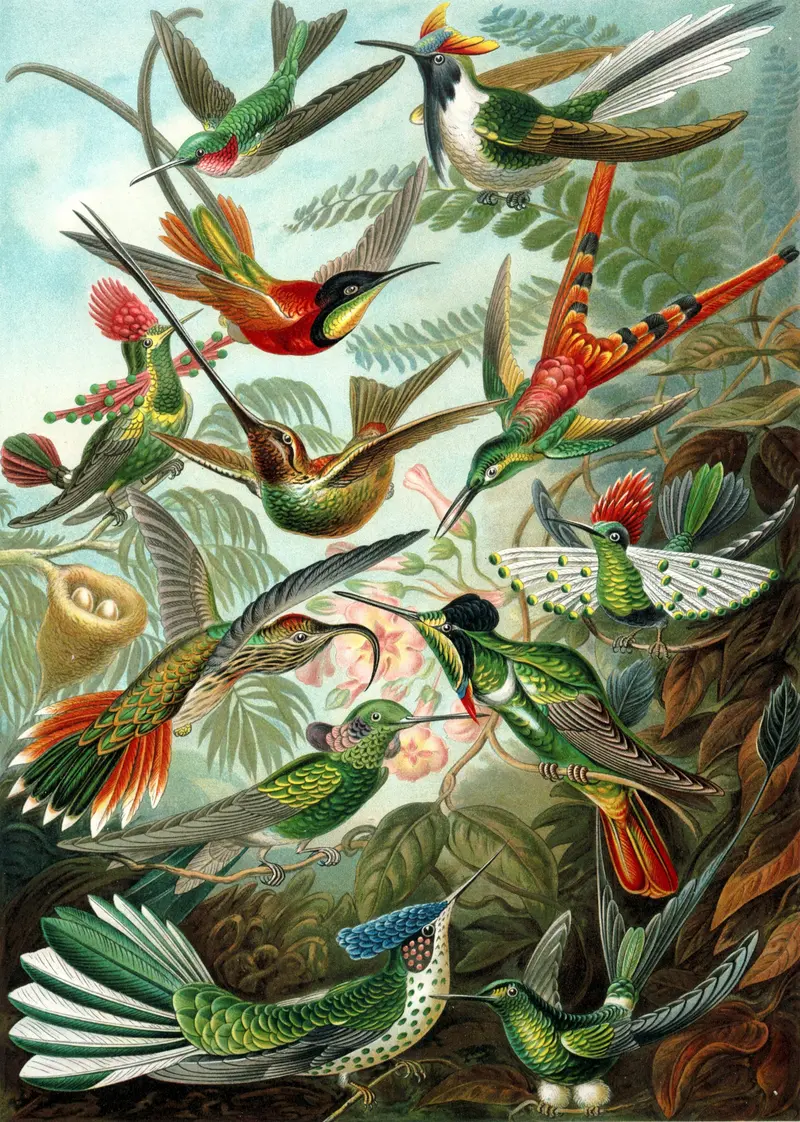
Trochilidae (Hummingbirds)
Ernst Haeckel
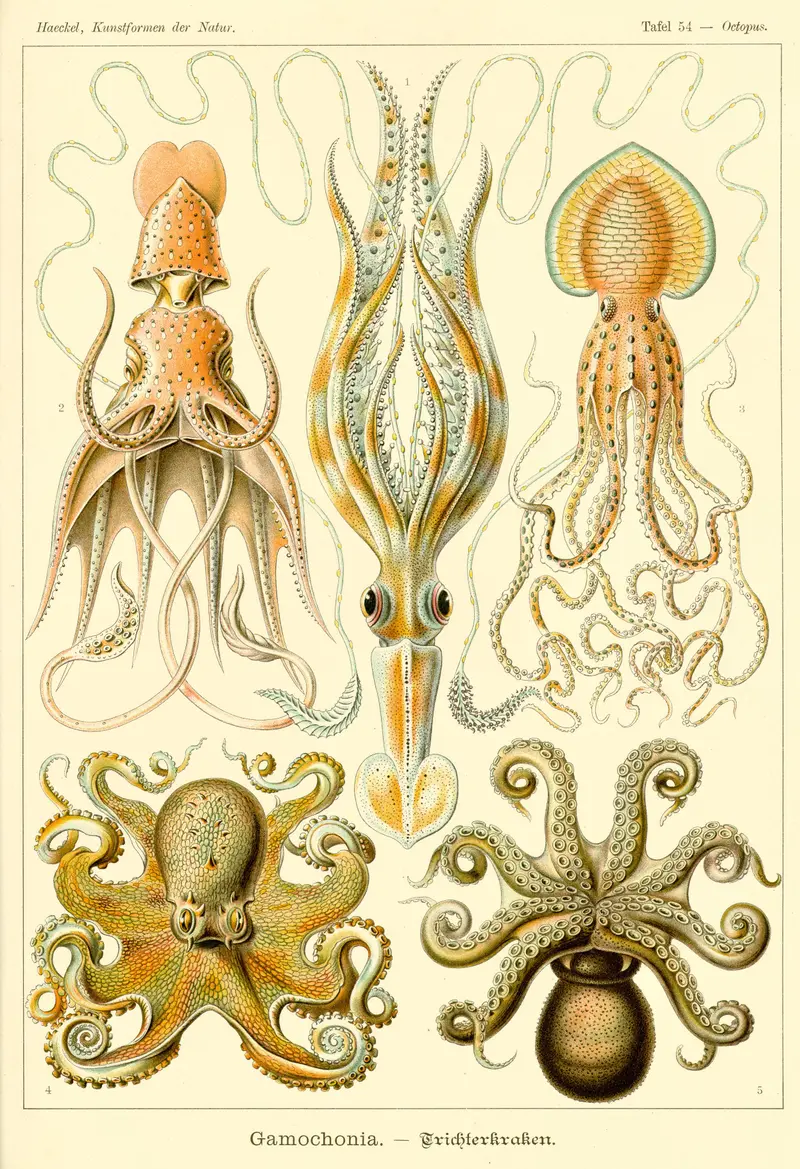
Gamochonia (Cephalopods)
Ernst Haeckel
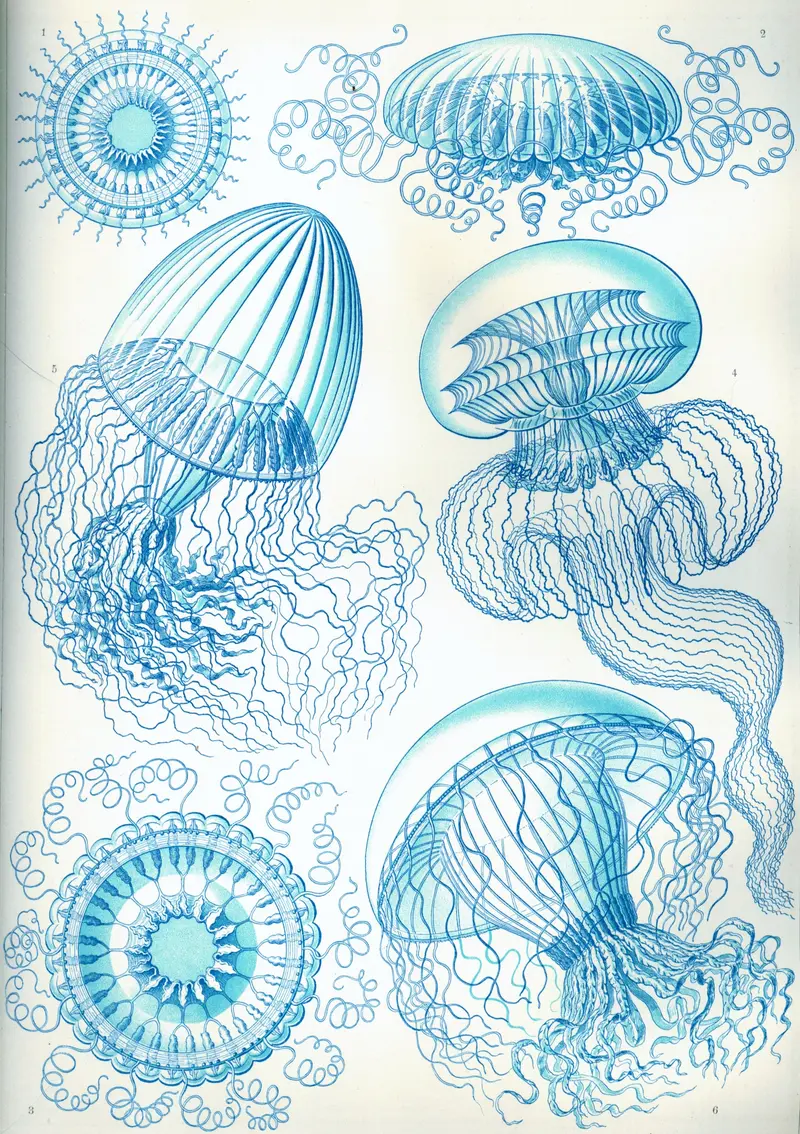
Leptomedusae (Jellyfish)
Ernst Haeckel
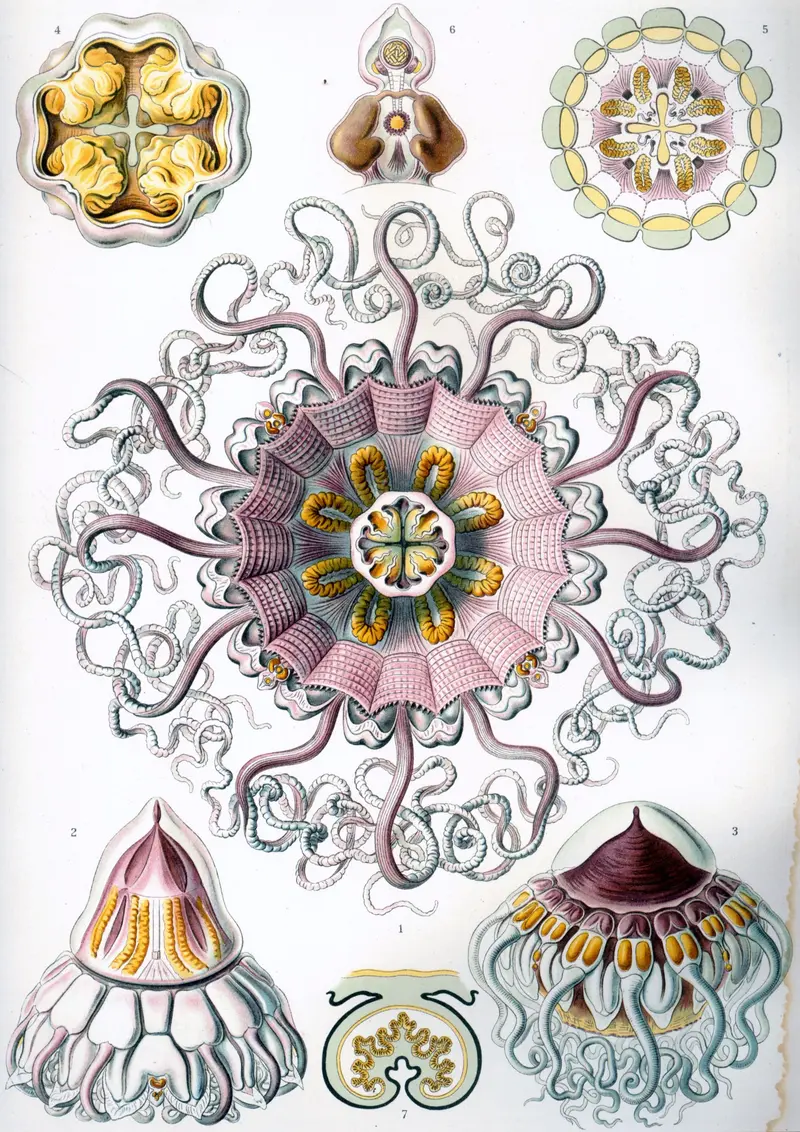
Peromedusae (Jellyfish)
Ernst Haeckel
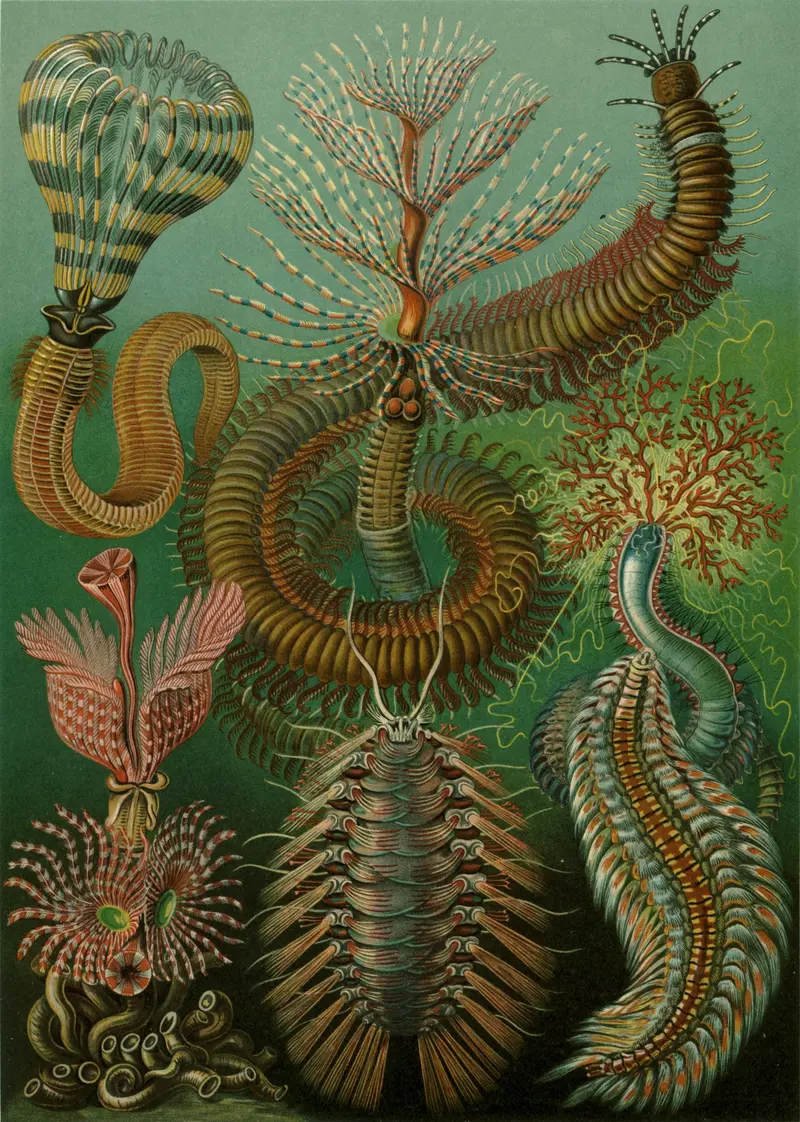
Chaetopoda (Bristle Worms)
Ernst Haeckel
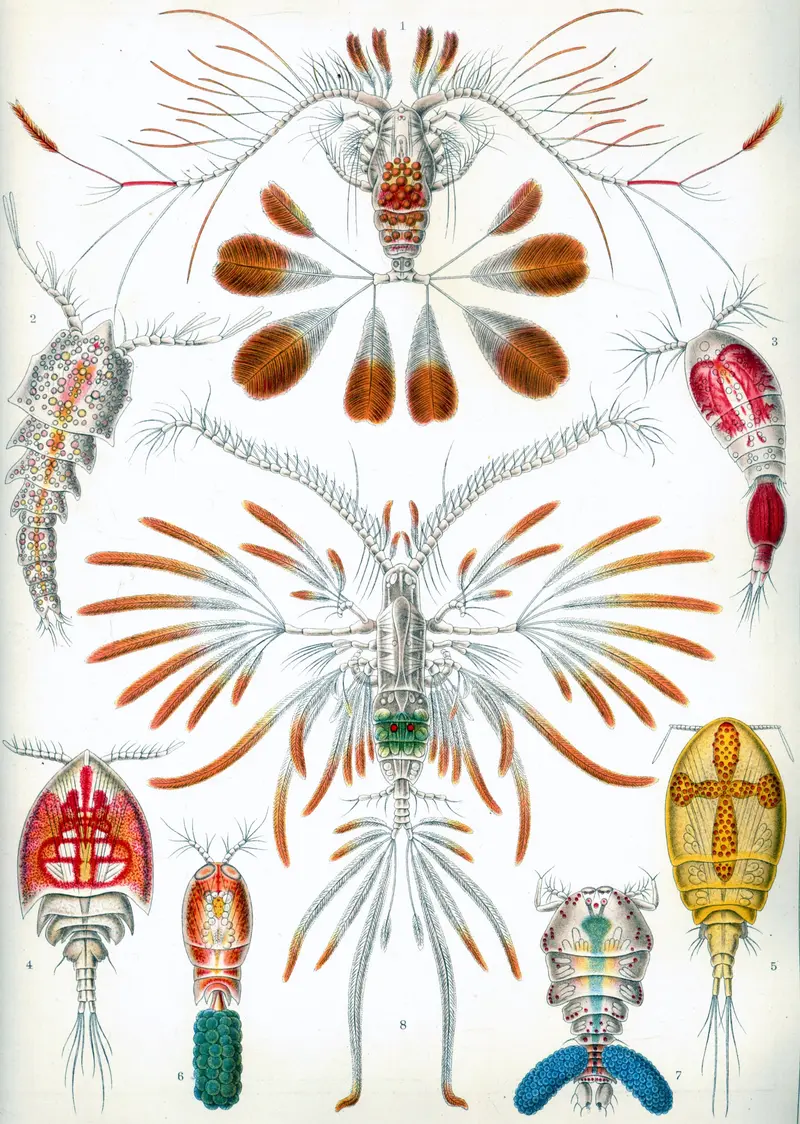
Copepoda (Copepods)
Ernst Haeckel





