
Rue de Jouy le Comte — History & Facts
What first draws the eye in Rue de Jouy le Comte is the hush that seems to settle over the entire street, as if the hour itself has paused. The road curves gently away, guiding us past a row of houses whose colored shutters and walls are softened by the cool, damp air. A woman bends over her work in the foreground, her white cap catching the last light, while children gather in loose groups further down the lane.
The palette is all watery blues and mossy greens, with the faintest blush of pink in the sky—a fleeting moment between day and dusk. Lepère’s brushwork is loose and suggestive, letting the trees dissolve into the sky, and the figures into the very rhythm of the place. This is the France of the early 1880s, when artists like Auguste Lepère were turning their attention to the quiet dignity of rural life and the changing face of the countryside. Such images were rarely grand commissions; instead, they were often painted for fellow artists, collectors, or simply for the artist’s own pursuit of light and mood.
The date—probably 1880—places this work in a time of rapid transformation, when the old rhythms of village life were beginning to yield to modernity. Today, the piece lives in the National Gallery of Art’s collection, thanks to a project that has opened its doors to a wider world. Let your gaze linger on the subtle play of color and shadow, and imagine the gentle hush of this street as it must have felt to Lepère himself.
More Artworks by Auguste Lepère

Le Pont-Neuf (Paris)
Auguste Lepère
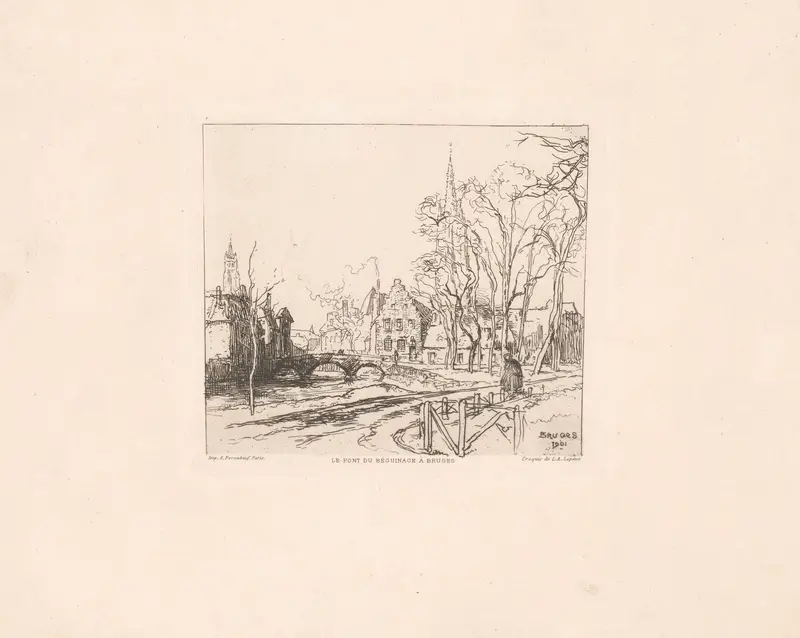
Le pont du Beguinage à Bruges
Auguste Lepère
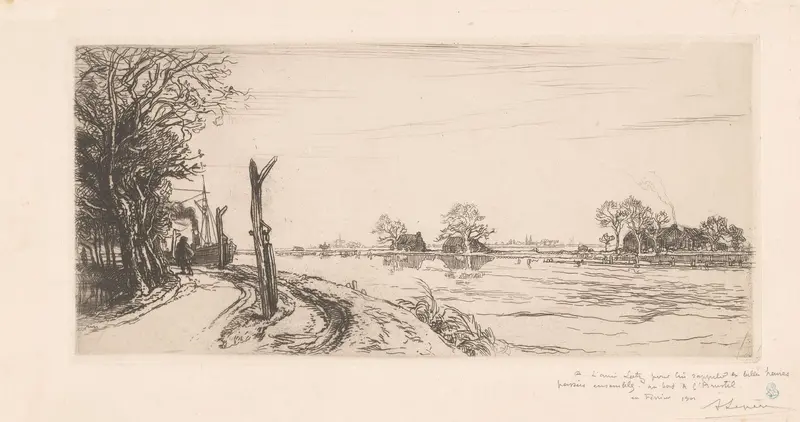
Au bord de l’Amstel
Auguste Lepère
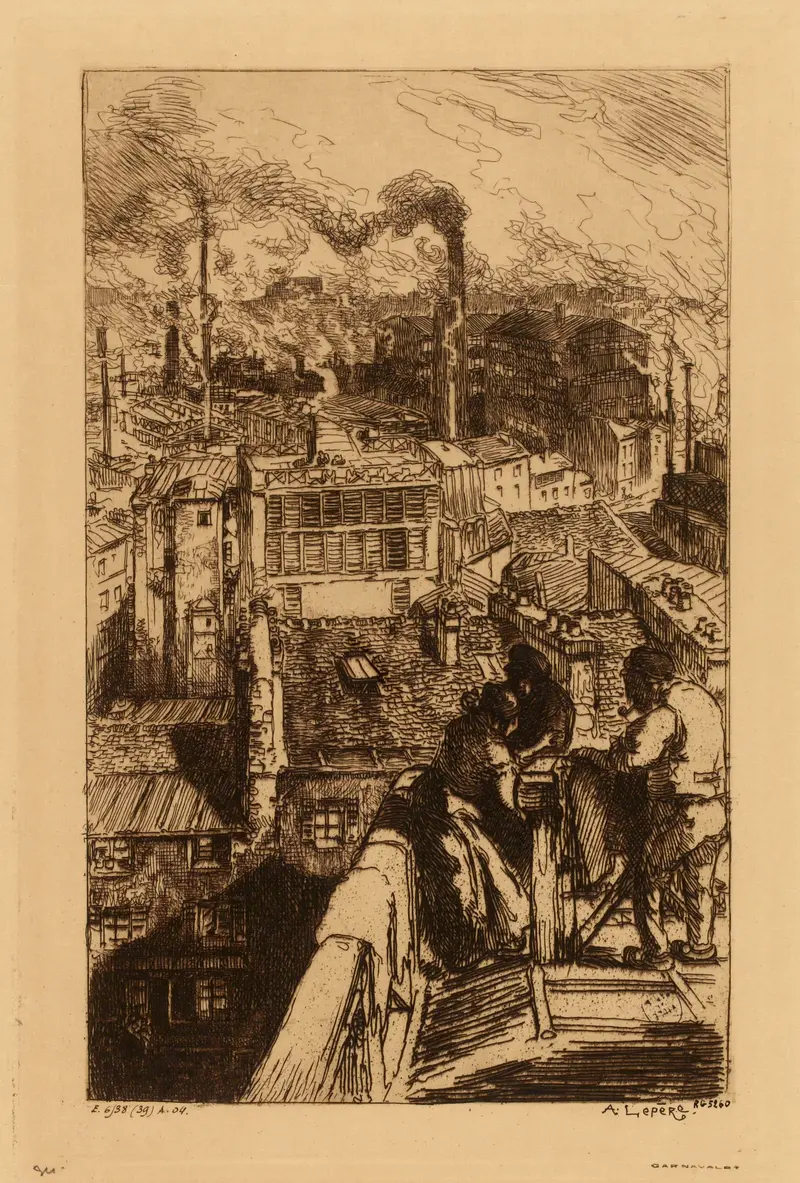
Le quartier des Gobelins
Auguste Lepère
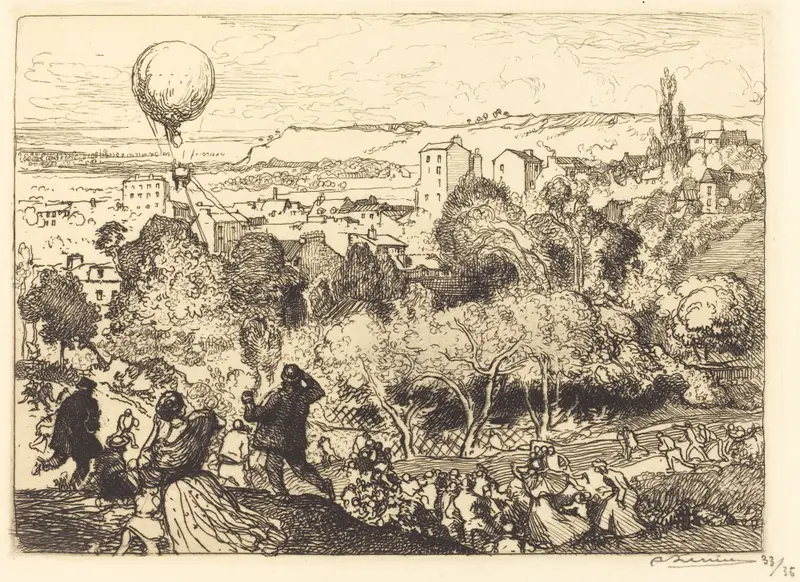
The Falling Balloon, in Pre-Saint-Gervais (Lebaloon qui tombe, au Pre-Saint-Gervais)
Auguste Lepère
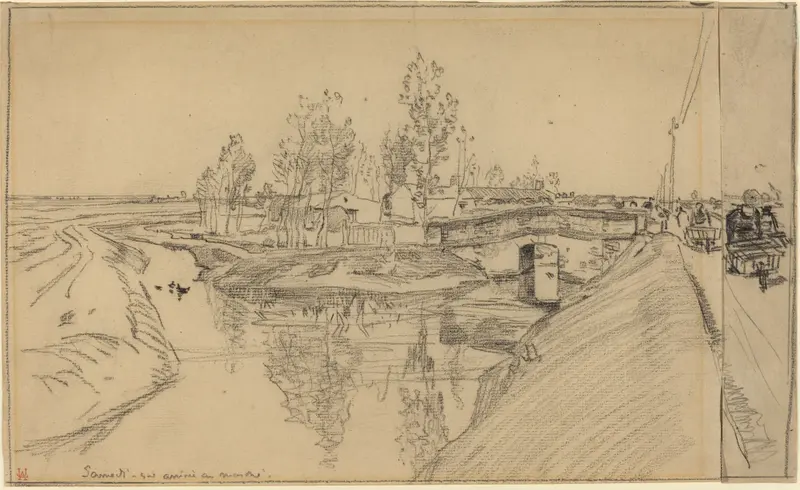
Arrivee au Marche
Auguste Lepère
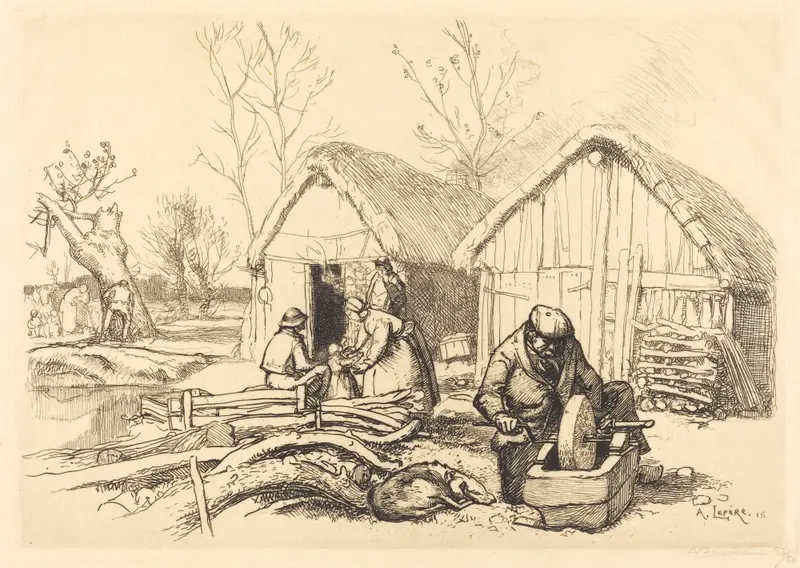
The House of the Woodcutter, Vendee (La maison du bucheron, Vendee)
Auguste Lepère
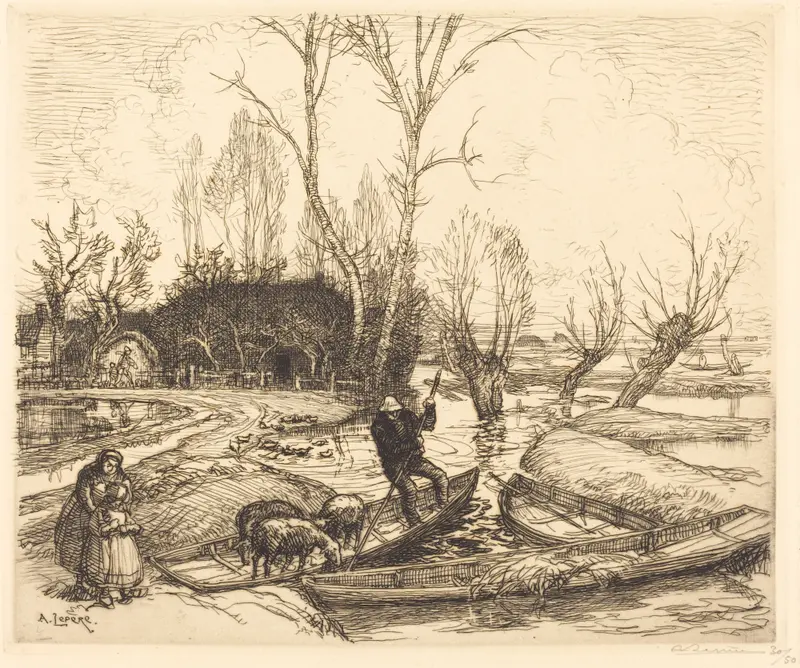
In the Deluged Marsh - The Shepherd (Au marais inonde - Le berger)
Auguste Lepère
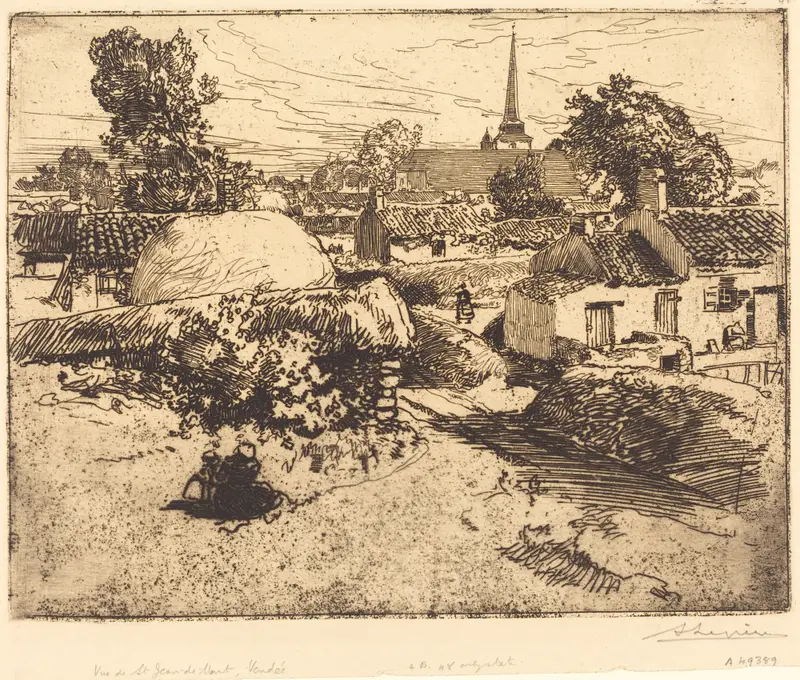
View of St.-Jean-de-Mont, Vendee (Vue de St.-Jean-de-Mont, Vendee)
Auguste Lepère
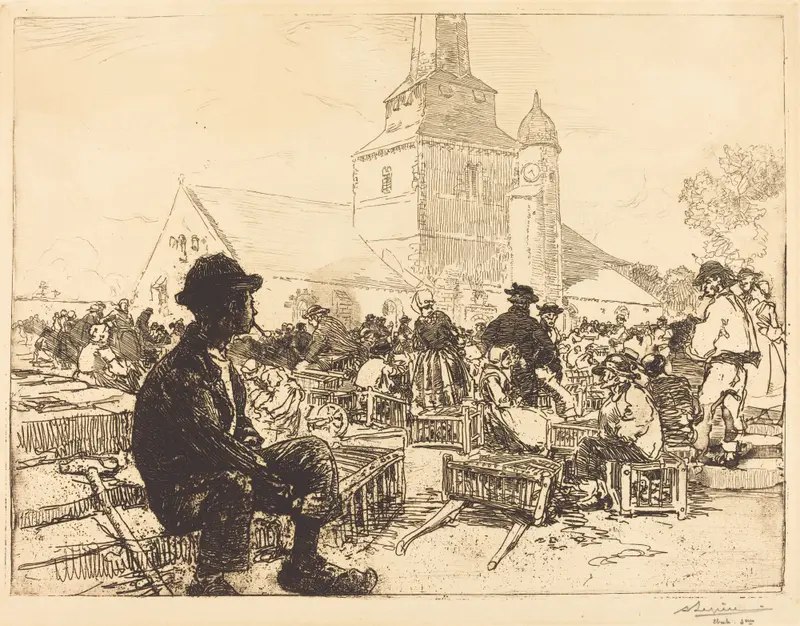
Poultry Market at St.-Jean-de-Mont (Marche a la volaille, a St.-Jean-de-Mont)
Auguste Lepère
More Landscape Art

The Starry Night
Vincent van Gogh

View of Delft
Johannes Vermeer

Water Lilies
Claude Monet

The Grand Canal, Venice, looking north-west from the Ca' Corner to the Ca' Contarini degli Scrigni, with the campanile of Santa Maria della Carità
Canaletto

Windsor Castle
Canaletto

The Grand Canal looking North-East from the Palazzo Dolfin-Manin to the Rialto Bridge
Canaletto