
Rue de Lanneau — History & Facts
In the stillness of Rue de Lanneau, a quiet serenity envelops the viewer, inviting introspection and reflection. The tranquil street invites you to consider the delicate balance between presence and absence, urging you to ponder what lies beneath the surface of this peaceful scene. Look to the left at the charming façades, their soft, muted tones harmonizing with the subtle interplay of light and shadow. Notice how the dappled sunlight bathes the cobblestones in a gentle glow, each stroke of paint meticulously layered to evoke texture and depth.
The artist’s careful composition leads your gaze down the winding street, creating a path that feels both inviting and mysterious, as though it were inviting you to explore its secrets. Yet, within this serene portrayal lies an undercurrent of emotional tension. The empty street suggests solitude, while the absence of people evokes a sense of longing or nostalgia. The juxtaposition of the warm colors with the cool shadows hints at the passage of time, urging the observer to reflect on moments lost and memories cherished.
In this stillness, a deeper story of life's transient nature unfolds, revealing the layers of emotion hidden in the familiar. In 1895, while living in Paris, the artist created this piece during a period marked by a burgeoning impressionist movement that sought to capture everyday life with honesty and sensitivity. This was a time when urban landscapes were rapidly changing, and artists were responding to the evolving world around them. Séguin’s work reflects not only a personal exploration of serenity but also a broader artistic evolution, immortalizing a moment that resonates with both tranquility and quiet reflection.
More Artworks by F. Séguin
Browse all →
Rue Brantôme. (anciennement rue des Petits Champs donnant rue Saint Martin et rue Beaubourg)
F. Séguin
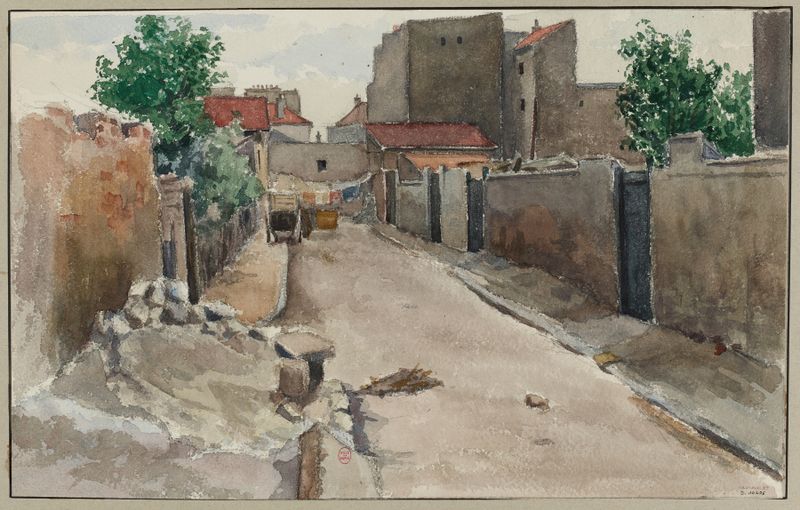
La rue de Chambéry, prise de la rue de Nice la Frontière
F. Séguin
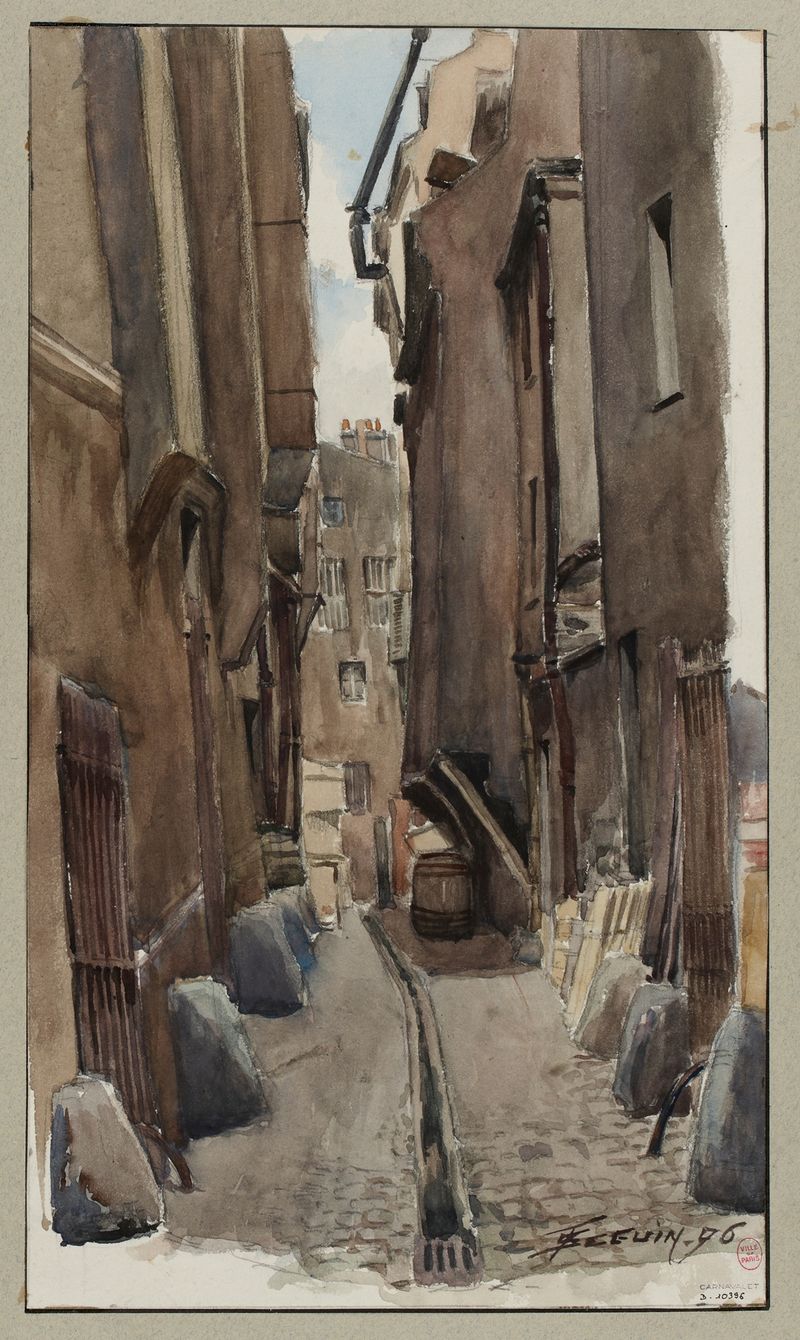
Le Cul de sac du Bœuf, (rue Saint Merri)
F. Séguin

Rue Descartes
F. Séguin
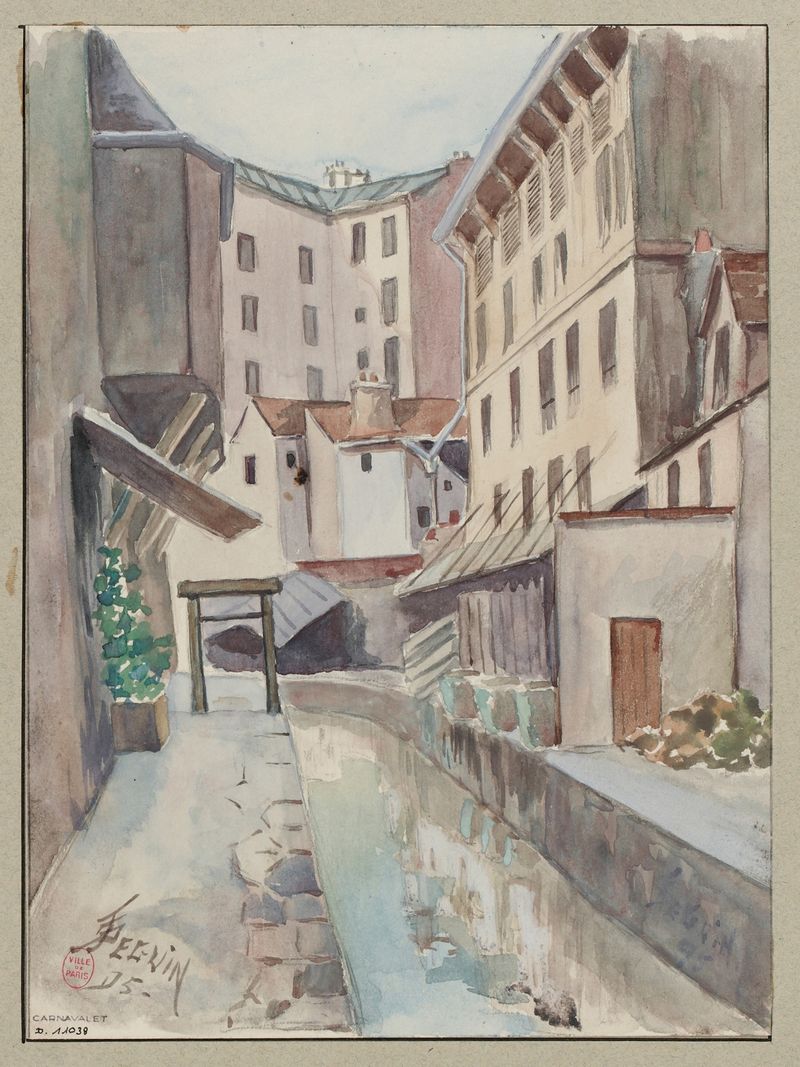
Le bord de la Bièvre à l’avenue des Gobelins
F. Séguin

Villa des Otages mur où furent fusillés les 52 derniers otages de la Commune, rue Haxo
F. Séguin
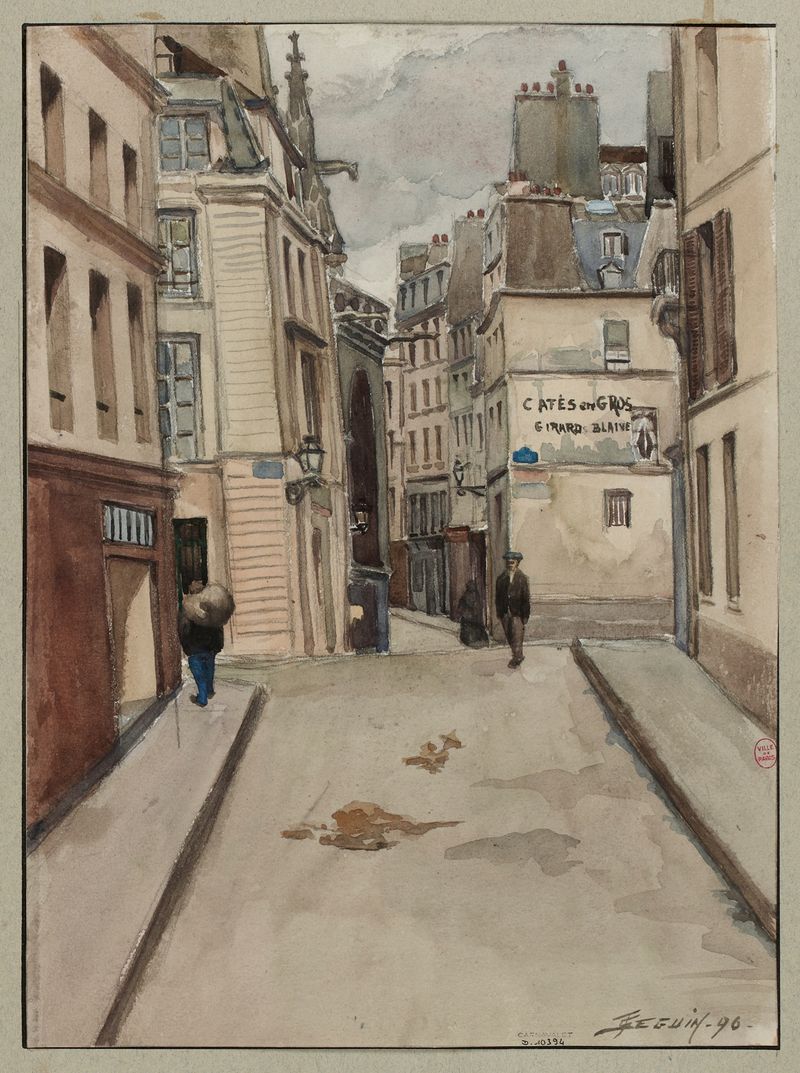
Rue du Cloître Saint Mérry, de la rue du Renard à la rue Saint Martin
F. Séguin
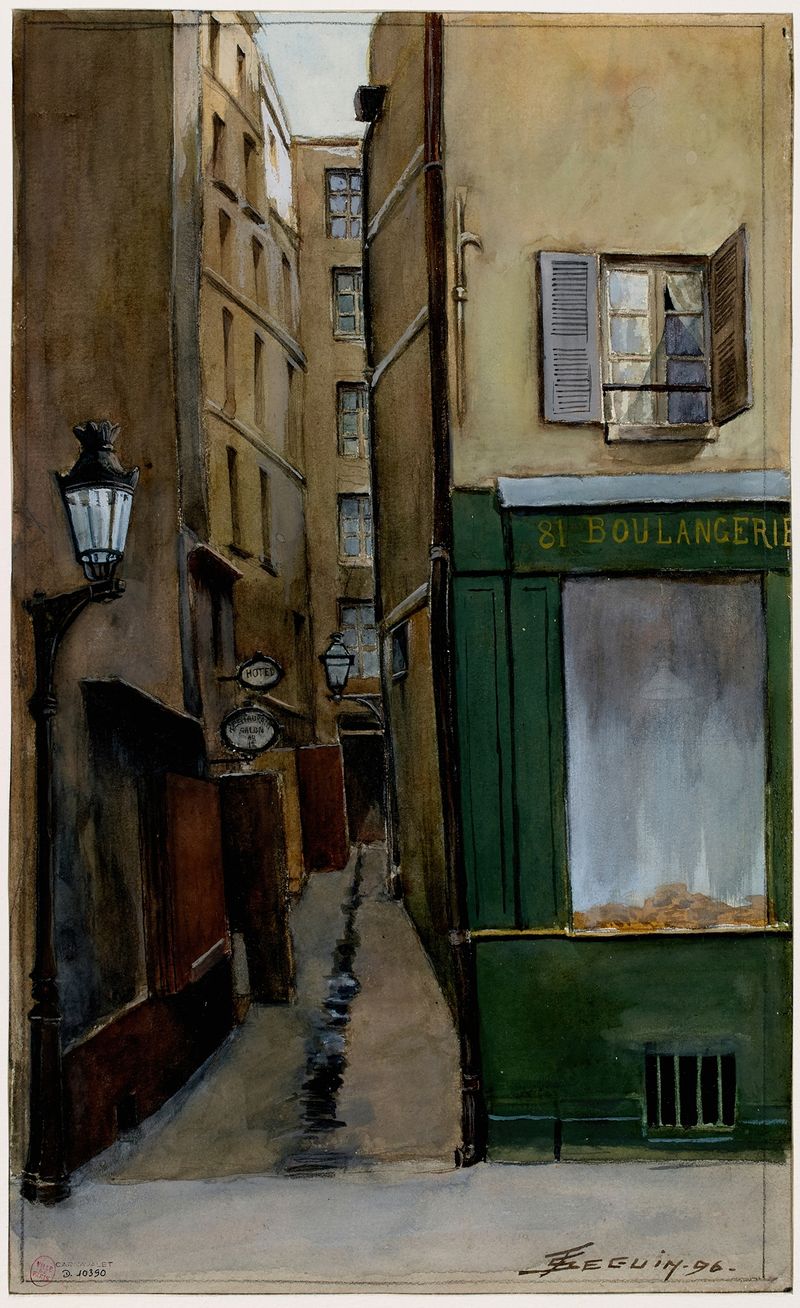
Cul de sac du Fiacre, 81 rue Saint Martin
F. Séguin
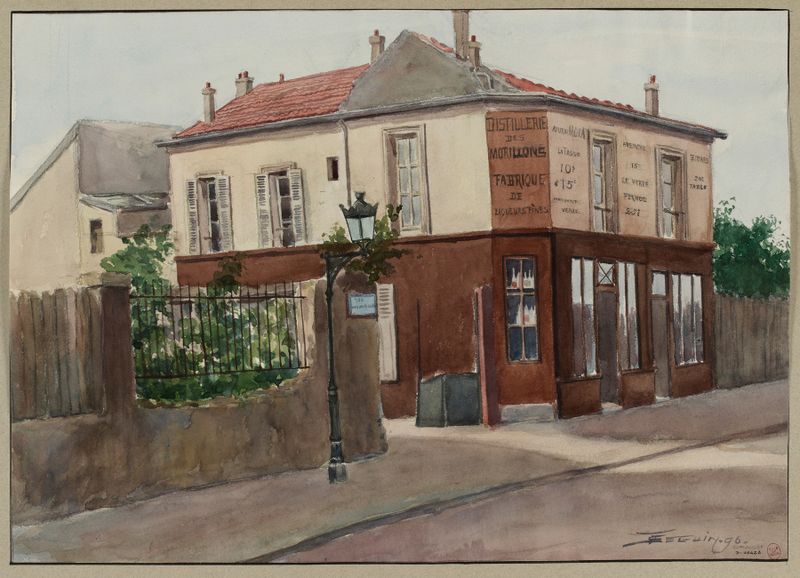
Angle de l’impasse Carlier et au 24 rue des Morillons, Vaugirard
F. Séguin
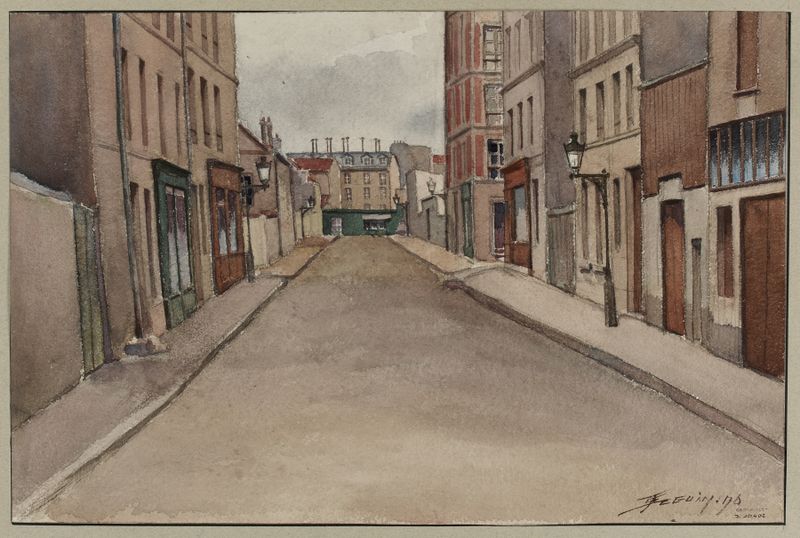
Rue Franquet
F. Séguin





