
Rue Saint-Médard en 1905, en direction de la rue Mouffetard — History & Facts
Could beauty survive in a century of chaos? In Rue Saint-Médard en 1905, en direction de la rue Mouffetard, Fédor Hoffbauer captures the awakening of life amid the shadows of uncertainty. The vibrant street scene breathes with a sense of nostalgia, inviting viewers to step into a moment suspended between past splendor and present turmoil. Focus first on the lively figures meandering along the cobblestone street, their animated gestures infusing the canvas with energy. Notice how the warm light spills from the left, illuminating the rustic facades, casting elongated shadows that hint at the depth of time.
The rich palette, filled with soft yellows and earthy tones, envelops the scene, creating a harmonious balance that draws you deeper into this urban tapestry. Hidden within this joyful depiction are contrasts of life and decay, vitality and the specter of war. The thrumming energy of the people stands in stark relief against the dilapidation of some buildings, a subtle reminder of the fragility of human existence. In this bustling tableau, Hoffbauer weaves a narrative where each passerby carries the weight of their own story, a collective experience resonating with both hope and melancholy. Created between 1915 and 1945, the artist painted this piece during a tumultuous period marked by two World Wars and the rise of modernity.
Hoffbauer, residing in Paris, was surrounded by an evolving art scene that sought to capture the essence of everyday life amid chaos. This painting reflects not only his personal engagement with a changing world but also the broader artistic movement to celebrate beauty as a response to the struggles of the time.
More Artworks by Fédor Hoffbauer
Browse all →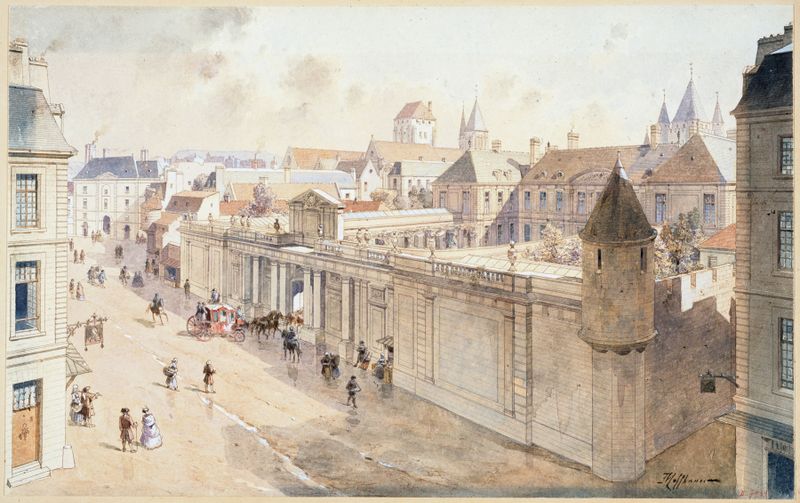
Le palais du Grand Prieur au Temple, en 1770
Fédor Hoffbauer
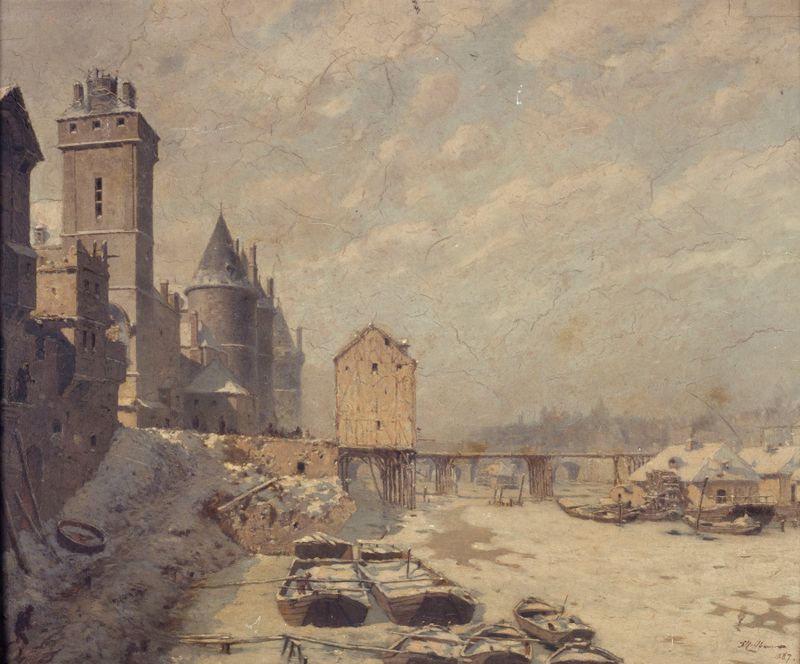
La tour de l’Horloge, la Conciergerie et le pont au Change, en 1621
Fédor Hoffbauer

Banquet des officiers de la marine Russe, dans la salle des fêtes à l’Hôtel de Ville. Fêtes Franco-Russes à Paris
Fédor Hoffbauer

Le Grand Châtelet et le pont de Bois, 1621-1645
Fédor Hoffbauer
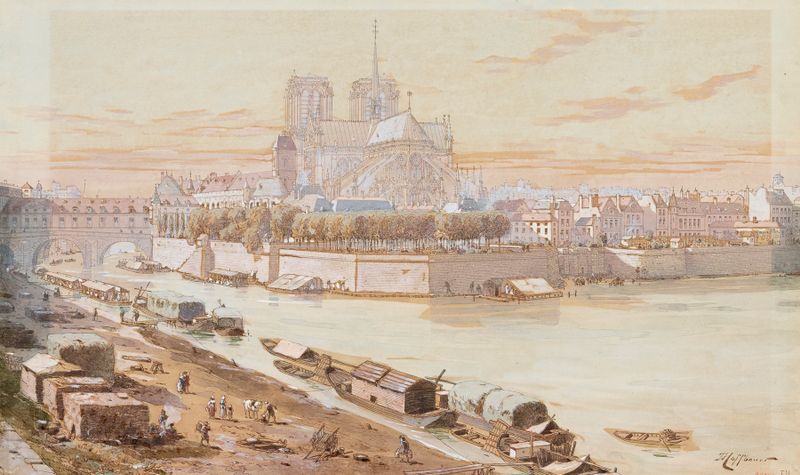
Notre-Dame et l’Evêché en 1750
Fédor Hoffbauer

Vue panoramique de Paris en 1588, depuis les toits du Louvre, avec le Pont-Neuf en construction
Fédor Hoffbauer
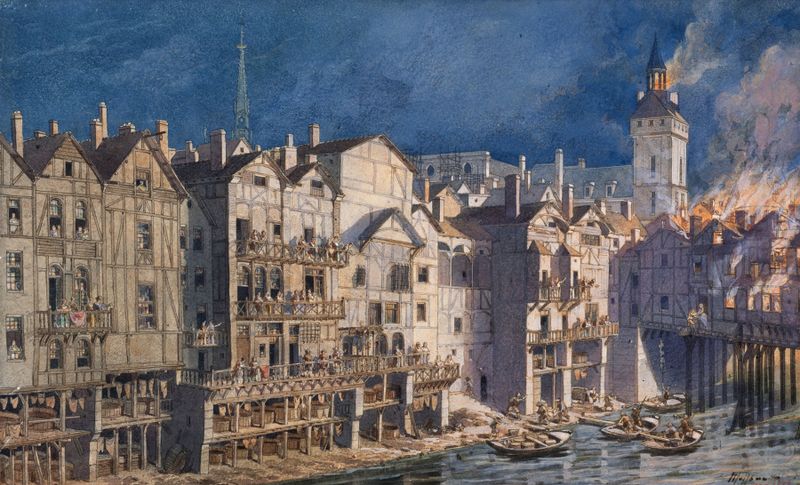
La Cité entre le pont Notre Dame et le pont au Change en 1621
Fédor Hoffbauer

L’Hôtel de Ville et le pont d’Arcole en 1842
Fédor Hoffbauer

Le Cimetière des Innocents en 1750
Fédor Hoffbauer
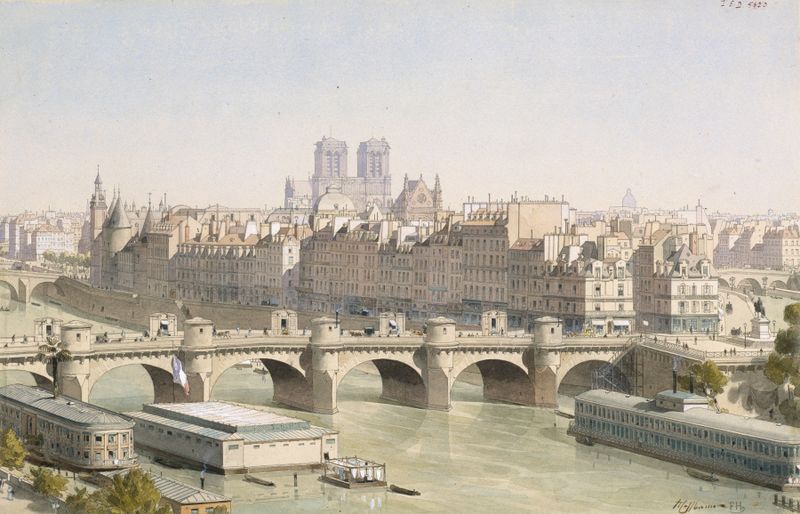
Vue de l’île de la Cité et le pont-Neuf avec ses boutique, vers 1840
Fédor Hoffbauer





