
Ruïnes van de stadsmuren van Rome — History & Facts
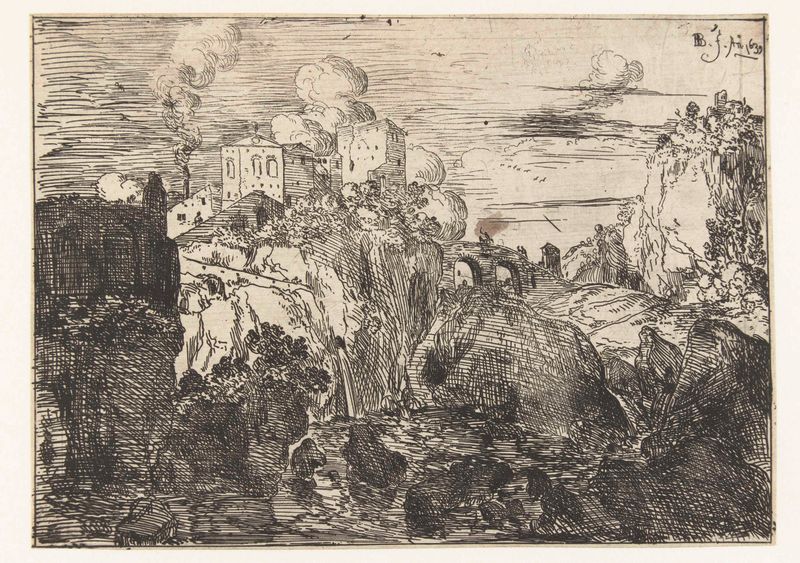
In Ruïnes van de stadsmuren van Rome, the remnants of destruction bear witness to a story of violence tempered by time. This canvas encapsulates a moment where nature intertwines with human history, transforming devastation into a serene landscape that invites contemplation. Focus your gaze on the crumbling walls to the left, where remnants of stone rise defiantly against a backdrop of lush greenery. The soft hues of beige and olive contrast with the sharp lines of the ruins, evoking a sense of both fragility and resilience.
Notice how light cascades through the gaps in the architecture, illuminating patches of wildflowers that flourish amid decay. Breenbergh's delicate brushwork and layered textures create a rich tapestry that draws us deeper into the narrative. Yet, beneath this tranquil facade lies an emotional tension—the juxtaposition of the man-made and the natural, the past and the present. The ruins, symbols of lost power, evoke a haunting memory of violence, while the encroaching flora suggests rebirth and renewal.
This duality prompts reflections on the cycle of destruction and healing, reminding us that beauty often arises from the remnants of turmoil. In the years 1639 to 1640, Breenbergh painted this piece during a period marked by a deepening interest in landscape painting, influenced by the Baroque era's fascination with nature. Living in the vibrant artistic hub of the Netherlands, he navigated a world grappling with political unrest and cultural transformation. This work reflects not only his personal exploration but also a broader artistic movement that sought to reconcile the chaos of life with the grace of beauty.
More Artworks by Bartholomeus Breenbergh
Browse all →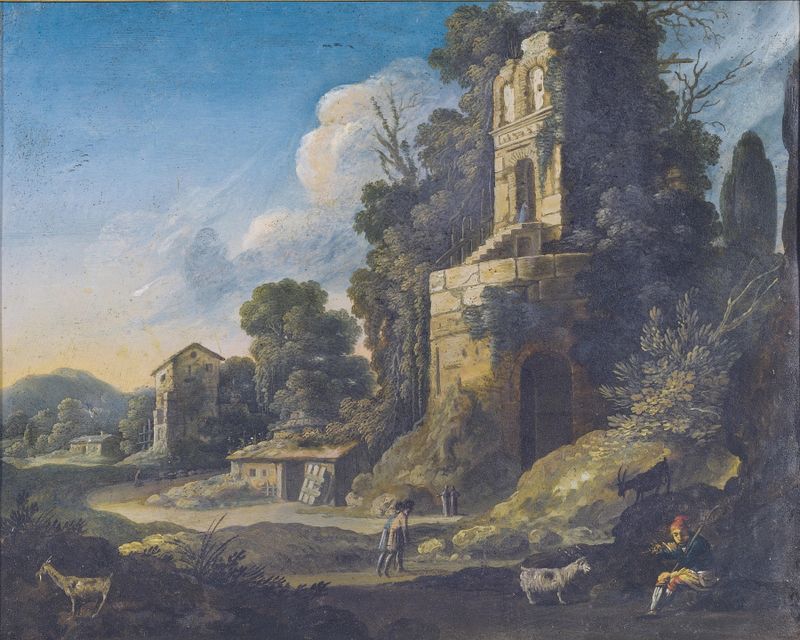
Italianate landscape with buildings and a herdsman playing pipes
Bartholomeus Breenbergh

Arcadian Landscape
Bartholomeus Breenbergh

Ruïnes van keizerlijk paleis te Rome
Bartholomeus Breenbergh

Ruïne van het Colosseum
Bartholomeus Breenbergh
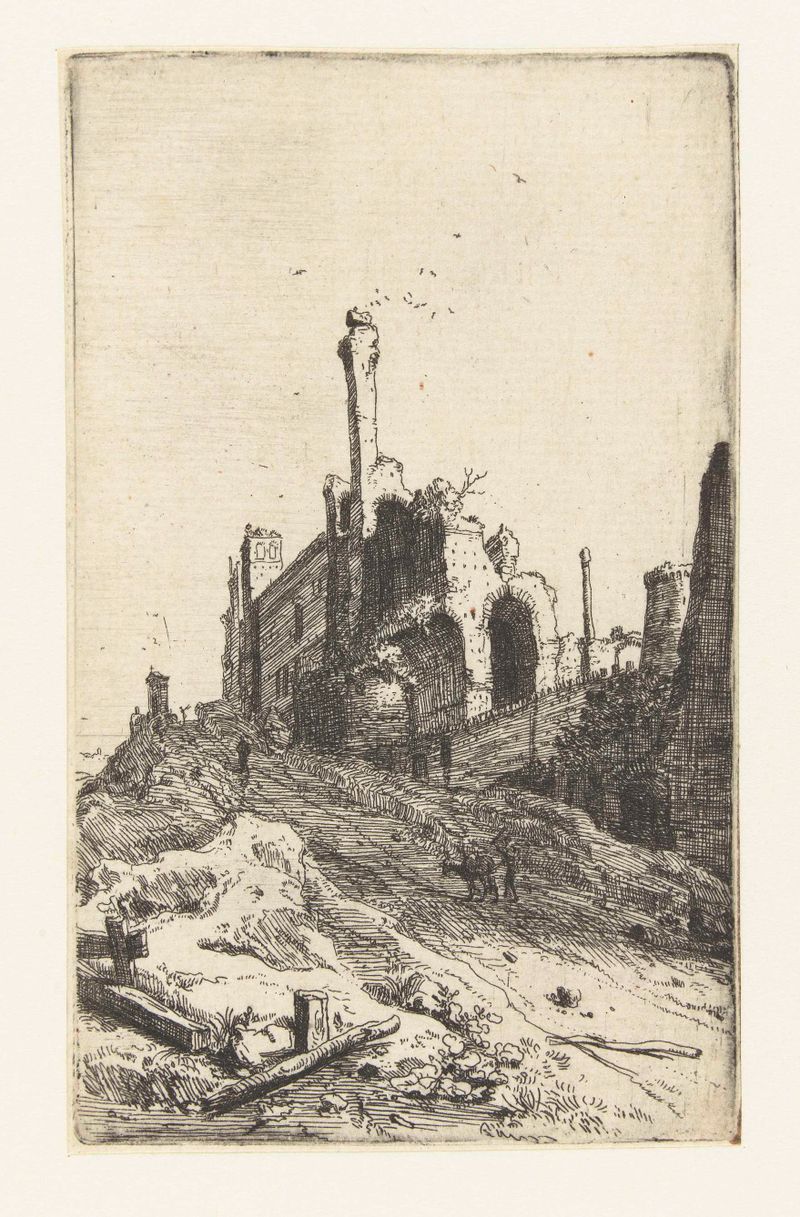
Ruïnes van een paleis te Tivoli
Bartholomeus Breenbergh

Figures Among Ruins By The Tiber
Bartholomeus Breenbergh

Italian Landscape with the Aurelian Wall
Bartholomeus Breenbergh
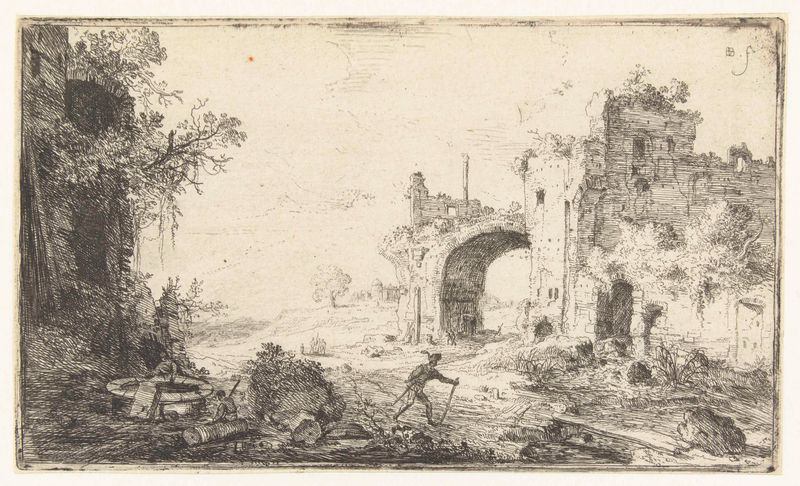
Ruïnes van de thermen van Caracalla
Bartholomeus Breenbergh
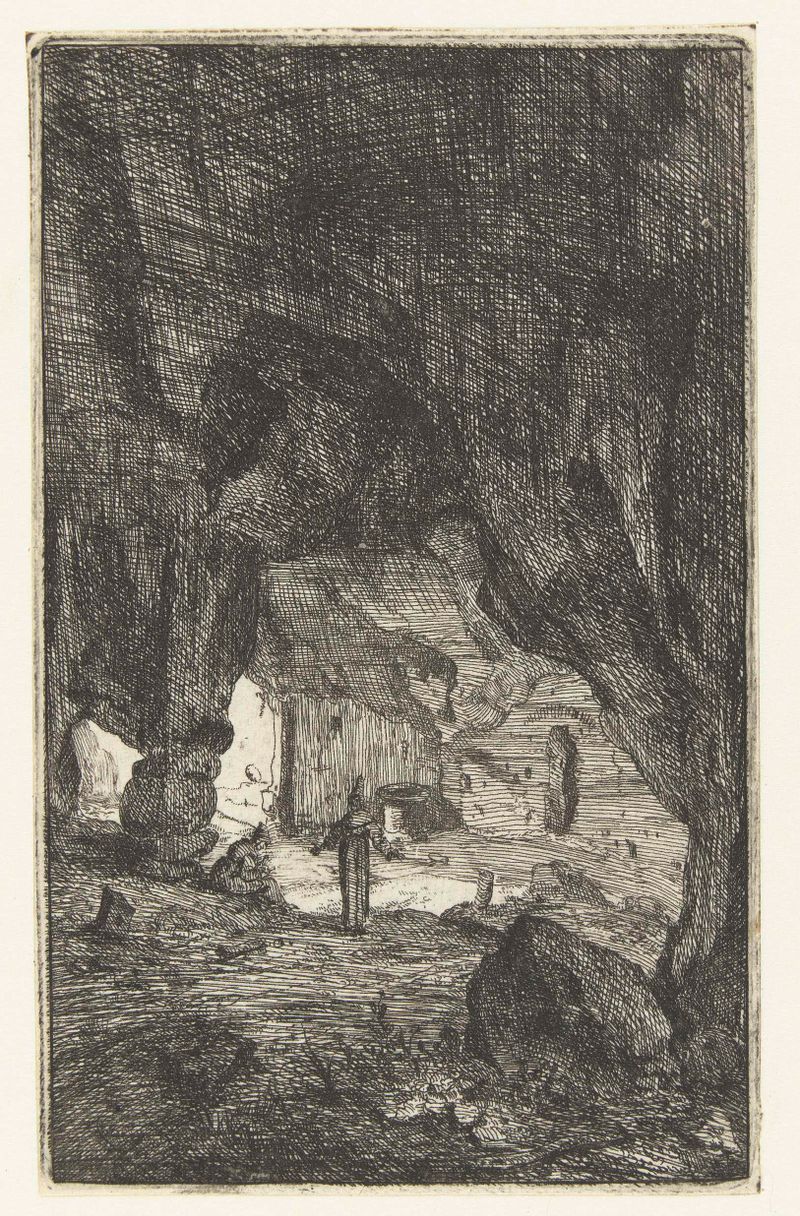
Interieur van een grot
Bartholomeus Breenbergh
Italiaans landschap met gebouwen en een brug
Bartholomeus Breenbergh
More Architecture Art
Browse all →
The statue of Liberty
Frédéric Auguste Bartholdi

View of Houses in Delft, Known as ‘The Little Street’
Johannes Vermeer

View of Houses in Delft, Known as ‘The Little Street’
Johannes Vermeer

The Cathedral in Rouen. The portal, Grey Weather
Claude Monet

The yellow house
Vincent van Gogh

The Church in Auvers-sur-Oise, View from the Chevet
Vincent van Gogh