
Ruïnes van de thermen van Caracalla — History & Facts
Did the painter know this moment would outlive them? The ruins stand, a testament to both human ambition and inevitable decay, whispering stories of desire and loss through the corridors of time. Look to the left at the towering columns, their once-majestic arches crumbling against the weight of history. The play of light, filtered through the broken stones, creates an ethereal glow that dances upon the ground, hinting at the grandeur that once was. Notice how the muted earth tones of ochre and gray evoke a sense of nostalgia, while the soft blues of the sky introduce an element of hope, reinforcing the paradox of beauty in ruin. Each detail in the painting serves as a bridge between time and emotion.
The intricate textures of the stones reveal the passage of years, while the scattered shadows suggest both the remnants of past joys and the solitude of abandonment. This juxtaposition of desolation and the lingering allure of what once thrived captures the viewer’s heart, prompting reflections on fleeting moments and the relentless march of time. Created between 1638 and 1642, the artwork emerged during a period of deep exploration in the realms of landscape and architecture. Breenbergh, immersed in the artistic culture of Amsterdam, was influenced by the burgeoning interest in classical themes and the portrayal of ruins, reflecting a world that increasingly grappled with the impermanence of existence against the backdrop of a flourishing art scene.
More Artworks by Bartholomeus Breenbergh
Browse all →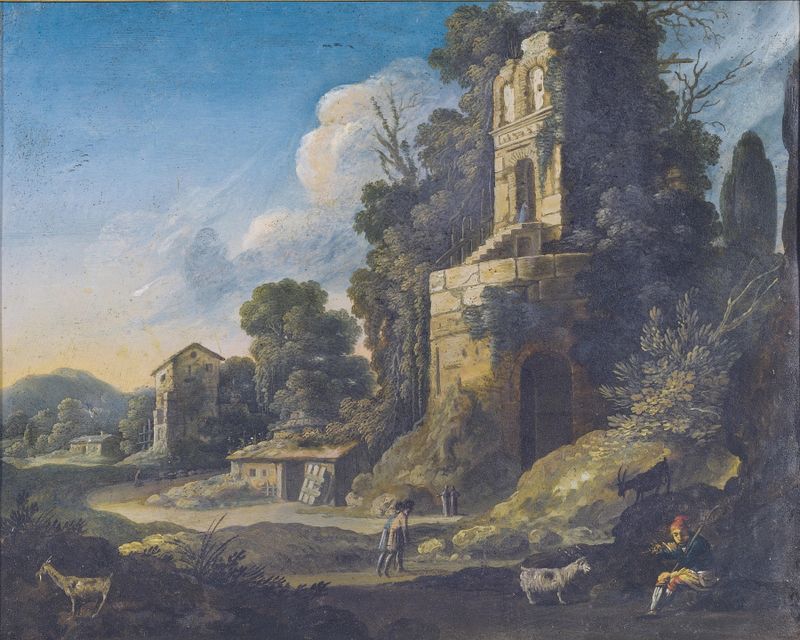
Italianate landscape with buildings and a herdsman playing pipes
Bartholomeus Breenbergh

Arcadian Landscape
Bartholomeus Breenbergh

Ruïnes van keizerlijk paleis te Rome
Bartholomeus Breenbergh

Ruïne van het Colosseum
Bartholomeus Breenbergh
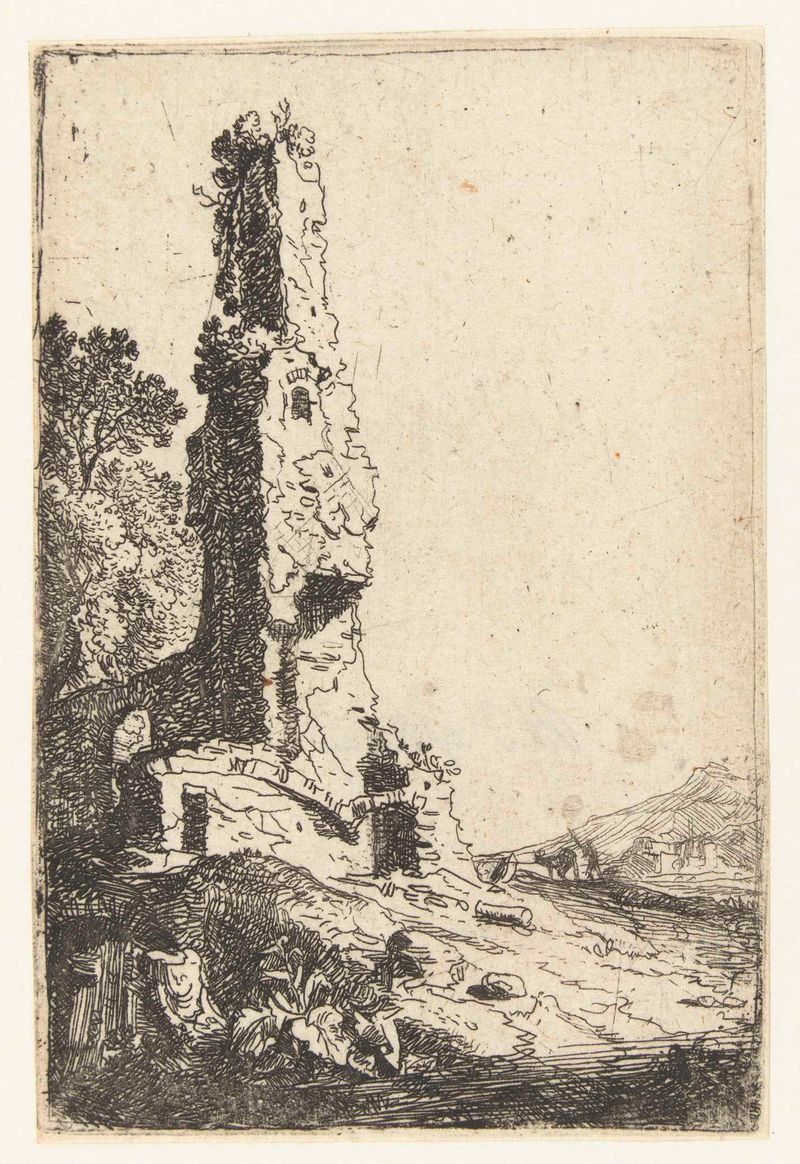
Ruïnes van de stadsmuren van Rome
Bartholomeus Breenbergh
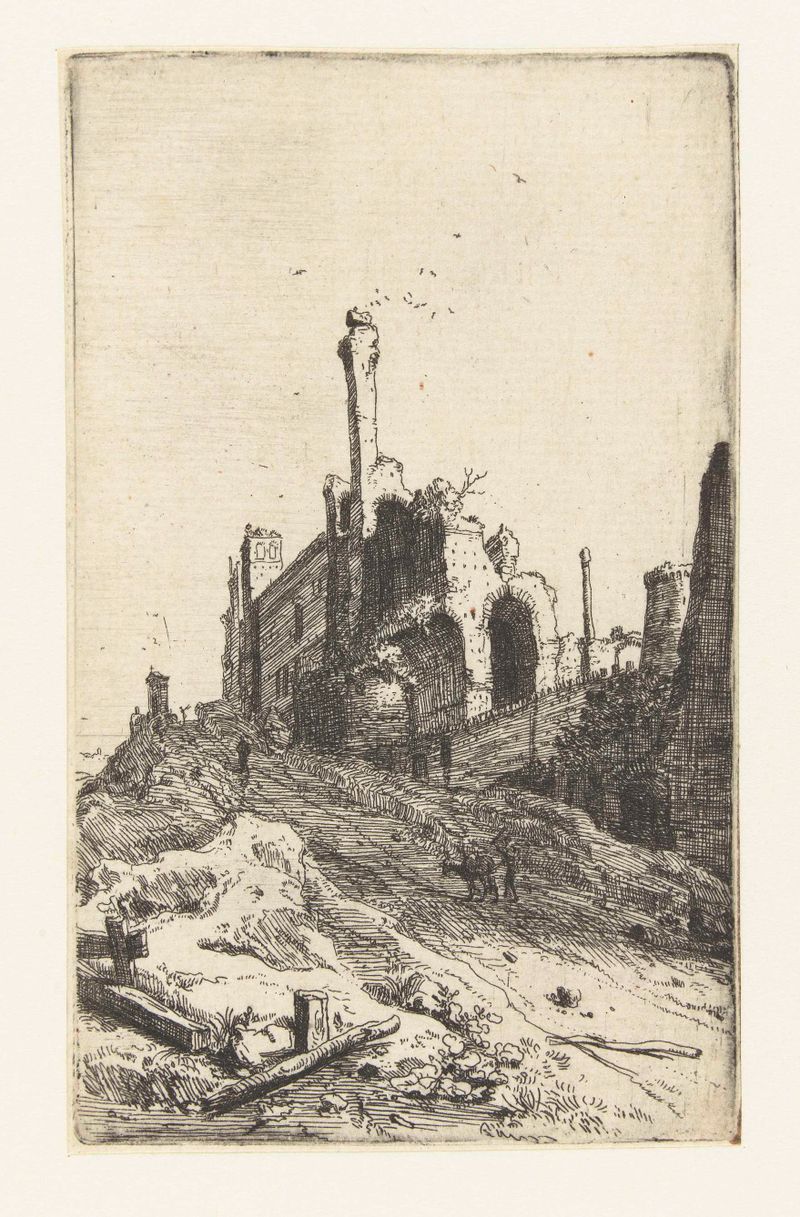
Ruïnes van een paleis te Tivoli
Bartholomeus Breenbergh

Figures Among Ruins By The Tiber
Bartholomeus Breenbergh

Italian Landscape with the Aurelian Wall
Bartholomeus Breenbergh
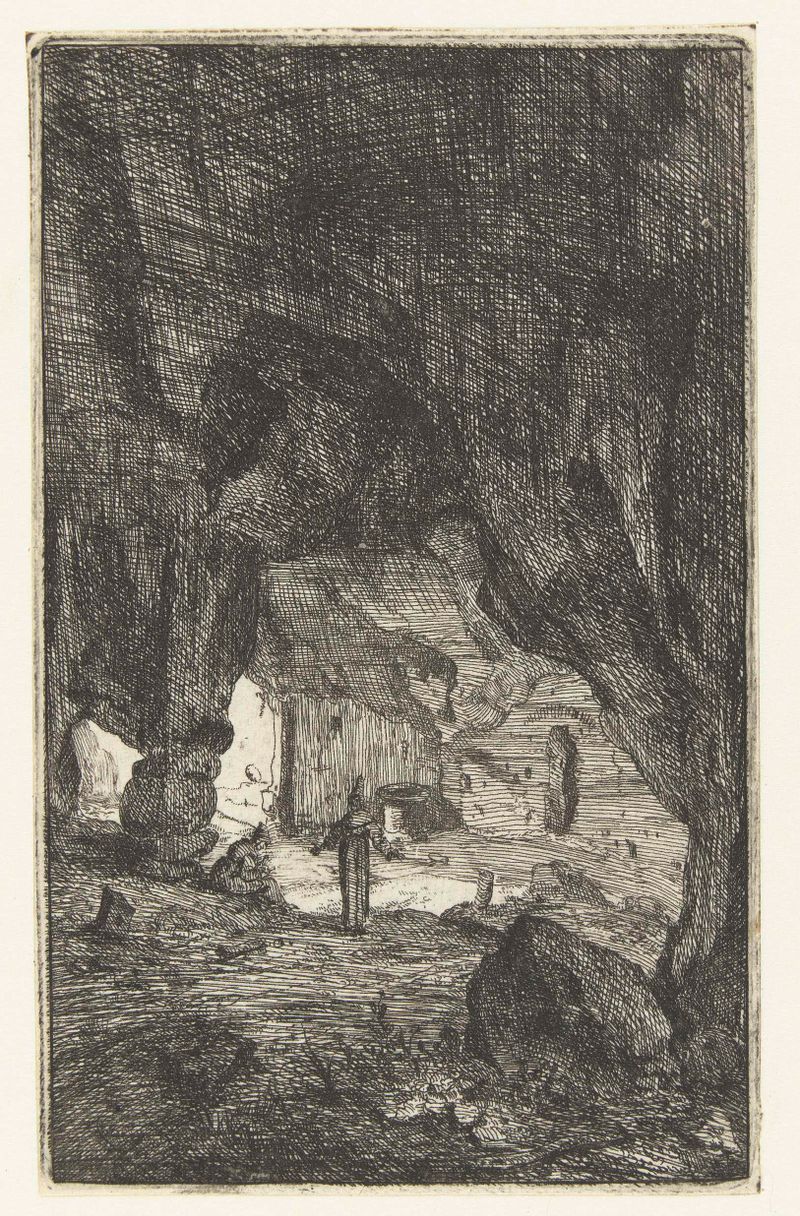
Interieur van een grot
Bartholomeus Breenbergh
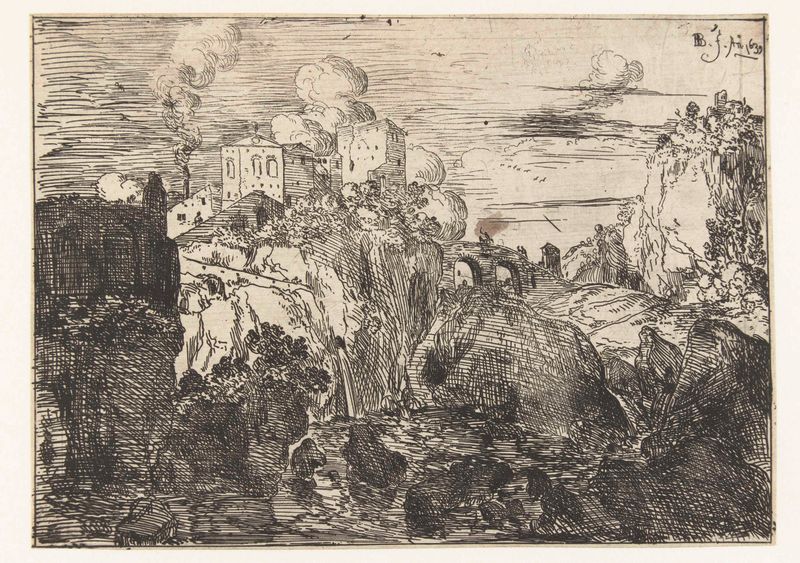
Italiaans landschap met gebouwen en een brug
Bartholomeus Breenbergh
More Architecture Art
Browse all →
The statue of Liberty
Frédéric Auguste Bartholdi

View of Houses in Delft, Known as ‘The Little Street’
Johannes Vermeer

View of Houses in Delft, Known as ‘The Little Street’
Johannes Vermeer

The Cathedral in Rouen. The portal, Grey Weather
Claude Monet

The yellow house
Vincent van Gogh

The Church in Auvers-sur-Oise, View from the Chevet
Vincent van Gogh