
Ruïnes van een paleis te Tivoli — History & Facts
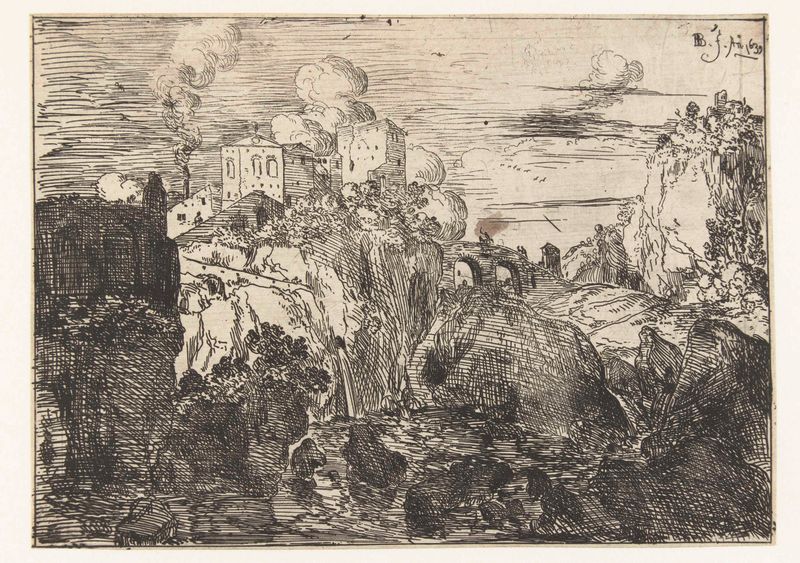
In a world suffused with fleeting moments, innocence often slips through our fingers like grains of sand. Yet, within the canvas lies a testament to the beauty of what once was. Look to the left at the crumbling remnants of grand columns rising like silent sentinels against the backdrop of an azure sky. The soft, golden light bathes the ruins, accentuating the delicate textures of stone and foliage that intertwine in a tender embrace.
Notice how the artist has juxtaposed the warm hues of the sunlight with the cooler tones of distant hills, creating a harmony that evokes both nostalgia and longing. The gentle brushwork reveals the painstaking detail that invites the viewer to wander through the past, encouraging contemplation of life's ephemeral nature. Delve deeper into the rich tapestry of the painting, and you'll discover fragments of stories hiding in plain sight. The serene landscape surrounding the ruins speaks of resilience, while the shadows play with the notion of time – a stark reminder of innocence lost.
Each figure, though seemingly small against the grand architecture, embodies a shared humanity, their silhouettes echoing silent tales of joy and sorrow, of aspirations left behind. The contrast between the vibrant life of nature and the faded glory of human creation serves as an exploration of beauty that transcends time. In the years 1639 to 1640, Bartholomeus Breenbergh painted this work during a period marked by the rise of Dutch landscape painting, a genre that sought to capture the sublime and the picturesque. Living and working in Rome at the time, he was deeply influenced by the classical ideals of beauty and permanence, yet infused his landscapes with a sense of fragility that reflected his own experiences and the artistic currents of the era.
More Artworks by Bartholomeus Breenbergh
Browse all →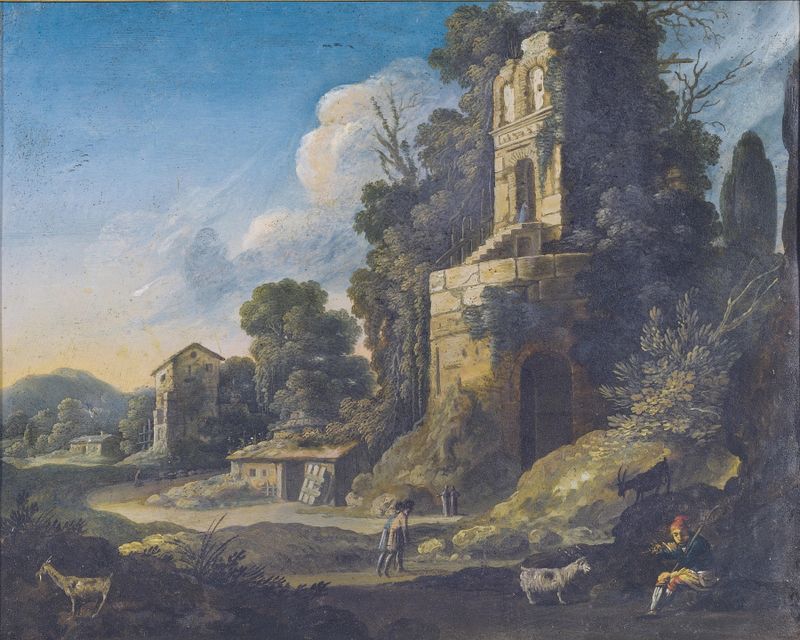
Italianate landscape with buildings and a herdsman playing pipes
Bartholomeus Breenbergh

Arcadian Landscape
Bartholomeus Breenbergh

Ruïnes van keizerlijk paleis te Rome
Bartholomeus Breenbergh

Ruïne van het Colosseum
Bartholomeus Breenbergh
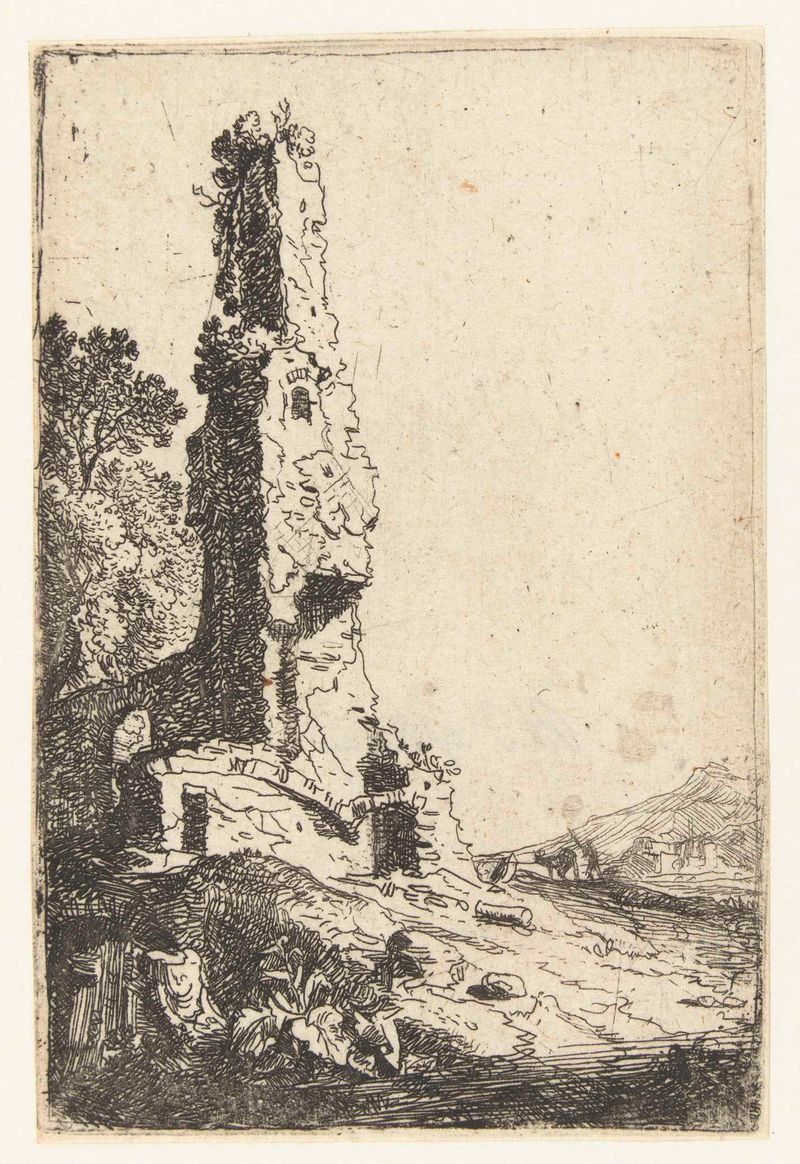
Ruïnes van de stadsmuren van Rome
Bartholomeus Breenbergh

Figures Among Ruins By The Tiber
Bartholomeus Breenbergh

Italian Landscape with the Aurelian Wall
Bartholomeus Breenbergh
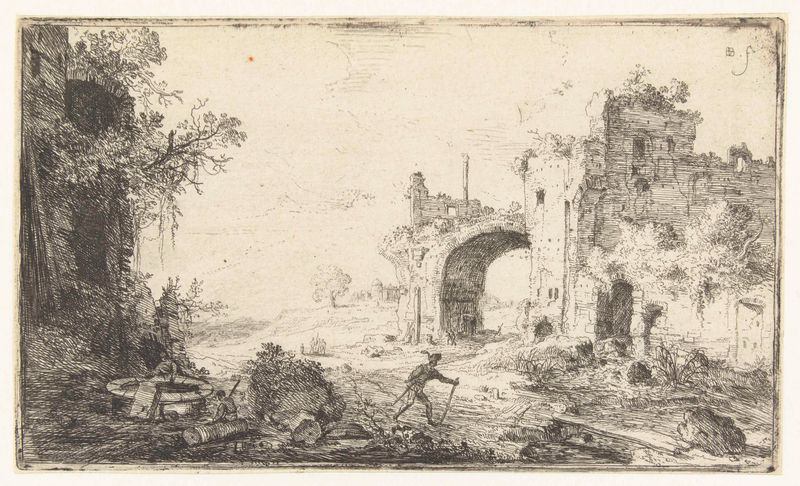
Ruïnes van de thermen van Caracalla
Bartholomeus Breenbergh
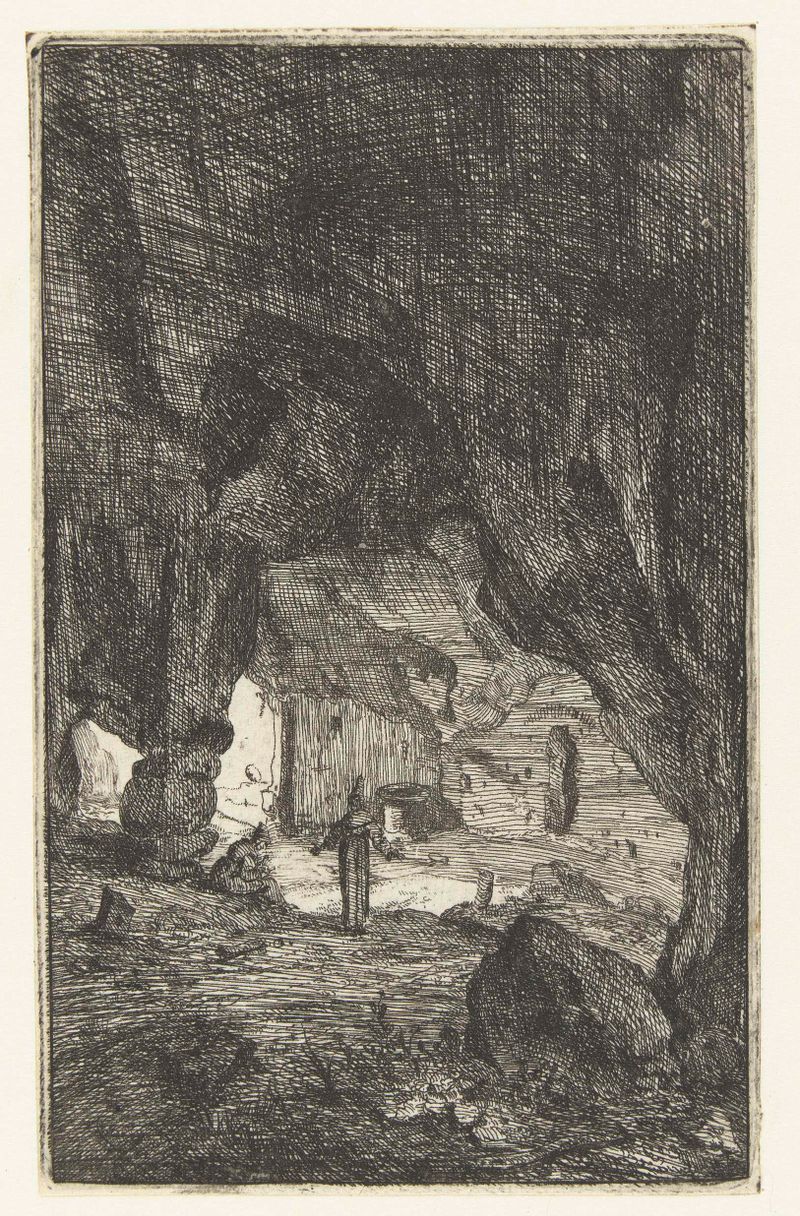
Interieur van een grot
Bartholomeus Breenbergh
Italiaans landschap met gebouwen en een brug
Bartholomeus Breenbergh
More Architecture Art
Browse all →
The statue of Liberty
Frédéric Auguste Bartholdi

View of Houses in Delft, Known as ‘The Little Street’
Johannes Vermeer

View of Houses in Delft, Known as ‘The Little Street’
Johannes Vermeer

The Cathedral in Rouen. The portal, Grey Weather
Claude Monet

The yellow house
Vincent van Gogh

The Church in Auvers-sur-Oise, View from the Chevet
Vincent van Gogh