
Rural cemetery — History & Facts
When Taras Shevchenko created Rural cemetery in 1838, he was still a serf, not yet the celebrated poet and artist who would become a symbol of Ukrainian national identity. This early work stands at a crossroads in his life: painted just before he gained his freedom in 1838, thanks to a group of Russian intellectuals who purchased it for him. The painting is often discussed as a rare visual document from the period when Shevchenko was beginning to find his artistic voice, shaped by both personal hardship and the rural world he knew intimately.
Scholars note that very few works from this formative time survive, making Rural cemetery a precious window into the artist’s early sensibility. The scene Shevchenko chose is quiet but charged with meaning: a cluster of simple wooden crosses and weathered grave markers rises from a gentle slope, watched over by a lone figure—perhaps a mourner, perhaps the artist himself. The overgrown grass, scattered wildflowers, and distant horizon speak of the cycles of life and death in the Ukrainian countryside. Light falls softly across the graves, picking out the rough textures of wood and earth, while a single, gnarled tree leans protectively over the site.
Unlike the grand, dramatic cemeteries of Romanticism elsewhere in Europe, Shevchenko’s vision is intimate and rooted in local tradition, recalling the quiet realism of Jean-François Millet’s later rural scenes, though with a distinctly Ukrainian character. The physical history of Rural cemetery is as enigmatic as its mood. The medium remains uncertain, and the painting’s early provenance is not clearly recorded—likely a result of Shevchenko’s status and the upheavals of his era. Today, it is preserved in the National Museum of Taras Shevchenko in Kyiv, where it is recognized as a key work from the artist’s formative years.
Though not as widely known as his later, more overtly political pieces, this painting marks an important step in Shevchenko’s journey from serfdom to national icon, capturing the landscape and customs that would fuel both his art and poetry for decades to come.
More Artworks by Taras Shevchenko
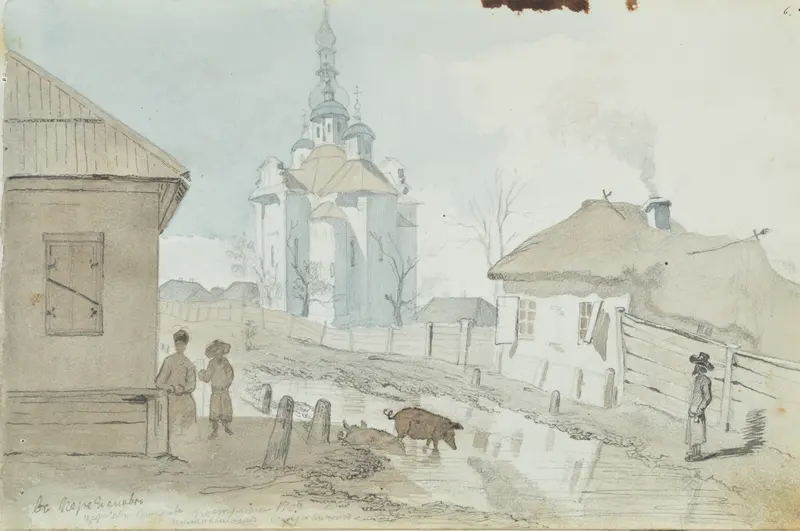
1845 Sh Sketchbook f.06r
Taras Shevchenko

1845 Sh Sketchbook f.04r
Taras Shevchenko

1848 Bilia vohnu
Taras Shevchenko
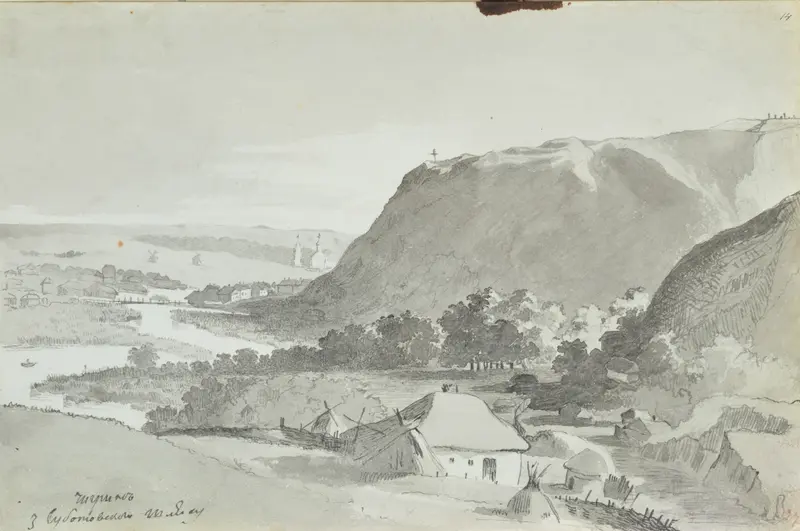
1845 Sh Sketchbook f.14r
Taras Shevchenko
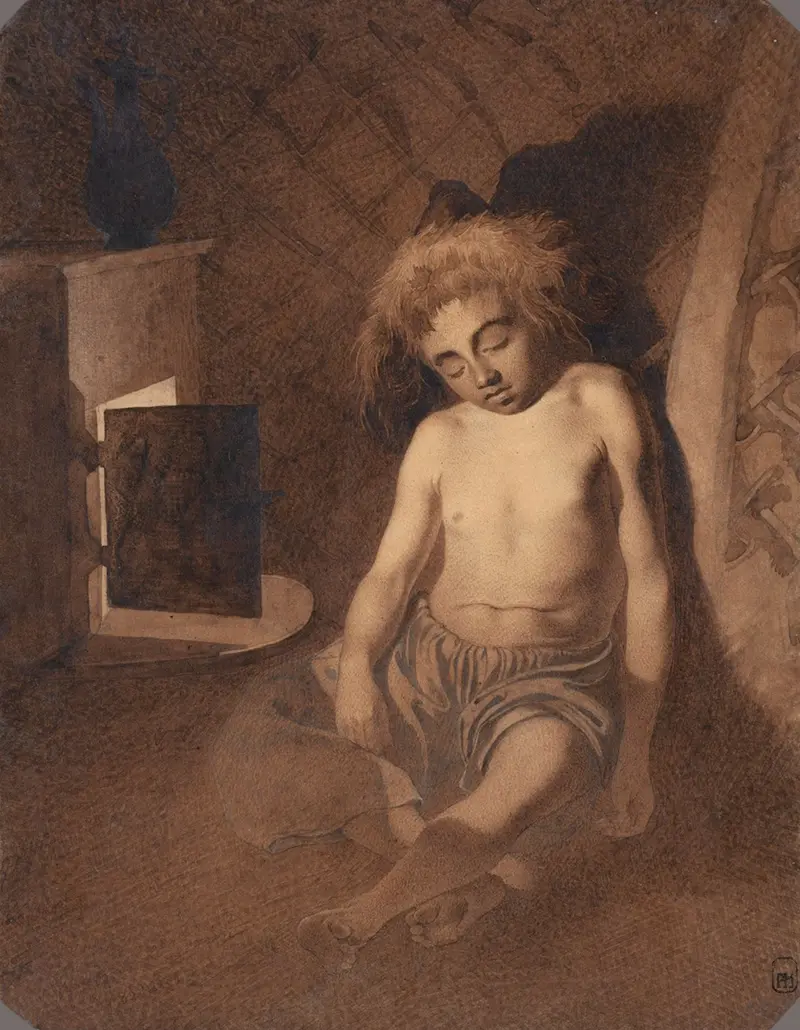
1848 Hlopcyk zasnuv
Taras Shevchenko
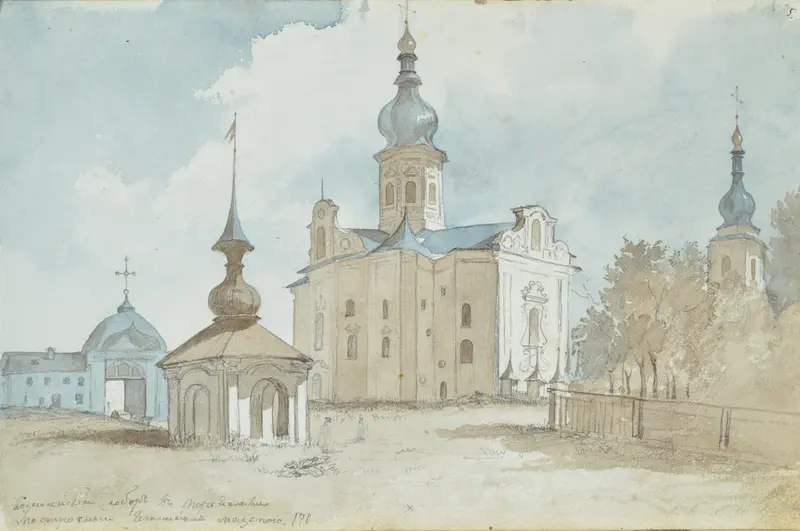
1845 Sh Sketchbook f.05r
Taras Shevchenko
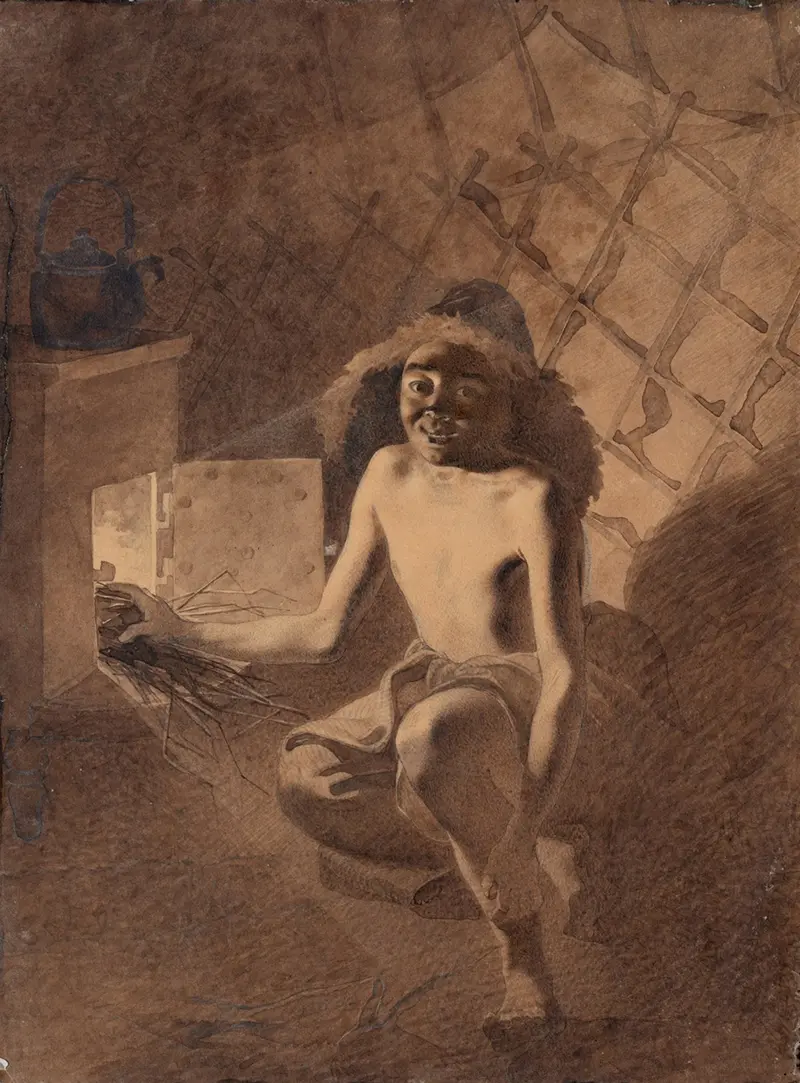
1848 Hlopcyk rozpalije
Taras Shevchenko
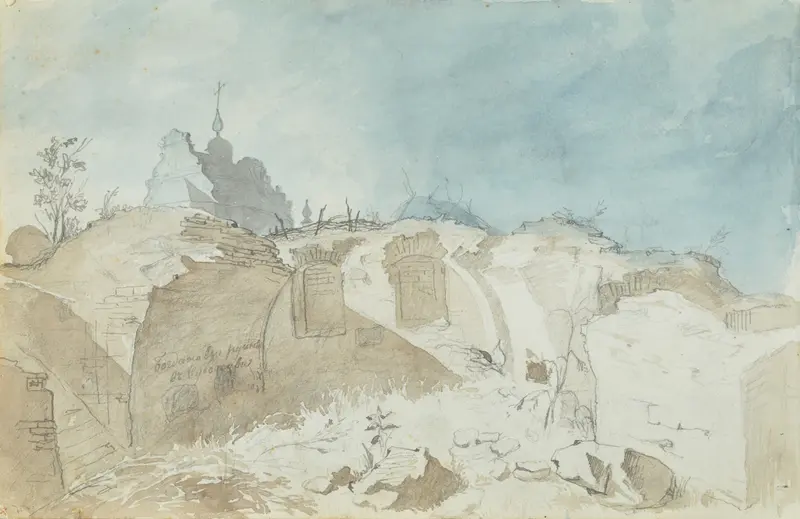
1845 Sh Sketchbook f.12v
Taras Shevchenko
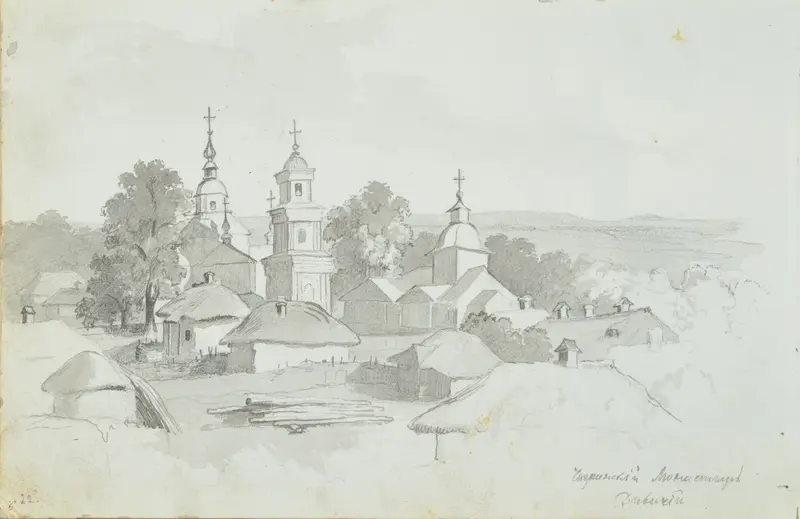
1845 Sh Sketchbook zz f.11v
Taras Shevchenko
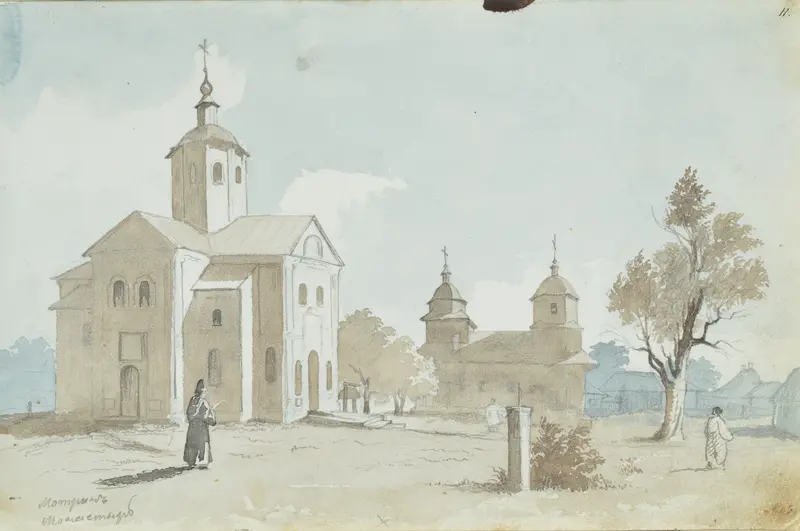
1845 Sh Sketchbook f.11r
Taras Shevchenko
More Landscape Art

The Starry Night
Vincent van Gogh

View of Delft
Johannes Vermeer

Water Lilies
Claude Monet

The Grand Canal, Venice, looking north-west from the Ca' Corner to the Ca' Contarini degli Scrigni, with the campanile of Santa Maria della Carità
Canaletto

Windsor Castle
Canaletto

The Grand Canal looking North-East from the Palazzo Dolfin-Manin to the Rialto Bridge
Canaletto