
San Barnaba Altarpiece — History & Facts
In 1487, the powerful Florentine guild of doctors and apothecaries commissioned Sandro Botticelli to create the San Barnaba Altarpiece for their church, San Barnaba. This was not just a religious gesture but a public statement of prestige, as the guild’s patronage placed Botticelli—already renowned for his mythological scenes—at the heart of Florence’s civic and spiritual life. The altarpiece, unusually large for its time, was intended to impress both congregants and rivals, and its scale and complexity reflect the ambitions of its patrons as much as its painter. At the center of the panel, the Madonna and Child are enthroned beneath a grand architectural canopy, surrounded by six saints who stand as silent witnesses.
Botticelli captures a moment of serene adoration: the Christ Child, perched on his mother’s lap, raises his hand in blessing, while the saints—among them Saint John the Baptist and Saint Catherine—turn toward him in gestures of reverence and contemplation. The delicate gold halos, the intricate brocade of the Virgin’s robe, and the soft, luminous faces all speak to Botticelli’s mastery of line and color. Unlike the crowded drama of Ghirlandaio’s altarpieces, Botticelli’s composition breathes with clarity and order, inviting the viewer to meditate on the harmony between the earthly and the divine. The San Barnaba Altarpiece has remained in Florence since its completion, though its precise journey through the centuries is not fully documented.
Its survival through periods of religious upheaval and political change is a testament to its enduring importance for the city and its guilds. Today, the painting is recognized as a key work from Botticelli’s mature period, bridging his early devotional panels and his later, more lyrical mythologies. Though the original frame and predella are lost, the altarpiece continues to offer a window into the spiritual and civic ideals of Renaissance Florence.
More Artworks by Sandro Botticelli

Virgin and Child
Sandro Botticelli

Madonna and Child and the Young St John the Baptist
Sandro Botticelli

Madonna and Child with six angels and Saint John the Baptist as Child
Sandro Botticelli

Adoration of the Magi
Sandro Botticelli

Virgin and Child with the Young Saint John the Baptist
Sandro Botticelli
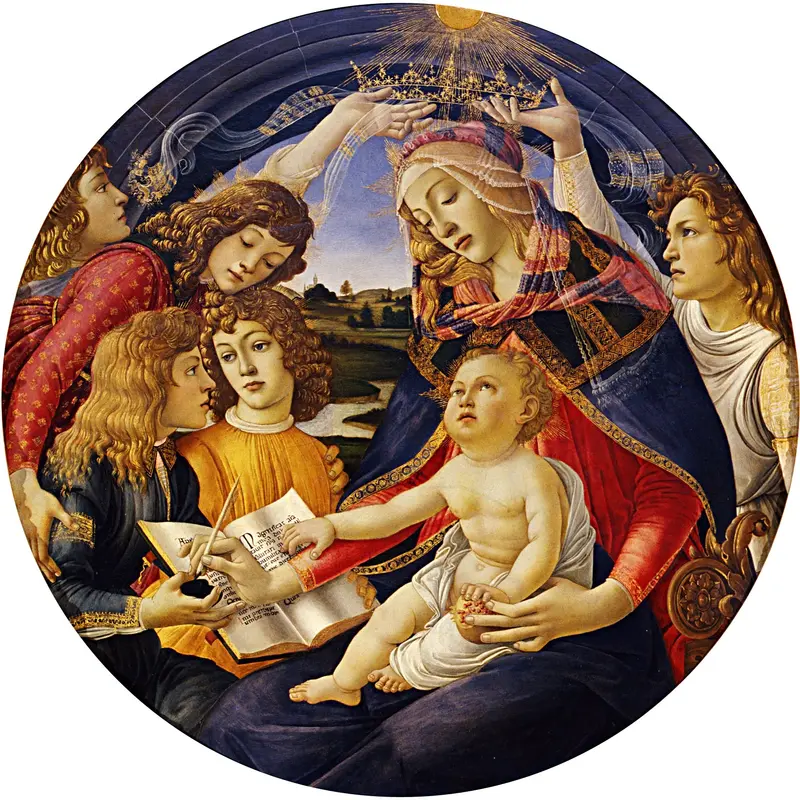
Madonna of the Magnificat
Sandro Botticelli
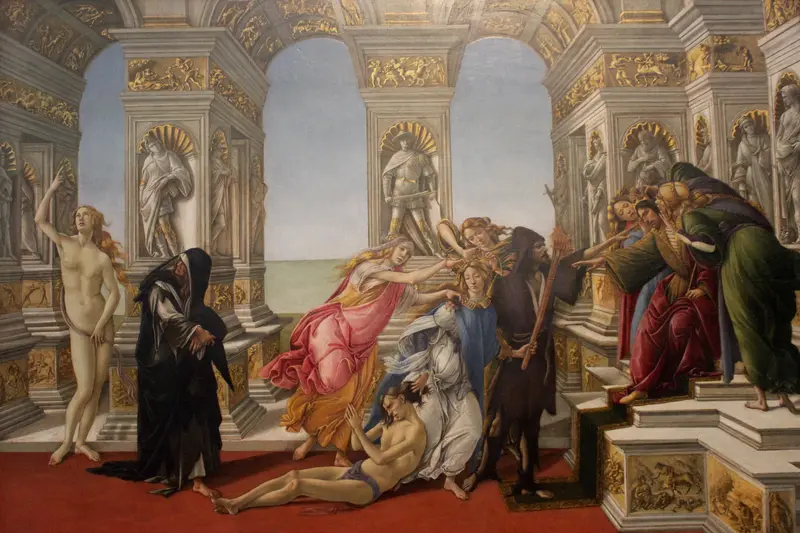
Calumny of Apelles
Sandro Botticelli

Portrait of a young man holding a roundel
Sandro Botticelli

The Trinity with Saint Mary Magdalene and Saint John the Baptist, the Archangel Raphael and Tobias
Sandro Botticelli

Idealized Portrait of a Lady (Portrait of Simonetta Vespucci as Nymph)
Sandro Botticelli





