
Sara in a Dark Bonnet with Right Hand on Arm of Chair — History & Facts
When Mary Cassatt painted Sara in a Dark Bonnet with Right Hand on Arm of Chair in 1901, she was in the midst of her most productive years, having already achieved rare acclaim as an American woman in the Parisian art world. What makes this work particularly notable is that it features her beloved niece, Sara, who appeared in several of Cassatt’s paintings around the turn of the century. These portraits were not merely family mementos; they became a recurring motif through which Cassatt explored the changing roles and inner lives of women and girls in the early twentieth century.
The intimacy of the sitter’s gaze and posture has led some scholars to suggest that Cassatt was consciously challenging the conventions of formal portraiture. The scene is quiet, yet charged with presence: Sara, dressed in a dark bonnet, rests her right hand on the arm of a chair, her body angled toward the viewer but her eyes turned away, lost in thought. The soft modeling of her face and the gentle fall of light across her features recall the influence of Impressionism, but Cassatt’s approach is more restrained than that of her friend Edgar Degas. The bonnet, a symbol of propriety and femininity, frames Sara’s face, while the hand on the chair suggests both poise and a subtle tension, as if she is caught between childhood and adulthood.
Unlike the grand, public portraits of the era, Cassatt’s composition draws the viewer into a private moment, echoing her lifelong interest in the quiet drama of domestic life. The exact provenance of Sara in a Dark Bonnet with Right Hand on Arm of Chair is not fully documented, as is the case with several of Cassatt’s family portraits. It likely remained in the artist’s circle for some time, cherished as both a personal and artistic achievement. Today, it stands as a testament to Cassatt’s enduring fascination with the lives of women and girls, and her ability to capture their complexity with empathy and directness.
The painting is representative of her mature period, when she had moved away from large-scale Impressionist scenes to focus on the intimate, psychological depth of her sitters. Its current whereabouts are not widely publicized, but it continues to be celebrated in exhibitions and scholarship as a key example of Cassatt’s unique vision.
More Artworks by Mary Cassatt

The Child's Bath
Mary Cassatt
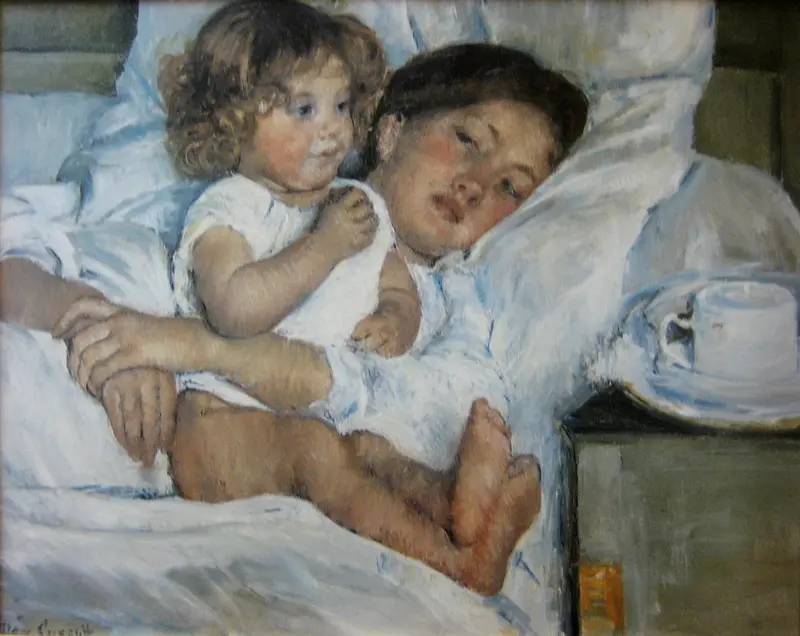
Breakfast in Bed
Mary Cassatt

Mother and Child (Baby Getting Up from His Nap)
Mary Cassatt
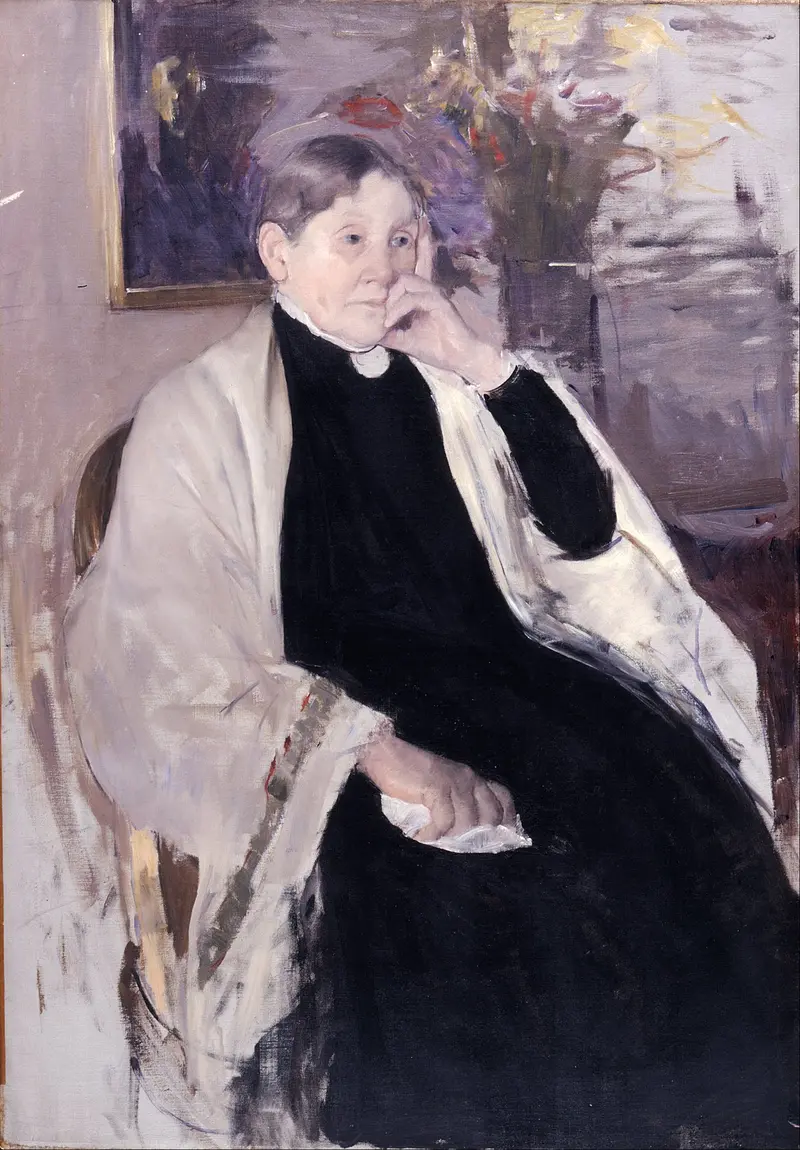
Mrs. Robert S. Cassatt, the Artist's Mother
Mary Cassatt
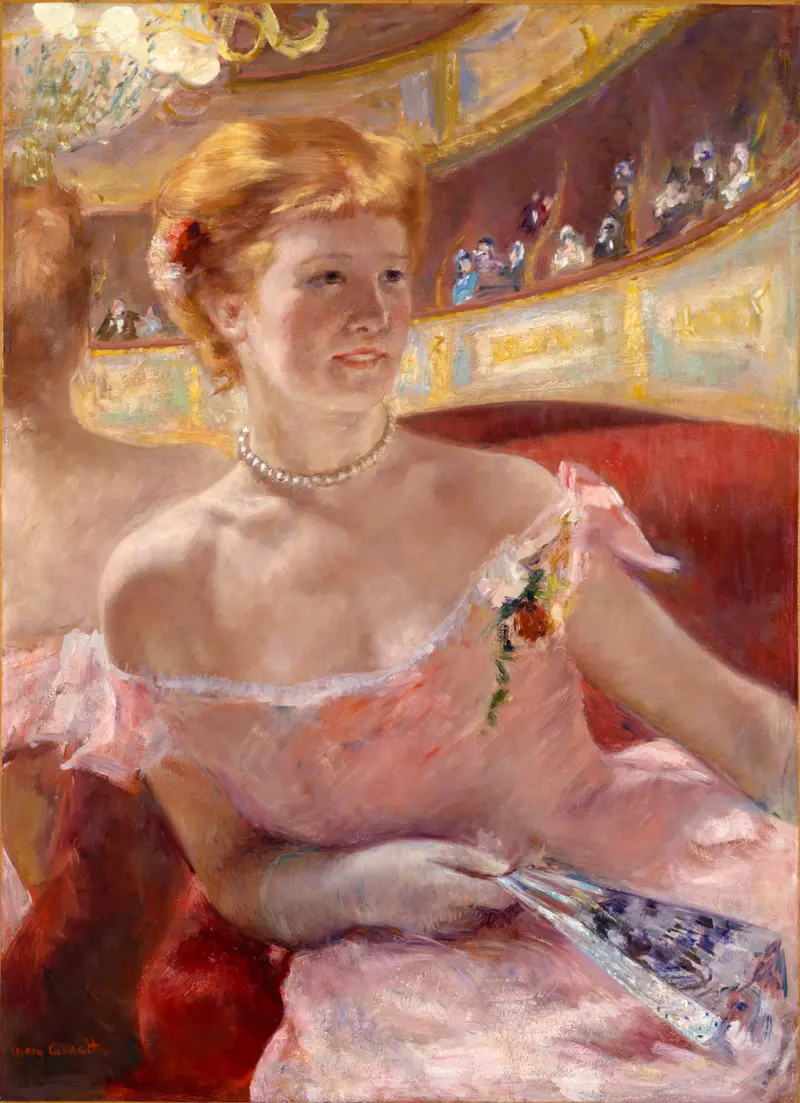
Woman with a Pearl Necklace in a Loge
Mary Cassatt
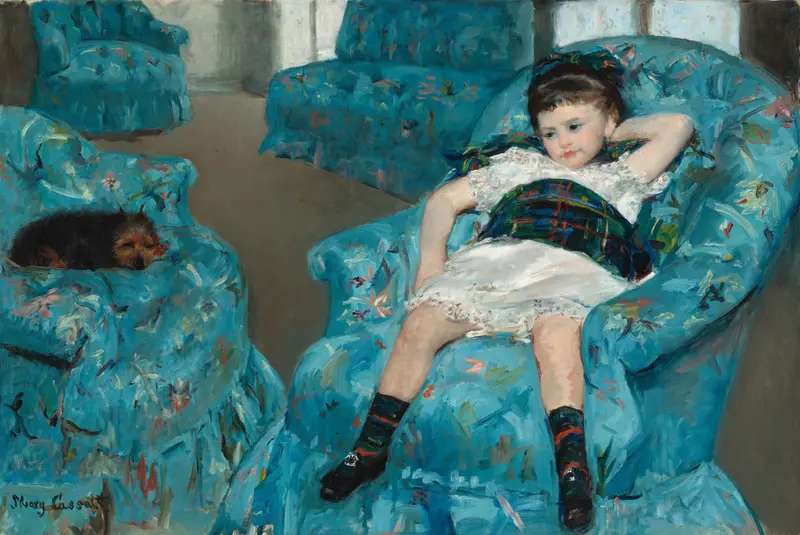
Little Girl in a Blue Armchair
Mary Cassatt
Mother and Child (The Oval Mirror)
Mary Cassatt
Mother and Child
Mary Cassatt
In The Loge
Mary Cassatt
On a Balcony
Mary Cassatt





