
Schepen op kalme zee — History & Facts
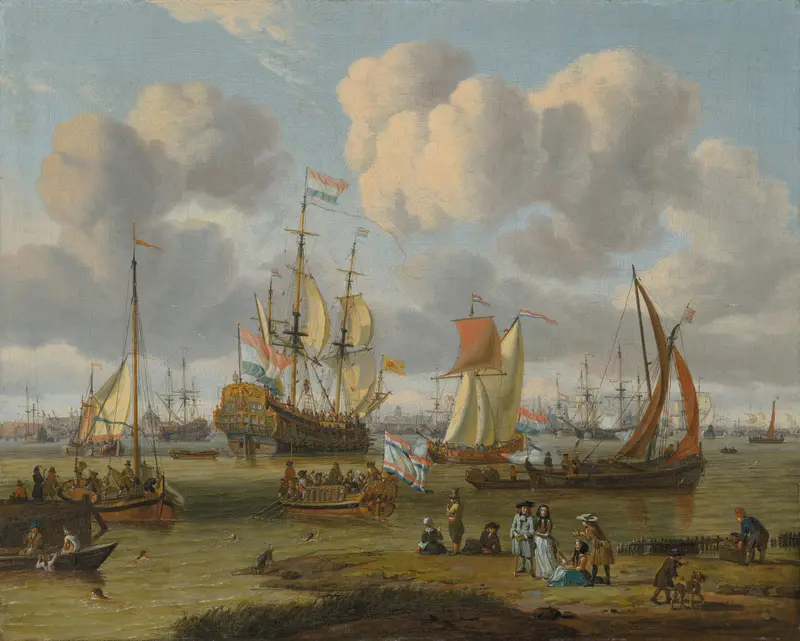
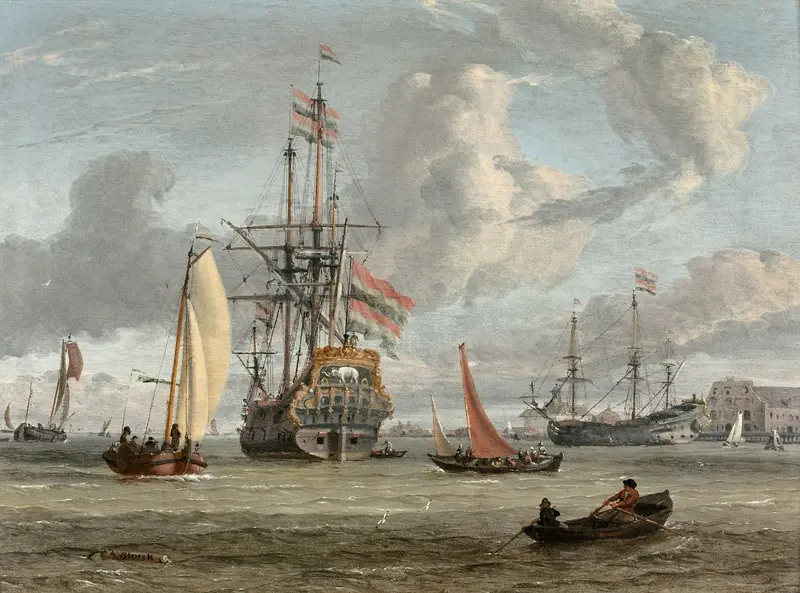
What first draws the eye is the gentle choreography of ships and figures, all suspended in a moment of deep calm. The low horizon grants the sky a sweeping stage, its clouds tinged with the pinks and golds of a fading day, while the water below mirrors this quiet drama. In the foreground, a cluster of people—some in animated conversation, others gazing out—anchor the scene in daily life, their presence a reminder that these tranquil waters are also a stage for human stories.
The sails, some furled and some catching the last light, signal a pause between journeys, while the flags and rigging hint at the bustling trade and travel that defined the Dutch Golden Age. Every detail, from the careful reflections on the water to the distant silhouettes of ships, is placed to slow the viewer’s gaze, inviting a sense of stillness. Painted between 1659 and 1708, Schepen op kalme zee belongs to a world where maritime scenes were both a celebration of national pride and a window onto everyday experience. In the Dutch Republic of the seventeenth century, such works were eagerly collected by merchants and burghers whose fortunes rode on the tides.
Artists like Abraham Storck specialized in these seascapes, offering not only a record of the ships and harbors that powered the economy, but also a meditation on the rhythms of water, weather, and work. Today, this painting resides in the collection of Rijksmuseum Twenthe, its quiet surface still reflecting the ambitions and pleasures of an age when the sea was both a livelihood and a source of wonder. Look again at the horizon, and imagine all the stories setting sail.
More Artworks by Abraham Storck

The Muscovite legation visiting Amsterdam, 29 August 1697
Abraham Storck
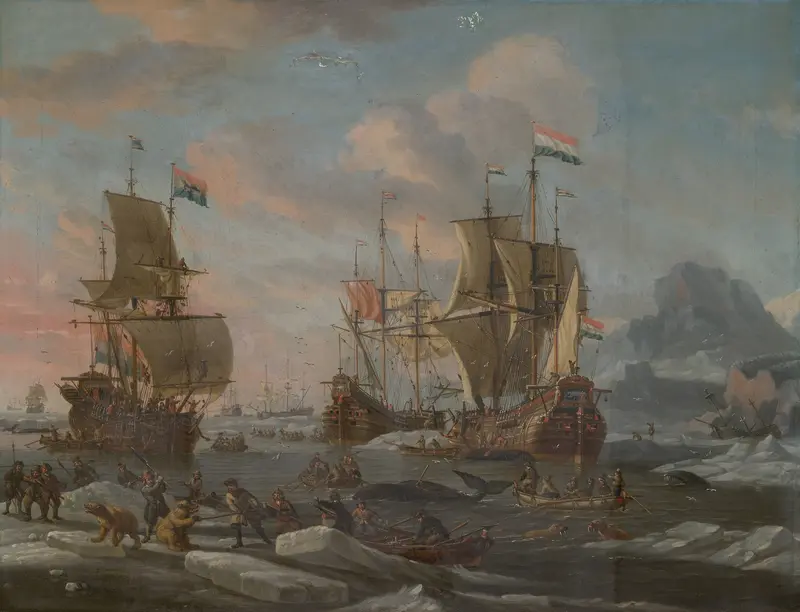
The Dutch Whaling Fleet
Abraham Storck
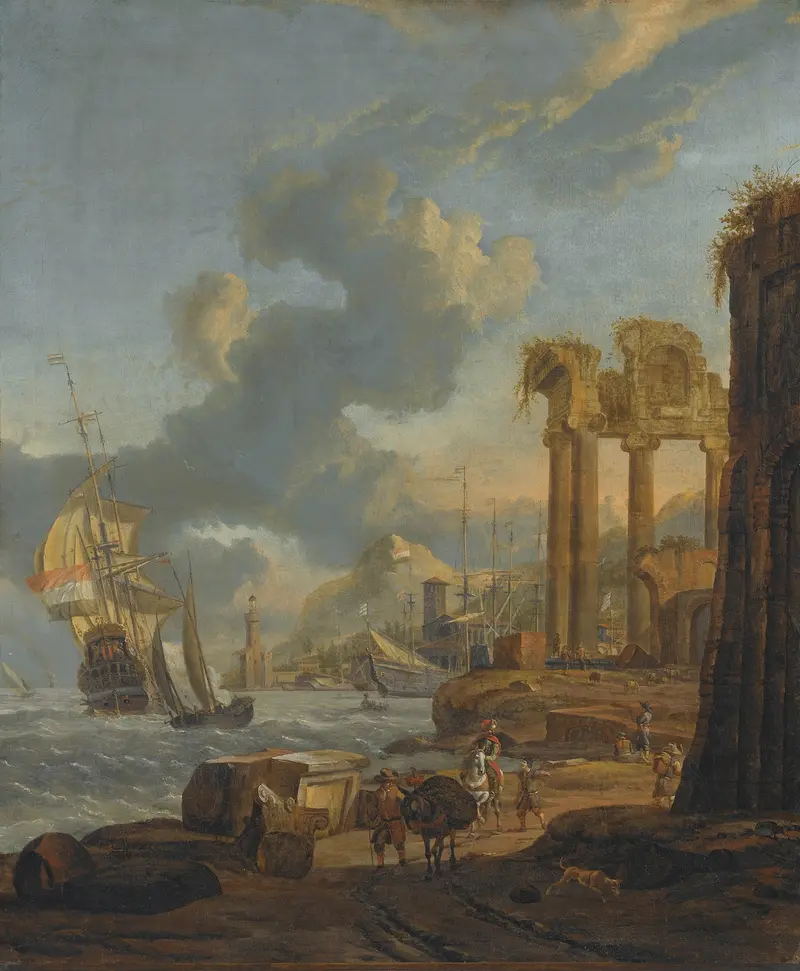
A Mediterranean Harbour Scene With Travellers On The Shore, A Dutch Man-Of-War On The Left
Abraham Storck
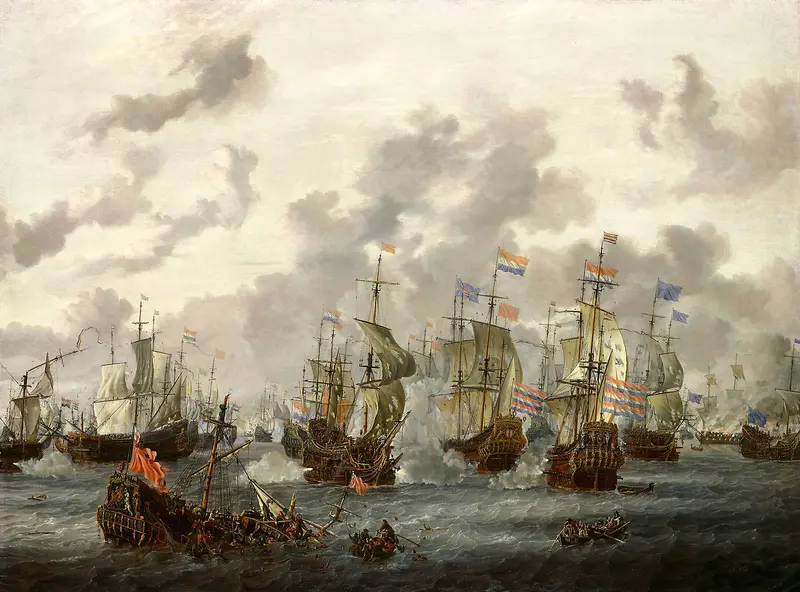
The Four Days’ Battle
Abraham Storck
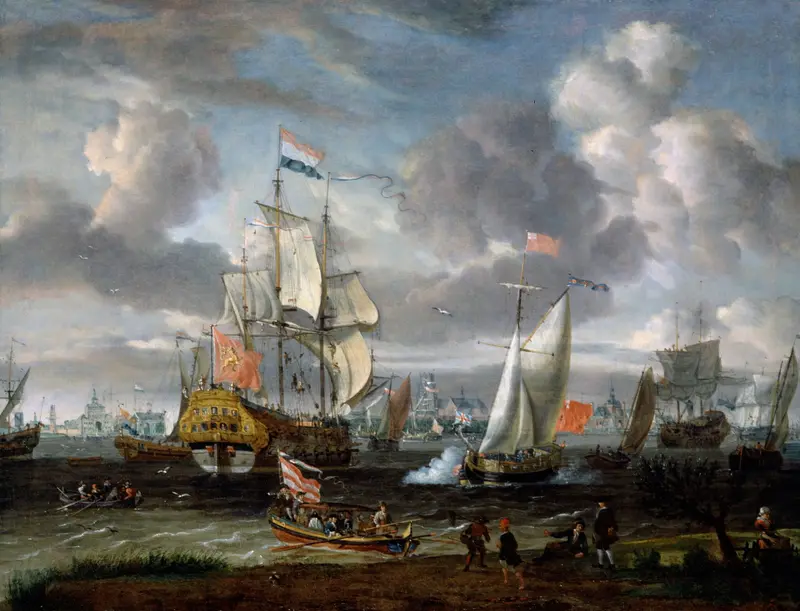
An English Yacht saluting a Dutch Man-of-War in the port of Rotterdam
Abraham Storck
Shipping off Amsterdam with figures on a quay
Abraham Storck
The Dutch Whaling Fleet
Abraham Storck
Whaling Grounds in the Arctic Ocean
Abraham Storck
Shipping in an estuary
Abraham Storck
Grand navire de la couronne du Danemark près d’un littoral
Abraham Storck





