
Schiahörner mit Enzian (Schiahorner with Gentian) — History & Facts
The first thing that seizes the eye in Schiahorner mit Enzian (Schiahorner with Gentian) is the riot of color—greens, violets, and pinks—organizing the wildness of an alpine meadow into rhythmic, almost musical waves. The gentian flowers, rendered in bold, blocky shapes, seem to pulse across the hillside, their blue shadows echoing the jagged peaks that rise behind them. The trees stand like sentinels, their forms simplified into zigzag patterns that lead the gaze upward, while the sky, tinged with lilac and rose, suggests a fleeting moment of dusk or dawn.
There is nothing quiet or passive here; every brushstroke vibrates with energy, as if the landscape itself is alive and restless. Painted in 1925, this work belongs to a world in which artists like Ernst Ludwig Kirchner sought to break free from traditional representation and capture the inner life of a scene. The jagged forms and saturated palette are hallmarks of the Expressionist movement, which flourished in Germany in the early twentieth century. These artists, often working in the wake of war and social upheaval, turned to the landscape as a site of renewal and personal vision.
History has kept few traces of the individual stories behind works like this one, now in the collection of the Albright-Knox Art Gallery, but the painting’s exuberance invites viewers to imagine themselves in that vivid, half-imagined mountain world—where even the shadows seem to sing.
More Artworks by Ernst Ludwig Kirchner
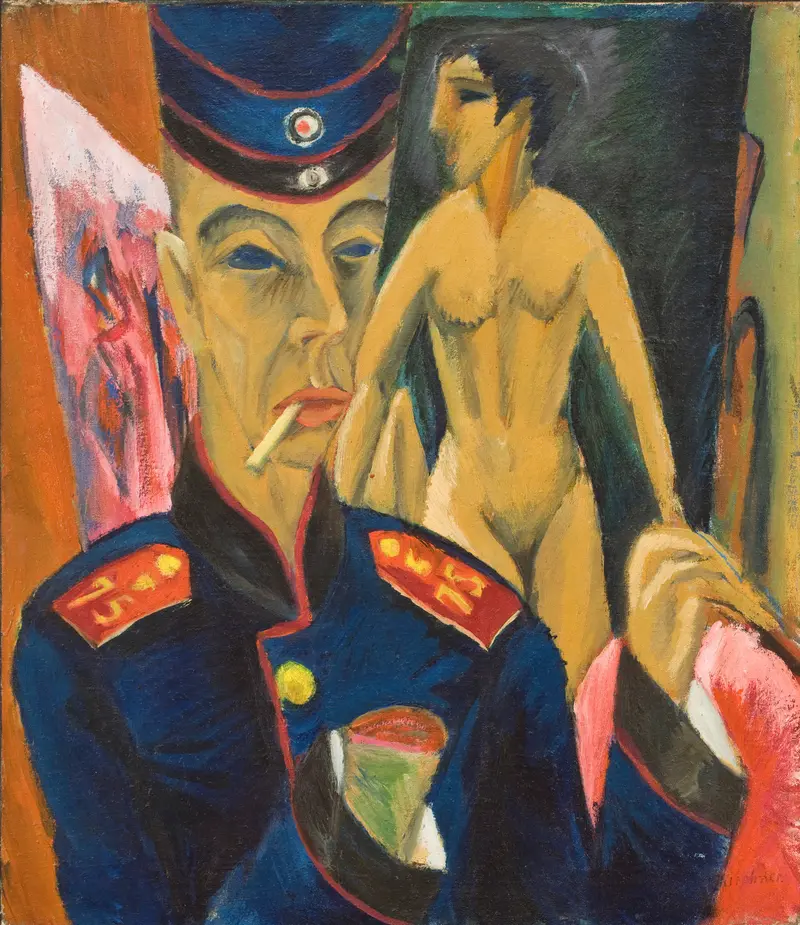
Self-Portrait as a Soldier
Ernst Ludwig Kirchner
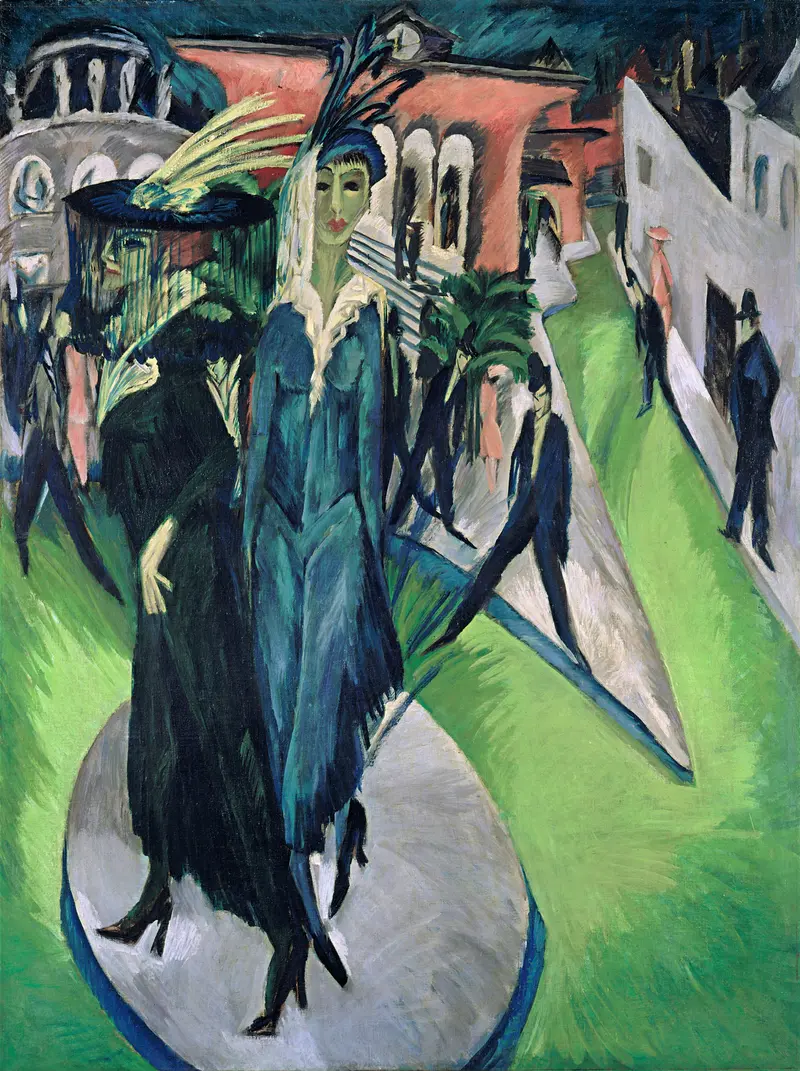
Potsdamer Platz
Ernst Ludwig Kirchner

Alphütten und Tinzenhorn
Ernst Ludwig Kirchner
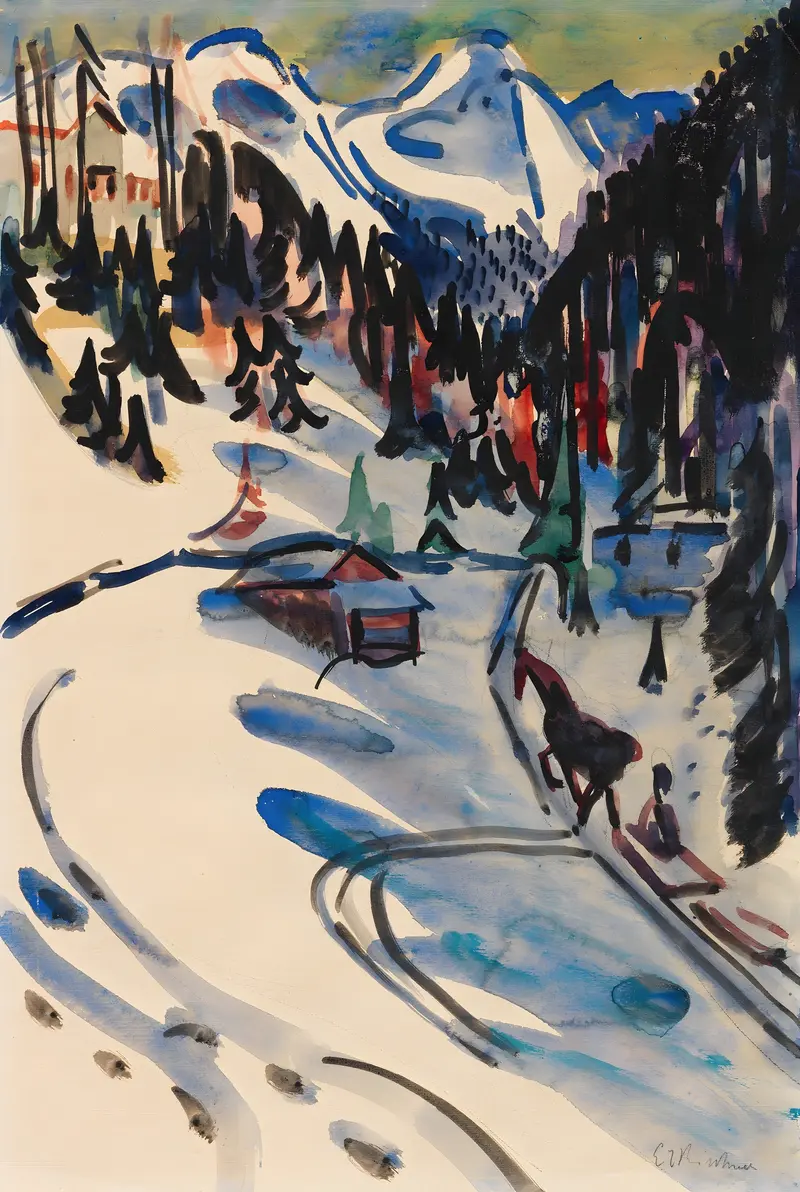
Sertigtal im Winter
Ernst Ludwig Kirchner
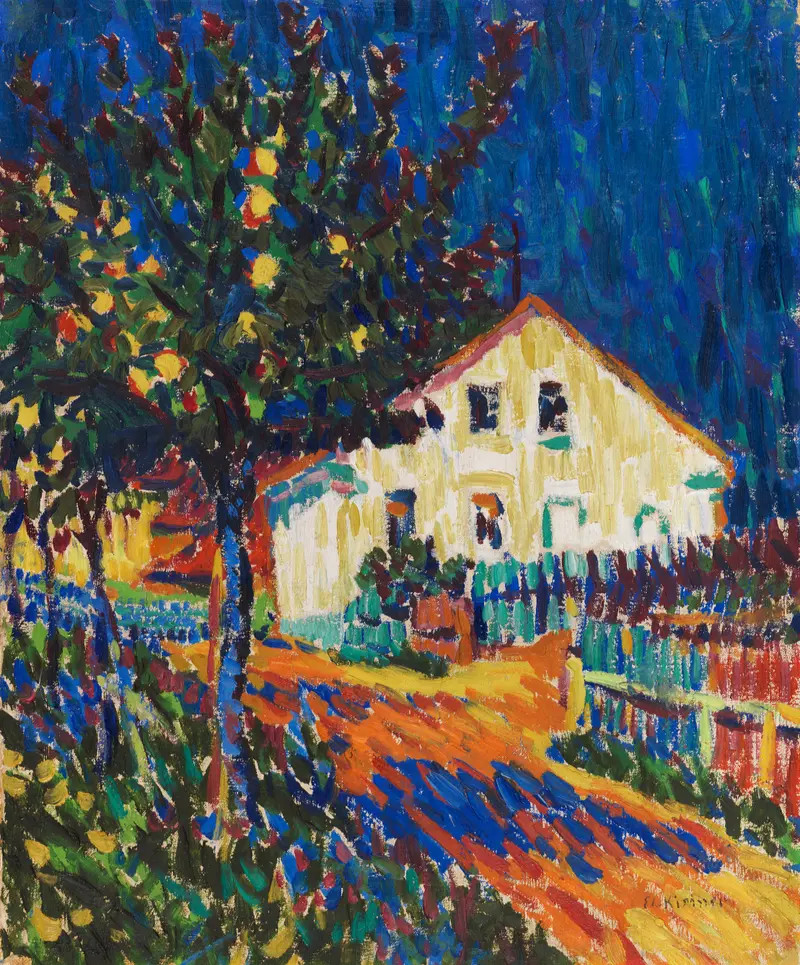
Dorfstraße mit Apfelbäumen
Ernst Ludwig Kirchner
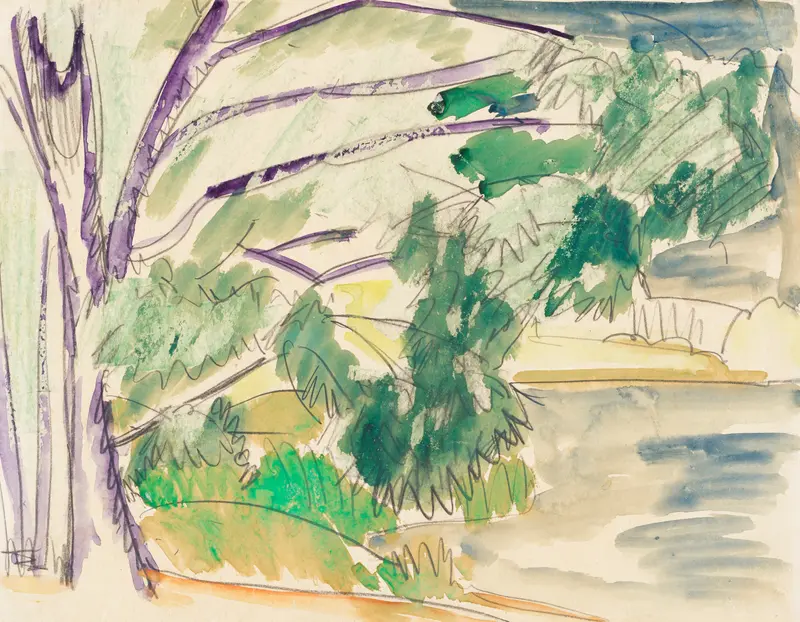
Unter Bäumen am See
Ernst Ludwig Kirchner
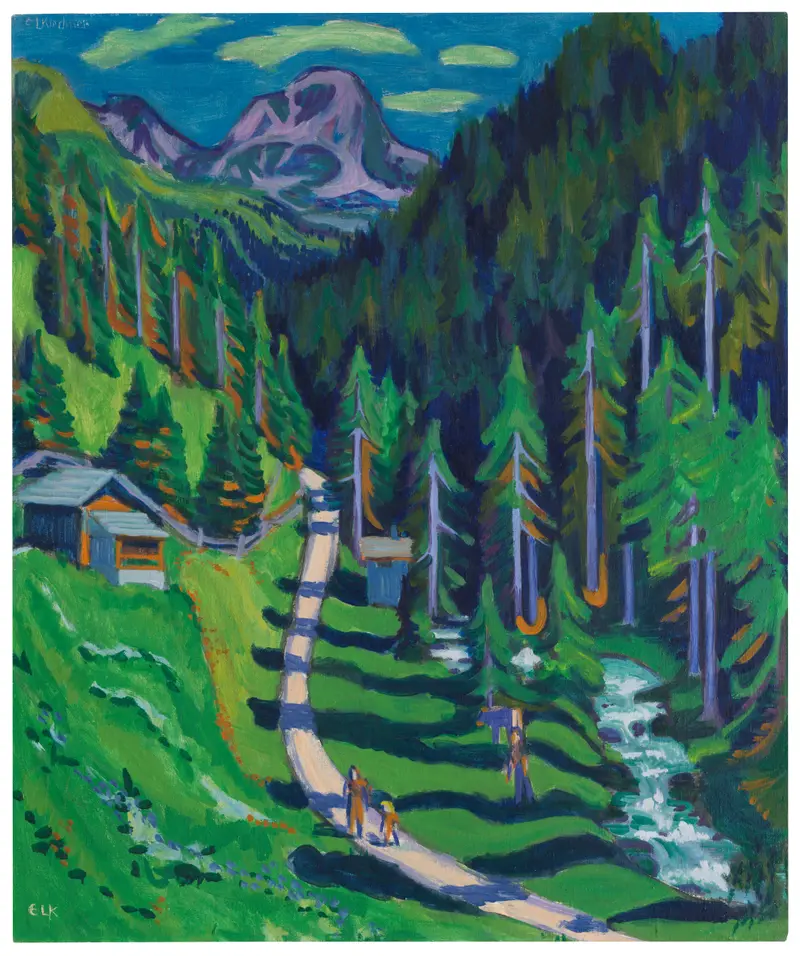
Sertigweg
Ernst Ludwig Kirchner
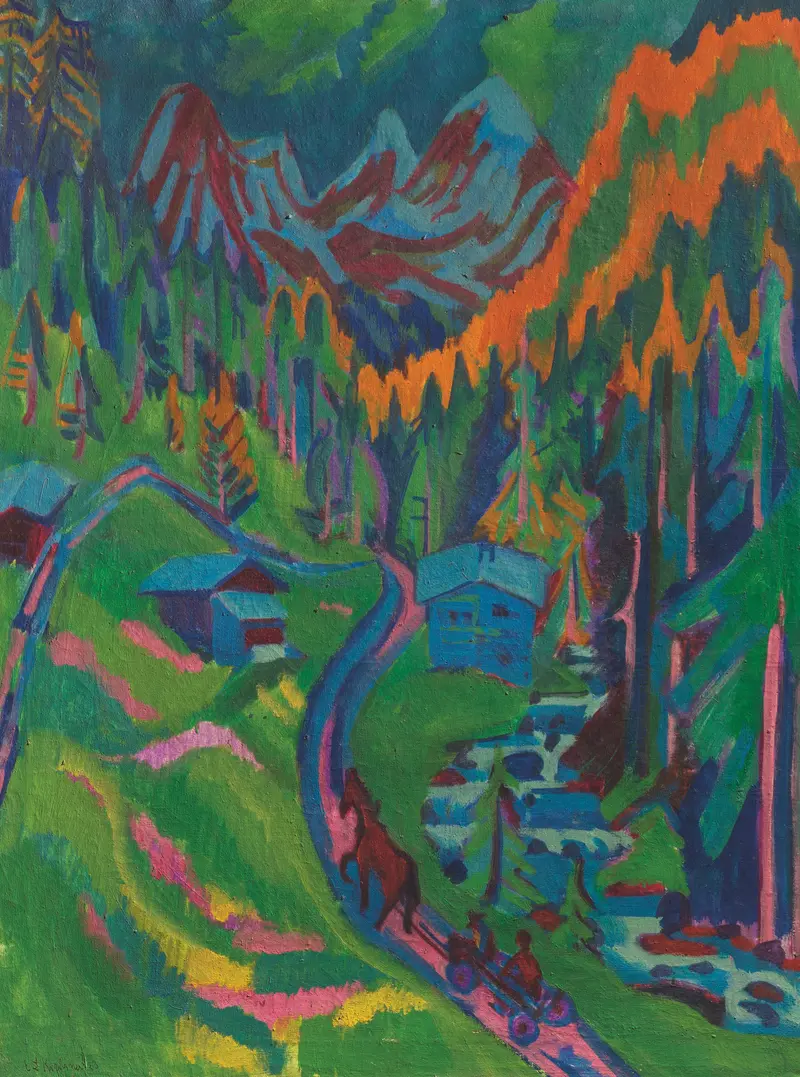
Sertigweg im Sommer
Ernst Ludwig Kirchner
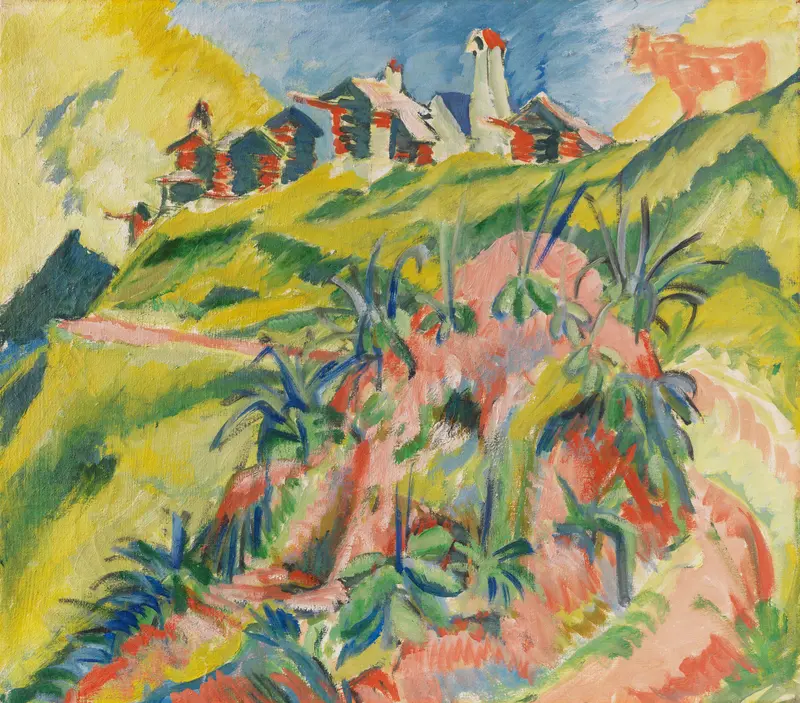
Bergdorf mit rosa Kuh
Ernst Ludwig Kirchner
Fehmarnküste mit Leuchtturm
Ernst Ludwig Kirchner
More Landscape Art

The Starry Night
Vincent van Gogh

View of Delft
Johannes Vermeer

Water Lilies
Claude Monet

The Grand Canal, Venice, looking north-west from the Ca' Corner to the Ca' Contarini degli Scrigni, with the campanile of Santa Maria della Carità
Canaletto

Windsor Castle
Canaletto

The Grand Canal looking North-East from the Palazzo Dolfin-Manin to the Rialto Bridge
Canaletto