
Schönbusch Castle near Aschaffenburg — History & Facts
In a world where equilibrium is often elusive, art stands as a testament to the harmony that can be achieved. Look to the center of the piece, where the majestic Schönbusch Castle emerges, its stately facade reflecting a serene stillness. Notice how the verdant trees encircle the structure, their lush greens contrasting with the pale blues of the sky. The light gently cascades down, illuminating the castle’s architecture, drawing your gaze to the intricate details crafted with care.
The composition is carefully balanced, with the castle sitting firmly in the middle, flanked by nature's embrace, invoking both strength and tranquility. Examining the subtle interplay of light and shadow, one can feel the tension between human achievement and nature's omnipresence. The castle, a symbol of civilization, stands resolutely yet humbly within the expanse of the undulating landscape. The delicate brushwork captures not just the physical details but the very essence of serenity, suggesting a fragile balance between the man-made and the organic, the grand and the intimate.
Look closer, and the interplay of the reflections in the water hints at depths beyond the surface, whispering the secrets of continuity. In 1786, while Christian Georg Schütz the elder captured this idyllic moment, he was immersed in a period of artistic exploration, delving into the burgeoning Romantic ideals that celebrated nature. Working in Aschaffenburg, he was influenced by the era's emphasis on emotional depth and the sublime, a counterpoint to the precision of earlier artistic traditions. This piece, reflective of both personal and cultural currents, embodies a harmonious vision that resonates across time.
More Artworks by Christian Georg Schütz the elder
Browse all →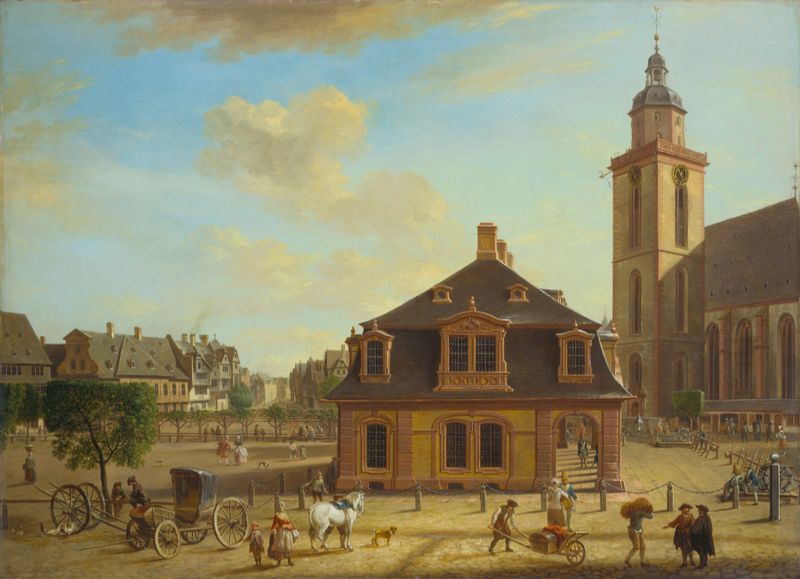
The Rossmarkt in Frankfurt
Christian Georg Schütz the elder
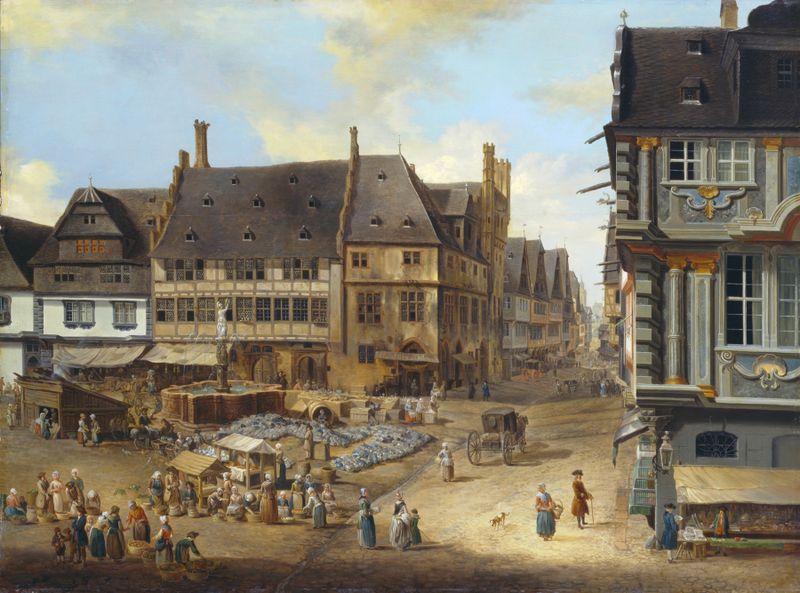
The Liebfrauenberg in Frankfurt
Christian Georg Schütz the elder
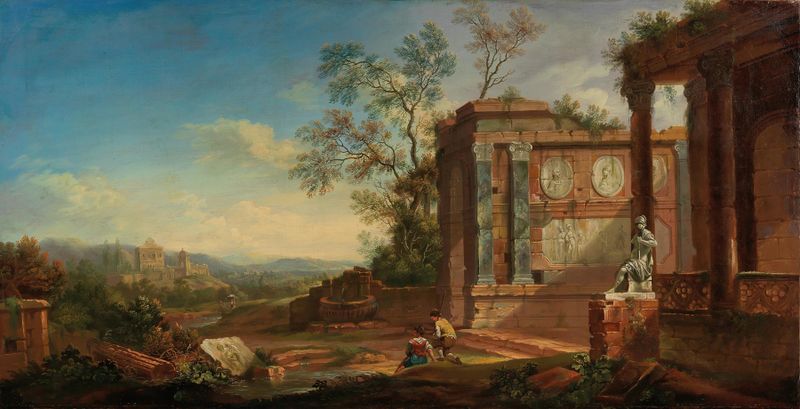
Gebirgige Flusslandschaft
Christian Georg Schütz the elder
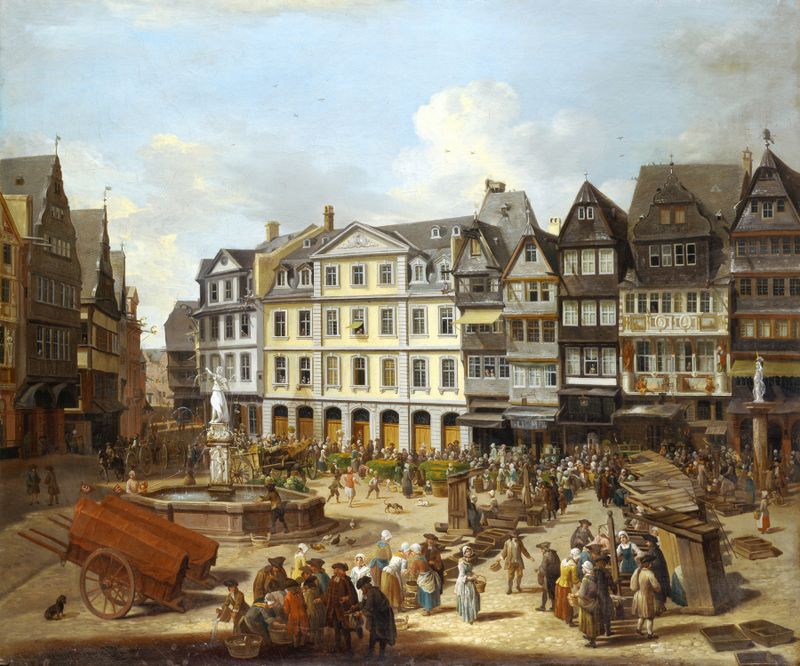
A Market on the Römerberg in Frankfurt
Christian Georg Schütz the elder
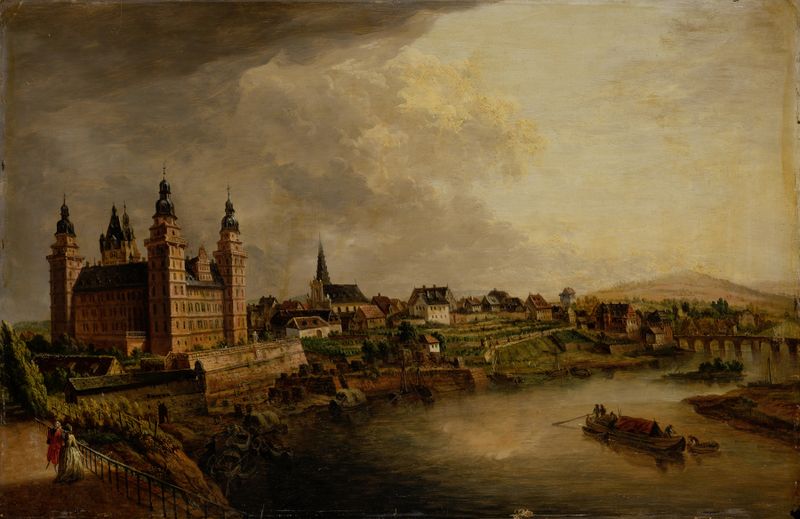
View of Aschaffenburg
Christian Georg Schütz the elder

Landscape with River.
Christian Georg Schütz the elder

River Landscape in the Morning Light
Christian Georg Schütz the elder

A Rhine landscape with a ferry, near Bonn with the Rolandsbogen, Drachenfels and the island of Nonnenwerth beyond
Christian Georg Schütz the elder
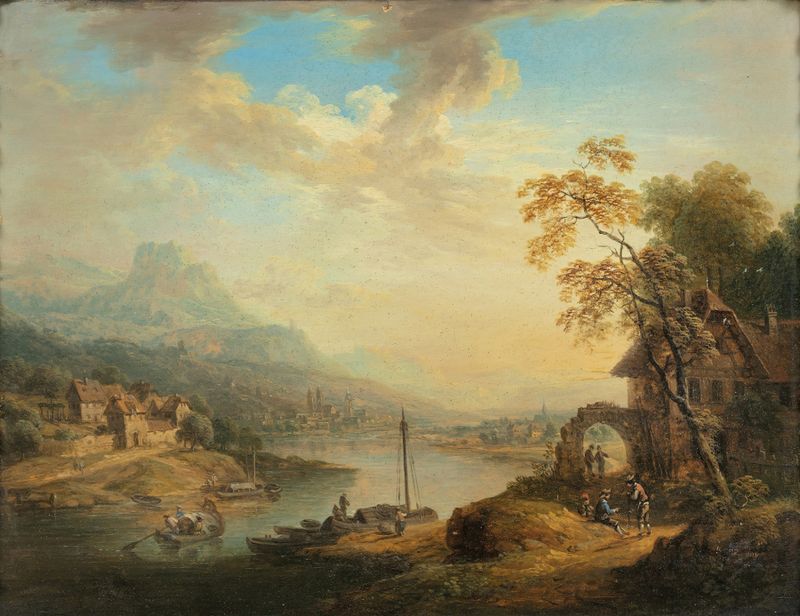
River Landscape
Christian Georg Schütz the elder

Flooded Woodlands near Oberrad
Christian Georg Schütz the elder





