
Schooner at Sunset — History & Facts
Who listens when art speaks of silence? In Schooner at Sunset, the essence of stillness envelops the viewer, inviting a reflective pause amidst the vibrant hues of twilight. Look to the horizon where the sun, a blazing orb, spills golden light across the water, illuminating the canvas with warmth. Notice how the shadows of the sails stretch and sway, their silhouettes etched against the brilliant sky. This interplay of light and shadow creates a palpable tension, drawing your gaze to the lone schooner as it navigates the tranquil waves, embodying both movement and serenity. The juxtaposition of the fiery sunset and the cool shadows invites contemplation on the transient nature of time and life.
Here, the calm sea reflects the warm glow above, yet the darkness creeping in from the edges suggests an encroaching night, a reminder of the fleeting moments that we often overlook. The lone vessel becomes a metaphor for solitude amidst nature’s grandeur, urging the viewer to consider the quiet strength found in silence and stillness. In 1880, Winslow Homer painted this evocative scene while residing in Maine, a period marked by his deepening interest in the sea and its myriad moods. This artwork emerged from an era when America was grappling with its identity, and Homer’s explorations through landscape and marine painting captured the complex interplay of light and shadow, both literally and metaphorically.
More Artworks by Winslow Homer
Browse all →
The Gulf Stream
Winslow Homer
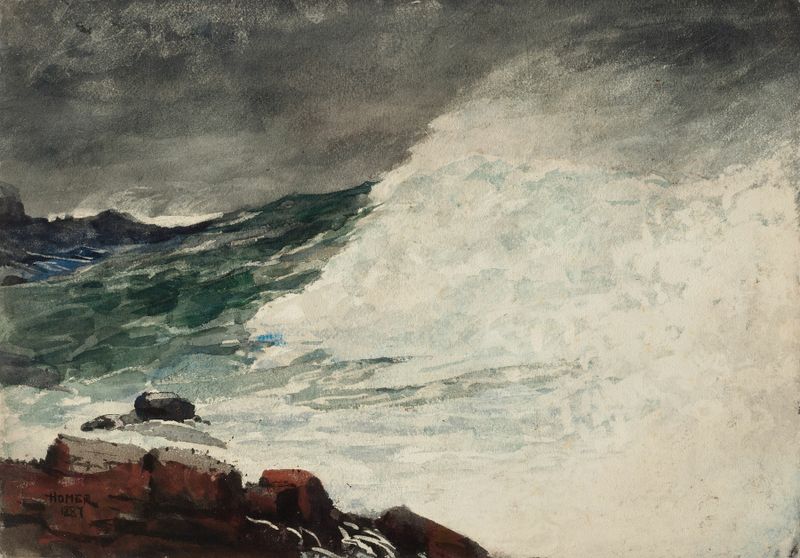
Prout’s Neck, Breaking Wave
Winslow Homer
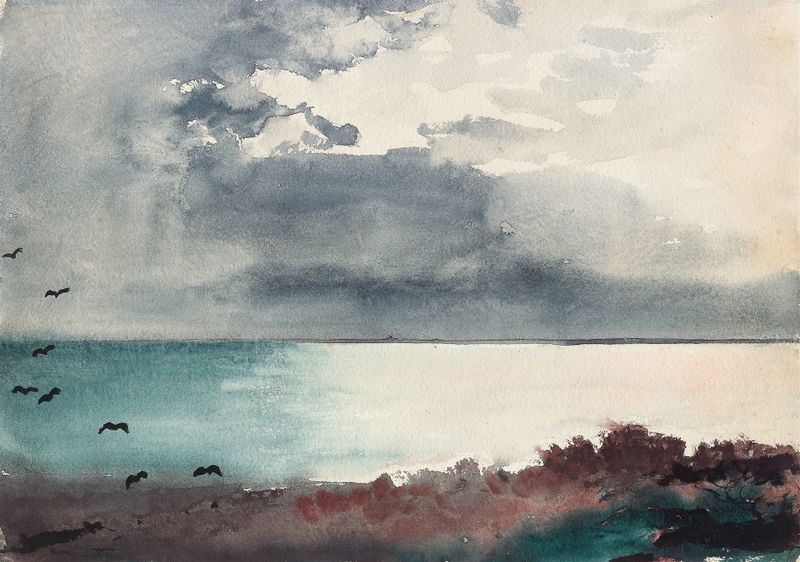
Breaking Storm, Coast of Maine
Winslow Homer
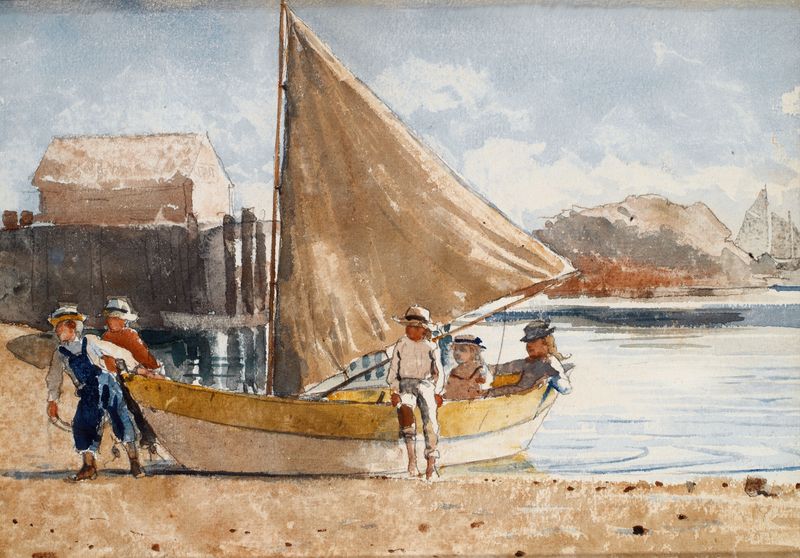
Summertime
Winslow Homer
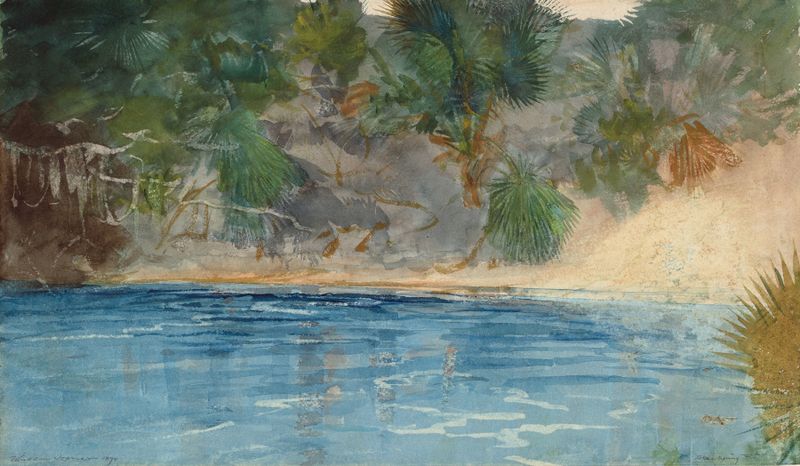
Blue Spring, Florida
Winslow Homer
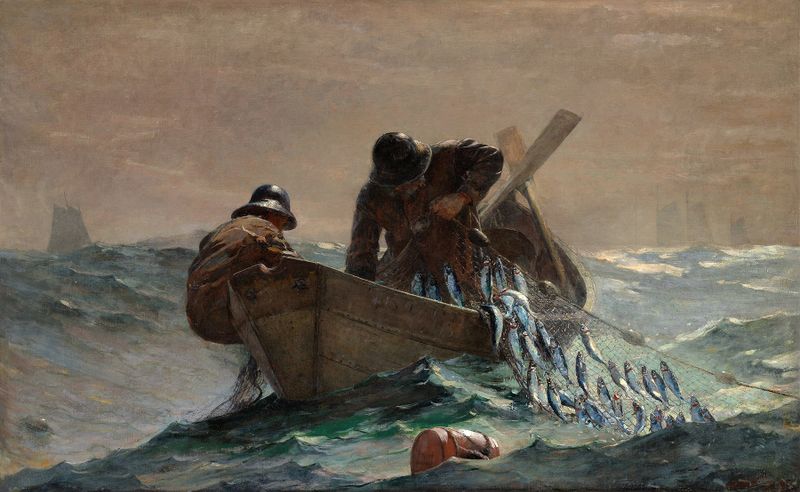
The Herring Net
Winslow Homer
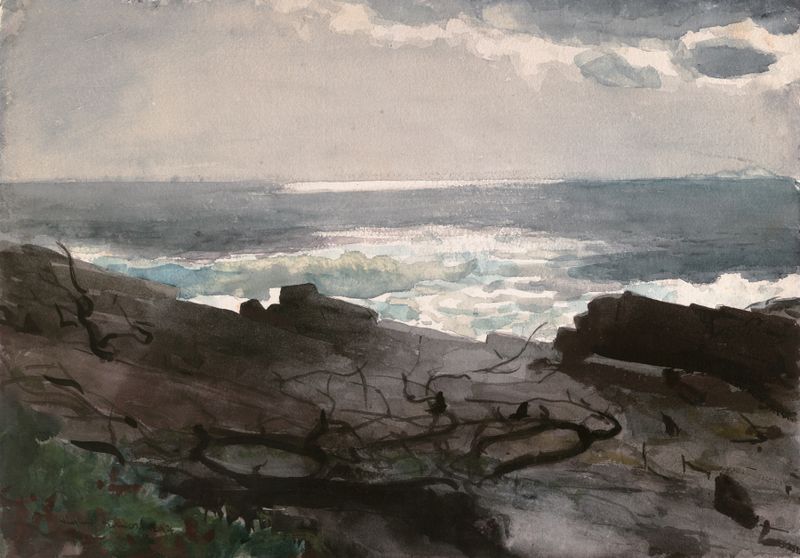
Sunshine and Shadow, Prout’s Neck
Winslow Homer
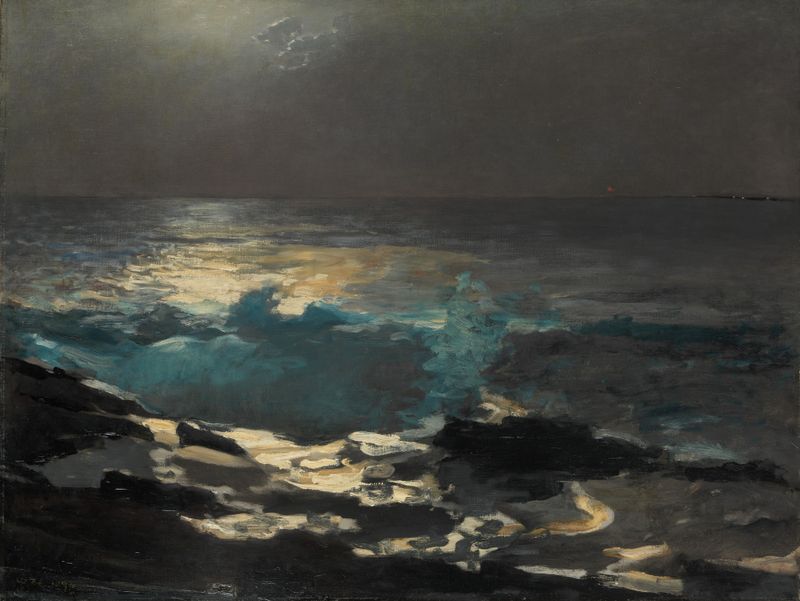
Moonlight, Wood Island Light
Winslow Homer
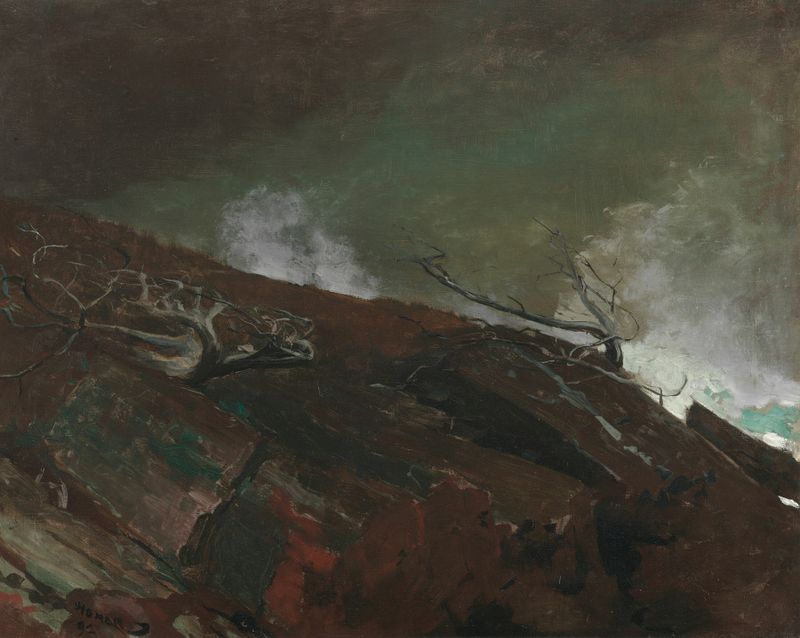
Coast of Maine
Winslow Homer
Bass Fishing – Florida
Winslow Homer




