
Scène De Rue — History & Facts
In the interplay of light and shadow, we find the essence of our humanity, often obscured by the chaos of life. Look to the center of Scène De Rue, where the figures gather, cloaked in the warm hues of a fading day. The soft brushwork creates a tapestry of movement, as vibrant blues and ochres dance across the canvas, inviting you to follow the lines of their gestures. Notice how the shadows stretch and weave around the forms, anchoring them to the cobblestone street.
The light falls delicately on their faces, revealing fleeting emotions, while the deeper hues create an atmosphere of both camaraderie and solitude. In the subtle contrast between the bright figures and their dark surroundings lies a poignant narrative. Each character appears to exist in their own world, yet they are connected by the shared space and moment—highlighting the delicate balance between individuality and community. The shadowy corners hint at untold stories, perhaps of those who drift in and out of view, suggesting a deeper commentary on the unseen lives that inhabit our shared streets. Emile Bernard painted Scène De Rue in 1885 while living in Pont-Aven, a hub of artistic experimentation.
During this period, he was influenced by the Symbolist movement and the emerging Post-Impressionist style, seeking to capture not just the visual, but the emotional and psychological dimensions of life. As Bernard explored this profound territory, he became a key figure in the shift towards modern art, navigating the balance of light and shadow both on the canvas and within the human experience.
More Artworks by Emile Bernard
Browse all →
House among trees; Pont-Aven
Emile Bernard
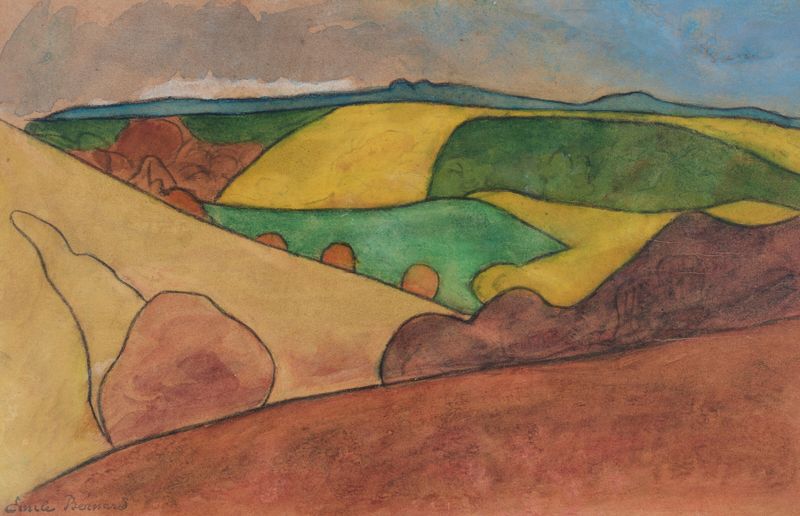
Paysage de Bretagne
Emile Bernard

Harvest by the Sea
Emile Bernard
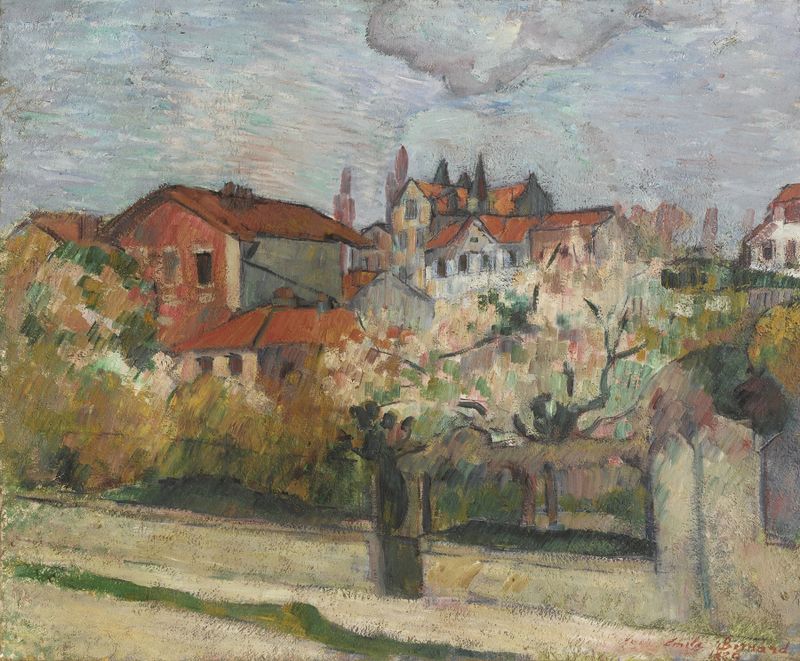
Jardin en fleur à Asinères
Emile Bernard
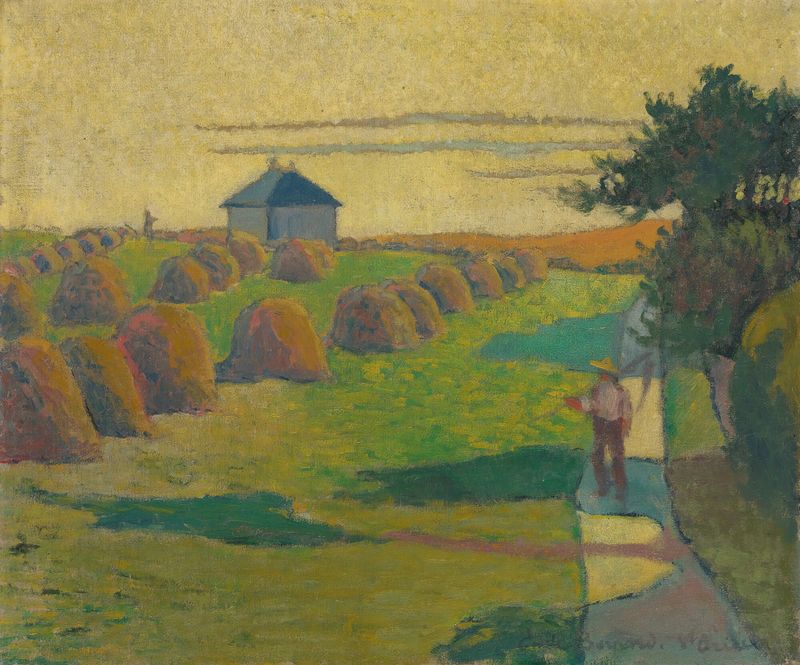
Saint-Briac
Emile Bernard
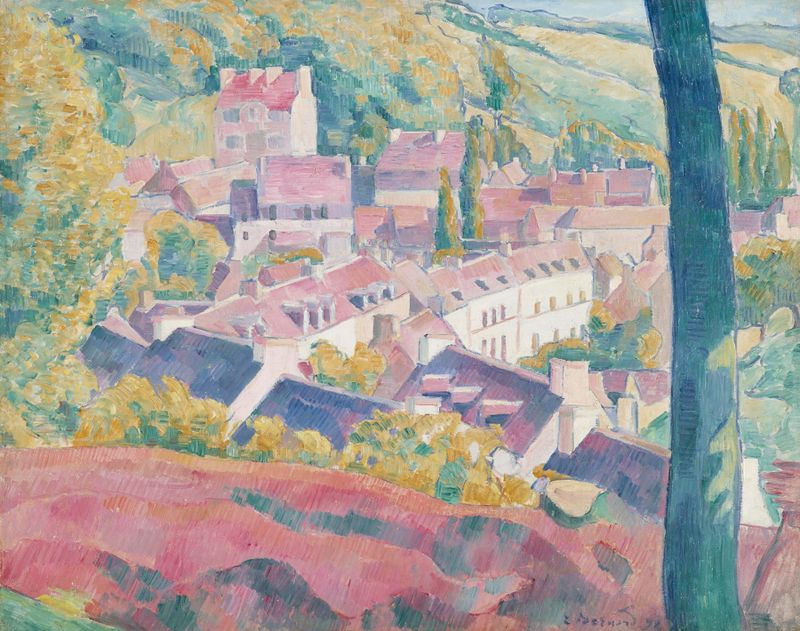
Pont-Aven Seen from the Bois d’Amour
Emile Bernard
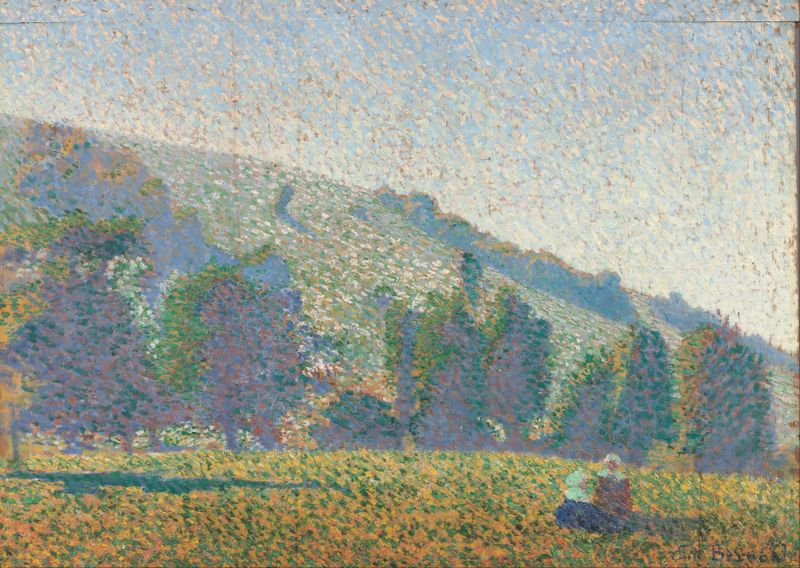
Two Breton women in a meadow
Emile Bernard

Un Coin Du Bois D’amour A Pont Aven
Emile Bernard

Vue des toits
Emile Bernard

Landscape at Pont-Aven
Emile Bernard





